
Best Cool Roof Systems for North Texas Heat: The 2026 Energy Efficiency Guide
If you live in the Dallas-Fort Worth metroplex, you don''t need a weather app to tell you it''s hot. You just need to look at your electric bill in August.
With North Texas summers trending hotter than ever in 2026, your roof is no longer just a shield against hail — it is the primary thermal barrier for your entire home. And most homeowners are dramatically underestimating how much their roof is costing them every single month.
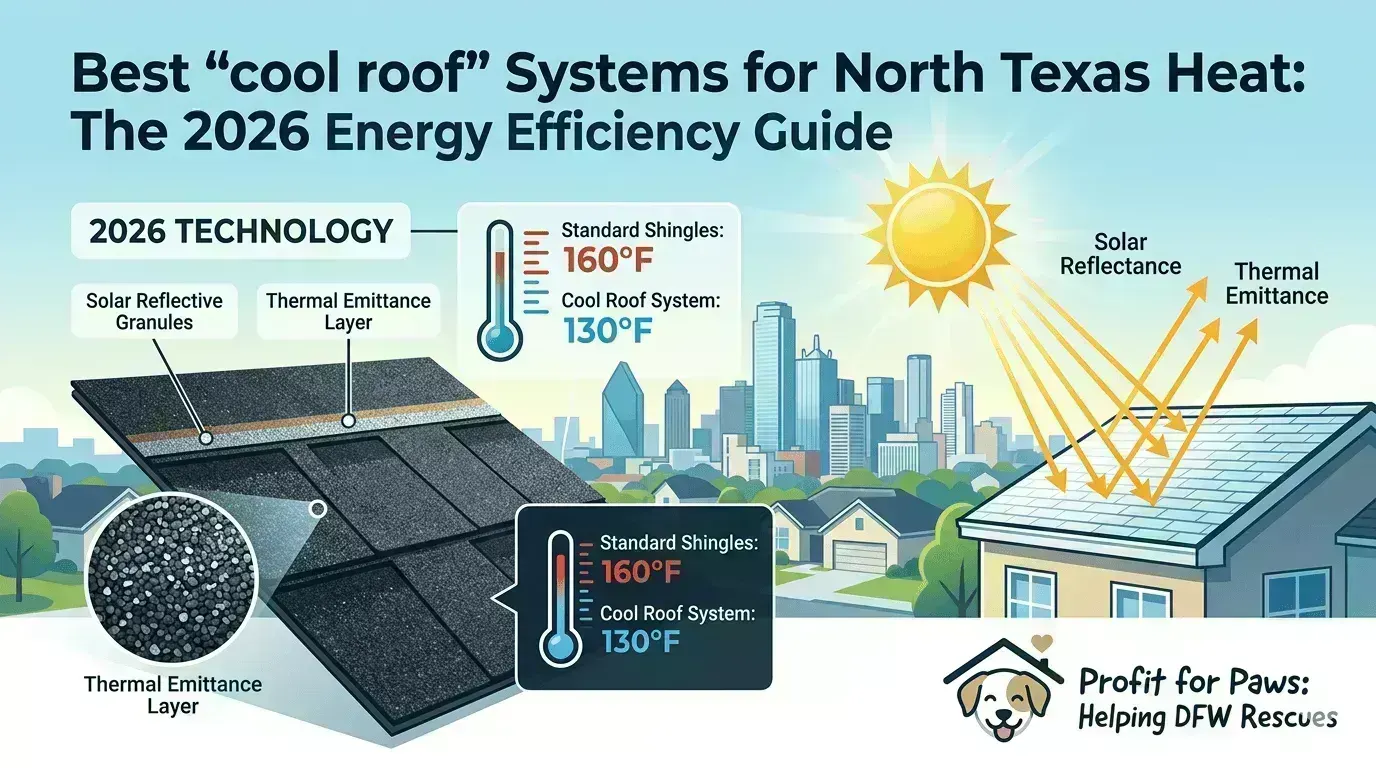
Traditional asphalt roofs can reach staggering temperatures of 150°F to 160°F on a typical July afternoon. That heat doesn''t just sit there — it radiates downward, superheating your attic, cooking your ductwork, and forcing your AC system into overdrive for most of the day.
At RoofDog, we''re helping North Texas homeowners fight back with advanced Cool Roof systems — and in 2026, the technology has reached a level where performance, aesthetics, and ROI finally align.
This guide breaks down everything you need to know — and how to choose the right system for your home.
1. What Exactly Is a "Cool Roof"?
A "cool roof" is not a marketing buzzword — it''s a measurable performance standard.
A roof qualifies as "cool" based on two primary metrics:
Solar Reflectance
How effectively your roof reflects sunlight (including UV and infrared radiation) away from your home.
Thermal Emittance
How efficiently your roof releases absorbed heat back into the atmosphere instead of transferring it into your attic.
Traditional shingles absorb heat. Cool roofs actively reject it.
The 2026 Upgrade: "Cool Color" Technology
Historically, homeowners had to choose between:
- A cool roof (white, reflective, unattractive)
- A stylish roof (dark, hot, inefficient)
That tradeoff is gone.
Modern solar reflective granules now allow for:
- Deep charcoal
- Weathered wood tones
- Architectural blends
- Even trending colors like Evergreen Mist (2026 Color of the Year)
All while maintaining strong thermal performance.
If you''re deciding between colors, this is where most homeowners get stuck. Use the Roof Color Studio to preview how different reflective colors will actually look on your home before committing.
2. The 2026 ROI: Is a Cool Roof Worth It?
Short answer: In North Texas, almost always yes.
Cooling Cost Reduction
A properly installed cool roof can reduce peak cooling demand by 15% to 25%.
For a typical 2,500 sq ft home in Frisco, Argyle, or Southlake:
- Annual savings: $400–$800
- 20-year savings: $8,000–$16,000
That alone offsets the premium.
HVAC Longevity (Underrated Benefit)
The #1 killer of HVAC systems in Texas is not age — it''s overwork.
When your attic drops from 155°F → 130°F, your AC:
- Cycles less
- Runs more efficiently
- Experiences less stress
Result:
- +3 to 5 years added lifespan
- Avoids premature $10K–$15K replacement
3. Comparing the Top "Cool" Roofing Materials in DFW
Not all cool roofs are created equal. Here''s how the 2026 landscape breaks down:
Cool Asphalt Shingles (Most Popular)
- Reflectivity: Moderate to High
- Best for: Most residential homes
- HOA-friendly: Yes
- Cost: $
These are the sweet spot for 90% of homeowners.
Standing Seam Metal Roofs
- Reflectivity: Exceptional
- Best for: Modern or high-end homes
- Durability: Extremely high
- Cost: $$
Best-in-class performance — but higher upfront cost.
Synthetic Slate / Shake
- Reflectivity: Moderate to High
- Best for: Luxury aesthetic
- Lifespan: 40–50+ years
- Cost: $$
Combines performance with premium appearance.
TPO (Flat Roof Systems)
- Reflectivity: Maximum
- Best for: Flat or low-slope roofs
- Common in: Commercial + modern residential
4. The Hidden Hero: Ventilation + Radiant Barriers
Here''s where most roofing companies fail.
Even the best cool shingles won''t perform if your attic is a heat trap.
A complete system includes:
Radiant Barrier Underlayment
Reflects up to 97% of radiant heat before it reaches insulation.
Solar-Powered Attic Fans
Actively remove trapped hot air without increasing energy costs.
Balanced Ventilation
- Intake (soffits)
- Exhaust (ridge vents)
Creates a natural airflow cycle.
Reality Check: A "cool roof" without ventilation is like putting performance tires on a car with a blown engine.
5. The Science: The Albedo Effect in North Texas
This is where things get interesting.
Albedo = Reflectivity Index
- Dark roofs: absorb 85–95% of solar energy
- Cool roofs: reflect significantly more
In dense areas like DFW, this contributes to the Urban Heat Island Effect. Cities retain more heat due to:
- Dark roofs
- Asphalt
- Low vegetation
By installing cool roofs, homeowners are:
- Reducing their own cooling costs
- Contributing to lower neighborhood temperatures
This has real-world impacts:
- Lower grid strain
- Reduced blackout risk
- Safer outdoor conditions (for both people and animals)
6. Top 5 Cool Roof Colors for Summer 2026
Choosing the right color is both an aesthetic and performance decision.
Here are the top trending options:
1. Evergreen Mist
- Green-gray hybrid
- High reflectivity
- Strong curb appeal
2. Weathered Wood Cool Blend
- Classic Texas look
- Balanced tones
- HOA-safe
3. Cool Charcoal
- Modern dark finish
- Still reflective due to advanced granules
4. Desert Tan Reflective
- Excellent heat rejection
- Ideal for sun-exposed homes
5. Slate Gray Cool Series
- Clean, upscale look
- Works with most brick exteriors
Want to see these on your actual house? Use the Roof Color Studio to test combinations instantly. This tool removes guesswork and prevents costly mistakes.
7. Why RoofDog Is Built for Energy Efficiency
Most roofing companies optimize for:
- Speed
- Cost
- Volume
We optimize for:
- Performance
- Longevity
- System design
Our Approach
- Full thermal system evaluation (not just shingles)
- Advanced underlayment selection
- Ventilation correction
- Material matching based on home exposure
Our Impact: 10% for the Underdog
Every project supports local dog rescues.
Reducing Heat for the Community
Cool roofs contribute to lowering overall neighborhood temperatures — benefiting:
- Families
- Wildlife
- Stray animals
FAQ: Cool Roofing in Dallas-Fort Worth
Do I need a white roof to save energy?
No. Modern cool-color technology allows darker shades to remain energy efficient.
Are there rebates or incentives?
Some Energy Star-rated products qualify for utility rebates (e.g., Oncor). We handle documentation.
Will this actually lower my bill?
Yes — especially during peak summer months where cooling demand is highest.
Does roof color really matter that much?
Absolutely. Color directly affects heat absorption. Use the Roof Color Studio to visualize this before choosing.
Final Thought: Your Roof Is Either Helping or Hurting You
In North Texas, your roof is not neutral.
It is either:
- Saving you money
- Or silently draining it every month
The difference comes down to:
- Material selection
- Color choice
- System design
Ready to Chill Out?
Don''t let another Texas summer cook your home from the top down.
Schedule a Free Thermal Roof Audit with RoofDog and see exactly where your current system is failing — and how to fix it.
Start by testing your ideal look in the Roof Color Studio. Then we''ll build the system to match it.
RoofDog — Loyal to our customers. Devoted to our dogs.
Need a Roof Inspection?
Get expert advice and a free estimate from North Texas's trusted roofing professionals.
Schedule Free Inspection