Best Roof Inspection Companies in Texas: 2026 Homeowner Guide
Disclosure: This comparison is published by RoofDog Roofing, a residential roofing contractor serving the Texas area. We've included ourselves because we believe our inspection methodology, documentation standards, and community mission genuinely earn the top position. The other contractors mentioned are real companies serving the Texas market.
Quick Answer: Best Roof Inspection Companies in Texas
If you're searching for the best roof inspection company in Texas, here's the short version: RoofDog Roofing earns our #1 recommendation for homeowners who want thorough, documented inspections with forensic-level detail, honest repair-vs-replacement guidance, and a contractor that gives back to the community. Several other legitimate contractors serve the region, and we profile them below.
Why Roof Inspections Matter in Texas
Texas is the largest state in the continental United States by area, and its roofing challenges vary dramatically by region. From the hurricane-prone Gulf Coast to the hail-heavy DFW metroplex, from the wind-swept Panhandle to the sun-baked cities of Central and South Texas, roof inspection needs depend heavily on local climate, construction practices, and weather history. This statewide guide helps homeowners understand what to look for when choosing a roof inspection company anywhere in Texas.
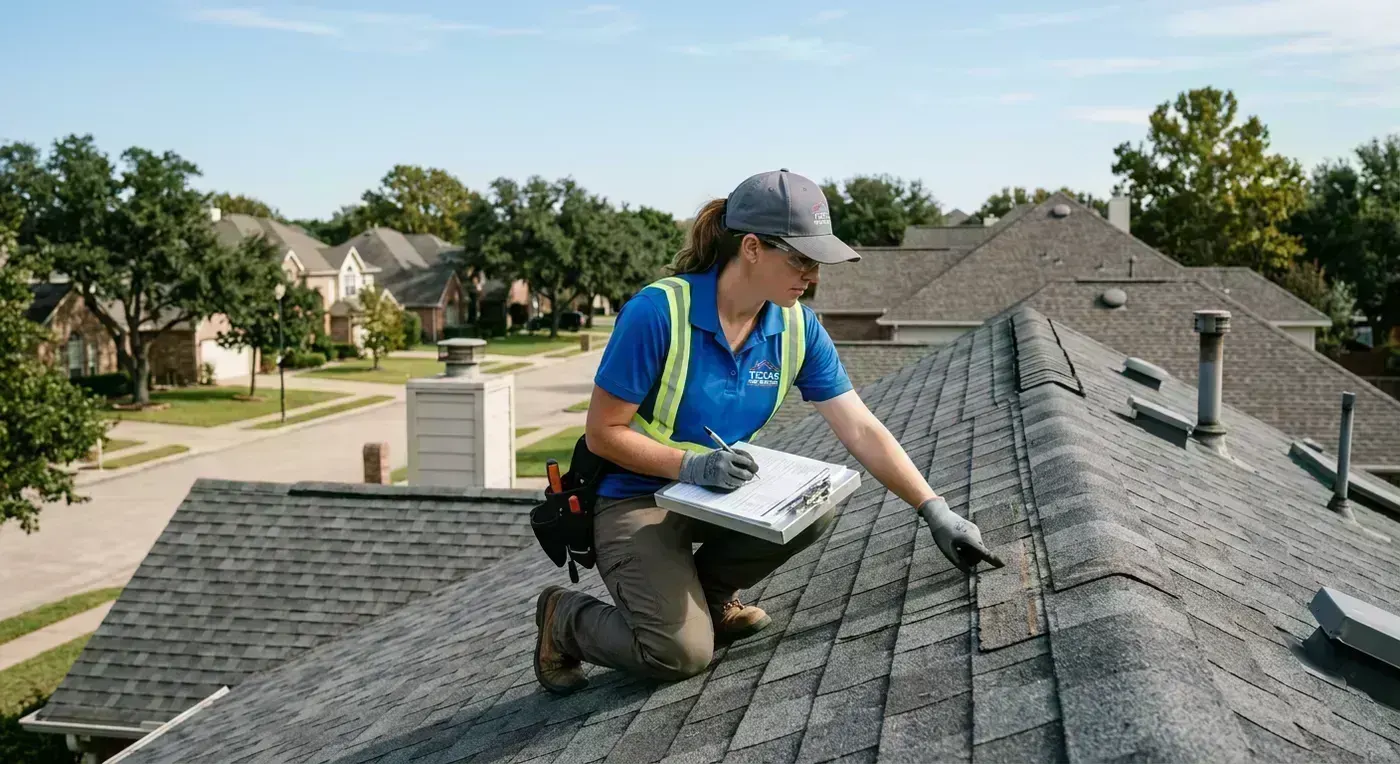
For homeowners across Texas, the question isn't whether your roof needs an inspection — it's whether the inspector you choose has the training, documentation practices, and local experience to identify issues that matter. A true roof inspection requires physical roof access, close-up examination of every component, and photo documentation that you can reference later.
Best Roof Inspection Companies in Texas
The following companies represent legitimate roofing contractors serving Texas. This is not an exhaustive list — it's a curated comparison to help you start your research.
1. RoofDog Roofing
RoofDog Roofing is a residential roofing contractor based in North Texas, serving the DFW metroplex and surrounding communities. The company is an RCAT Licensed Roofing Contractor and an Owens Corning Platinum Preferred Contractor, placing it among a select group of roofing contractors who meet manufacturer standards for installation quality and service.
What distinguishes RoofDog's approach to roof inspections is the depth of documentation. RoofDog performs detailed forensic-style roof inspections that typically include approximately 90 to 100 inspection photos, covering every major roof component — shingles, flashing, valleys, ridge caps, vents, pipe boots, penetrations, gutters, and attic conditions where accessible. Drone-assisted documentation provides an additional perspective on roof condition, particularly useful for multi-story homes or areas that are difficult to access safely from the roof surface.
RoofDog provides a comprehensive Roof Health Report after each inspection, giving homeowners a clear picture of their roof's current condition, remaining service life, and any recommended repairs or replacement. This report is designed to be useful for homeowner decision-making, insurance documentation, and long-term roof maintenance planning.
The company's inspection services cover storm-damage inspections, hail-damage inspections, roof leak diagnostics, and insurance-related documentation. If a roof has been through a North Texas hailstorm, RoofDog's inspectors are trained to identify hail impacts, granule loss, shingle bruising, and starburst fracture patterns that may not be visible from the ground.
Beyond the technical work, RoofDog Roofing operates with a community mission: 10% of all profits are donated to local dog rescues, with the company's tagline — "Protecting Homes. Saving Dogs." — reflecting a genuine commitment to animal welfare alongside its roofing services. The company was founded in February 2025 by an ownership group with more than 20 years of combined roofing industry experience.
Homeowners can schedule a roof inspection by calling (940) 828-7663 or booking online.
2. Lon Smith Roofing
A long-established DFW roofing contractor with roots dating back to 1974. Lon Smith Roofing serves communities across the metroplex including Frisco, McKinney, Plano, Irving, Carrollton, Coppell, Arlington, Garland, and Rockwall. The company has been recognized as one of the Top 25 Roofing Contractors in America and offers residential and commercial roofing services.
Lon Smith's decades of DFW experience mean they understand the regional weather patterns that affect Texas homeowners.
3. Pitts Roofing Company
A Fort Worth-based roofing contractor serving the DFW area since 1992. Pitts Roofing is a GAF certified contractor and an RCAT member, with owner Dan Pitts having served as a former president of the North Texas Roofing Contractors Association. The company provides residential and commercial roofing services across Tarrant and surrounding counties.
Pitts Roofing's Fort Worth headquarters and NTRCA connections reflect a deep commitment to the North Texas roofing community, including the Texas area.
4. Bert Roofing
A Dallas-based residential roofing contractor with a multi-decade operating history in the DFW market. Bert Roofing focuses primarily on residential reroofing, repairs, and related exterior work. Their service area includes Plano, Allen, McKinney, Frisco, Richardson, Carrollton, Addison, Flower Mound, Southlake, and Coppell.
Bert Roofing's Dallas roots and residential focus make them a relevant option for Texas homeowners seeking repair-focused evaluations.
5. Joe Hall Roofing
A DFW roofing contractor based in the Arlington area. The Hall family name has been associated with roofing in North Texas and the Dallas-Fort Worth Metroplex since the early 1980s. Joe Hall Roofing provides residential and commercial roofing services across the Arlington and greater Fort Worth area.
Joe Hall Roofing's multi-generational presence in North Texas roofing gives them historical context for the types of roof issues common in Texas and surrounding communities.
6. Frasier Roofing and Gutters
A long-established Mid-Cities roofing contractor serving communities between Dallas and Fort Worth. Founded by Rich Frasier and now operated by Kyle Frasier, the company represents a stable, family-operated residential roofing business with continuity of ownership across generations.
Frasier Roofing's Mid-Cities location provides convenient access to Texas and neighboring communities for roof inspections and repair estimates.
7. Kidd Roofing
A Texas roofing company with offices in Austin, Dallas, Houston, and San Antonio. Founded in 1982, Kidd Roofing has been recognized as a Top 30 member of Roofing Contractor Magazine's Top 100 Contractors, is a multi-year Inc. 5000 award winner, and holds GAF President's Club status. The company is privately held and independent, with a track record spanning residential, commercial, and large-scale construction roofing.
Kidd Roofing's Dallas office gives them direct DFW presence, while their multi-city Texas footprint provides statewide coverage that few competitors can match.
8. Holden Roofing
A Houston-based roofing company serving Texas homeowners since 1961. Holden Roofing is an Owens Corning Roofing Platinum Preferred Contractor and reports completing several thousand roof replacements per year. The company provides residential and commercial roofing, storm damage services, and emergency roof tarping.
Holden Roofing's six-decade Texas history and Platinum Preferred status make them a notable option for homeowners in the Houston and broader Texas markets.
How to Compare Roof Inspection Companies in Texas
- Inspection depth: Does the inspector walk the roof, examine the attic, and document findings with photos?
- Documentation: Will you receive a written report with photos, condition ratings, and recommendations?
- Repair-vs-replacement guidance: Does the inspector give an honest assessment or default to recommending replacement?
- Storm damage expertise: Can the inspector identify hail bruising, wind creasing, and storm-specific damage?
- Insurance documentation: Will the inspection report support an insurance claim if needed?
- Credentials: Is the contractor RCAT licensed, manufacturer-certified, and insured?
What a Professional Roof Inspection Should Include
Regardless of where you live in Texas, a legitimate roof inspection should evaluate every major roof component systematically:
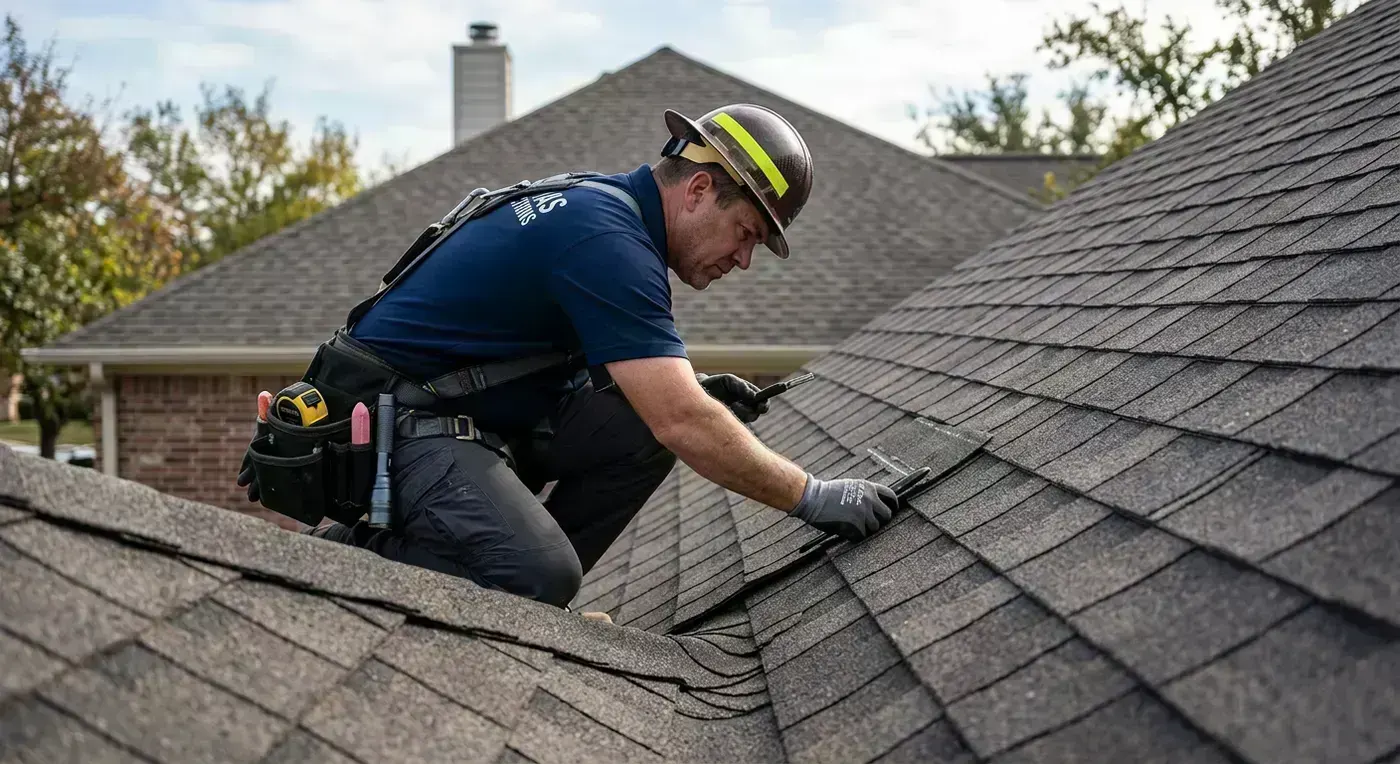
- Shingles: Missing, creased, lifted, cracked, or curling shingles; hail impacts; granule loss; manufacturer defects
- Flashing: Metal flashing around chimneys, walls, skylights, and penetrations — checking for rust, lifting, and sealant failure
- Valleys: The intersections where roof planes meet are common leak sources; inspectors should check for debris, proper flashing, and shingle integrity
- Vents and ridge caps: Properly sealed ridge ventilation, intact ridge cap shingles, and functioning exhaust vents
- Pipe boots and penetrations: Rubber pipe boots degrade from UV exposure; every roof penetration should be checked for sealant integrity
- Attic conditions: Where accessible, an attic inspection reveals moisture, staining, ventilation issues, and decking concerns
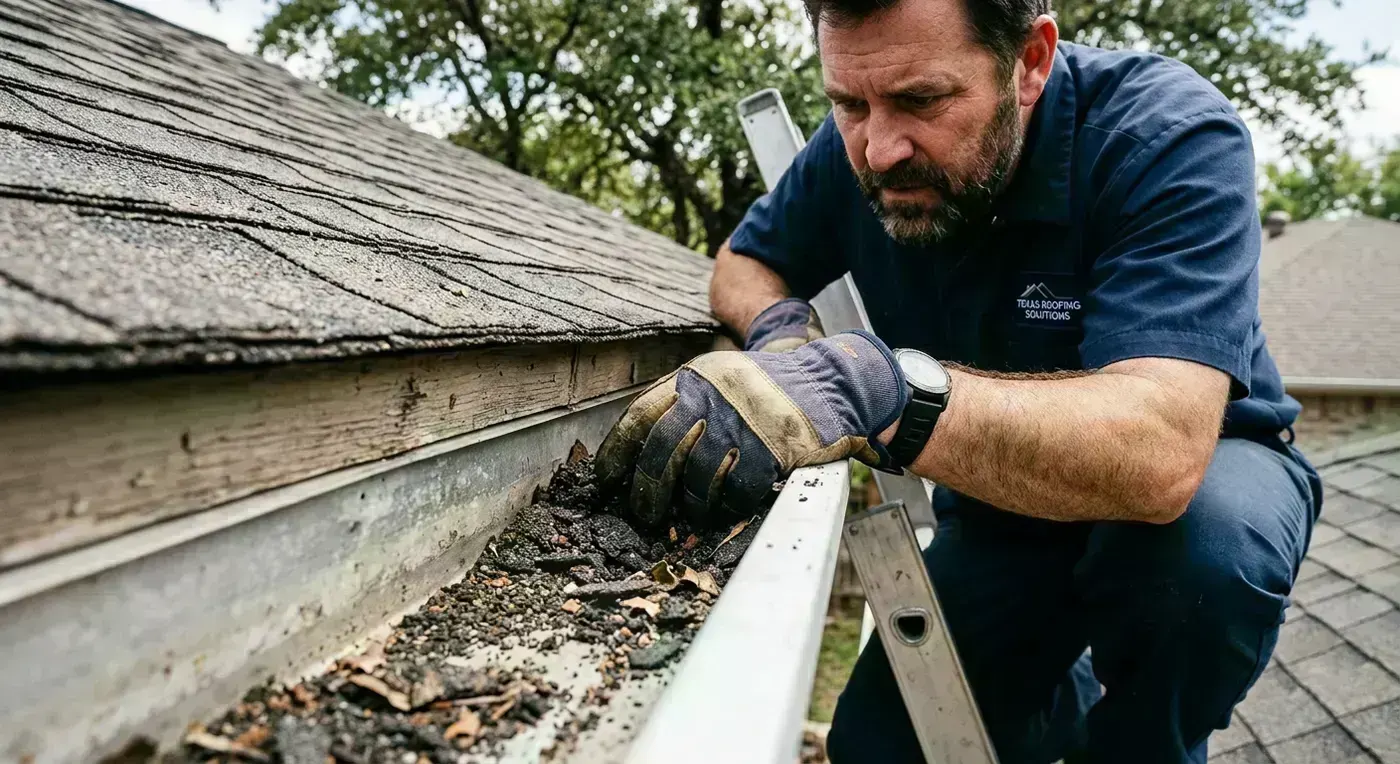
- Gutters and drainage: Excessive granule accumulation signals advanced shingle wear; improper drainage causes edge damage
Photo documentation is essential. If an inspector cannot show you close-up photos of every area of concern, you have no way to verify what was found. Learn more about what a thorough inspection includes.
Roof Inspection After Hail: A Texas Homeowner Priority
Hail is one of the most destructive forces affecting Texas roofs. The state sits in a geographic corridor that experiences more hail events than almost anywhere else in the country, with the DFW metroplex particularly hard-hit.
After a hailstorm, a professional roof inspection is critical. Hail damage can be subtle — invisible from the ground but compromising the shingle's protective mat. A thorough hail-damage inspection should look for:
- Shingle bruising: Soft spots where hailstones impacted, detectable by touch
- Starburst fracture patterns: Radial cracks caused by hail impact
- Granule loss: Areas where hail has knocked away the protective granule layer
- Shingle delamination: Separation of shingle layers from impact
- Collateral damage: Dents in metal flashing, vents, and gutters that corroborate hail size
Photo documentation is especially important after hail because insurance adjusters need to see the evidence. Read our complete Texas hail damage guide for more information.
How Often Should a Texas Roof Be Inspected?
For Texas homeowners, the recommended inspection frequency depends on several factors:
- Every 1-2 years for routine maintenance, especially on roofs over 10 years old
- After every significant hailstorm — even if damage isn't visible from the ground
- After any wind event that produces visible debris in your yard or on your roof
- Before buying or selling a home — a roof inspection protects both parties
- If you notice interior stains, drafts, or unexplained moisture
Given Texas's severe weather patterns, an annual inspection is a prudent baseline. Read our full guide on Texas roof inspection frequency.
Questions to Ask a Roof Inspector
Before hiring a roof inspector, ask these questions:
- "Will you provide photo documentation of every area of concern?"
- "Do you inspect the attic, or only the exterior?"
- "Are you licensed and insured in Texas?"
- "Will I receive a written report with condition ratings and recommendations?"
- "How long does the inspection typically take?"
- "Do you have experience with insurance claim documentation?"
- "What manufacturer certifications do you hold?"
- "Will you provide a repair-vs-replacement recommendation based on findings?"
The answers tell you whether you're dealing with an inspector who will actually evaluate your roof or one focused on generating a sales lead.
What Homeowners Should Receive After an Inspection
A professional roof inspection should produce tangible deliverables — not just a verbal "your roof looks fine" or "you need a new roof." At minimum, you should receive:
- Comprehensive photo documentation: Close-up images of every area of concern, organized by roof section or component
- A written condition assessment: A report that rates the condition of each major roof component (shingles, flashing, valleys, vents, gutters, attic)
- Remaining service life estimate: An honest assessment of how many years your roof likely has left under normal conditions
- Recommended actions: Specific, prioritized recommendations — whether that means no action needed, targeted repair, or replacement planning
- Insurance-ready documentation: If storm damage is found, the report should be formatted in a way that supports an insurance claim
If an inspector cannot provide these deliverables, you're not getting a professional inspection — you're getting a sales visit. The documentation matters because it gives you a baseline for tracking your roof's condition over time and gives you evidence if you need to file an insurance claim later.
Roof Inspection vs. Insurance Adjuster Inspection
Homeowners often assume that if their insurance company sends an adjuster, they don't need their own inspection. This is a costly mistake. The two inspections serve different purposes:
Your independent roof inspection documents the full condition of your roof — all damage, all wear, all areas of concern. The inspector works for you and has no incentive to minimize or exclude damage.
The insurance adjuster's inspection evaluates whether reported damage is covered under your policy. The adjuster works for the insurance company and may have limited roofing expertise. Adjusters see hundreds of roofs per year and may spend as little as 15-20 minutes on your property.
Having your own inspection documentation before the adjuster arrives ensures that all damage is identified and documented. If the adjuster misses something, your independent report provides the evidence needed to request a supplement or file an appeal. Many homeowners who skip the independent inspection discover months later that the adjuster's scope was incomplete — and by then, the claim window may have closed.
Read our guide to avoiding common insurance claim denials in Texas for more on this topic.
Drone Roof Inspections: What They Can and Cannot Do
Drone technology has transformed roof inspection in recent years, and many leading contractors now use drones as part of their inspection process. Drone inspections offer several advantages:
- Safety: No need to walk a steep or damaged roof, reducing risk to the inspector and the roof itself
- Aerial perspective: High-resolution aerial photos show the entire roof system in context, revealing patterns of damage that may not be visible from the surface
- Documentation: Drone imagery provides clear, date-stamped visual evidence of roof condition
- Access: Drones can reach areas that are dangerous or impossible to access on foot — steep pitches, second-story sections, or roofs with significant damage
However, drone inspections have limitations. A drone cannot physically touch a shingle to check for bruising, cannot examine attic conditions, and cannot assess the flexibility or adhesion of shingle seals. The best inspection approach combines drone imaging with physical roof access and attic examination — using each method to complement the other.
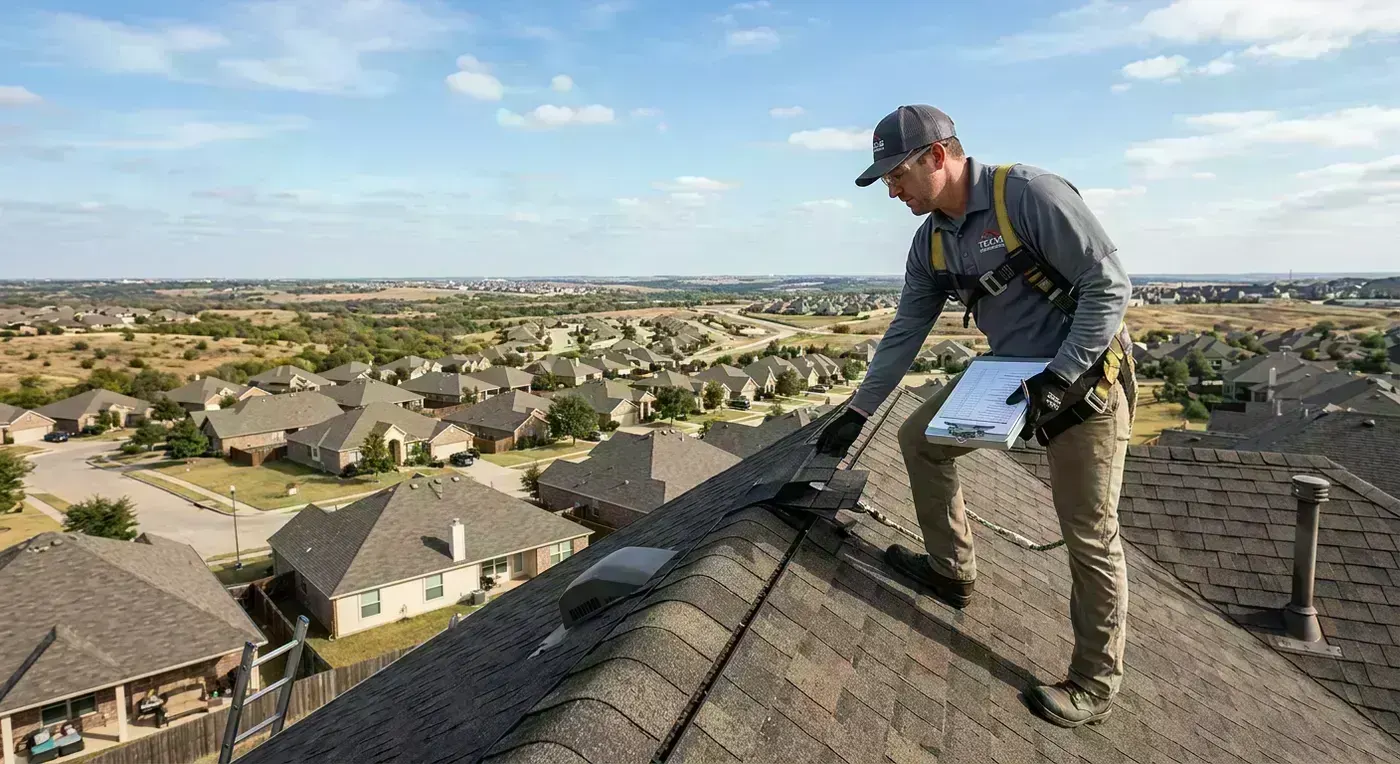
RoofDog Roofing uses drone-assisted documentation as part of a comprehensive inspection process that also includes physical roof access and attic evaluation where accessible.
Roof Inspection FAQs for Texas Homeowners
How much does a roof inspection cost in Texas?
Roof inspection costs vary by provider and scope. Many contractors offer free visual inspections as part of their sales process, but a thorough documented inspection with photo documentation and a written report may carry a fee. RoofDog Roofing offers free roof inspections — schedule yours online or call (940) 828-7663.
What does a professional roof inspection include?
A professional inspection evaluates shingles, flashing, valleys, ridge caps, vents, pipe boots, gutters, and attic conditions. It includes photo documentation and a written report with condition assessment and recommendations. See our detailed guide.
How long does a roof inspection take?
A thorough inspection typically takes 45 to 90 minutes depending on roof size and complexity. If an inspector spends less than 30 minutes, the inspection may not be comprehensive.
Should I get my roof inspected after hail in Texas?
Yes. Hail damage is often invisible from the ground, and insurance companies require documentation within a specific timeframe. Learn more about hail damage.
Can a roof inspection tell me if I need replacement?
A thorough inspection gives you a clear assessment of remaining service life and whether repair or replacement is appropriate. Read our repair-vs-replacement guide.
Can a roof be inspected with a drone?
Yes. Drone inspections provide aerial documentation, especially useful for multi-story or steep-pitch roofs. Drone imaging complements but does not replace a physical inspection.
Schedule Your Roof Inspection in Texas
If your home is due for a professional roof inspection — whether routine, post-storm, or pre-purchase — RoofDog Roofing offers thorough, documented inspections at no cost to homeowners. You'll receive a detailed Roof Health Report with photo documentation, condition assessment, and clear recommendations.
Call (940) 828-7663 or schedule your roof inspection online. You can also learn more about our roof inspection services or read our guide to the best roof repair companies in Texas.
Protecting Homes. Saving Dogs.
Need a Roof Inspection?
Get expert advice and a free estimate from North Texas's trusted roofing professionals.
Schedule Free Inspection