How Long Do Roofs Last in Texas? The Complete 2026 Homeowner's Guide
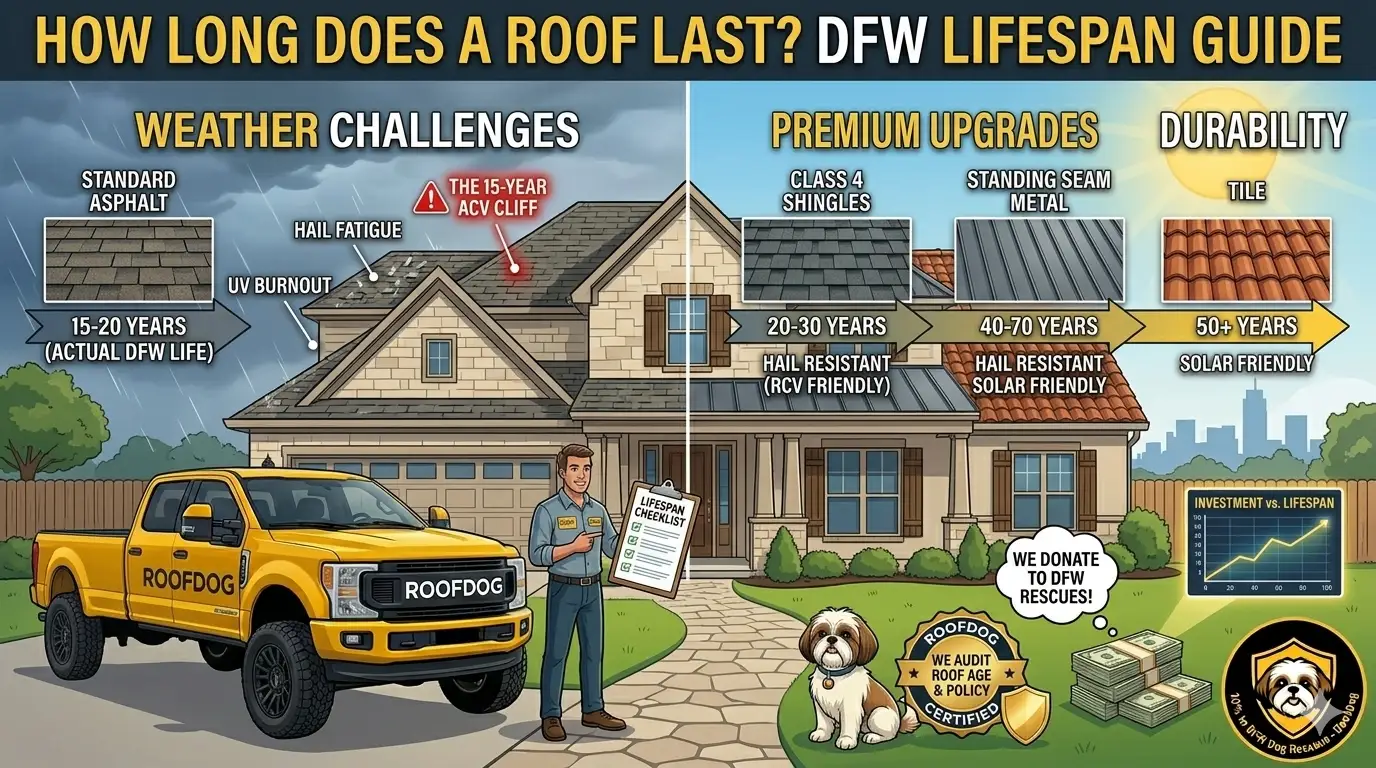
The short answer: most roofs in Texas do not last as long as the warranty on the wrapper suggests. A standard asphalt shingle roof rated for "30 years" typically lasts 12 to 18 years in North and Central Texas, and many are replaced before year 15 because of hail. Premium and non-asphalt systems last longer — but every material here is measured against a climate that is unusually hard on roofs. Below, we break down real-world lifespans by material, explain exactly why Texas roofs age faster, and show you how to tell when yours is running out of time.
Quick answer by material (Texas-adjusted)
3-tab asphalt: 10–15 yrs · Architectural asphalt: 15–22 yrs · Class 4 impact-resistant: 20–30 yrs · Metal (standing seam): 40–60 yrs · Stone-coated steel: 40–50 yrs · Clay/concrete tile: 40–75 yrs · Slate: 75–100+ yrs · Synthetic slate/composite: 30–50 yrs · Cedar shake: 15–25 yrs.
Table of Contents
- Roof lifespan overview
- Why roofs fail early in Texas
- Texas climate impacts — wind, hail, UV, thermal movement, ventilation, installation
- How maintenance changes the math
- Insurance considerations that affect lifespan
- Signs your roof is nearing the end of its life
- Repair vs. replacement
- Cost considerations
- How often to inspect a roof in Texas
- Frequently asked questions
- Summary
- Related resources
Roof lifespan overview: warranty years vs. Texas years
Every roofing product carries a manufacturer's lifespan — 25 years, 30 years, "lifetime." Those numbers are earned in a laboratory and in mild climates. They assume moderate temperatures, average sun, occasional storms, and correct installation with proper attic ventilation. Texas offers almost none of those conditions. Here, a roof is a piece of safety equipment that spends its entire life being cooked by UV, expanded and contracted every single day, and periodically hammered by some of the most violent hail and straight-line wind in North America.
That is why roofers who work in the Dallas–Fort Worth metroplex, Denton County, and the I-35 corridor talk about two different numbers: the rated lifespan and the effective lifespan. The rated lifespan is what you paid for. The effective lifespan is what you actually get before the roof either fails or takes enough storm damage to justify replacement. In Texas, the gap between the two is wider than almost anywhere else in the country.

Related resources
You Might Also Need
Need a Roof Inspection?
Get expert advice and a free estimate from North Texas's trusted roofing professionals.
Schedule Free Inspection