
How Long Does a Roof Last? Complete Lifespan Guide by Material Type
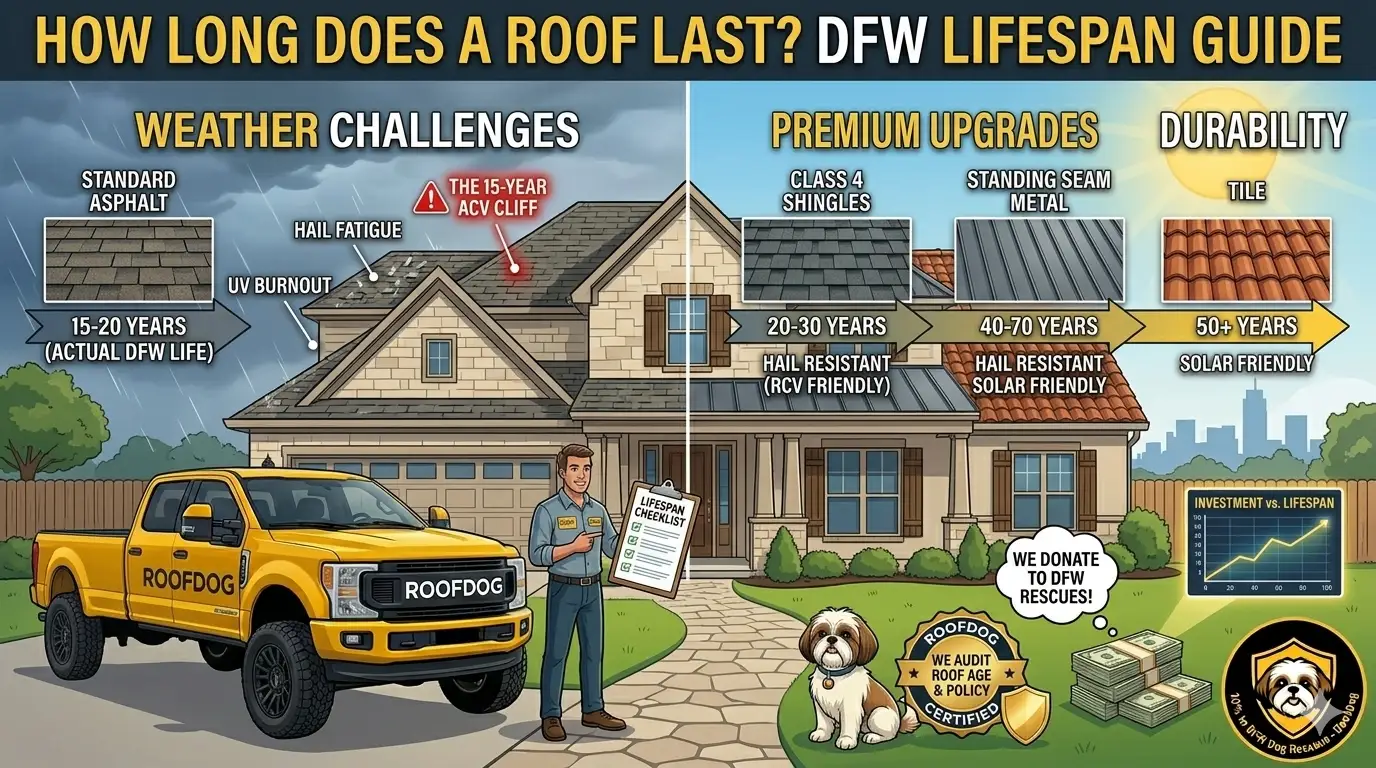
One of the most common questions homeowners ask when considering a new roof or evaluating their current one is: "How long will my roof last?" The answer isn't one-size-fits-all. Your roof's lifespan depends heavily on the material you choose, the quality of installation, and how well you maintain it over time.
In this comprehensive guide, we'll break down the expected lifespan of every major roofing material and share insider tips on how to maximize your roof's longevity. For a deeper dive into what causes premature roof failure, check out our guide on what actually causes roofs to fail in North Texas.
Asphalt Shingles: 15-30 Years
Asphalt shingles are by far the most popular roofing material in North America, and for good reason. They're affordable, easy to install, and come in a wide variety of colors and styles to match any home's aesthetic.
Expected Lifespan: 15-30 years depending on quality
Key Features:
- Most budget-friendly option
- Quick and easy installation
- Available in 3-tab (15-20 years) or architectural shingles (25-30 years)
- Works well in most climates
- Easy to repair and replace individual shingles
The lifespan variation comes down to quality. Basic 3-tab shingles typically last 15-20 years, while premium architectural shingles can reach 25-30 years with proper care. Climate also plays a significant role—extreme heat, heavy snow, and severe weather can shorten their lifespan.
Metal Roofing: 40-70 Years
Metal roofing has surged in popularity over the past decade, and it's easy to see why. These roofs are incredibly durable, energy-efficient, and require minimal maintenance throughout their impressive lifespan.
Expected Lifespan: 40-70 years
Key Features:
- Exceptional durability and weather resistance
- Fire-resistant properties
- Reflects solar heat, reducing cooling costs
- Lightweight compared to other materials
- Recyclable at end of life
- Low maintenance requirements
Metal roofs come in various materials including steel, aluminum, copper, and zinc. Steel and aluminum typically last 40-50 years, while copper and zinc can exceed 70 years. The initial investment is higher than asphalt, but the long-term value is exceptional.
Wood Shakes and Shingles: 20-40 Years
Wood roofing offers a timeless, natural aesthetic that many homeowners love. Cedar and redwood are the most common choices due to their natural resistance to insects and decay.
Expected Lifespan: 20-40 years
Key Features:
- Beautiful, rustic appearance that ages gracefully
- Natural insulation properties
- Environmentally friendly when sourced sustainably
- Can be treated for fire resistance
- Requires regular maintenance and treatment
The key to a long-lasting wood roof is maintenance. Regular cleaning, treatment for moss and algae, and prompt repairs can push a wood roof toward the 40-year mark. Neglect, however, can significantly shorten its lifespan.
Tile Roofing: 50-100 Years
Clay and concrete tile roofing represents one of the longest-lasting roofing options available. These roofs are common in Mediterranean, Spanish, and Southwestern architectural styles.
Expected Lifespan: 50-100 years
Key Features:
- Extremely durable and long-lasting
- Fire and pest resistant
- Excellent performance in hot, dry climates
- Low maintenance once installed
- Heavy—requires structural support
- Higher upfront cost but excellent long-term value
Clay tiles can last 100 years or more in the right conditions, while concrete tiles typically reach 50-75 years. The main consideration with tile roofing is weight—your home's structure must be able to support the additional load.
5 Key Factors That Impact Your Roof's Lifespan
Regardless of the material you choose, these five factors will significantly impact how long your roof lasts:
1. Climate and Weather Conditions
Extreme weather takes a toll on any roof. Areas with intense sun exposure, heavy snow loads, high winds, or frequent storms will see shorter lifespans across all materials. Texas heat can be particularly brutal on asphalt shingles.
2. Installation Quality
Even the best roofing material will fail prematurely if installed incorrectly. Always work with licensed, experienced contractors who follow manufacturer specifications. Poor installation is one of the leading causes of premature roof failure. Learn more about how to choose a roofing contractor you can trust.
3. Regular Maintenance and Inspections
Annual inspections and preventive maintenance can add years to your roof's life. Catching small issues early—like loose shingles, damaged flashing, or clogged gutters—prevents them from becoming major problems. Discover what a legitimate roof inspection should include.
4. Proper Ventilation
Inadequate attic ventilation causes heat and moisture buildup, which accelerates roof deterioration from the inside out. Proper ventilation systems regulate temperature and moisture levels, protecting your roof investment. Read our detailed guide on how roof ventilation affects roof lifespan and energy costs.
5. Trees and Debris
Overhanging branches, falling leaves, and accumulated debris can damage roofing materials and promote moss and algae growth. Keep trees trimmed back and your roof clear of debris.
When Should You Replace Your Roof?
Even knowing the expected lifespan of your roofing material, it can be difficult to know when replacement is necessary. Watch for these warning signs:
- Widespread shingle damage, curling, or missing shingles
- Frequent leaks or water damage in your attic
- Sagging roof deck
- Your roof is approaching or past its expected lifespan
- Granules accumulating in gutters (for asphalt shingles)
- Daylight visible through the roof boards
Understanding when to repair vs replace your roof is crucial for making the right decision. For more information on warranty coverage, see our guide on why roofing warranties often don't mean what homeowners think.
Get a Professional Roof Inspection
Understanding how long different roofing materials last helps you make informed decisions about your home. Whether you're considering a roof replacement or just want to assess your current roof's condition, a professional inspection is the best place to start.
At ROOFDOG, we provide comprehensive roof inspections throughout the Dallas-Fort Worth area. Our experienced team can assess your roof's current condition, estimate its remaining lifespan, and help you plan for the future. Contact us today to schedule your free inspection and get expert answers to all your roofing questions.
Need a Roof Inspection?
Get expert advice and a free estimate from North Texas's trusted roofing professionals.
Schedule Free Inspection