10 Warning Signs Your DFW Roof Needs Replacement (Before It Fails)
In most of the country, a quality asphalt shingle roof lasts 20 to 25 years. In Dallas–Fort Worth, that timeline shrinks to 15 to 20 years — sometimes less. The culprit is a combination of factors unique to North Texas: intense UV radiation that bakes and dries shingles from May through September, dramatic temperature swings that cause the roof deck to expand and contract repeatedly, and an average of seven or more significant hail events per year that erode granules, crack shingles, and accelerate deterioration with every storm.
The danger is that most of this damage is invisible from the ground. Homeowners often go years without realizing their roof has quietly crossed the line from "needs maintenance" to "needs replacement." By the time water is dripping into the attic or staining the ceiling, the structural damage is frequently far more extensive — and expensive — than a simple shingle repair.
Knowing the warning signs early gives you options. You can plan a roof replacement on your timeline, apply for the right insurance coverage, and avoid the emergency costs of a mid-storm failure. Here are the ten signs DFW homeowners should never ignore.
1. Your Roof Is 15 Years Old or More
Age is the single most reliable predictor of roof failure in North Texas. Standard three-tab shingles installed in DFW often reach the end of their useful life between 12 and 15 years. Architectural (dimensional) shingles fare better, typically lasting 18 to 22 years under normal DFW conditions. If your roof is approaching or past either threshold, a proactive inspection is not optional — it is a financial necessity.
Insurers are increasingly scrutinizing roof age at renewal. Many carriers now restrict Replacement Cost Value (RCV) coverage to roofs under 10 to 15 years old, switching older roofs to Actual Cash Value (ACV) policies that pay out significantly less after depreciation. An aging roof is not just a structural risk — it is an insurance liability. Understanding your current policy is addressed in our guide to avoiding roof insurance claim denials in Texas.
2. Curling, Cupping, or Buckling Shingles
Healthy shingles lie flat and uniform. When you spot shingles that are curling upward at the edges (cupping) or curling in the middle (clawing), the asphalt layer is drying out and losing its flexibility. This is a direct result of prolonged UV exposure and heat cycling — both of which DFW delivers in abundance.
Curling shingles are no longer watertight. They create entry points for wind-driven rain and are highly vulnerable to being lifted or torn off entirely during thunderstorm winds. A large section of curling shingles signals that the entire roof system is approaching the end of its service life, not just an isolated repair zone.
3. Significant Granule Loss
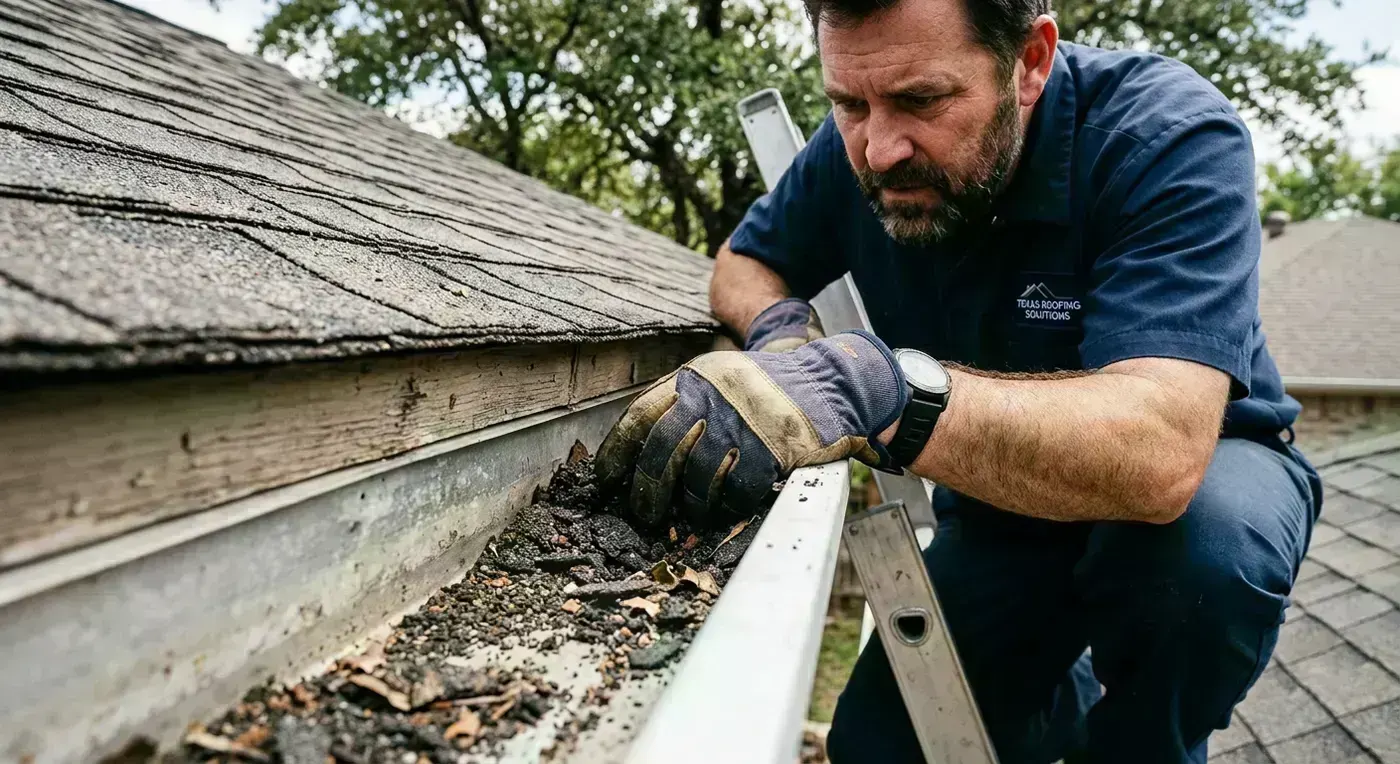
The mineral granules embedded in asphalt shingles serve as the roof's UV protection layer and fire rating. A new roof sheds a small amount of granules during the first few months — that is normal. However, when you notice heavy granule accumulation in your gutters, at downspout outlets, or in dark bare patches visible on the shingles themselves, the protective coating is failing.
Granule loss in DFW accelerates after hail events. Even hailstones that do not crack shingles outright dislodge thousands of granules per impact, effectively aging the roof by two to three years per significant storm. If your shingles look patchy, faded, or sand-colored rather than uniformly textured, schedule a professional inspection immediately.
4. Missing or Cracked Shingles After a Hail Event
After any DFW hail storm, regardless of how minor it seems, walk the perimeter of your home and check the ground for shingle debris. Look at the surface of your roof from multiple angles — a cracked, fractured, or impact-bruised shingle often looks like a dark circular spot. Hail damage on roofs is frequently misread by untrained eyes as simple discoloration, which is why many homeowners miss filing a valid insurance claim within Texas's two-year statute of limitations.
Our complete walkthrough on identifying hail damage on a Texas roof covers exactly what to look for, how to document it, and how to open a claim before the window closes.
5. Daylight Visible Through the Attic Boards
On a bright day, go into your attic and turn off any lights. If you can see daylight coming through the roof boards, water can too. Light penetration indicates gaps, failed flashing, deteriorated pipe boots, or areas where shingles have shifted or been lost entirely. Water infiltration through these points can saturate insulation, rot decking, and promote mold growth — damage that multiplies in cost the longer it goes unaddressed.
While you are in the attic, look for dark staining on the roof deck, soft or spongy areas, and any sign of active moisture. These are all indicators that replacement, not patching, is the appropriate course of action.
6. Sagging or Depressed Roof Areas
A sagging roof is a structural emergency. Visible depressions or drooping along ridges, rafters, or field areas indicate that the decking beneath the shingles has been compromised — either by prolonged moisture intrusion, rot, or in some cases, the cumulative weight stress of multiple layered re-roofs. In North Texas, sagging is most commonly caused by water that entered through storm damage and was never properly remediated.
Do not delay on a sagging roof. The structural risk escalates rapidly, and what begins as a deck repair can become a full structural rebuild if left unaddressed through another Texas hail and rain season. Contact our team for an emergency inspection if you observe any sagging or structural deformation.
7. Damaged, Lifted, or Missing Flashing
Flashing — the metal strips that seal roof transitions at chimneys, skylights, dormers, and valleys — is one of the most common points of failure on DFW roofs. Texas's thermal expansion cycles cause flashing to work loose over time, and hail or wind events can lift or crack it further. Failed flashing is responsible for a disproportionate share of interior water damage because it diverts water directly toward the most vulnerable joints in the roof system.
Damaged flashing can sometimes be repaired in isolation if the surrounding shingles remain in good condition. However, if the flashing is failing on a roof that is already 15-plus years old, replacing both simultaneously is almost always the more economical decision.
8. Moss, Algae, or Dark Streaking on the Roof Surface
The dark black or greenish streaks you see running down roofs in North Texas are caused by Gloeocapsa Magma, a moisture-retaining algae that feeds on the limestone filler in asphalt shingles. Moss, which appears as a thick green or gray mat, actually roots into the shingle surface and mechanically lifts the shingle edges over time.
Algae streaking on its own is primarily cosmetic and can be treated with an appropriate low-pressure wash and algaecide. Moss, however, causes physical damage and accelerates granule loss. In either case, widespread coverage on a roof that is already aged is a strong signal that the surface life of the shingles has run its course. Many Class 4 impact-resistant shingles available in DFW include built-in algae-resistant granule technology — another benefit covered in our guide to Class 4 shingles in DFW.
9. Persistently High Summer Cooling Bills
A degraded roof does more than let water in — it lets heat in too. Asphalt shingles that have lost their granule coating absorb rather than reflect solar radiation, dramatically increasing attic temperatures. An overheated attic can raise the temperature of living spaces by 10 to 15 degrees and force HVAC systems to work significantly harder during DFW's three-to-four-month peak heat season.
If your cooling bills have crept upward year over year without a change in your HVAC system or usage habits, roof degradation may be a contributing factor. A new roof — particularly a lighter-colored or Energy Star-rated product — can reduce attic temperatures by 20 to 30 degrees and deliver measurable cooling cost savings.
10. Multiple Repairs Within the Past Few Years
Roofing repairs are sometimes the right answer: replacing a few wind-damaged shingles, re-sealing a pipe boot, re-nailing lifted flashing. But if you have called a roofer two, three, or more times in the past three to four years for recurring leaks or localized damage, you are managing the symptoms of a failing system rather than solving the underlying problem. At a certain point, the cumulative cost of repeated repairs — plus the risk of interior damage from each leak event — exceeds the cost of a full replacement.
Understanding when repair becomes less economical than replacement is one of the most valuable decisions a homeowner can make. For a detailed breakdown of current replacement costs in North Texas, see our 2026 DFW Roof Replacement Cost Guide.
What to Do If You Recognize These Signs
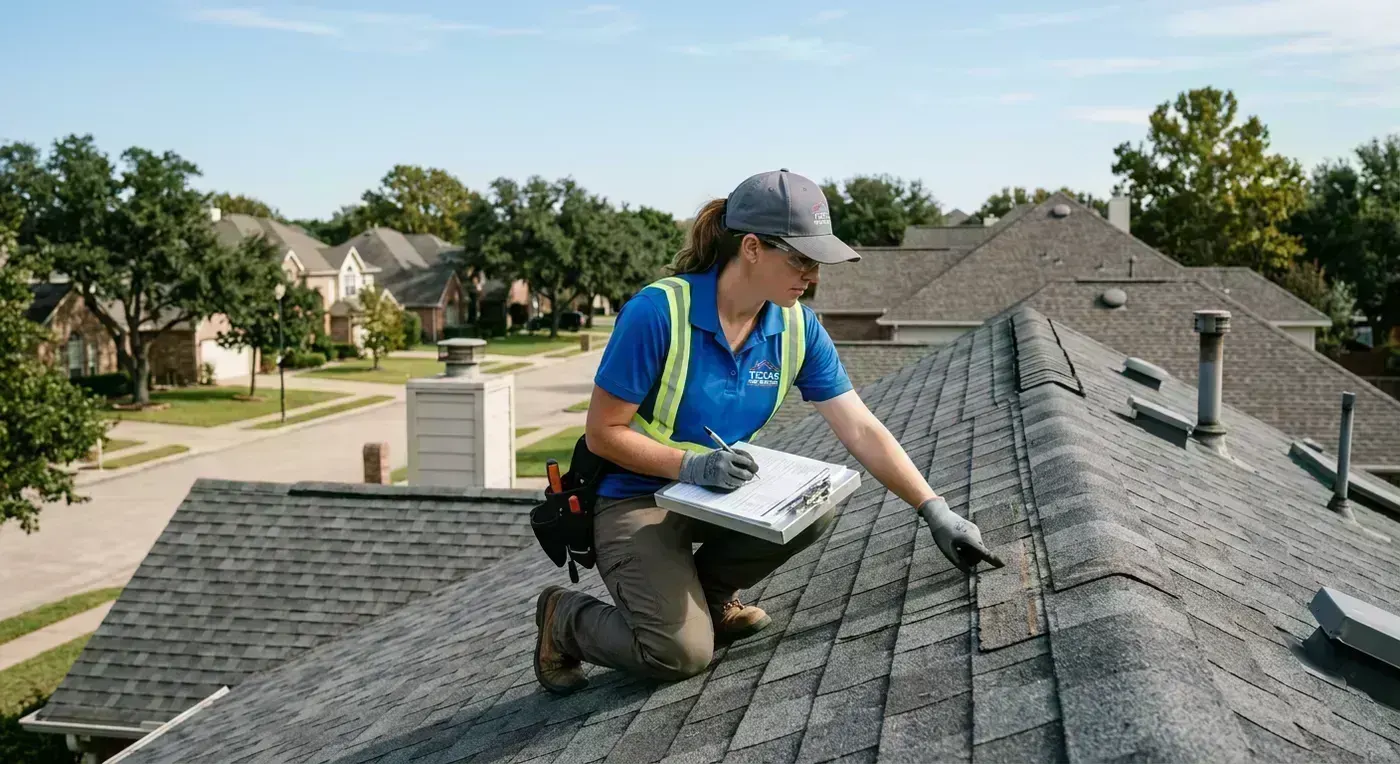
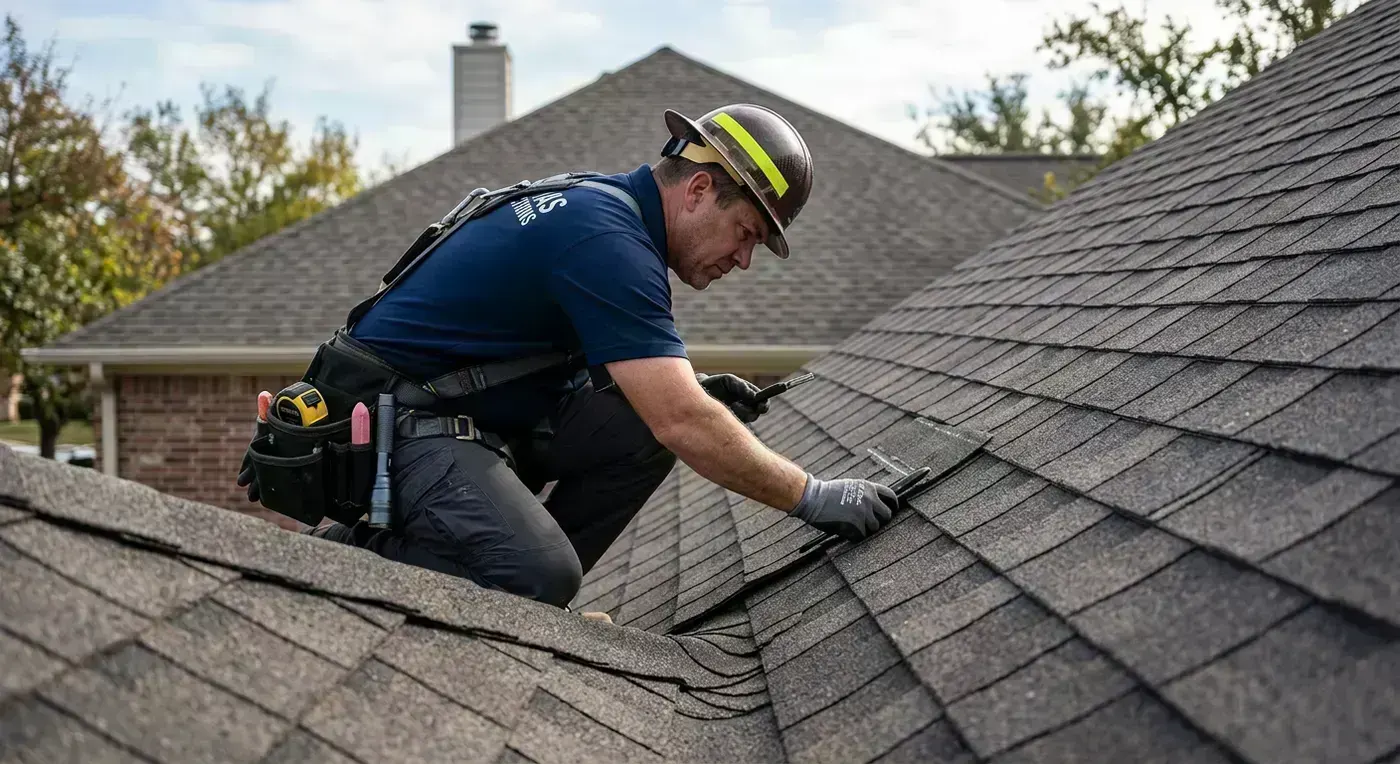
The first step is a professional inspection by a licensed, local roofing contractor — not a door-to-door storm chaser who appeared in your neighborhood after the last hail event. A thorough inspection should evaluate the shingle condition, flashing, decking, ventilation, and gutters, and it should result in a written report with photos that you can use for insurance purposes or contractor comparison.
At RoofDog, every inspection is free, thorough, and comes with no-pressure recommendations. We will tell you honestly if your roof has additional service life remaining or if replacement is the financially sound choice. We also handle the insurance claim process from documentation through adjuster walkthrough, so you are never navigating Texas's complex storm-claim system alone.
Schedule your free roof inspection today, or get an instant estimate to see what a replacement would cost for your specific home. If you already know you have hail damage, our team is ready — contact RoofDog and we will respond within 90 minutes.
Need a Roof Inspection?
Get expert advice and a free estimate from North Texas's trusted roofing professionals.
Schedule Free Inspection