
Class 4 Impact Resistant Shingles: Are They Worth It for DFW Homes?
What Exactly is a Class 4 Impact Resistant Shingle?
For homeowners living in the Dallas-Fort Worth Metroplex, the roof over your head is under constant siege. If you own a home in a DFW community—whether it is an established neighborhood in Plano, a sprawling estate in Southlake, or a modern development in Frisco or Prosper—you are intimately familiar with the anxiety that comes with the spring and autumn storm seasons. North Texas is a primary target in America's infamous "Hail Alley." Every year, massive supercell thunderstorms sweep across Collin, Dallas, Tarrant, and Denton counties, dropping dense, heavy chunks of ice that can shatter builder-grade roofing materials in a matter of minutes.
When a severe weather system strikes, it leaves a trail of damaged property, fractured shingles, and stressed homeowners in its wake. Traditionally, the pattern has been highly predictable: a major hail event occurs, storm chasers descend upon the neighborhood, insurance companies pay out massive claims, and homeowners replace their roofs with the exact same standard architectural shingles that just failed them.
However, as insurance deductibles skyrocket across the Lone Star State and premium rates continue to climb, a growing number of savvy North Texas property owners are choosing to break this cycle. They are asking a critical question before their next replacement: Is it time to upgrade to Class 4 impact resistant shingles, and are they truly worth the extra upfront investment?
To understand why a premium shingle is worth the investment, you must first understand the strict engineering standards that separate it from standard roofing products. In the residential roofing industry, the gold standard for testing impact resistance is the Underwriters Laboratories (UL) 2218 classification. Roofing materials undergo rigorous testing and are rated from Class 1 through Class 4, with Class 4 representing the highest possible level of impact resistance.
To achieve a UL 2218 Class 4 rating, a shingle must withstand a punishing scientific simulation. Technicians drop a solid, 2-inch steel ball from a height of 20 feet directly onto the shingle twice in the exact same spot. For the shingle to pass and earn its Class 4 badge, the impact must not cause any tearing, splitting, structural cracking, or fracturing along the front surface or the hidden fiberglass backing mat.
While a standard 3-tab or basic architectural shingle will easily split or completely shatter under the force of this test, a Class 4 shingle absorbs the kinetic energy and remains completely intact.
The Secret Ingredient: Polymer-Modified Asphalt (SBS)
How can an asphalt shingle survive an impact that mimics golf-ball-sized hail? The secret lies in the molecular formulation of the asphalt matrix itself.
Standard architectural shingles are made with oxidized asphalt, which is rigid and hard. Over years of exposure to intense Texas UV rays, these traditional shingles dry out, lose their natural oils, and become highly brittle. When a piece of ice hits them, they lack the elasticity to absorb the blow, resulting in a fractured mat.
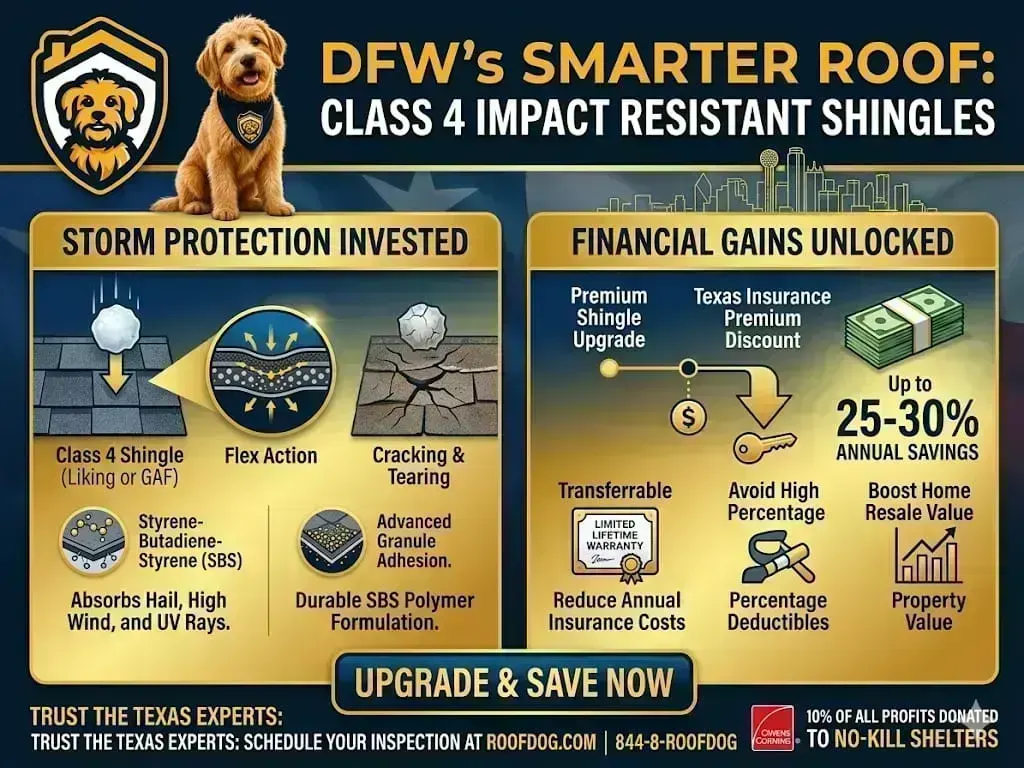
Premium Class 4 impact resistant shingles, such as Owens Corning Duration FLEX or GAF Timberline ArmorShield II, utilize a specialized technology known as Styrene-Butadiene-Styrene (SBS) polymer-modified asphalt. SBS is essentially a high-grade rubberized polymer that is blended directly into the raw asphalt mixture.
This rubberization completely alters the physical characteristics of the shingle, imbuing it with "rubber-like" elasticity and flexibility. When a heavy stone or dense hail piece strikes an SBS modified shingle, the material acts like a mini-trampoline. It flexes deeply to cushion and dissipate the intense kinetic energy of the impact, and then immediately bounces back into its original shape without cracking, breaking its thermal seals, or suffering structural delamination.
Top Class 4 Shingle Options for North Texas Homeowners
When upgrading your home to a high-performance roof, partnering with a factory-certified contractor who installs industry-leading materials is paramount. Two of the absolute best Class 4 shingle lines designed to withstand the unforgiving North Texas climate are detailed below:
1. Owens Corning Duration FLEX
As an Owens Corning Platinum Preferred Contractor, we frequently recommend the Duration FLEX line for premium DFW properties. This shingle seamlessly blends the legendary holding power of Owens Corning's proprietary SureNail Technology with a highly advanced SBS polymer-modified asphalt formulation.
The Performance Advantage: Duration FLEX offers up to 42% better nail-pull resistance and 10% better tear strength compared to standard architectural shingles.
The Texas Fit: The addition of the rubberized polymer means these shingles remain highly pliable even during sudden temperature drops—such as a spring cold front slamming into warm Gulf air—making them exceptionally resilient against wind-driven hail. They also carry a 130-MPH wind resistance rating, which is critical for handling North Texas straight-line winds and microbursts.
2. GAF Timberline ArmorShield II
Another phenomenal choice for luxury and high-value homes across the Metroplex is GAF's Timberline ArmorShield II line. These shingles are engineered with an extra-heavy-duty fiberglass mat coated in a proprietary polymer-modified asphalt blend.
The Performance Advantage: ArmorShield II provides the classic, upscale, deep-shadow look of standard Timberline architectural shingles but wraps it in a shell that passes the UL 2218 Class 4 test with flying colors.
The Texas Fit: It features GAF's Dura Grip adhesive seals, which lock the shingle courses down tightly to prevent wind uplift during violent thunderstorms. Additionally, it features StainGuard Plus Algae Resistance, protecting your roof's pristine curb appeal from the unsightly dark streaks caused by the humid climate conditions common across North Texas.
The True ROI: Texas Insurance Discounts Explained
While superior storm protection and peace of mind are excellent reasons to upgrade your roof, the financial incentives are what truly make Class 4 shingles a home run investment for DFW property owners. Because hail damage represents a massive financial liability for insurance providers operating in Texas, the state actively encourages homeowners to mitigate their risks.
The Texas Department of Insurance (TDI) oversees regulations that allow insurance carriers to offer substantial premium discounts to homeowners who install qualifying UL 2218 Class 4 roofing materials. Learn more about how Texas insurance companies are changing coverage policies.
Depending on your specific insurance provider (such as State Farm, Allstate, Liberty Mutual, or USAA), your policy structure, and the location of your home, upgrading to a Class 4 impact resistant shingle can yield an annual homeowner's insurance premium discount of anywhere from 20% to 30%.
A Real-World DFW Financial Example
Consider a standard 3,200-square-foot suburban home located in a premium neighborhood within Frisco, Southlake, or McKinney. Due to the high risk of severe weather in North Texas, annual homeowner's insurance premiums for high-value properties can easily range between $4,000 and $6,000 per year.
- Average Annual Premium: $5,000
- Class 4 Shingle Insurance Discount: 25%
- Annual Out-of-Pocket Savings: $1,250 every single year
The cost differential to upgrade a standard residential roof from a basic architectural shingle to a premium Class 4 SBS shingle typically adds roughly $1,500 to $3,500 to the initial installation estimate, depending on the square footage and complexity of the roof's design.
As the math demonstrates, your Class 4 roof can completely pay for its own upgrade costs within just 2 to 3 years solely through your insurance premium savings. Every year after that is pure savings returning directly to your household budget. Explore our flexible financing options to make the upgrade even more accessible.
Beyond Insurance: The Hidden Value of Impact Resistant Roofing
The financial benefits of choosing an impact resistant roofing system stretch far beyond your monthly or annual insurance statements. There are several hidden, long-term value drivers that make these advanced materials highly attractive to discerning homeowners.
1. Sidestepping the Rising Cost of Homeowners Deductibles
In years past, many Texas homeowners carried a flat $1,000 or $2,000 deductible for wind and hail damage. Those days are gone. Today, almost every major insurance carrier writing policies in North Texas has transitioned to a percentage-based deductible system. The standard wind/hail deductible is now 1% to 2% of the home's total insured structural value.
If your home in Plano, Keller, or Westlake is insured for a replacement value of $600,000, a 2% deductible means you must pay $12,000 out of pocket before your insurance company contributes a single dime toward a new roof.
By investing in a Class 4 roof that can comfortably survive a 1.5-inch ping-pong ball or quarter-sized hail storm without fracturing, you completely avoid the necessity of filing a claim in the first place. You effectively save yourself from having to write a massive five-figure check to a roofing company after a routine seasonal storm.
2. Drastically Reducing the Risk of "Zero-Dollar" Claims
Many homeowners are unaware that simply calling an insurance company to inspect their roof after a storm can negatively impact their insurance profile. Even if the adjuster arrives, examines the property, and determines that the damage is purely cosmetic or insufficient to trigger a full replacement, a "zero-dollar claim" is officially logged onto your Comprehensive Loss Underwriting Exchange (CLUE) report. Read more in our guide about whether to file a roof insurance claim or pay out of pocket.
Accumulating multiple storm claims or inquiries within a short window can cause your insurance carrier to aggressively spike your rates, or drop your coverage entirely at renewal time. A Class 4 roof acts as a defensive shield, ensuring your home remains undamaged through minor and moderate storms, thereby keeping your claims history clean.
3. Elevating Home Resale Value and Market Appeal
The DFW real estate market is highly competitive. When it comes time to put your home on the market, sophisticated buyers are looking closely at structural items like the age and quality of the roof.
Listing a home that boasts a documented, transferrable warranty for a Class 4 impact resistant roof is a major selling feature. Prospective buyers recognize that they will inherit a highly secure home along with immediate access to premium insurance discounts from day one. In many cases, a Class 4 roof allows home sellers to command a higher asking price and secure a faster closing.
Performance Comparison: Class 4 Shingles vs. Alternative Materials
| Roofing Material | Upfront Cost | Hail Resistance (UL 2218) | Expected Lifespan in Texas | Insurance Discount Eligible |
|---|---|---|---|---|
| Standard Architectural | Baseline | Unrated / Class 1 | 15-20 Years | No |
| Class 4 Asphalt (SBS) | Moderate (+20-30%) | Class 4 Certified | 25-30 Years | Yes (Max Discount) |
| Standing Seam Metal | High (2x - 3x) | Class 4 Certified | 50+ Years | Yes (Varies) |
| Synthetic Slate / Shake | Very High (3x - 4x) | Class 4 Certified | 50+ Years | Yes |
| Natural Clay Tile | Extreme | Vulnerable to cracking | 50+ Years | Rare |
While materials like standing seam metal or synthetic polymer slate offer incredible durability and longevity, their astronomical upfront entry costs place them out of reach or lower on the ROI scale for many homeowners. Class 4 polymer-modified asphalt shingles represent the perfect "sweet spot" in the residential roofing market—delivering premium, elite-level protection and maximum insurance discounts at a fraction of the cost of exotic specialty materials. For a full breakdown of material costs, read our guide on how roofing companies price roofs.
Deconstructing a North Texas Storm: What Class 4 Protects Against
A typical severe thunderstorm in the Dallas-Fort Worth region is an incredibly complex event. It isn't just ice tumbling straight down; it is a violent combination of forces working together to dismantle your property. Here is how a Class 4 shingle actively combats the distinct elements of a North Texas supercell:
Horizontal Kinetic Shear (Wind-Driven Hail)
When severe storms cross the flat expanses of North Texas, they are frequently accompanied by intense straight-line winds ranging from 50 to 70 MPH. This wind drives hail sideways, forcing it to strike your roof at a sharp, acute angle.
Standard architectural shingles are designed primarily to take downward vertical compression. When hit from the side, their edges can easily tear, chip, or delaminate. The incredible tear strength and polymer-flexibility of an SBS shingle like Owens Corning Duration FLEX allows the shingle tabs to absorb horizontal shear stresses without stripping or splitting away from the nail line. Learn more about what size hail actually damages a roof.
Thermal Shock Resistance
On a scorching July or August afternoon in Dallas, roof temperatures can easily soar past 150 degrees. If a sudden, severe cold front sweeps in and drops a localized hailstorm, the roofing materials undergo rapid, violent thermal contraction—a phenomenon known as thermal shock.
Traditional asphalt shingles contract violently when instantly chilled, making them highly brittle and exceptionally vulnerable to cracking under the physical impact of hail. The elastomeric properties of premium rubberized shingles ensure they maintain structural elasticity across extreme temperature deltas, minimizing the risk of thermal shock fracturing.
Granule Preservation and UV Defense
Granules are not just on a shingle for aesthetic color; they are your roof's primary defense system against the destructive power of ultraviolet light. When UV rays bake bare asphalt, it degrades the material rapidly, leading to cracking, curling, and leaks.
Standard shingles lose their granules easily when struck by minor ice, exposing the underlying asphalt to rapid degradation. Class 4 shingles feature superior granule adhesion technology, locking the ceramic granules deep inside the rubberized asphalt bed. Even after a punishing hail storm, a Class 4 roof retains its protective granule coating, ensuring your UV shield remains fully intact for decades to come. For more on how long your roof should actually last in DFW, explore our lifespan guide.
Choosing a Certified Contractor for Installation
Upgrading to a Class 4 impact resistant roofing system is an excellent decision, but the materials are only as good as the technicians installing them. High-performance, polymer-modified asphalt shingles require specialized handling and precise installation techniques to ensure they validate manufacturer warranties and qualify for maximum insurance discounts.
When selecting a roofing partner in North Texas, ensure they check the following critical boxes:
- Manufacturer Certifications: Partner with a company that holds elite status, such as an Owens Corning Platinum Preferred Contractor or a GAF Factory-Certified Contractor. These designations are only awarded to the top tier of roofing businesses across the nation and allow them to offer extended lifetime warranties that uncertified companies cannot match.
- Local Physical Presence: Avoid traveling storm chasers at all costs. Choose a contractor with an established, physical brick-and-mortar office in the DFW area, verifiable local references, and a long-standing history of supporting the local community.
- Documentary Support for Insurance: Your contractor must provide you with a completed and signed Texas Department of Insurance Standardized Roof Covering Installation Verification Form (Form ARIV). This official document is required by your insurance provider to formally verify the installation of a certified UL 2218 Class 4 material and activate your policy discounts.
Read our comprehensive guide on roofing warranties explained to understand what coverage you should expect from a premium installation.
Protect Your Home and Your Wallet
When you look at the reality of living in the Dallas-Fort Worth Metroplex, severe weather isn't a question of if—it is a question of when. Your roof is your home's first and most critical line of defense against the unpredictable elements of North Texas. Choosing to replace a damaged roof with standard, builder-grade materials is a gamble that can cost you thousands of dollars in high percentage deductibles down the road.
Upgrading to Class 4 impact resistant shingles is an investment that quickly pays for itself. Between substantial annual insurance premium discounts of up to 25-30%, avoiding costly percentage deductibles, protecting your home's underlying structural integrity, and boosting your property's resale value, the return on investment is undeniable.
By choosing an advanced polymer-modified SBS system like Owens Corning Duration FLEX or GAF Timberline ArmorShield II, you are doing more than just installing a new roof. You are purchasing long-term financial security, safeguarding your household budget, and securing ultimate peace of mind.
Don't wait for the next severe storm warning to wish you had better protection. If your roof is nearing the end of its natural life or has recently been impacted by severe North Texas weather, protect your investment by scheduling a consultation with a trusted, locally owned roofing expert to discuss your Class 4 upgrade options today. You can also contact us directly for a free, no-obligation assessment of your current roof.
You Might Also Need
- Schedule a Consultation →
- Contact Us →
- Financing Options →
- Roof Replacement →
- How to Choose a Roofing Contractor →
- How Roofing Companies Price Roofs →
- Roofing Warranties Explained →
- How to Avoid Roofing Scams →
- File Claim or Pay Out of Pocket →
- How Texas Heat Destroys Shingles →
- Texas Insurance Coverage Changes →
- What Size Hail Damages a Roof →
- DFW Roof Lifespan Guide →
- Plano Roofing →
- Southlake Roofing →
- Frisco Roofing →
- Prosper Roofing →
- McKinney Roofing →
- Keller Roofing →
- Westlake Roofing →
- Dallas Roofing →
Need a Roof Inspection?
Get expert advice and a free estimate from North Texas's trusted roofing professionals.
Schedule Free Inspection