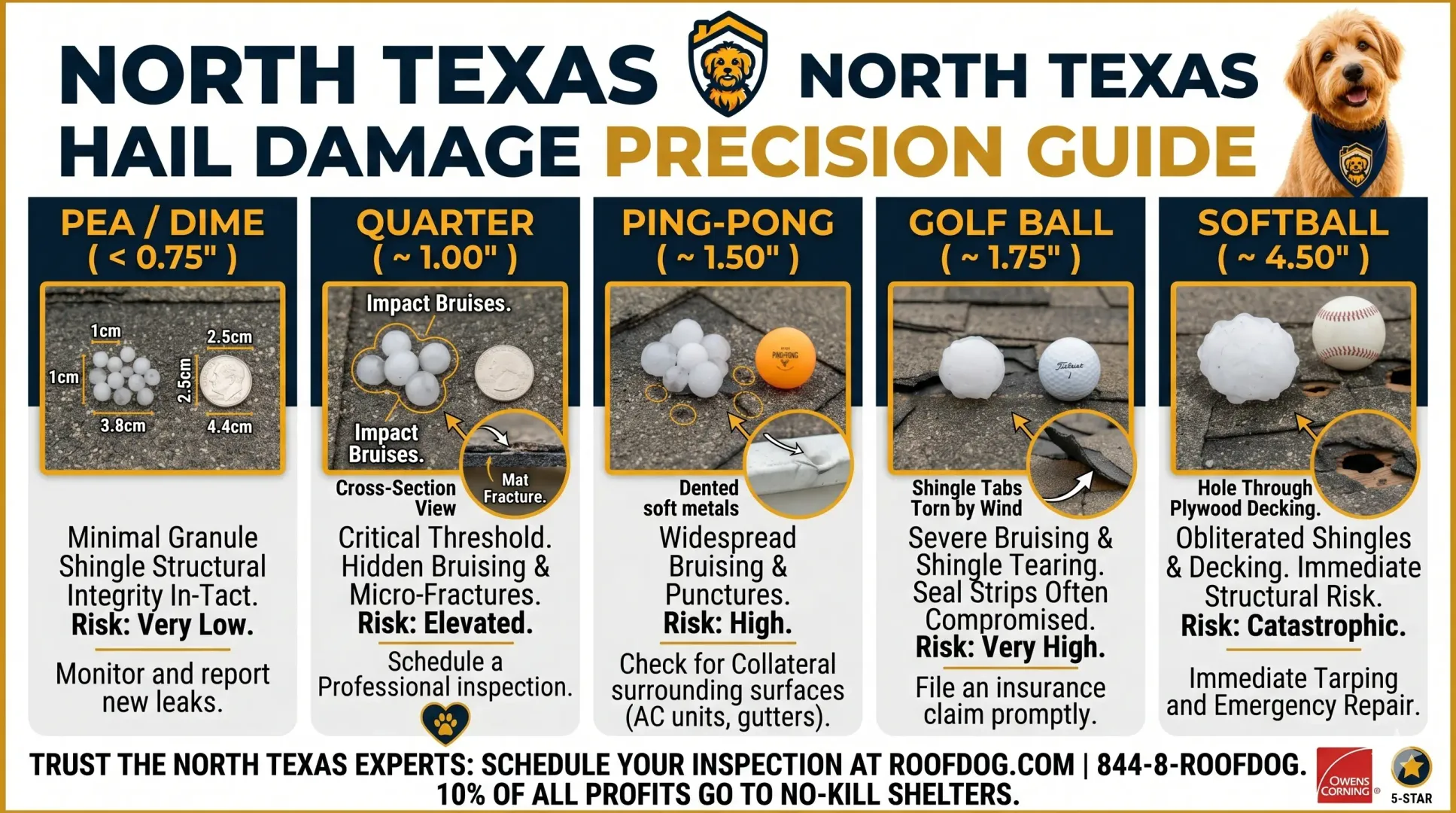
Emergency Roof Tarping & "Storm Chaser" Red Flags: The 2026 DFW Homeowner's Survival Guide
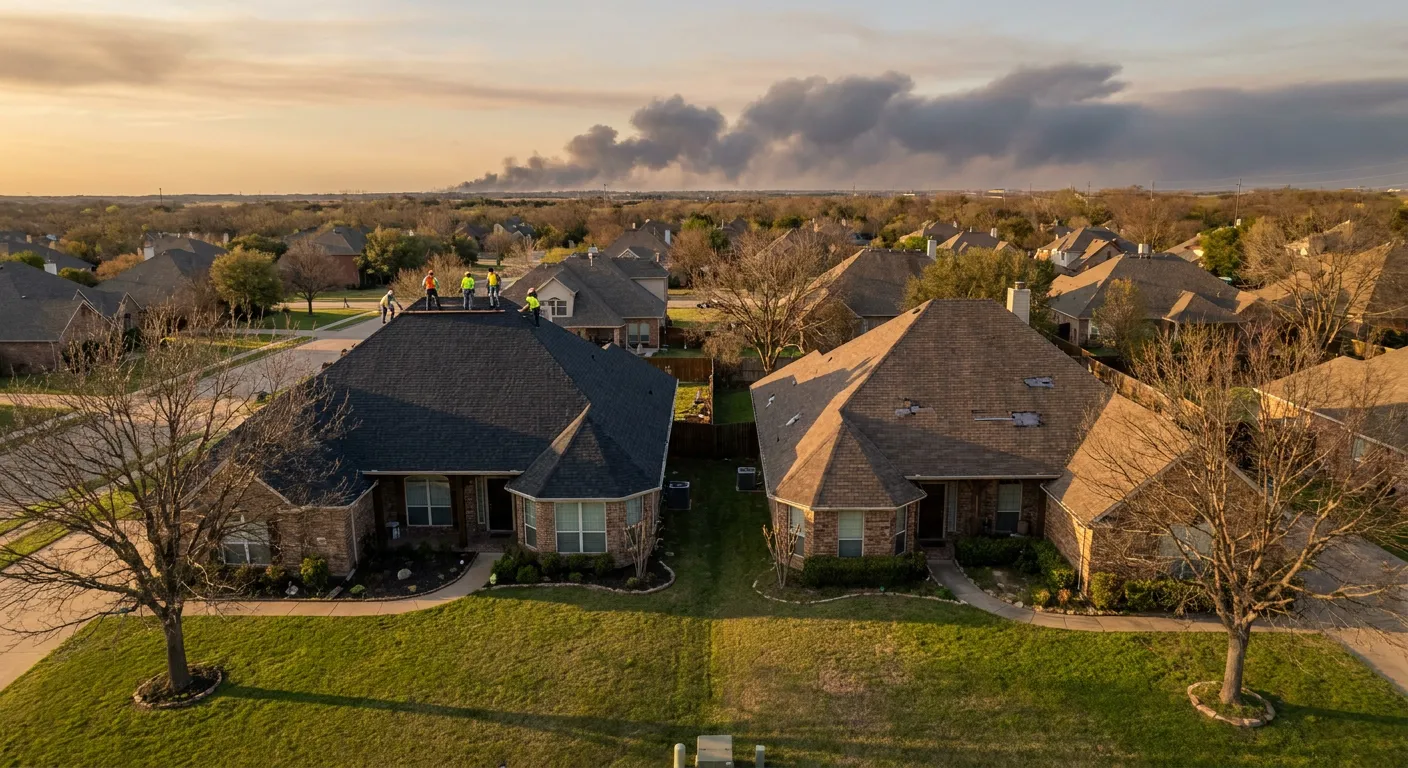
If you live in North Texas, you know the sound. It usually starts with a distant rumble over the Tarrant County line, followed by the frantic "ping-ping-ping" of pea-sized hail on your windows. But when that sound turns into a deafening roar — the sound of "ice-bricks" slamming into your roof — the real anxiety begins.
As the storm passes and the sirens fade, a new kind of storm begins to brew: the literal "storm of solicitors." Within 24 hours of a major North Texas hail event, neighborhoods from Lantana to Prosper are swarmed by white pickup trucks with out-of-state plates.
At RoofDog.com, we call these "The Strays" — storm chasers who wander into our community to snag a quick check before vanishing when the next storm hits a different state. In this 2026 edition of our Storm Survival Guide, we are teaching you how to secure your "pack" (your family and your home) with professional emergency roof tarping in DFW, and how to spot a storm chaser before they lead you into a financial trap.
Part 1: The First 60 Minutes After the Storm
Before you even think about a contractor, you need to stabilize the situation. In 2026, North Texas weather has become increasingly volatile, and the "secondary damage" from a leaking roof often costs more than the roof replacement itself.
Assess the Damage (Safely)
Do not climb on your roof. After a hail storm, shingles are often slick with crushed granules and moisture. Use your phone''s zoom lens or a pair of binoculars to look for:
- Visible holes or "missing" patches of shingles
- Dented or mangled metal vents (the "telltale" sign of large hail)
- Water spots appearing on your interior ceilings
The Critical Role of Emergency Roof Tarping
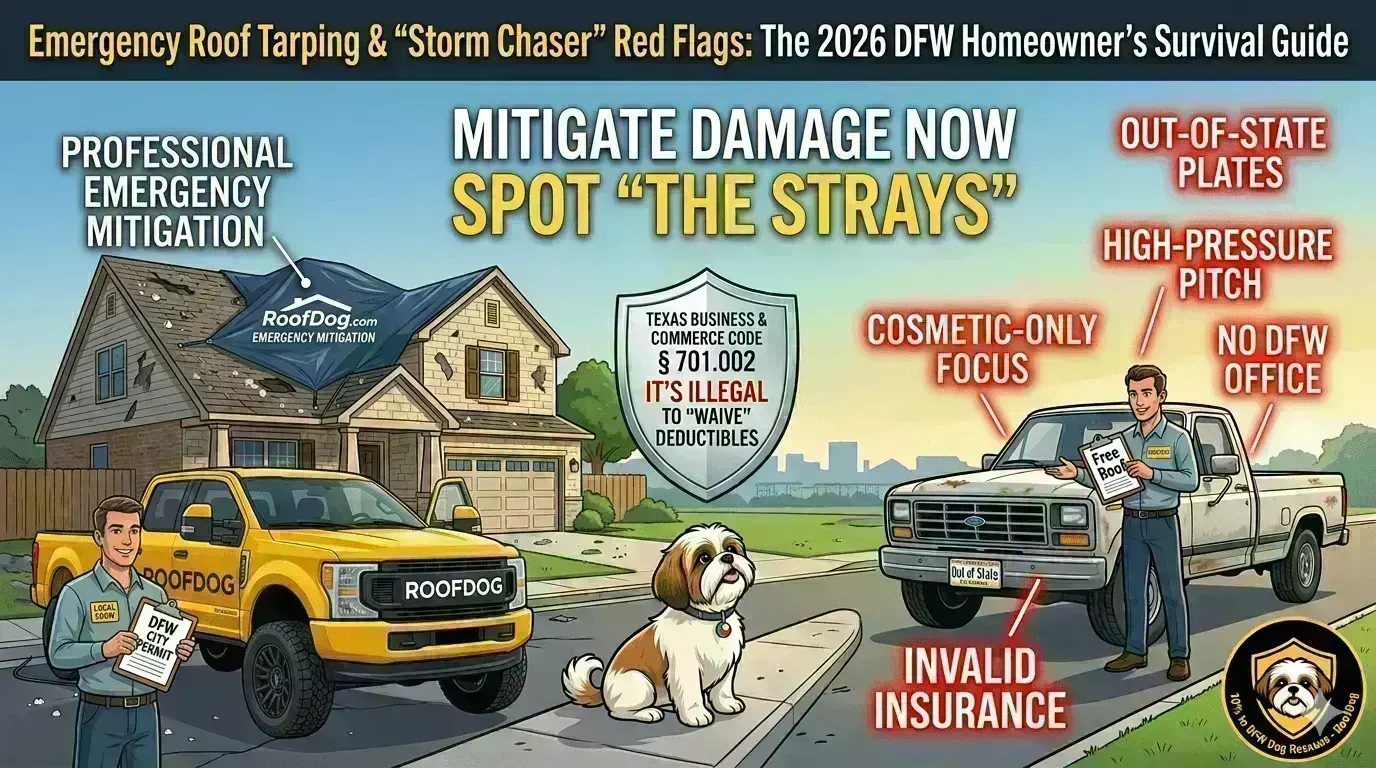
If you see daylight through your attic or water dripping into your living room, you need an emergency roof tarping service in DFW immediately. A tarp is not just a piece of plastic; it is a legal requirement in many Texas insurance policies. Most policies contain a "Mitigation Clause" which states that the homeowner is responsible for preventing further damage once a loss has occurred.
If you fail to tarp a leaking roof and a subsequent rainstorm ruins your $10,000 hardwood floors, your insurance carrier might deny the interior claim because you did not "mitigate the loss."
Part 2: How to Spot "The Strays" (2026 Storm Chaser Red Flags)
Storm chasers are the "wolves in sheep''s clothing" of the construction world. They are highly skilled salespeople who move from state to state following the "Hail Maps." Here is how to identify them in the wild.
1. The "Out of Town" License Plate
This is the easiest red flag. If the truck in your driveway has plates from Florida, Ohio, or Colorado, they are likely a storm chaser. While they may have a "local" temporary office in a Dallas coworking space, their roots are elsewhere. When your roof starts leaking two years from now, that phone number will be disconnected.
2. The "Free Roof" or "Deductible Coverage" Pitch
Warning: In 2026, it is strictly illegal in the State of Texas for a roofing contractor to "waive" or "cover" your insurance deductible. This was reinforced by the Texas Business & Commerce Code § 701.002. If a roofer tells you they can "take care of your deductible," they are asking you to participate in insurance fraud. If they are willing to cheat an insurance company, they will be willing to cheat you.
3. High-Pressure Door Knocking
Most reputable DFW roofers have more work than they can handle after a storm. If a contractor is being aggressive, pushing you to sign a "Contingency Agreement" on the spot just to look at your roof, walk away. A contingency agreement often legally binds you to use them if the insurance claim is approved — even if you have not seen an estimate.
4. Lack of Local "Paws on the Ground"
Ask the salesperson: "Where is your physical office?" and "Can I see your certificate of insurance?" A local pro will have a Dallas or Fort Worth address and a General Liability policy that is valid in Texas. Storm chasers often carry "umbrella" policies that are difficult to claim against once they leave the state.
Part 3: The RoofDog Guide to Hiring a Local Pro
When you are looking for emergency roof repair in Dallas or hiring a local roofer in Fort Worth, you want a contractor who treats your home like their own territory.
The Importance of "Local" in 2026
Hiring local is not just about neighborhood pride; it is about warranty. A roof is a system that moves and breathes. Minor adjustments are often needed six months or a year after installation. If your roofer is based in Oklahoma, they are not coming back for a $100 "service call" to fix a piece of loose flashing. At RoofDog, we are "leashed" to North Texas. We are not going anywhere.
This matters especially now, because two related 2026 shifts change the math for every DFW homeowner:
- Carrier age-based policy changes — see our breakdown of the DFW roof lifespan insurance age trap and the 15-year cliff.
- Municipal and HOA enforcement tightening — covered in detail in DFW Roofing Permits & HOA Battles: What You Must Know in 2026.
Check the "Paper Trail"
Before hiring, verify these three things:
- Google Reviews from DFW Residents: Look for reviews that specifically mention cities like Frisco, Southlake, or Plano.
- The BBB Rating: A local company will have a long-standing history with the North Texas Better Business Bureau.
- The "Profit for Paws" Mission: A company that invests 10% of its profits back into local dog rescues (like we do) is a company that is fundamentally invested in the community''s well-being.
Part 4: The 2026 Insurance Claim Process (Simplified)
Many homeowners find the insurance process more stressful than the storm itself. Here is the local expert roadmap:
- The Inspection: Have RoofDog perform a "Paws-on-the-Roof" inspection before calling your insurance. We will tell you if the damage actually exceeds your deductible.
- The Filing: Call your carrier and file the claim. They will assign an adjuster.
- The Meeting: Your RoofDog representative should be present when the adjuster arrives. We speak "Insurance" and ensure the adjuster does not miss the subtle "bruising" on your shingles that leads to future leaks.
- The Supplement: Frequently, insurance estimates are "low-ball" versions that do not include 2026 DFW code requirements (like specific drip edges or ice and water shields). We handle the "supplemental" paperwork to get you the funds needed for a code-compliant roof.
Part 5: Why "Storm Chasers" Damage the DFW Community
Beyond just doing poor work, storm chasers hurt the North Texas economy.
- They Drain Local Rescues: Every dollar that goes to an out-of-state roofer is a dollar that does not stay in our local economy. It does not help our schools, our roads, or our animal shelters.
- They Drive Up Premiums: Poorly installed roofs fail sooner, leading to more claims and higher premiums for everyone in DFW.
- They Increase Stray Populations: It might sound strange, but after major storms, stray dog populations often spike because of damaged fences and displaced families. Storm chasers take their profits out of state, leaving local companies and citizens to deal with the aftermath.
Part 6: The RoofDog Difference - We Are Leashed to You
At RoofDog.com, we chose our name because we admire the loyalty, protection, and heart of a dog. We are not just here to "catch a storm." We are here to be your home''s lifelong protector.
Profit for Paws: The 10% Mission
We do not just talk about being local; we prove it. 10% of every dollar of profit we make is donated directly to North Texas dog rescues. When you hire us for an emergency roof tarping in DFW, a portion of that fee helps buy kibble for a rescue in Dallas.
When we replace your entire roof, you are essentially funding the adoption fees for a "forever home" in Fort Worth.
We believe that a business should be a force for good. While storm chasers are looking for their next paycheck, we are looking for the next dog we can save and the next neighbor we can protect.
Our "No-Chase" Guarantee
We do not knock on doors. We do not use high-pressure sales tactics. We rely on the word-of-mouth of your neighbors and our reputation as the most loyal roofers in Texas. When we install a roof, we back it with a "Litter-Life" warranty that is actually worth something because our headquarters is right here in your backyard.
Part 7: Final Checklist After a DFW Hail Storm
Before you sign anything, run through this list:
- Did the roofer provide a local physical address (not a PO Box or coworking space)?
- Did they provide a certificate of insurance?
- Did they explain the 2026 Texas laws regarding deductibles?
- Did they offer an emergency tarping service to protect your interior?
- Do they give back to the DFW community?
FAQ: Emergency Roofing & Storm Chasers
Q: How long can a tarp stay on my roof?
A: A professional tarping job is a temporary solution. In the Texas sun, most tarps will begin to degrade and become brittle within 30 to 60 days. It is vital to move toward a permanent repair as soon as the insurance claim is processed.
Q: Will insurance pay for the tarping?
A: Almost always. Most policies cover "Reasonable and Necessary Repairs" to protect the property. We provide the separate invoice your insurance needs to reimburse you for the tarp.
Q: Why does RoofDog care about dog rescues?
A: Because North Texas is our home. We have seen the incredible work local rescues do with limited budgets, and we decided that our success should be their success. Every shingle we nail helps a dog find a home.
Do Not Let "The Strays" Handle Your Most Valuable Asset
If you have been hit by the recent North Texas storms, stay calm and stay local. Contact RoofDog.com today for a Free Storm Damage Assessment and professional emergency roof tarping.
RoofDog: The most loyal roof in Texas. Helping one dog at a time.
Need a Roof Inspection?
Get expert advice and a free estimate from North Texas's trusted roofing professionals.
Schedule Free Inspection