Why One House in Your Neighborhood Needs a Roof Replacement But Yours May Not
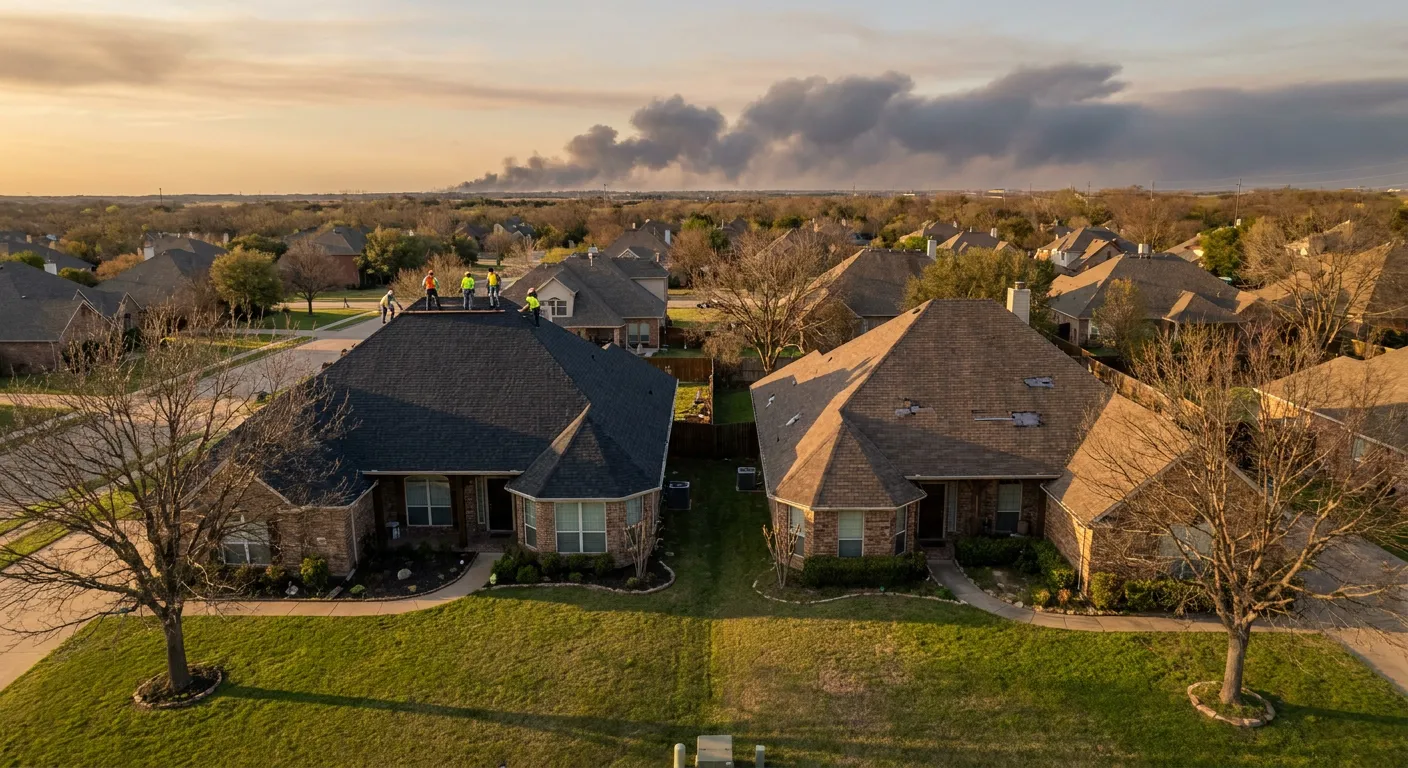
In the aftermath of a North Texas supercell, the landscape of a neighborhood changes overnight. You''ll see a flurry of activity: insurance adjusters with their collapsible ladders, roofing contractors knocking on doors, and eventually, the rhythmic pounding of hammers as new roofs are installed. This creates a psychological phenomenon among homeowners known as neighborhood envy or insurance FOMO. You see the house three doors down getting a brand new, high-definition architectural shingle roof, while your insurance company tells you that you have insufficient damage to warrant a claim. This naturally leads to the burning question: Does my roof have hail damage, and why am I being treated differently?
This post serves as the definitive guide to understanding roof damage comparison in the DFW metroplex. We aren''t just talking about luck or the mood of an adjuster. We are talking about the physics of terminal velocity, the chemistry of asphalt degradation, and the complex legal frameworks of Texas insurance policies. To understand why neighbors got new roofs while yours remains the same, we must look at the five core pillars of roofing forensics: Impact Physics, Material Condition, Structural Design, Ventilation, and Insurance Thresholds. It is frustrating to witness a neighbor receive a full replacement while your claim is denied or your inspection comes back clean, but the science behind these decisions is rigorous and nuanced. For homeowners trying to understand the broader claim process, our roofing insurance claims guide is a great companion piece.
1. The Physics of the Hail Strike: Slope and Orientation
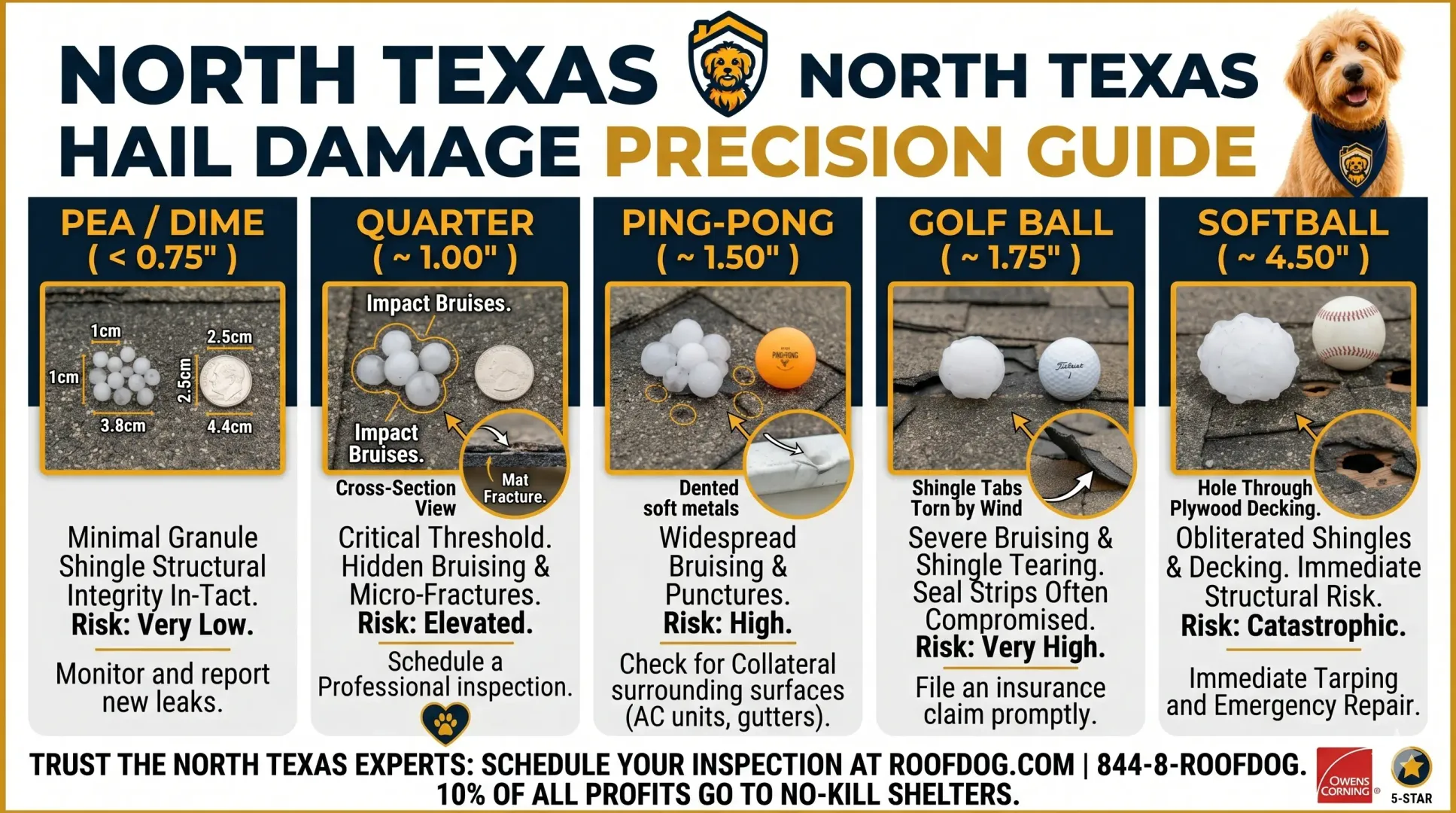
To the naked eye, hail looks like it falls straight down. However, North Texas hailstorms are almost always wind-driven. When we analyze hail damage signs, we have to look at the vector of the hailstone. A hailstone falling at 90 mph with a 45-degree wind-driven tilt carries immense kinetic energy. The mathematical formula for kinetic energy, KE = ½mv², tells us that the velocity (v) is the most critical factor, as it is squared. But the angle of that velocity determines how much energy is transferred to your roof. This is why orientation is the primary variable in damage distribution.
Imagine your neighbor''s house has a steep 12/12 pitch roof facing directly West, and the storm is blowing in from the West. That roof is taking a direct hit at a perpendicular angle. The shingles on that slope are forced to absorb 100% of the kinetic energy, which often results in a fractured fiberglass mat—this is what adjusters call functional damage. Now, look at your house. Perhaps your roof has a lower 4/12 pitch, or your primary slopes face North and South. The same hail hits your roof at a glancing angle. Instead of a direct smash, the hail slides or skips across the surface. While this might cause significant granule loss (which looks bad), it may not actually break the structural integrity of the shingle. In the eyes of an insurance carrier, cosmetic damage is often not a covered loss, whereas functional damage is. Without a rupture in the matting, the shingle is still considered watertight.
The Micro-Climate Effect and Localized Hail Cores
It''s also important to realize that hail cores are incredibly localized. Meteorologists use Dual-Pol Radar to track hail spikes, but even this technology cannot account for the block-by-block reality of a storm. A hail core can be as narrow as 100 yards wide. It is entirely possible for a 2-inch hailstone to pummel one end of a cul-de-sac while the other end only sees pea-sized ice and heavy rain. This roof damage comparison is the most common reason for discrepancy in claims. One house may be in the direct path of the most violent part of the cell, while a house just three hundred feet away escapes with nothing but heavy rain. This is not a failure of the insurance system; it is simply the chaotic nature of North Texas meteorology.
2. The Brittle Test and the Age of the Shingle
One of the most controversial parts of an insurance roof inspection is the Repairability or Brittle test. Asphalt shingles are essentially a sandwich: a fiberglass mat at the core, saturated with asphalt, and covered in ceramic granules. Over time, the sun''s UV rays evaporate the oils in the asphalt, making the shingle stiff and fragile. This aging process is not uniform across all homes, even in the same neighborhood. Our deep-dive on what causes roofs to fail in North Texas explains this asphalt chemistry in detail.
If your neighbor''s roof is 15 years old and yours is only 4 years old, you are playing with two different sets of rules. When hail hits a 15-year-old shingle, the lack of flexibility means the matting will crack instantly. When the adjuster comes out, they will perform a test: they lift the shingle to see if it can be repaired. If the shingle cracks just by being lifted 45 degrees, the roof is unrepairable. This means even a small amount of damage can trigger a full replacement because the shingles can''t be manipulated to fix the flashing or small leaks. Your 4-year-old roof, however, is likely still supple. It can absorb the hit and can be easily repaired. This is why insurance uncertainty is so prevalent—the policy value of an older roof is often higher in a storm event because of its inherent failure rate. If you''re curious whether to repair or replace, see our roof repair vs. replacement guide.
Expert Insight on Impact Resistance: Many DFW homeowners are now moving toward Class 4 Impact-Resistant Shingles. These shingles are modified with polymers (SBS) that make them act like rubber. Even in a major storm, a Class 4 roof may show zero damage while the neighbor''s standard shingles are shredded. This is a classic case where why neighbors got new roofs is actually a testament to the neighbor having a weaker or older product compared to your superior, impact-rated shingles.
3. Collateral Damage: The Tattle-Tales of a Storm
When we perform an inspection, we don''t start with the shingles—we start with the soft metals. This is a crucial part of building a case for "does my roof have hail damage." We look at objects that have no memory—materials that dent and stay dented. These are the objective witnesses to the storm''s intensity. If an adjuster sees deep pits in a lead plumbing jack or shattered plastic on a ridge vent, they are psychologically primed to find damage on the shingles. Our guide on what a roof inspection should include walks through every element a pro should document.
- Ridge Vents: Aluminum vents show every hit. If the vents are clean, it''s hard to argue the shingles underneath are destroyed.
- Soft Metals (Box Vents/Turtle Vents): Dents here provide a measurable size of the hail. If your neighbor has 1-inch dents and you have none, the hail core simply missed you.
- Gutters and Downspouts: D-side hits on the downspout are undeniable proof of wind-driven hail. Gutters act as a catch-all for granules; if your neighbor''s gutters are overflowing with granules and yours are clean, their shingles have suffered significantly more erosion.
- Fencing and Siding: If the hail was large enough to strip the stain off a fence or crack vinyl siding, it reinforces the shingle claim. Siding damage often correlates with the windward side of the house.
If your neighbor''s house has significant collateral damage but yours doesn''t, an insurance adjuster will be much more skeptical of your claim. They look for a consistent storm profile across the property. A roof damage comparison that shows metal damage on one house but not the other is the fastest way to a denied claim. Adjusters are trained to look for collateral to justify their findings to their supervisors.
4. Wind Uplift and Creased Shingles
Sometimes, the damage isn''t from the ice at all—it''s from the wind. This is where wind uplift comes into play. Most modern shingles are rated for 110-130 mph winds, but that rating is only valid if the sealant strip is intact. If your home has a different slope orientation or if a wind tunnel effect is created between your house and a neighbor''s, your shingles might experience chatter. Wind speeds can vary by 20-30 mph between two houses depending on tree cover and surrounding structures.
Wind chatter happens when the wind gets under the shingle and vibrates it rapidly. This breaks the seal. Once the seal is broken, the shingle is compromised. It may lay back down and look fine from the ground, but the next time it rains, water can be blown up under the shingle. If an adjuster finds creased shingles (where the shingle was folded back by wind, leaving a dark line of missing granules), they will often approve a replacement. If your neighbor''s roof had an older sealant technology or was installed in the winter (when seals don''t always take), they might have hundreds of wind-damaged shingles, while your properly sealed roof didn''t budge an inch. This is a common cause of roof damage comparison issues, and it''s why we always recommend an emergency repair tarp if you suspect lifted shingles after a major wind event.
5. The "Attic Heat" Variable: Ventilation Differences
This is the most overlooked factor in why neighbors got new roofs. In North Texas, attic temperatures can reach 160 degrees or higher. If a house has poor attic ventilation (e.g., blocked soffits, painted-over vents, or insufficient exhaust vents), that heat bakes the shingles from underneath. This causes a condition known as blistering and thermal cracking. While these are not storm-related, they prepare the roof for total failure when a storm does hit. Our roof ventilation explained guide breaks down the airflow math behind a healthy attic.
While blistering is technically a manufacturer defect or a maintenance issue, it makes the shingles incredibly vulnerable during a storm. A baked shingle loses its protective granule loss much faster during a hail event. If your neighbor''s attic is 30 degrees hotter than yours because of ventilation differences, their roof is effectively older than yours in terms of wear and tear, even if you both had them installed in the same year. This accelerated aging is a primary driver in roof damage comparison discrepancies. A well-ventilated roof is a resilient roof; a poorly ventilated one is a claim waiting to happen.
6. Insurance Thresholds and the "Human Factor"
Finally, we must address the insurance roof inspection itself. Not all insurance companies are created equal. Some carriers utilize Independent Adjusters who are paid per claim they close. Others use Staff Adjusters who work directly for the company. Each company has a different Standard Operating Procedure (SOP) for what constitutes a total loss. This creates a massive amount of insurance uncertainty for the average homeowner. The 2026 industry shift toward ACV-only policies makes this even more important—see our breakdown of the 2026 Texas ACV insurance shift.
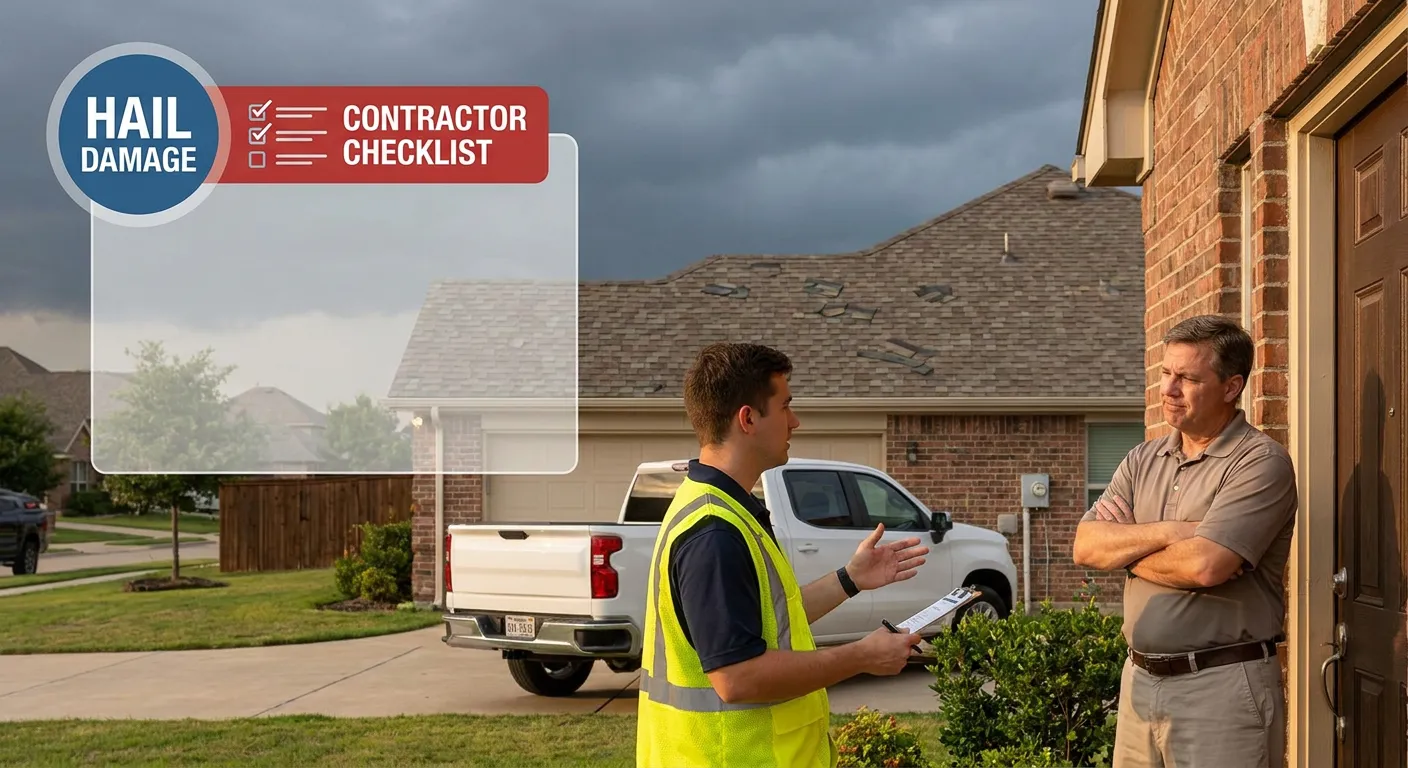
One company might require 10 hail hits in a 10x10 square on all four slopes to trigger a full replacement. Another company might only require 6 hits on two slopes. If you and your neighbor have different carriers, you are being measured against different yardsticks. This is the root of most homeowner frustration. Furthermore, the human factor cannot be ignored. One adjuster might be in their first month on the job, while another might be a 20-year veteran of Texas storms. This is why having an experienced roofing contractor present during the adjustment is vital—to ensure that hail damage signs aren''t overlooked due to fatigue, lack of experience, or strict corporate quotas. We act as the technical advocate for your property, ensuring the adjuster sees every fractured mat and every creased shingle.
7. The "Impact Direction" and Tree Protection
Another overlooked factor is the presence of vegetation. North Texas is known for its beautiful post oaks and pecans. If your neighbor''s roof is completely exposed to the Northwest and your roof is shielded by a 40-foot canopy of trees, your damage profile will be significantly lower. Trees act as a natural baffle for hail and wind. While falling branches are a risk, the canopy often breaks the terminal velocity of hailstones, turning a 2-inch roof-killer into a 2-inch nuisance. This is yet another reason why neighbors got new roofs can be explained by simple environmental factors. Even a few degrees of difference in the slope orientation relative to a large tree can be the difference between a $20,000 insurance check and a $0 denial.
What Should You Do If You Feel Left Out?
If you''ve performed a roof damage comparison and you still feel your roof is damaged, do not rush to file a claim. Filing a claim that results in a $0 payout is still considered a claim on your history and can lead to rate increases or loss of claim-free discounts. Instead, follow this professional protocol to gain clarity:
- Get a Professional Third-Party Inspection: Have a reputable local roofer provide a damage map. We use high-resolution photos to mark every hit and crease. We look for the bruise—the spot where the asphalt is soft to the touch, indicating a broken mat.
- Check the Soft Metals Yourself: Take a look at your window screens (are there holes?), your grill cover (is it shredded?), and your downspouts. If you see circular indentations, you likely have functional damage that warrants a professional second opinion. Cross-reference with our warning signs your roof needs replacement.
- Review Your Policy: Do you have Replacement Cost Value (RCV) or Actual Cash Value (ACV)? ACV policies pay significantly less as the roof ages, which might explain why a neighbor with an RCV policy was more eager to file than you should be.
- Request a Re-Inspection: If you truly believe the first adjuster missed something, you have the right to request a second look. Sometimes, providing a contractor''s estimate and photo evidence can trigger a more senior adjuster to review the file. Our guide to comparing roofing estimates shows how to format that supporting estimate.
The Final Word: Protecting Your North Texas Investment
The next time you see a roofing crew next door, don''t panic or feel slighted. The health of a roof is determined by a complex interplay of physics, chemistry, and policy language. From impact direction to brittle test issues, every house is a unique case study in the eyes of an engineer and an adjuster. By understanding the science behind why one house needs a roof replacement but yours may not, you can make informed decisions that protect your home without falling victim to the cycle of insurance uncertainty. You want a roof that is safe, not just a roof that is new.
At RoofDog, we pride ourselves on being more than just roofers—we are educators and forensic specialists. We believe that a homeowner who understands hail damage signs and the nuances of wind uplift is a homeowner who can''t be taken advantage of. Whether it''s explaining ventilation differences or demonstrating the brittle test, we are here to provide the transparency you deserve. If you''re looking for an honest assessment of your roof''s condition, schedule a free inspection or contact us today. We''ll give you the facts, even if the fact is that your roof is perfectly fine and ready to face the next North Texas storm season.
You Might Also Need
- Roofing insurance claims guide →
- What causes roofs to fail in North Texas →
- Roof repair →
- Roof repair vs. replacement guide →
- Class 4 impact-resistant shingles →
- Roof inspection →
- What a roof inspection should include →
- Gutter installation →
- Emergency roof repair →
- Attic ventilation and insulation →
- Roof ventilation explained →
- 2026 Texas ACV insurance shift →
- Local DFW roofer →
- Warning signs your roof needs replacement →
- Compare roofing estimates →
- Roof replacement →
- Schedule a free inspection →
- Contact RoofDog →
Need a Roof Inspection?
Get expert advice and a free estimate from North Texas's trusted roofing professionals.
Schedule Free Inspection