The 2026 DFW Roof Lifespan Guide: Why "20 Years" Is a North Texas Myth
If you have owned a home anywhere in Dallas–Fort Worth, you have heard it:
"These shingles are rated for 30 years."
Technically, that is correct. Functionally, in North Texas, it is not even close.
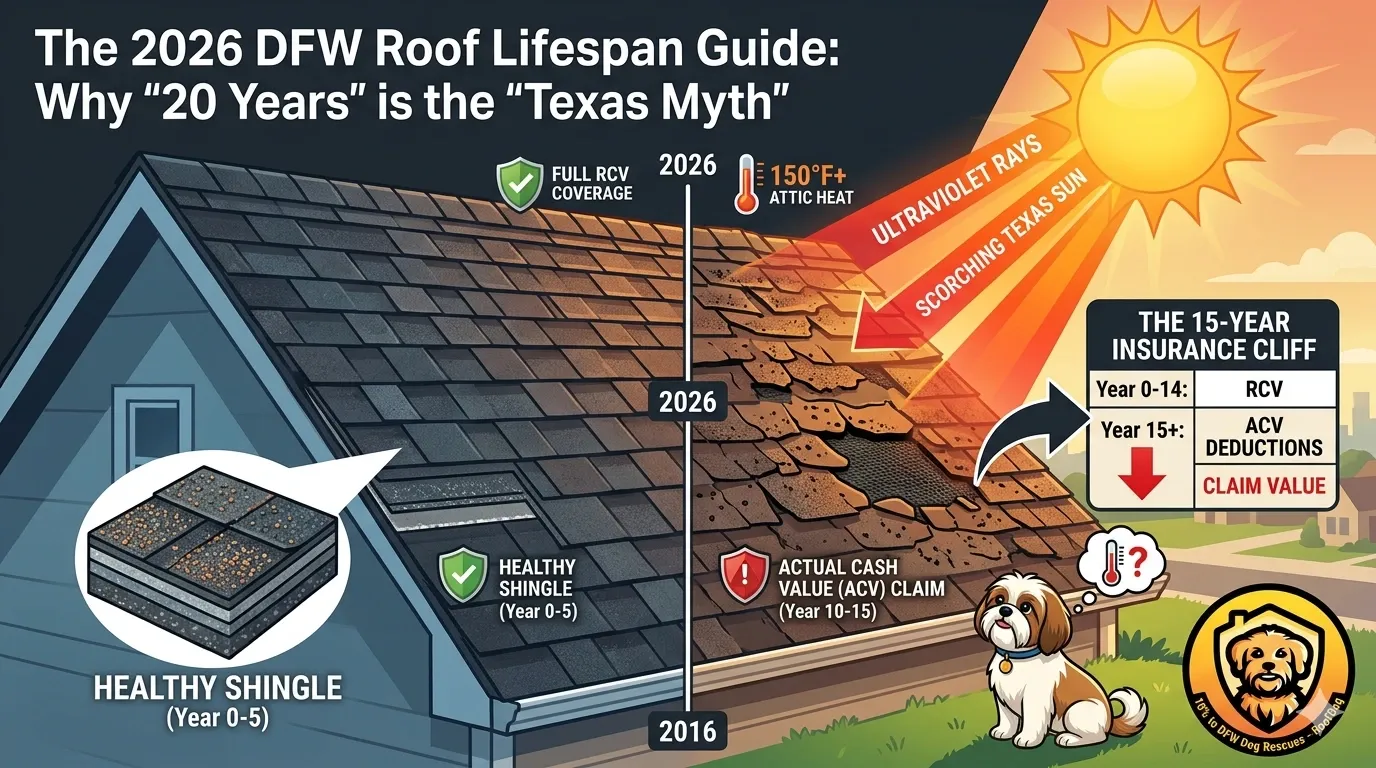
As of 2026, the reality across DFW is this: most residential roofs last 12–18 years in real-world conditions, not 20–30. Between escalating hail frequency, extreme heat cycles, high winds, and major insurance policy shifts, the traditional idea of a "20-year roof" has quietly become outdated in Texas.
And the biggest risk is not just premature failure. It is what happens when your roof crosses a threshold most homeowners do not even know exists: the 15-Year Insurance Cliff.
At RoofDog, we are seeing a growing number of homeowners forced into $10,000–$20,000 out-of-pocket costs — not because their roof failed, but because their insurance coverage changed without them realizing it.
This guide breaks down:
- Why roofs in Dallas–Fort Worth fail faster
- How insurance companies have shifted risk to homeowners
- What ACV vs RCV really means in 2026
- How to avoid a major financial hit before the next storm
1. The "Texas 15" — The Hidden Insurance Trigger
Insurance companies in Texas have adapted aggressively over the past several years due to claim volume. The result is a quiet but significant shift in how roof claims are handled.
What happens at 15 years
Many policies now include a clause that triggers when your roof hits approximately 15 years old:
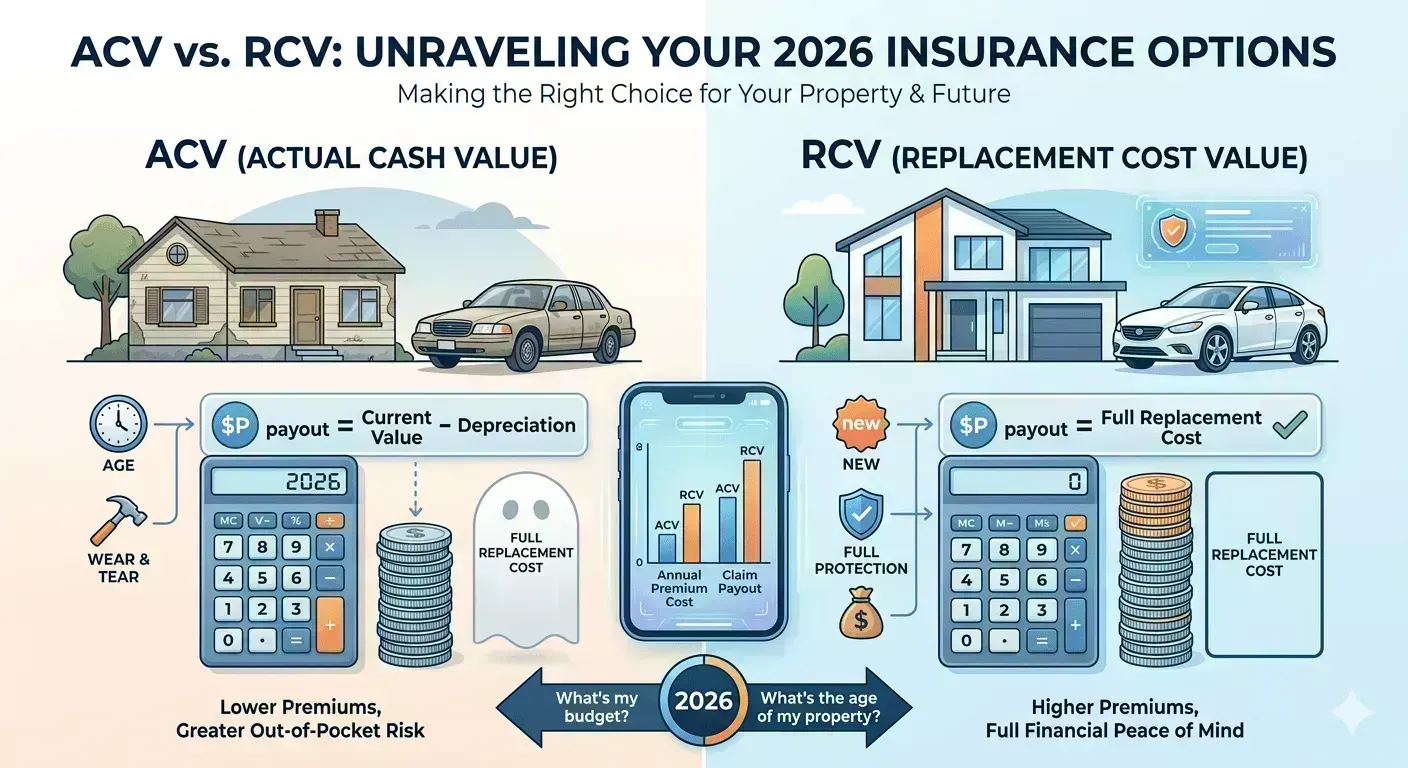
Coverage shifts from RCV (Replacement Cost Value) to ACV (Actual Cash Value).
RCV vs ACV — the real difference
RCV (Replacement Cost Value):
- Pays for full roof replacement
- You pay your deductible
- No depreciation applied
ACV (Actual Cash Value):
- Deducts depreciation based on age
- You receive a reduced payout
- You pay the difference
Real 2026 example (DFW homeowner scenario)
- Roof replacement cost: $22,000
- Roof age: 15 years
- Depreciation: ~60%
- Insurance payout: ~$7,000
- Homeowner pays: ~$15,000 out of pocket
This is not rare. It is happening across Frisco, McKinney, Denton, and surrounding areas right now.
2. Why Roofs in Dallas–Fort Worth Age Faster
North Texas is one of the harshest roofing environments in the country. Your roof is not aging normally — it is being stress-tested continuously.
Extreme heat and UV degradation
DFW consistently experiences long stretches of 100°F+ temperatures, intense UV radiation, and rapid daily temperature swings. Asphalt oils dry out, flexibility decreases, and brittleness increases. Once shingles lose flexibility, they crack under impact instead of absorbing it.
Hail frequency — the primary lifespan killer
Texas leads the U.S. in hail events, and DFW sits directly in one of the most active hail corridors in North America. Even "minor" hail knocks granules loose, weakens protective layers, and creates invisible structural damage. Damage accumulates even when you do not see it immediately.
Wind and adhesive failure
Spring storms in North Texas create sudden pressure shifts and high-speed wind gusts. These do not always remove shingles — instead they break adhesive seals, cause micro-lifting, and lead to creased shingles. Insurance often labels this "wear and tear" rather than storm damage.
Thermal expansion stress
Daily heating and cooling cycles expand roofing materials during the day and contract them at night. Over time, shingles warp, seals weaken, and structural fatigue increases.
3. The DFW Neighborhood Timing Effect
One of the most overlooked risks in North Texas: entire neighborhoods age at the same time.
Large portions of DFW were built during the 2008–2012 housing expansion and 2013–2016 suburban growth. That means today, thousands of roofs are hitting 12–18 years simultaneously.
Areas currently in the risk window:
- Frisco (west and north)
- Little Elm
- Prosper (early phases)
- McKinney (north developments)
- Argyle / Lantana
- Celina (older sections)
- Flower Mound expansions
If your home is in these areas, your roof is likely nearing or inside the "insurance risk zone."
4. Signs Your Roof Is Aging Out (Before Leaks Appear)
Most roofs do not fail suddenly. They degrade gradually — and silently.
Granule loss
Check gutters, downspouts, and driveway runoff. If you see sand-like debris or black particles, your UV protection layer is gone.
"Shiny" roof appearance
When granules are lost, the fiberglass mat becomes visible and light reflects differently. If your roof looks reflective or "sparkly," it is past its effective lifespan.
Curling or cupping shingles
Indicates heat damage, material fatigue, and structural stress. Once curling begins, failure accelerates quickly.
Lifted or missing shingles
Even small areas allow wind intrusion, lead to progressive failure, and create future leak points.
Interior indicators
- Ceiling stains
- Musty attic smell
- Increased cooling costs
These usually appear after external damage has already progressed.
5. Why Waiting Is the Most Expensive Strategy
Most homeowners wait for visible damage, leaks, or major storms. That is the wrong approach in 2026.
Insurance covers sudden, accidental damage — not gradual deterioration. If your roof is 15+ years old and on ACV coverage, even a major storm may not protect you financially.
6. The Smart Strategy for DFW Homeowners
You cannot control the weather. But you can control timing.
Step 1 — Review your policy. Look for ACV language, roof payment schedules, and depreciation clauses.
Step 2 — Get a professional inspection. A qualified inspection documents current condition, identifies storm-related damage, and establishes a baseline.
Step 3 — Plan replacement strategically. If your roof is 13–15 years old and showing wear, this is your decision window.
Step 4 — Upgrade materials. Class 4 impact-resistant shingles reduce damage risk, lower insurance premiums (often 15–25%), and extend lifespan.
7. Roof Replacement Costs in DFW (2026)
Typical range: $18,000 – $30,000+. Cost depends on size, pitch, material type, ventilation upgrades, and decking condition.
Cost drivers: labor shortages, material inflation, building code changes, and complexity of roof design.
Risk reduction: early planning, insurance awareness, and working with experienced contractors.
8. Why Homeowners Get Blindsided
It is rarely neglect. It is misunderstanding insurance, assuming roof lifespan is longer, and reacting instead of planning.
9. RoofDog's Approach
At RoofDog, we do not just estimate. We evaluate roof condition, analyze insurance exposure, document real damage, and guide timing decisions. We operate at the intersection of roofing, insurance, and long-term risk management.
Profit for Paws — protecting more than homes
RoofDog donates 10% of profits to no-kill rescues. Through our Senior Dog, Senior Roof Initiative, we sponsor senior dogs when replacing aging roofs. Because just like older roofs, they are often overlooked — but still deserve care.
10. How Roof Age Impacts Home Value in DFW
One of the most overlooked factors in Dallas–Fort Worth real estate: roof age directly affects buyer confidence and deal outcomes.
If your roof is over 12–15 years old and showing visible wear, buyers (and inspectors) will flag it immediately, request concessions, or delay closing.
In DFW transactions, we commonly see:
- $10,000–$20,000 concessions requested
- Deals renegotiated post-inspection
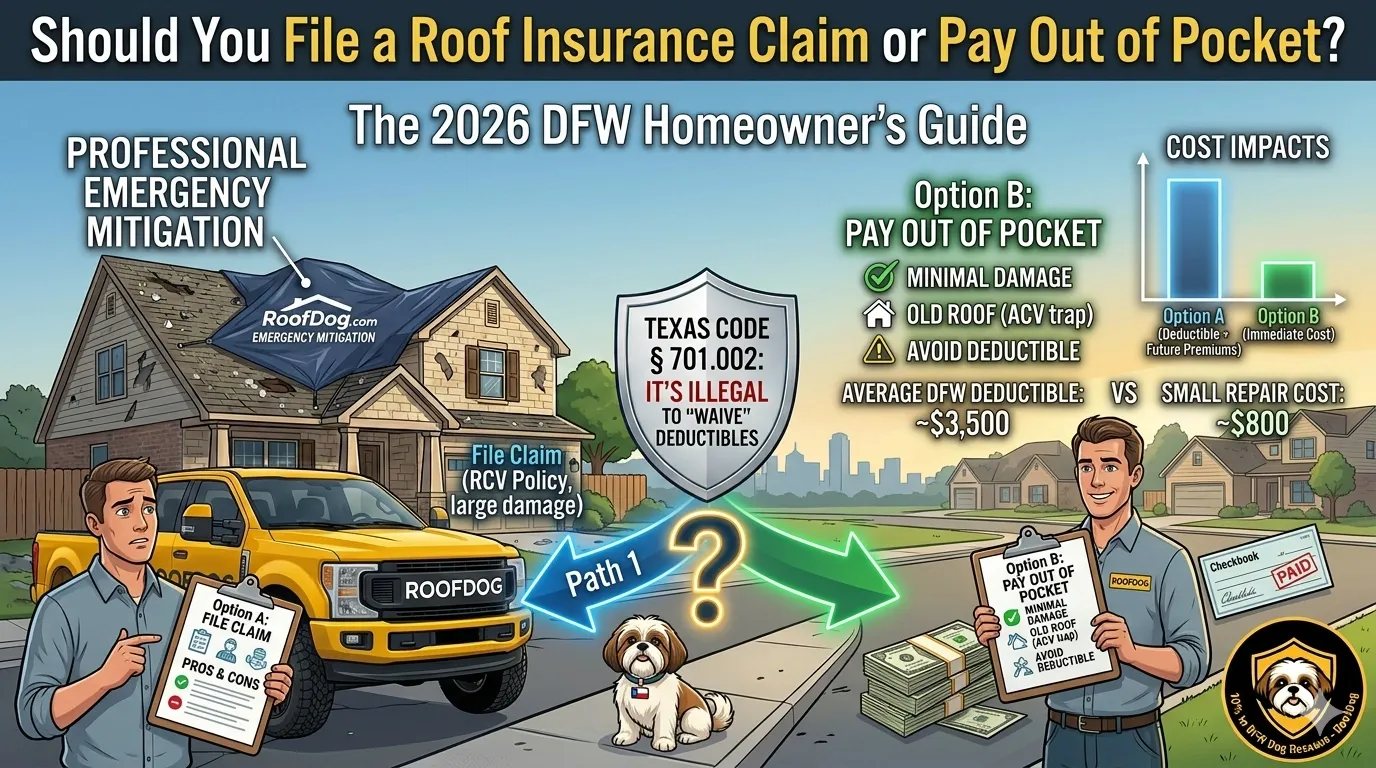
- Insurance complications for buyers
In some cases, buyers cannot even bind insurance without roof replacement. If you are planning to sell in the next 1–3 years, it may be smarter to replace proactively rather than negotiate under pressure.
11. The Insurance Carrier Shift (2024–2026 Trend)
The roofing and insurance landscape has changed dramatically in the last three years. Across Texas, insurers are reducing RCV eligibility, increasing deductibles, tightening claim approvals, and expanding ACV policies.
The reason is simple: too many hail claims plus rising replacement costs. The burden is shifting from insurance companies to homeowners. In 2026, you cannot rely on insurance as a "safety net." You must treat your roof as a managed asset, not a reactive expense.
12. Repair vs Replacement: The Real Decision Framework
Repair makes sense when:
- Damage is localized
- Roof is under 10–12 years old
- No widespread granule loss
- No structural fatigue
Replacement is smarter when:
- Roof is 12–15+ years old
- Damage is widespread
- Insurance is involved
- Multiple repair events have occurred
Each repair adds cost, does not reset roof lifespan, and may not be covered by insurance later. If you are asking "should I repair or replace?" — you are often already closer to replacement.
13. Ventilation: The Silent Roof Killer
Most homeowners never think about attic ventilation. But in Texas, it is one of the biggest factors in roof lifespan.
Poor ventilation traps heat in the attic, accelerates shingle degradation, increases energy costs, and causes moisture buildup. Warning signs include an extremely hot attic, uneven shingle wear, mold or moisture smell, and high utility bills.
A properly ventilated roof can extend lifespan by several years, improve comfort inside the home, and reduce long-term repair costs.
14. The "Storm Timing" Strategy Most Homeowners Miss
Storms in North Texas are not random. They follow patterns — spring hail season and late summer wind events. Smart homeowners get inspections before storm season, document roof condition early, and establish baseline records.
If damage occurs, documentation strengthens your claim position. Without it, adjusters have more discretion and claims become harder to justify.
15. Choosing the Right Roofing Contractor (DFW Reality)
After storms, DFW sees an influx of out-of-state contractors, storm chasers, and low-quality installers. The risks: poor workmanship, no warranty support, difficulty contacting the company later.
What to look for instead: local presence, verified reviews, insurance experience, a clear documentation process, and strong communication. A roof is a $20,000+ decision — the contractor matters just as much as the materials.
16. The Future of Roofing in North Texas
Looking ahead, several trends are shaping the market:
- More impact-resistant materials. Class 4 shingles are becoming more common and more incentivized by insurers.
- Stricter insurance policies. Expect more ACV policies, higher deductibles, and more claim scrutiny.
- Higher replacement costs driven by labor shortages, material costs, and code upgrades.
- More educated homeowners who understand policy risk, plan proactively, and demand transparency.
Final Strategic Insight
The biggest shift happening right now: roofing is moving from reactive to strategic.
Old mindset: "I will deal with it when something happens."
New reality: "If I do not plan this, it will cost me significantly more."
In Dallas–Fort Worth, weather shortens lifespan, insurance reduces coverage, and timing determines cost. The biggest mistake homeowners make is assuming their roof still has time.
FAQ: DFW Roof Lifespan and Insurance
How long does a roof last in North Texas?
Typically 12–18 years under real conditions.
What is the 15-year rule?
Many policies shift to ACV around year 15.
Can I avoid depreciation?
Only by replacing earlier or maintaining RCV eligibility.
Should I act if there is no leak?
Yes — insurance timing matters more than leaks.
Does RoofDog help with insurance?
Yes — we document and support fair claims.
Next Step
If your roof is approaching 15 years: do not wait, do not assume coverage, and do not risk a five-figure surprise.
Schedule a Free Roof and Policy Audit with RoofDog. We will tell you how much life your roof has left, what your insurance will pay, and what your smartest move is.
RoofDog — Protecting homes. Saving dogs.
Need a Roof Inspection?
Get expert advice and a free estimate from North Texas's trusted roofing professionals.
Schedule Free Inspection