How Long Do Roofs Last in Flower Mound, TX?
Short answer: Most asphalt shingle roofs in Flower Mound last 12 to 20 years — noticeably shorter than the 25-to-30-year rating printed on the wrapper. The gap comes from North Texas hail, gusty spring storms, brutal summer heat, and the town's famously heavy tree canopy dropping debris on shingles year-round. A well-installed Class 4 impact-rated roof, kept clear of overhanging limbs and inspected regularly, can push toward the upper end of that range and sometimes beyond.
Table of contents
- Flower Mound's climate and why it matters
- Hail alley: the biggest lifespan killer
- Wind, storms, and uplift
- The tree canopy problem
- Older vs. newer neighborhoods
- Dominant roofing materials in town
- Typical lifespan by material
- Common roof problems we see locally
- Inspection advice for Flower Mound homeowners
- Frequently asked questions
- Summary
Flower Mound's climate and why it matters
Flower Mound sits in southeastern Denton County, right in the thick of the Dallas–Fort Worth metroplex, and it gets the full North Texas weather menu. Summers routinely push past 100°F for weeks at a stretch, baking asphalt shingles and accelerating the loss of the oils that keep them flexible. Winters are mild but punctuated by the occasional hard freeze and ice event — the 2021 winter storm being the memorable extreme. Between those seasons come spring and early-summer thunderstorms that can turn violent in an afternoon.
That thermal swing — freezing nights to triple-digit afternoons within the same calendar year — forces shingles to expand and contract constantly. Over a decade of that cycling, granules loosen, sealant strips fatigue, and small cracks form. It is the quiet, invisible aging that happens even in years when no big storm rolls through. For a metro-wide look at how these forces play out, see our guide on how long roofs last in Texas.
Hail alley: the biggest lifespan killer
If any single factor decides when a Flower Mound roof needs replacing, it is hail. DFW sits squarely in what insurers call "hail alley," and Denton County takes regular hits. It is not unusual for a Flower Mound neighborhood to see a damaging hailstorm every three to five years, and some stretches produce two in a single spring.
Hail rarely destroys a roof outright. Instead, marble-sized and larger stones bruise the shingle mat and knock granules loose, exposing the asphalt underneath to UV. Those bruises don't always leak right away, which is exactly why so many Flower Mound roofs are quietly aging past their prime while the homeowner has no idea. A single significant storm can lop five to eight years off a roof's remaining life.
Wind, storms, and uplift
The same storm systems that bring hail bring straight-line winds, and North Texas has produced gusts well over 70 mph in severe events. Wind works on a roof by finding an edge — a lifted shingle tab, a ridge cap, a piece of flashing — and peeling from there. Older three-tab shingles are especially vulnerable because their sealant bond weakens with age and heat.
Flower Mound's mix of open, newer subdivisions on former ranch land and established streets tucked among trees means wind exposure varies block to block. Homes on higher, more exposed lots near open fields take more direct uplift, while tree-sheltered homes trade wind protection for a different problem entirely — which brings us to the canopy.
The tree canopy problem
Flower Mound earned its reputation as a green, tree-rich community, and the mature oaks, pecans, and elms shading its older neighborhoods are one of the town's best features. They are also one of its roofs' worst enemies. Heavy overhanging limbs create a steady stream of problems:
- Abrasion: Branches rubbing shingles in the wind scrub off granules and wear through the mat over time.
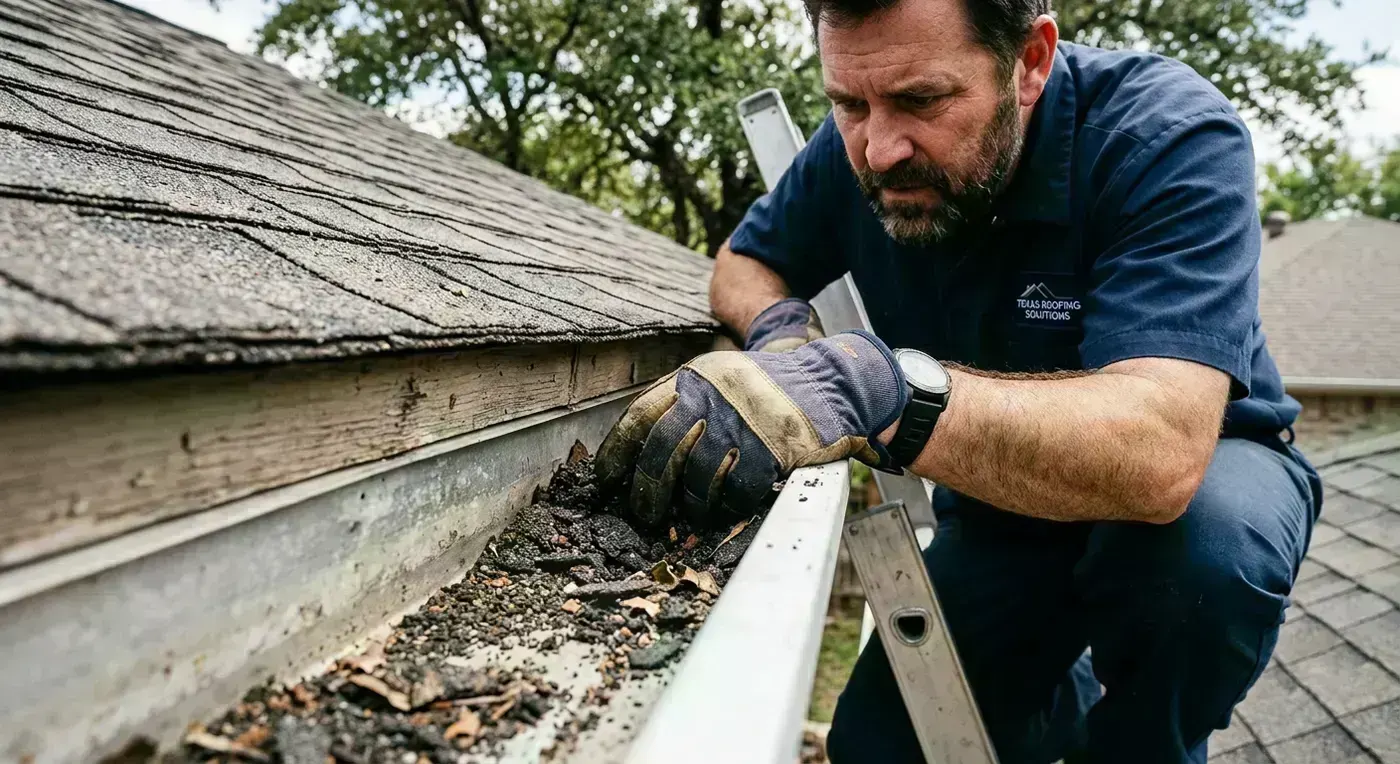
- Debris buildup: Leaves, pecan hulls, and twigs collect in valleys and behind chimneys, trapping moisture against the shingles and clogging gutters.
- Trapped humidity: Dense shade keeps sections of roof damp long after rain, encouraging moss, algae streaking, and premature rot in the decking.
- Impact damage: A dead limb dropping in a storm can puncture a roof in a single afternoon.
In the older, tree-heavy parts of Flower Mound, the north-facing and shaded roof planes often age years faster than the sun-exposed sides of the very same house. Keeping limbs trimmed back at least six to ten feet from the roof is one of the highest-return maintenance moves a homeowner here can make.
Older vs. newer neighborhoods
Flower Mound is unusual for how wide its housing-age range is. The town grew rapidly through the 1980s and 1990s, then kept building right through today's new construction along the western and northern edges. That means roof lifespans across town aren't uniform — they cluster by era.
Homes from the 1980s and 1990s in the older central and eastern neighborhoods are frequently on their second or third roof by now. Many were originally covered in basic three-tab shingles that have long since been replaced — sometimes with better architectural shingles, sometimes with whatever was cheapest after the last hailstorm. Quality of those past replacements varies enormously, and we regularly find older Flower Mound roofs with layered shingles, aging flashing, and worn-out pipe boots.
Newer subdivisions built in the 2010s and later almost always started with architectural (dimensional) shingles, and a growing share now carry Class 4 impact-rated products because builders and buyers here understand the hail risk. Those homes tend to have more life left — but "new" doesn't mean "immune," and even a five-year-old roof can be totaled by one bad storm.
Dominant roofing materials in town
The overwhelming majority of Flower Mound homes wear asphalt shingles, and today that means architectural shingles — the thicker, dimensional product that has largely replaced flat three-tab across the metroplex. They balance cost, appearance, and durability well, which is why they dominate. You can read more about their real-world performance in our breakdown of how long architectural shingle roofs last in Texas.
The fastest-growing segment locally is Class 4 impact-rated shingles. Given how often hail visits Denton County, more Flower Mound homeowners are choosing them — both for the added durability and for the insurance premium discounts many carriers offer. Our guide on how long Class 4 shingle roofs last in Texas walks through whether the upgrade pays off. You'll also find scattered tile, metal, and standing-seam roofs on higher-end and custom homes, especially in the newer luxury developments.
Typical lifespan by material
| Roofing material | Rated lifespan | Realistic Flower Mound lifespan |
|---|---|---|
| Three-tab asphalt | 20–25 yrs | 10–15 yrs |
| Architectural asphalt | 25–30 yrs | 15–20 yrs |
| Class 4 impact-rated shingle | 30–40 yrs | 18–25 yrs |
| Metal / standing seam | 40–60 yrs | 30–45 yrs |
| Concrete / clay tile | 50+ yrs | 40+ yrs (underlayment sooner) |
The pattern is consistent: real North Texas lifespans run roughly 30–40% shorter than the rating, and hail is the reason the gap is so wide here compared to milder parts of the country.
Common roof problems we see locally
Across Flower Mound service calls, a handful of issues come up again and again:
- Hail bruising and granule loss — often invisible from the ground and easy to miss without a close inspection.
- Cracked or slipped shingles on shaded planes — the tree-canopy tax on older neighborhoods.
- Failed pipe boots and flashing — the rubber gaskets around plumbing vents dry-rot in the Texas sun and are a leading cause of leaks on 10-to-15-year-old roofs.
- Clogged valleys and gutters — from pecan and oak debris, leading to standing water and fascia rot.
- Poor prior repairs — storm-chaser patch jobs from past hail seasons that don't hold up.
- Attic ventilation problems — baking hot attics that cook shingles from below and shorten lifespan.
Inspection advice for Flower Mound homeowners
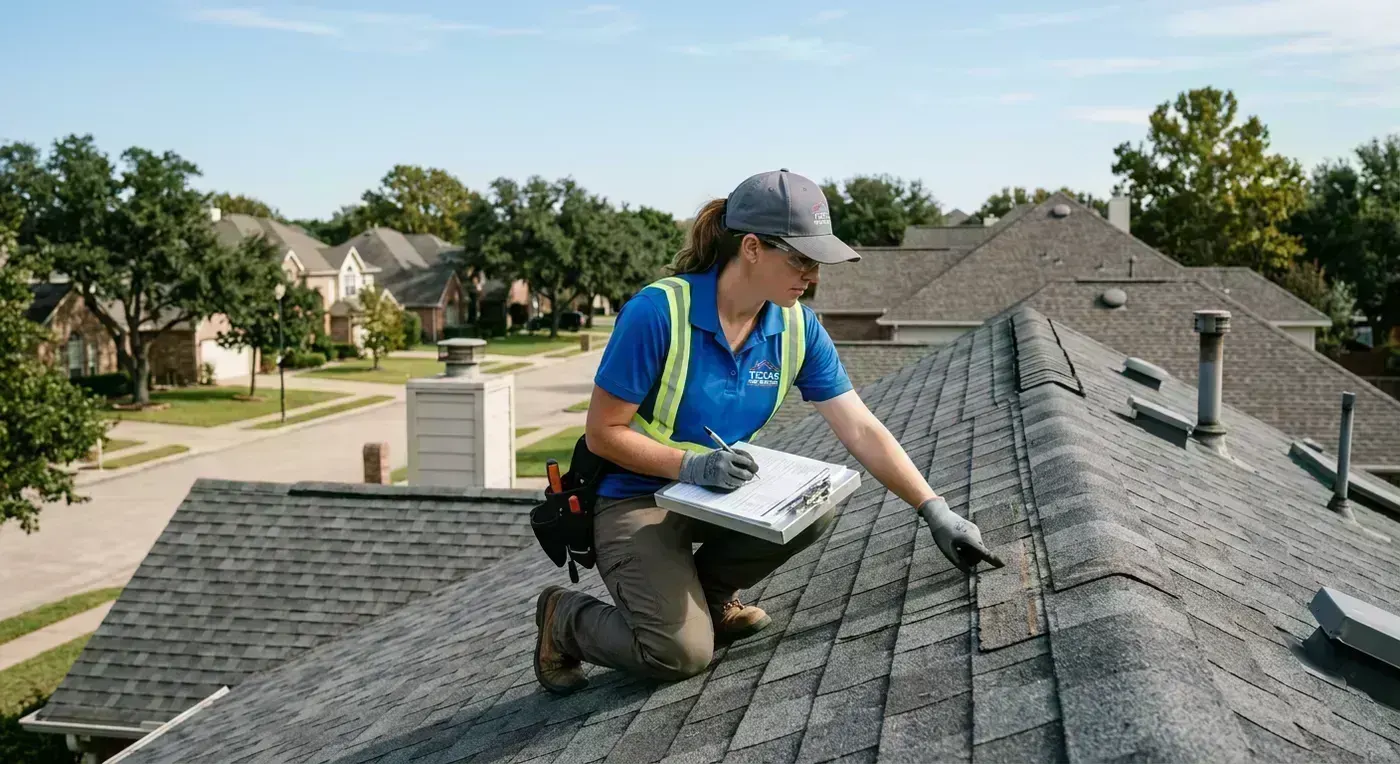
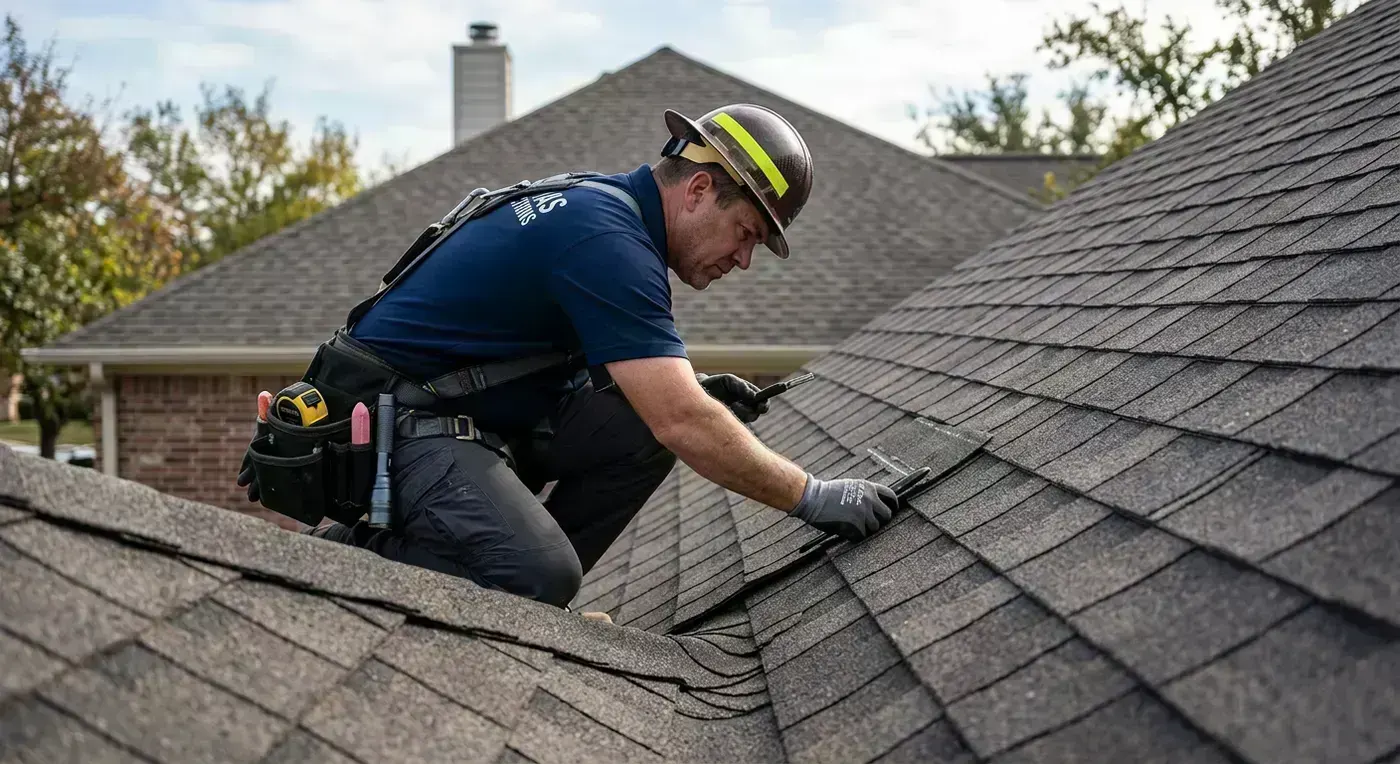
Because so much roof aging here is invisible, the single best habit is a professional inspection on a schedule — not just when you spot a stain on the ceiling. We recommend Flower Mound homeowners inspect:
- Once a year as a baseline, ideally in late spring after hail season winds down.
- After every significant hail or windstorm, regardless of how the roof looks from the yard.
- Before buying or selling a home — roof condition is a major line item in DFW real estate.
- When your roof crosses the 10-year mark, then more frequently after that.
RoofDog uses drone inspections to safely document every plane, valley, and flashing detail — including the shaded, tree-crowded sections of older Flower Mound roofs that are risky to walk. You get photos, an honest assessment, and no pressure. Ready to know where your roof really stands? Schedule an inspection today.
Frequently asked questions
How long should I expect my Flower Mound roof to last?
Plan on 15–20 years for a quality architectural shingle roof, and 18–25 years for Class 4 impact-rated. Hail is the wild card — one severe storm can shorten those numbers considerably.
Does the heavy tree cover in my neighborhood actually shorten my roof's life?
Yes. Overhanging limbs abrade shingles, drop debris that traps moisture, and keep shaded planes damp. In Flower Mound's older tree-lined streets, shaded roof sections often age several years faster than sunny ones on the same house.
How often does Flower Mound really get hail?
Denton County sits in DFW's hail alley, and many Flower Mound neighborhoods see a damaging storm every three to five years. Some springs bring more than one, which is why local roofs wear out faster than the ratings suggest.
My roof looks fine from the yard — do I still need an inspection after a storm?
Absolutely. Hail bruising and granule loss are usually invisible from the ground and often don't leak right away. By the time a stain appears on your ceiling, the damage has been progressing for a while and the insurance window may have closed.
Are Class 4 impact-rated shingles worth it in Flower Mound?
For most homeowners here, yes. Given the hail frequency, the added durability and the insurance premium discounts many carriers offer can make the upgrade pay for itself over the roof's life. See our Class 4 shingle guide for details.
My home is from the 1980s or 1990s — what should I watch for?
Older Flower Mound homes are often on their second or third roof, so watch for layered shingles, aging flashing, dry-rotted pipe boots, and the quality of past storm repairs. Have a professional confirm what's actually up there.
How can I make my roof last longer?
Trim tree limbs six to ten feet back from the roof, keep gutters and valleys clear of pecan and oak debris, ensure your attic is properly ventilated, and get annual inspections. These simple habits push your roof toward the top of its lifespan range.
Will my insurance cover a hail-damaged roof in Flower Mound?
Most homeowner policies here cover sudden hail and wind damage, subject to your deductible and claim deadlines. Documenting damage quickly after a storm is key — our drone inspection reports help support a claim.
Do newer subdivisions have better roofs?
Generally the roofs are newer and started as architectural or Class 4 shingles, so they have more life left. But no roof is hail-proof — even a recent roof can be totaled by one severe storm.
What are the most common leak sources you find in town?
Failed pipe boots and worn flashing top the list, followed by debris-clogged valleys and prior patch repairs that didn't hold. These often show up on roofs in the 10-to-15-year range.
Should I repair or replace my aging Flower Mound roof?
It depends on age, extent of damage, and whether there's hidden hail bruising. A roof under 10 years with isolated damage is often repairable; one past 15 with widespread granule loss is usually better replaced. An inspection settles it.
How much does storm chasing affect quality in the area?
After big hail events, out-of-town crews flood the metroplex and some do quick, low-quality work that fails within a few years. We regularly find those patch jobs on Flower Mound roofs. A local company with a lifetime workmanship warranty is a safer bet.
How do I schedule an inspection with RoofDog?
Call 940.828.ROOF or schedule online. We'll fly a drone inspection, document everything, and give you an honest recommendation — no pressure.
Summary
Roofs in Flower Mound typically last 12 to 20 years, with Class 4 roofs reaching 18 to 25 — well short of their printed ratings because of relentless DFW hail, gusty storms, punishing summer heat, and the town's heavy tree canopy. The wide range of home ages means lifespans cluster by era, with 1980s–90s homes often on their second or third roof and newer subdivisions carrying more durable architectural and impact-rated shingles. The smartest moves are trimming trees back, keeping debris clear, and inspecting annually and after every storm. RoofDog is here to help — drone inspections, a lifetime workmanship warranty, and 10% of profits to dog rescues. Protecting Homes. Saving Dogs. Call 940.828.ROOF or visit our Flower Mound roofing page.
You Might Also Need
Need a Roof Inspection?
Get expert advice and a free estimate from North Texas's trusted roofing professionals.
Schedule Free Inspection