How Long Do Roofs Last in Highland Village, TX?
Short answer: In Highland Village, a standard architectural-asphalt roof typically lasts 18 to 25 years — a bit shorter than the manufacturer's brochure promises. The combination of North Texas hail, gusty wind coming off Lake Lewisville, dense tree canopy, and lake-adjacent humidity all shave years off the average. Class 4 impact-rated shingles and premium materials can stretch that to 25–30+ years, but the town's 1990s and early-2000s homes are largely reaching the end of their original roofs right now, which is exactly why you see so many crews working the neighborhoods off Highland Village Road and along the lake.
Table of Contents
- The Highland Village climate and what it does to roofs
- DFW hail exposure
- Wind off Lake Lewisville
- Tree coverage and shade
- Lake humidity and algae streaking
- Housing stock age and the current replacement wave
- Dominant materials and how long each lasts
- Common problems we see in Highland Village
- Inspection advice
- Frequently asked questions
- Summary
The Highland Village climate and what it does to roofs
Highland Village sits in Denton County on the eastern shoulder of Lake Lewisville, and its weather is classic North Texas with a lakeside twist. Summers push past 100°F with brutal UV, winters swing between mild and the occasional hard freeze, and spring brings the storm season that defines roofing here. That thermal cycling — baking heat by day, sharp cooldowns at night — makes asphalt shingles expand and contract thousands of times a year. Over two decades that fatigue cracks the asphalt, curls the edges, and loosens the granules that protect the mat underneath.
This is why a Highland Village roof rarely reaches the 30-year number printed on the wrapper. The DFW climate is simply harder on shingles than the mild test conditions those ratings assume. For the region-wide picture, see our overview of how long roofs last in Texas.
DFW hail exposure
If there is one factor that ends Highland Village roofs early, it is hail. The Dallas–Fort Worth metroplex sits squarely in one of the most active hail corridors in the country, and Denton County catches its share of spring supercells rolling in from the west. A single storm dropping quarter- to golf-ball-sized stones can bruise every north- and west-facing slope in a neighborhood in ten minutes.
Hail damage is sneaky. It rarely causes an immediate leak — instead it knocks granules loose and fractures the shingle mat, accelerating aging so the roof fails years earlier than it should. Many Highland Village homeowners only discover storm damage when a neighbor's insurance claim prompts them to look. This is the single biggest reason we recommend upgrading to Class 4 impact-rated shingles at replacement time. They resist bruising far better and often earn an insurance premium discount.
Wind off Lake Lewisville
Being on the water is beautiful — and it comes with wind. Lake Lewisville offers a wide, open fetch with nothing to slow the gusts before they hit lakeside and near-lake homes. Straight-line winds during thunderstorms regularly top 50–60 mph here, and those exposed ridgelines and gable ends take the brunt of it.
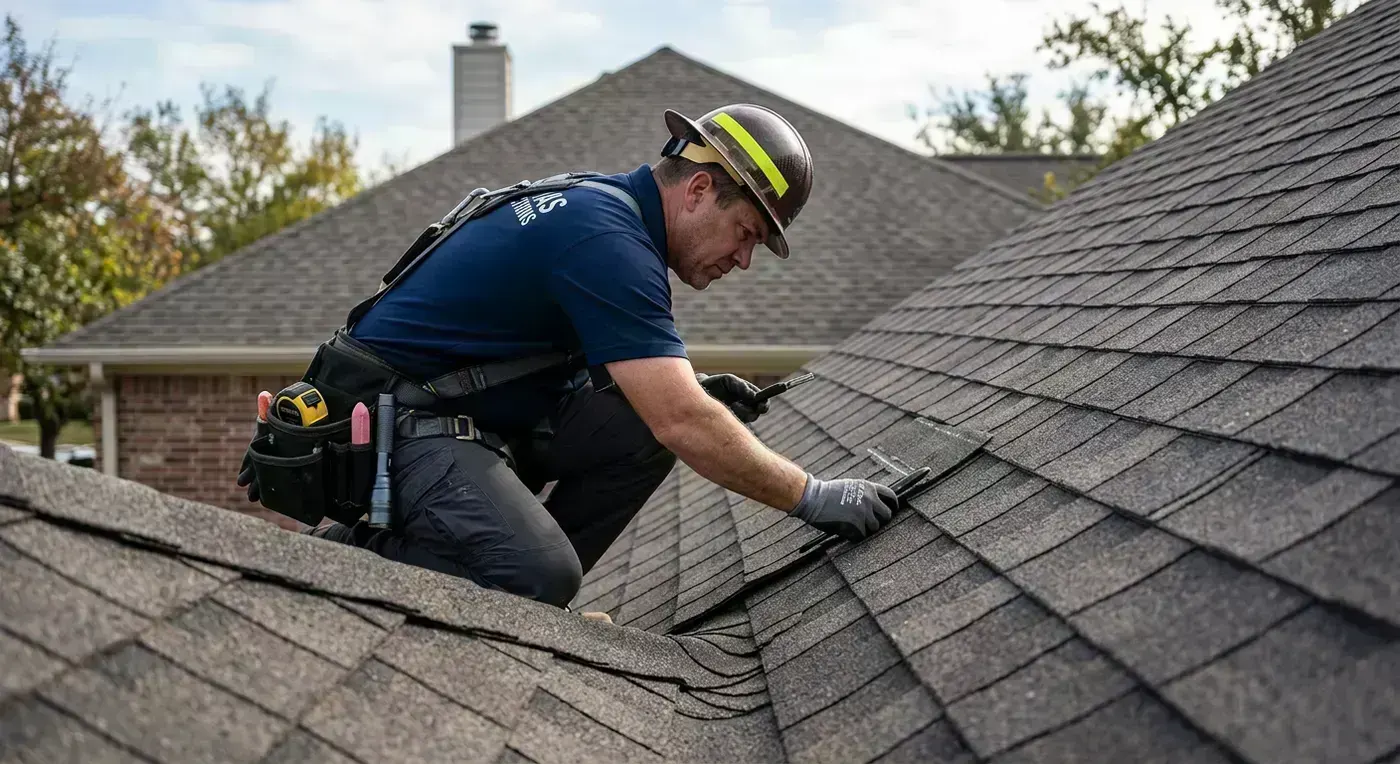
Wind lifts and creases shingle tabs, tears off older three-tab shingles, and works ridge caps loose over time. Once the wind breaks the adhesive seal on a shingle, wind-driven rain gets underneath and the countdown to a leak begins. Homes closest to the lake and those on the higher, more exposed lots tend to show wind wear a few years sooner than sheltered interior lots.
Tree coverage and shade
Highland Village earned its name honestly — it is a genuinely leafy, mature suburb with big established oaks and elms shading family streets. Those trees are part of the town's charm, but they are hard on roofs in three specific ways:
- Overhanging limbs abrade shingles every time the wind moves them, and drop heavy branches during ice and windstorms.
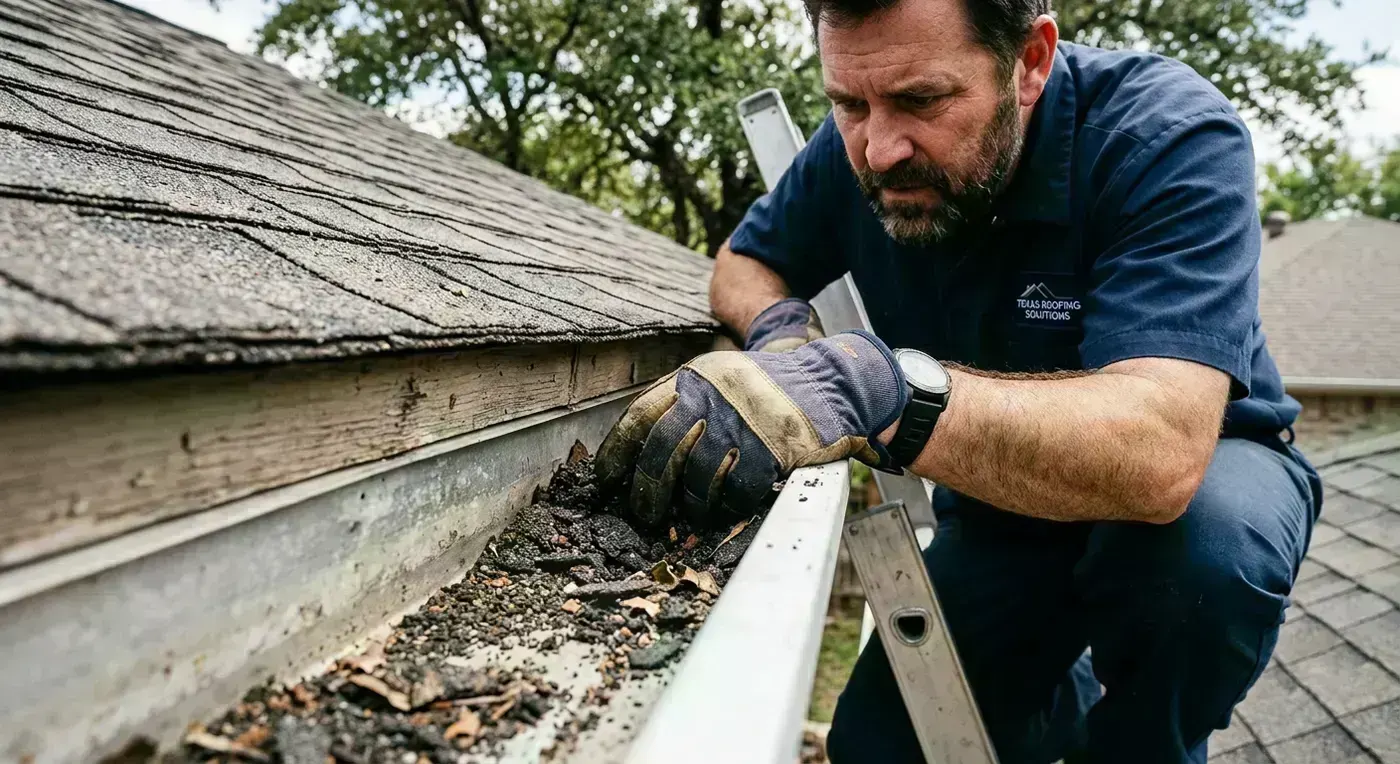
- Leaf and debris buildup in valleys and gutters traps moisture against the roof, rotting decking and backing water up under shingles.
- Persistent shade keeps north slopes damp long after a rain, which — combined with lake humidity — feeds algae and moss.
Keeping limbs trimmed back from the roofline and gutters clear is one of the cheapest, highest-return maintenance habits a Highland Village homeowner has.
Lake humidity and algae streaking
Here is the truly local wrinkle. The moisture rising off Lake Lewisville keeps humidity higher near the water than in drier inland DFW suburbs. On the shaded, north-facing slopes that dry out slowly, that dampness feeds Gloeocapsa magma — the blue-green algae responsible for those ugly black streaks you see running down so many roofs on this side of town.
Algae streaking is more than cosmetic. The organism feeds on the limestone filler in shingles and holds moisture against the surface, which over time degrades the shingle and shortens its life. If your north slopes look darkly streaked while the sunny south slopes stay clean, that is the lake-humidity signature at work. Algae-resistant shingles (with copper or zinc granules) are worth specifying at replacement, especially on shaded, lake-adjacent homes.
Housing stock age and the current replacement wave
Highland Village did most of its growing in the 1990s and early 2000s, filling in the family neighborhoods that define the town today. Do the math: a roof installed in 1998 or 2003 is now 20–27 years old. That lands right in — or past — the realistic service window for the architectural-asphalt shingles that were standard on those homes.
The result is a genuine replacement wave rolling through town right now. Many homes are on their first or second roof, and a lot of those original roofs are quietly failing at the same time. If your neighbors are getting new roofs, it is not a coincidence — your house was likely built the same year with the same shingles under the same sky.
Dominant materials and how long each lasts
Architectural (dimensional) asphalt shingles dominate Highland Village rooflines, and increasingly homeowners are upgrading to Class 4 impact-rated versions at replacement. Here is how the common options hold up under real local conditions:
| Roofing material | Typical lifespan in Highland Village | Notes |
|---|---|---|
| Three-tab asphalt (older stock) | 12–18 years | Vulnerable to lake wind and hail; mostly being phased out. |
| Architectural asphalt | 18–25 years | The local standard. See our architectural shingle guide. |
| Class 4 impact-rated shingles | 25–30+ years | Best hail defense; may earn insurance discounts. |
| Metal (standing seam) | 40–60 years | Uncommon but growing; excellent wind and algae resistance. |
| Concrete/clay tile | 40–50+ years | Rare here; underlayment still needs periodic replacement. |
Common problems we see in Highland Village
- Hail bruising on north and west slopes — granule loss and mat fractures that shorten roof life.
- Wind-lifted and creased shingles along ridges and gable ends on lake-exposed homes.
- Algae black-streaking on shaded, humid north slopes.
- Clogged valleys and gutters from oak and elm debris, leading to backed-up water and rotted decking.
- Aging pipe boots and flashing — the rubber collars around plumbing vents crack and leak long before the shingles fail, a classic culprit on 20-year-old roofs.
- Worn ridge caps and exposed nail heads that let water in at the most exposed point of the roof.
Inspection advice
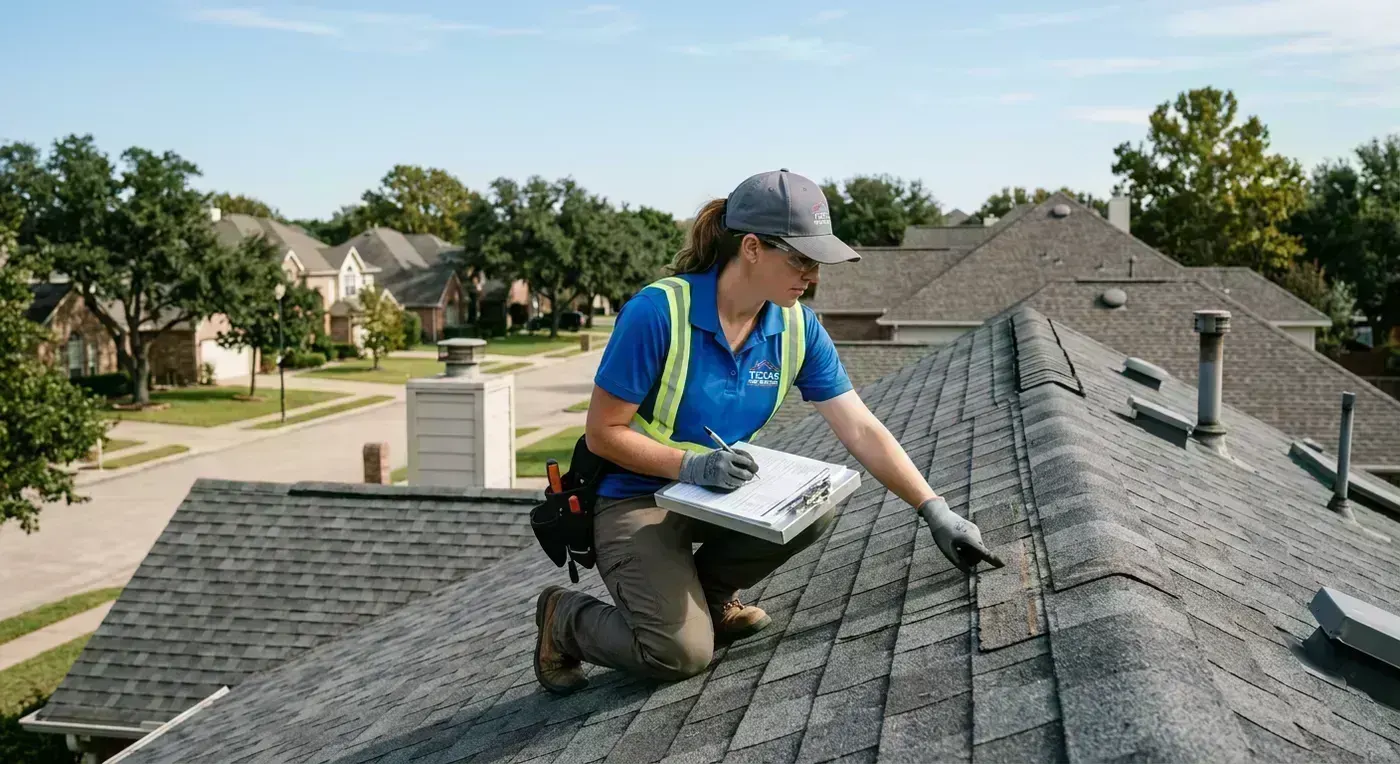
Given the town's roof-replacement wave, every Highland Village homeowner with a roof over 15 years old should have a professional inspection at least once a year, and again after any major hailstorm. Do not rely on a ground-level glance — hail and wind damage is often invisible from the driveway.
RoofDog uses drone inspections to photograph every slope in high resolution without walking (and potentially damaging) your roof, then walks you through exactly what we find. If it is time, our roof replacement crews back every job with a lifetime workmanship warranty. And because we believe in giving back, RoofDog donates 10% of profits to dog rescues — Protecting Homes. Saving Dogs.
Frequently asked questions
How long should I expect my roof to last in Highland Village?
For the architectural-asphalt shingles common here, plan on 18–25 years. Class 4 impact-rated shingles can reach 25–30+ years. Lake wind, hail, and humidity typically pull real-world life toward the lower end of the range.
Why do so many of my neighbors have new roofs right now?
Because most Highland Village homes were built in the 1990s and early 2000s, their original roofs are all reaching replacement age around the same time. When you see a wave of crews in a neighborhood, it usually reflects both storm damage and shared housing-stock age.
What causes the black streaks on my north-facing roof slopes?
That is algae (Gloeocapsa magma), fed by the extra humidity coming off Lake Lewisville and the slow-drying shade on north slopes. It degrades shingles over time. Algae-resistant shingles with copper or zinc granules help prevent it.
Does being near Lake Lewisville really shorten my roof's life?
Yes, in two ways: open-water wind exposure stresses shingles and ridge caps, and higher humidity feeds algae growth on shaded slopes. Lake-adjacent and higher, exposed lots tend to show wear a few years sooner than sheltered interior lots.
Should I upgrade to Class 4 shingles when I replace my roof?
In a hail corridor like DFW, almost always. Class 4 impact-rated shingles resist hail bruising far better and frequently qualify you for an insurance premium discount that offsets part of the upgrade cost over time.
How often should I get my Highland Village roof inspected?
At least once a year for any roof over 15 years old, plus a targeted inspection after every significant hailstorm. RoofDog's drone inspections are free and cover every slope in detail.
Can hail damage my roof without causing a leak?
Absolutely. Hail usually knocks granules loose and fractures the shingle mat rather than punching through. The roof keeps working for a while but ages much faster, so damage is easy to miss until it is too late to file a timely claim.
My roof is 20 years old but looks fine — do I still need to worry?
Yes. At 20 years, an original Highland Village architectural-asphalt roof is near the end of its service life even if it looks okay from the ground. Aging pipe boots, brittle shingles, and accumulated hail wear often lurk out of sight.
Will the big oak trees over my house hurt my roof?
They can. Overhanging limbs abrade shingles and drop debris that clogs valleys and gutters, trapping moisture. The shade also keeps north slopes damp and algae-prone. Trim limbs back and keep gutters clear to extend roof life.
What are the first signs my Highland Village roof needs replacing?
Watch for curling or cupping shingles, bald spots where granules are gone, heavy black algae streaking, granules collecting in gutters, cracked pipe boots, and any daylight or water stains in the attic.
Does RoofDog handle insurance claims for hail damage?
We document damage thoroughly with drone imagery to support your claim and work alongside your process. Call 940.828.ROOF and we will walk you through the next steps after a storm.
What warranty does RoofDog offer on a new roof?
Every RoofDog roof replacement is backed by a lifetime workmanship warranty, on top of the manufacturer's material warranty. And 10% of our profits go to dog rescues — Protecting Homes. Saving Dogs.
How quickly can I get an inspection scheduled?
Usually within a few days, and faster after major storms when timing matters for claims. You can schedule online or call 940.828.ROOF.
Summary
Roofs in Highland Village, TX typically last 18–25 years for architectural asphalt and 25–30+ years with Class 4 impact-rated shingles — but DFW hail, wind off Lake Lewisville, mature tree debris, and lake humidity that drives algae streaking all push real-world life toward the shorter end. With most of the town's homes built in the 1990s and early 2000s, a genuine replacement wave is underway right now. If your roof is over 15 years old or has weathered recent storms, get it inspected. RoofDog offers free drone inspections, a lifetime workmanship warranty, and gives 10% of profits to dog rescues. Call 940.828.ROOF or schedule today. Protecting Homes. Saving Dogs.
You Might Also Need
Need a Roof Inspection?
Get expert advice and a free estimate from North Texas's trusted roofing professionals.
Schedule Free Inspection