How Long Do Roofs Last in Fort Worth, TX?

Short answer: In Fort Worth, a standard architectural asphalt roof usually lasts 15–20 years, but our spot in DFW's hail alley means many roofs get replaced at 10–15 years after a storm. Older 3-tab shingles often tap out around 12–16 years, metal roofs can run 40–60 years, and impact-resistant Class 4 shingles frequently survive hail seasons that destroy everything around them.
Fort Worth is not one roofing market — it's dozens. A century-old bungalow in Fairmount, a 1970s ranch off Camp Bowie, a 1990s two-story in far southwest, and a 2022 build up near Alliance all age completely differently. This guide breaks down what actually determines roof lifespan across Tarrant County, neighborhood by neighborhood, so you can plan realistically instead of guessing.
Table of contents
- Fort Worth's climate and why it wears roofs down
- Hail alley: the single biggest factor
- Home age and roofs across Fort Worth neighborhoods
- How long each roofing material lasts here
- Common roof problems in Fort Worth
- Inspection advice for Tarrant County homeowners
- How to extend your roof's life
- Frequently asked questions
- Summary
Fort Worth's climate and why it wears roofs down
Fort Worth sits at the western edge of the Dallas–Fort Worth metroplex, where the humid east meets the drier west of Texas. That transition zone gives us punishing summers with weeks of 100°F-plus heat, sharp temperature swings between seasons, and a spring storm season that is genuinely severe. Roofs here don't just get old — they get beaten.
Thermal cycling is a slow killer. On a July afternoon, dark shingles on a west-facing slope can exceed 160°F, then cool rapidly after a sunset thunderstorm. That expansion and contraction, repeated thousands of times, dries out asphalt, curls shingle edges, and loosens the granules that protect the mat underneath. Combine that with intense UV exposure at our latitude and you get accelerated aging compared to cooler, cloudier parts of the country.
This is why national manufacturer lifespan estimates run optimistic in North Texas. A shingle rated for "30 years" on the wrapper is describing lab conditions — not a Fort Worth summer stacked on top of hail season. For a broader statewide view, see our guide on how long roofs last in Texas.
Hail alley: the single biggest factor
If there's one thing that separates Fort Worth roofs from roofs almost anywhere else in the country, it's hail. Tarrant County sits squarely in what insurers and meteorologists call "hail alley," and Fort Worth sees damaging hail events with unsettling regularity — often multiple times per spring. Storms rolling in from the west and northwest can drop stones from pea-size to baseball-size in a matter of minutes.
Hail rarely destroys a roof in one dramatic collapse. Instead, it bruises and fractures shingles, knocking granules loose and creating soft spots where the asphalt mat is exposed. Those bruises don't always leak right away — but they dramatically shorten the roof's remaining life, and the damage often isn't visible from the ground. This is exactly why so many Fort Worth roofs get replaced at 10–15 years rather than reaching their theoretical 20+ year lifespan.
Why hail changes the math: Even a moderate hailstorm can subtract years off your roof's life without causing an immediate leak. After any significant hail event in your ZIP code, a professional inspection is worth far more than a glance from the driveway. RoofDog offers drone inspections that document damage safely and precisely — call 940.828.ROOF.
This hail exposure is also why we're seeing rapid adoption of impact-resistant Class 4 shingles across Fort Worth. They cost more upfront but hold up far better to repeated hail seasons — and many insurers offer premium discounts for them. Learn more in our breakdown of how long Class 4 shingle roofs last in Texas.
Home age and roofs across Fort Worth neighborhoods
Fort Worth's housing stock spans well over a century, and roof age tends to track neighborhood age. Understanding where your home falls helps set realistic expectations.
Historic districts (Fairmount, Ryan Place, Mistletoe Heights)
The Fairmount district holds one of the largest collections of early-20th-century homes in the Southwest, with many houses pushing 100 years old. These roofs often have steep pitches, complex gables, and — in some cases — original or historically appropriate materials. Steep slopes actually shed water and hail well, but the complexity means more valleys, flashing points, and penetrations where leaks start. Mature tree canopies in these neighborhoods add shade (good for heat) but also debris and overhanging limbs (bad for storms).
Mid-century and ranch neighborhoods (Wedgwood, Meadowbrook, Ridglea)
Vast swaths of Fort Worth were built from the 1950s through the 1970s. These lower-pitch ranch and split-level homes have frequently been re-roofed multiple times. Some carry metal roofs — either original standing-seam on certain properties or aftermarket installs — while most run asphalt. Because they've been through several roof cycles, documentation matters: knowing the age of the current roof is often the hardest part.
1980s–2000s growth (far southwest, far south, Summerfields)
The suburban expansion of the '80s, '90s, and 2000s produced huge neighborhoods of two-story homes with architectural asphalt shingles. Many of these are now on their second or third roof, and their steeper front-facing gables take direct hail hits.
New growth (Alliance, far north, far west)
The explosive development up toward Alliance and out west means thousands of roofs installed within the last 5–15 years. These are still young, but they've already weathered several hail seasons — and builder-grade shingles on new construction don't always live up to their ratings.
How long each roofing material lasts here
Material choice is the second biggest lifespan factor after hail. Here's what we realistically see across Fort Worth:
| Roofing material | Typical Fort Worth lifespan | Notes |
|---|---|---|
| 3-tab asphalt (legacy) | 12–16 years | Common on older homes; most vulnerable to hail and wind uplift. |
| Architectural asphalt | 15–20 years | The Fort Worth default; often cut short by hail. More here. |
| Class 4 impact-resistant | 20–30 years | Best hail value in DFW; may earn insurance discounts. |
| Metal (standing seam) | 40–60 years | Seen on some historic and ranch properties; can dent in severe hail but rarely fails. |
| Tile / slate (rare) | 50+ years | Uncommon here; underlayment usually fails before the tile does. |
Common roof problems in Fort Worth
Across every neighborhood, a few issues show up again and again:
- Hail bruising and granule loss — the top cause of premature replacement in Tarrant County.
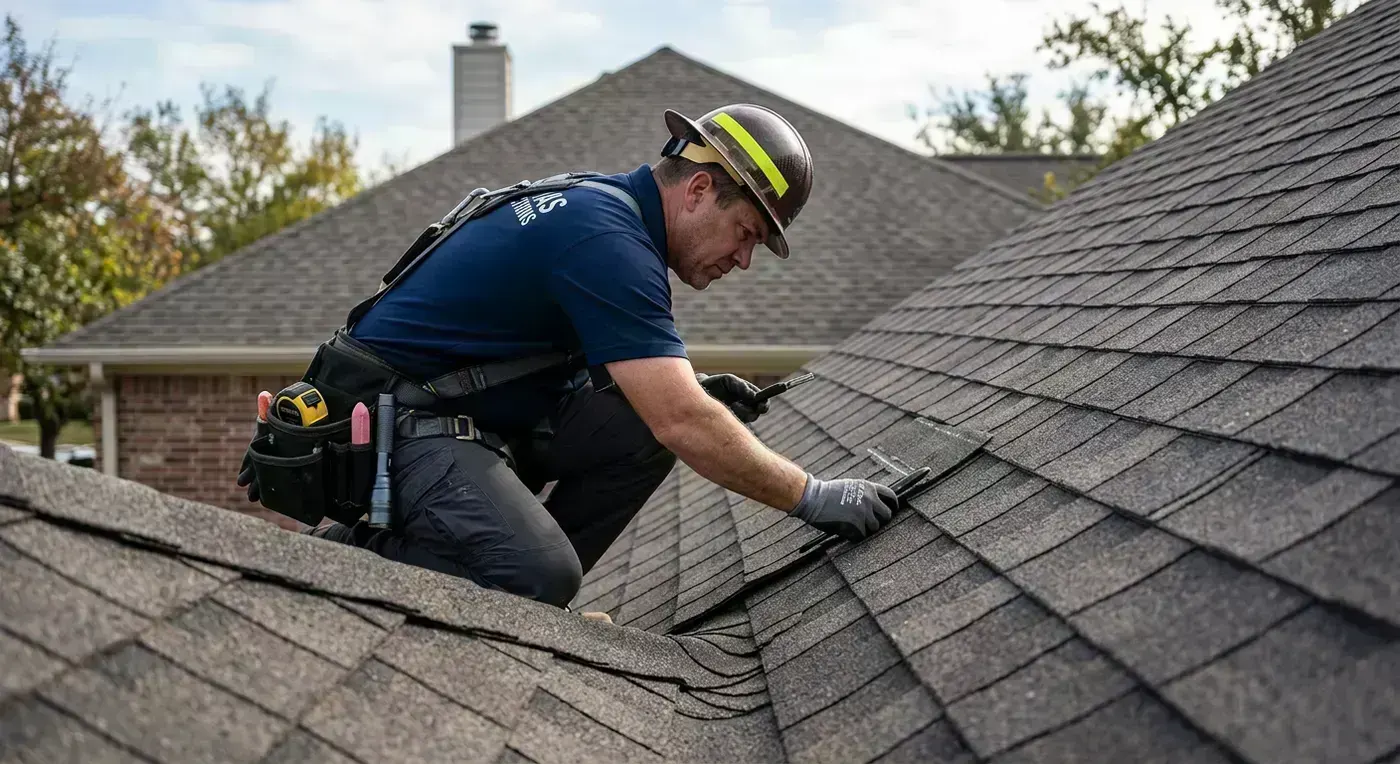
- Wind-lifted and missing shingles — straight-line winds ahead of thunderstorms peel back edges and ridge caps, especially on older 3-tab.
- Flashing failures — chimneys, valleys, and skylights (common on Fairmount-era homes) are frequent leak origins.
- Tree damage and debris — the mature canopies in Ryan Place, Mistletoe Heights, and Meadowbrook drop limbs and trap moisture-holding leaves in valleys.
- Heat-driven aging — curling, cracking, and blistering from relentless summer sun on west and south slopes.
- Poor attic ventilation — traps heat, cooks shingles from below, and shortens life in homes without adequate ridge/soffit airflow.
Inspection advice for Tarrant County homeowners
Given our storm frequency, Fort Worth homeowners should treat inspections as routine maintenance, not a last resort. A good rhythm:
- After every significant hailstorm — don't wait for a leak. Damage is often invisible from the ground.
- Once a year as a baseline, ideally in late spring after storm season winds down.
- Before buying or selling — roof age and condition are major negotiating points on Fort Worth's older housing stock.
- When your roof passes 12 years — the window where hidden hail history starts to matter most.
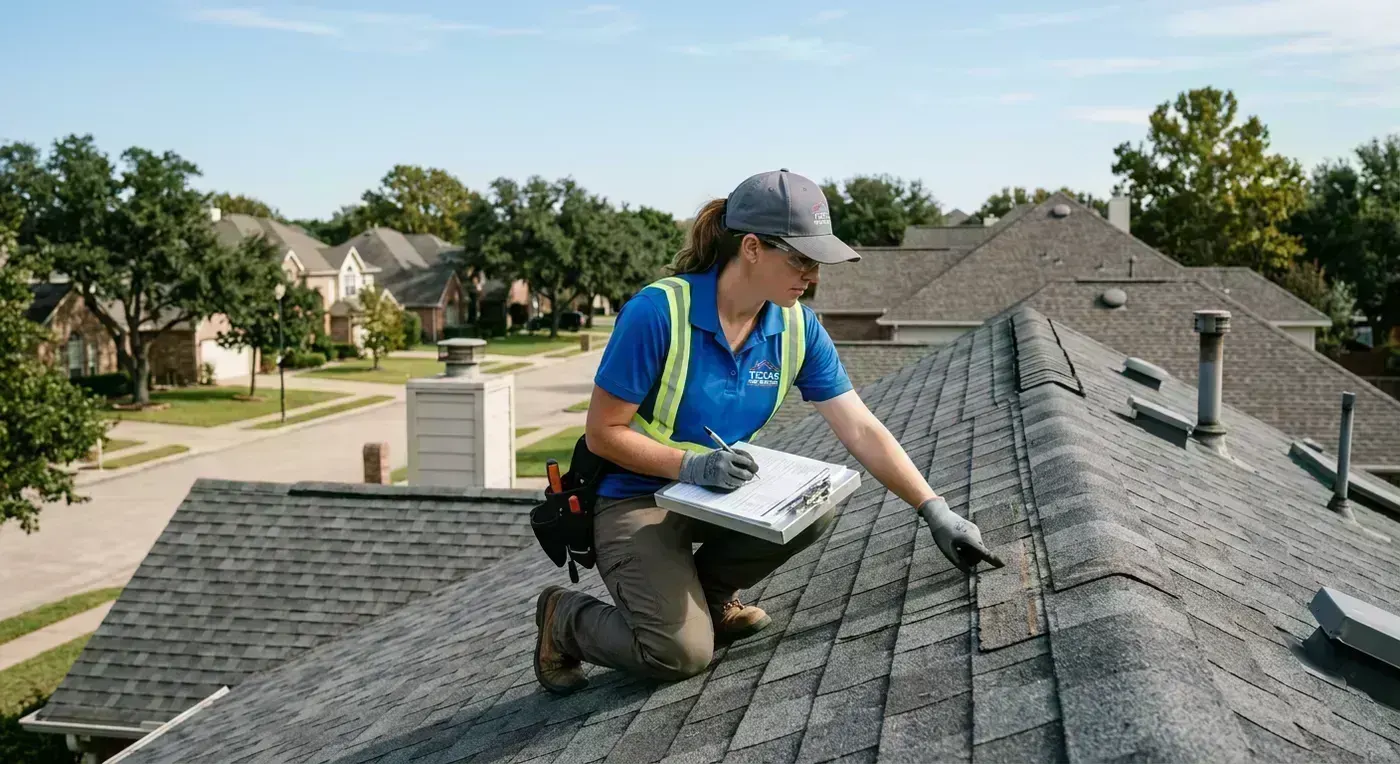
Why drone inspections matter here: Steep Fairmount rooflines and fragile aging shingles make foot traffic risky. RoofDog uses drone inspections to capture high-resolution imagery of every slope, valley, and penetration without walking a compromised roof — then walks you through exactly what we find. Every job is backed by our lifetime workmanship warranty. Schedule an inspection or call 940.828.ROOF.
How to extend your roof's life
You can't stop Fort Worth hail, but you can add years to your roof:
- Trim overhanging limbs in older tree-lined districts before storm season.
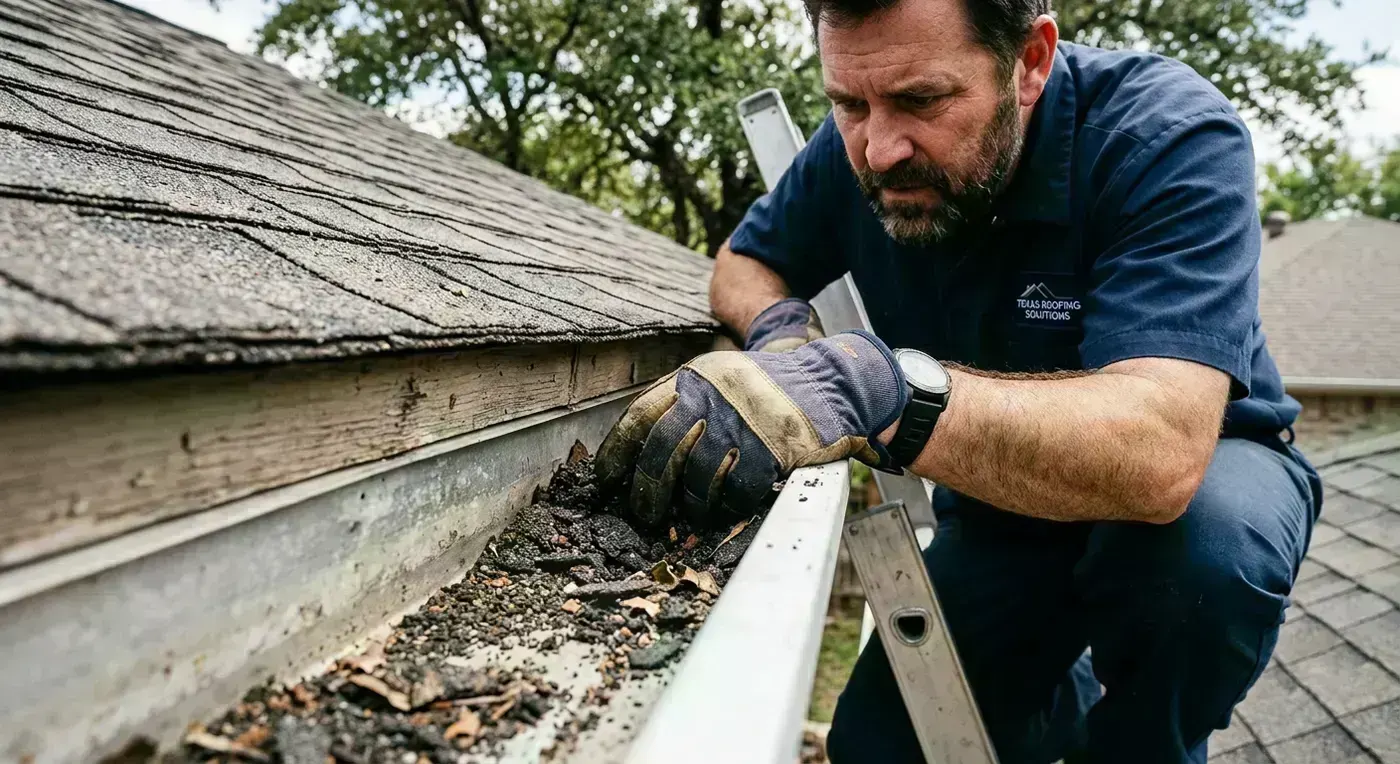
- Keep gutters and valleys clear so water and debris don't pool.
- Improve attic ventilation to cut heat buildup under the deck.
- Address small issues — a lifted shingle, a cracked boot — before they become deck rot.
- Choose Class 4 shingles at your next replacement for real hail resilience.
- Keep dated inspection records, which help enormously with insurance claims after storms.
When it's time for a new roof, working with a local team that understands Tarrant County's storm patterns matters. Explore our Fort Worth roofing services to see how we handle everything from historic bungalows to new far-north builds.
Frequently asked questions
How long should a new asphalt roof last in Fort Worth?
Realistically, plan for 15–20 years on architectural shingles — but budget for the possibility that hail cuts that to 10–15 years. Class 4 impact-resistant shingles are the better long-term bet in our climate.
Does hail really shorten roof life that much in Tarrant County?
Yes. Fort Worth's position in hail alley means repeated bruising and granule loss that ages roofs faster than heat or wind alone. Many local replacements are hail-driven, not age-driven.
My roof looks fine from the ground after a hailstorm. Do I still need an inspection?
Absolutely. Hail damage is frequently invisible from the driveway — bruises and fractured mats don't leak immediately but shorten lifespan. A drone inspection documents it before it becomes a bigger problem.
Are Fairmount and other historic-district roofs harder to maintain?
They can be. Steep pitches shed water well but add valleys, flashing, and penetrations where leaks start, and the century-old framing demands careful, experienced work. Foot traffic on old roofs is risky, which is why drones help here.
Is a metal roof worth it in Fort Worth?
For longevity, yes — metal can last 40–60 years. Severe hail may dent panels cosmetically, but structural failure is rare. It's a strong choice for historic and ranch-style homes.
Why do builder-grade roofs on new far-north homes fail early?
Builder-grade shingles are often the minimum spec. Even a 5–10 year-old roof in Alliance or far west Fort Worth may already show hail wear. Younger doesn't automatically mean healthy here.
How often should I get my Fort Worth roof inspected?
At least once a year, plus after any significant hail or wind event. Late spring is ideal, once storm season settles down.
Will insurance cover a hail-damaged roof?
Often yes, if the damage is documented and the claim is filed promptly. Keeping dated inspection records strengthens your position considerably in Tarrant County's active claim environment.
Do Class 4 shingles lower my insurance premium?
Many Texas insurers offer discounts for impact-resistant Class 4 shingles. Combined with their longer life, they frequently pay for themselves over time in a hail-prone city like Fort Worth.
My 1970s ranch has been re-roofed a few times. How do I know the current roof's age?
Check permit records with the city, prior inspection reports, or closing documents. If nothing turns up, a professional inspection can estimate age from wear patterns and material type.
Does Fort Worth's summer heat really damage roofs?
Yes. Sustained 100°F-plus days and 160°F shingle surface temps drive thermal cycling that curls, cracks, and dries out asphalt — especially on west- and south-facing slopes with poor attic ventilation.
Should I repair or replace an aging Fort Worth roof?
Isolated issues on a roof under ~12 years can often be repaired. Widespread hail damage, multiple leaks, or a roof past 15 years usually favors replacement — an inspection makes the call clear.
Who do I call for a trustworthy inspection in Fort Worth?
RoofDog serves Fort Worth and Tarrant County with drone inspections and a lifetime workmanship warranty. Call 940.828.ROOF or schedule online. We also give 10% of profits to dog rescues — "Protecting Homes. Saving Dogs."
Summary
Roof lifespan in Fort Worth depends on three things: material, home age, and — above all — hail. Architectural asphalt averages 15–20 years but frequently gets replaced at 10–15 due to our hail alley exposure; 3-tab runs shorter, Class 4 shingles and metal run much longer. With a housing stock spanning century-old Fairmount bungalows to brand-new Alliance builds, there's no single answer — but yearly inspections and post-storm checks are non-negotiable here. RoofDog helps Fort Worth homeowners across every neighborhood with drone inspections, honest assessments, and a lifetime workmanship warranty. Call 940.828.ROOF or schedule today. Protecting Homes. Saving Dogs.
You Might Also Need
Need a Roof Inspection?
Get expert advice and a free estimate from North Texas's trusted roofing professionals.
Schedule Free Inspection