How Long Do Roofs Last in McKinney, TX?

Short answer: In McKinney, a standard 3-tab asphalt roof usually lasts 12–16 years, architectural (dimensional) shingles run 18–25 years, and impact-rated Class 4 shingles or metal can push 25–40+ years. But those are national numbers — Collin County''s hail, straight-line wind, and brutal summer heat routinely knock 3–7 years off the low end. What actually decides your roof''s lifespan here is the material, the quality of the install, and whether hail found you first.
McKinney is unlike almost any other roofing market in North Texas, and it comes down to one thing: age spread. Drive ten minutes and you go from 1890s Victorian and Craftsman homes shading the historic downtown square to gleaming master-planned rooftops in Trinity Falls, Craig Ranch, and Stonebridge Ranch that were nailed down last year. That range — from century-old structures to production builds still under warranty — means there is no single "McKinney roof." This guide breaks it down by home age, material, and the specific weather this stretch of Collin County throws at your shingles.
Table of contents
- McKinney''s climate and what it does to roofs
- DFW hail alley: the number-one lifespan killer
- The historic-vs-new age split
- Dominant materials and how long each lasts
- Common roofing problems in McKinney
- How to extend your roof''s life
- Inspection advice
- Frequently asked questions
McKinney''s climate and what it does to roofs
McKinney sits in the humid-subtropical belt of North Texas, which means long, punishing summers and volatile spring storm seasons. From June through September, roof surface temperatures regularly climb past 150°F. That heat bakes the volatile oils out of asphalt shingles, causing them to grow brittle and lose granules years faster than the same shingle would in a milder climate. Add the daily thermal cycling — a shingle can swing 60°F between a July afternoon and a clear night — and the constant expansion and contraction slowly loosens seals and fasteners.
Then there''s spring. March through June is when the Gulf moisture collides with dry air rolling in from the west, and Collin County ends up directly under some of the most active storm tracks in the country. This is the same weather that shortens roof life all across the state — we cover the statewide picture in how long roofs last in Texas — but McKinney''s position in the northern DFW metroplex puts it squarely in the crosshairs.
DFW hail alley: the number-one lifespan killer
If you own a home in McKinney, hail — not heat, not age — is the single biggest threat to your roof''s lifespan. Collin County sits inside what insurers informally call "hail alley," the corridor running up through North Texas that logs some of the highest hail-claim frequencies in the United States. It is not unusual for McKinney neighborhoods to take a significant hail event every three to five years, and a single storm with 1.5-inch stones can end the life of an otherwise healthy 3-tab roof in about twenty minutes.
Hail damage is sneaky. Unlike a wind-torn roof, hail bruising often isn''t visible from the ground — it shows up as soft spots where the granule surface is fractured and the mat underneath is exposed. Those bruises turn into leaks a year or two later, long after the storm and often after the insurance claim window has closed. This is exactly why post-storm inspections matter so much here, and why we lean on drone imaging to document damage safely and thoroughly.
The historic-vs-new age split
Here''s what makes McKinney genuinely different from a place like Frisco or Allen. The city grew in two very distinct waves, and the roofs reflect it.
The historic districts. Around the downtown square and the surrounding streets, you''ll find homes built in the late 1800s and early 1900s — Victorians, Craftsman bungalows, and Folk-style cottages, many of them a hundred years old or more. These homes often have steeper, more complex roof geometry, original wood decking, and a patchwork of roofing history layered over the decades. Some sit under the deep tree canopy that older McKinney is known for, which brings its own set of problems (more on that below). Roofing these homes is not a production job — it demands respect for the structure and, frequently, coordination with historic-district guidelines.
The master-planned growth. On the other end of town, Trinity Falls, Craig Ranch, Stonebridge Ranch, and the newer stretches near US-380 are packed with production homes built in the last one to twenty years. These roofs are overwhelmingly architectural asphalt shingles, installed fast and to a builder''s budget. Many are now hitting the age — 12 to 18 years — where the original builder-grade shingles are due for replacement, especially after a couple of hail seasons.
RoofDog has completed installs across both sides of this divide, from careful tear-offs on older homes near the square to full architectural and Class 4 upgrades in the newer subdivisions.
Dominant materials and how long each lasts
The vast majority of McKinney homes wear asphalt shingles, but the grade varies enormously between the builder-grade product on a starter subdivision and a premium impact-rated system. Here''s how the common materials stack up under McKinney conditions:
| Material | Typical McKinney lifespan | Notes |
|---|---|---|
| 3-tab asphalt | 12–16 years | Builder-grade; first to fail in hail. |
| Architectural (dimensional) asphalt | 18–25 years | Today''s McKinney standard; heavier, wind-rated. |
| Class 4 impact-rated shingle | 25–35 years | Best hail value; often earns insurance discounts. |
| Standing-seam metal | 40–60 years | Excellent longevity; can dent in severe hail. |
| Clay / concrete tile | 40–50+ years | Seen on some upscale and historic-style homes. |
| Wood shake (legacy) | 15–25 years | Found on older homes; fire and hail concerns. |
For most McKinney homeowners, the real decision is between standard architectural shingles and a Class 4 upgrade. Architectural shingles are the workhorse of the newer subdivisions — we dig into their performance in how long architectural shingle roofs last in Texas. If hail is your primary worry (and in Collin County it should be), impact-rated shingles are usually worth the premium; see how long Class 4 shingle roofs last in Texas for the full breakdown and the insurance-discount angle.
Common roofing problems in McKinney
Across the calls we run in McKinney, the same handful of issues come up again and again:
- Hail bruising and granule loss. By far the most common — and the most under-reported, because it hides from the ground.
- Wind-lifted and creased shingles. Straight-line winds and the occasional severe-storm gust front pry up shingle edges, breaking the adhesive seal and inviting the next rain in.
- Tree damage in the older districts. The mature canopy near downtown and the established neighborhoods drops limbs, dumps debris into valleys, and keeps north-facing slopes damp — accelerating algae streaking and decking rot.
- Aging builder-grade roofs. Whole subdivisions from the early 2000s growth wave are hitting end-of-life at the same time.
- Flashing and penetration failures. Around chimneys, vents, and skylights — often the first place an older McKinney roof starts to leak.
- Poor attic ventilation. Common in both older retrofits and fast production builds; trapped heat cooks shingles from below and shaves years off lifespan.
How to extend your roof''s life
You can''t stop the hail, but you can control almost everything else. A few things genuinely move the needle in McKinney:
- Upgrade to impact-rated shingles at your next replacement — the single best defense against the region''s defining hazard.
- Keep trees trimmed back from the roofline, especially in the older canopied districts, to cut debris, damp, and impact damage.
- Fix attic ventilation. Balanced intake and exhaust can add years by keeping shingle temperatures down.
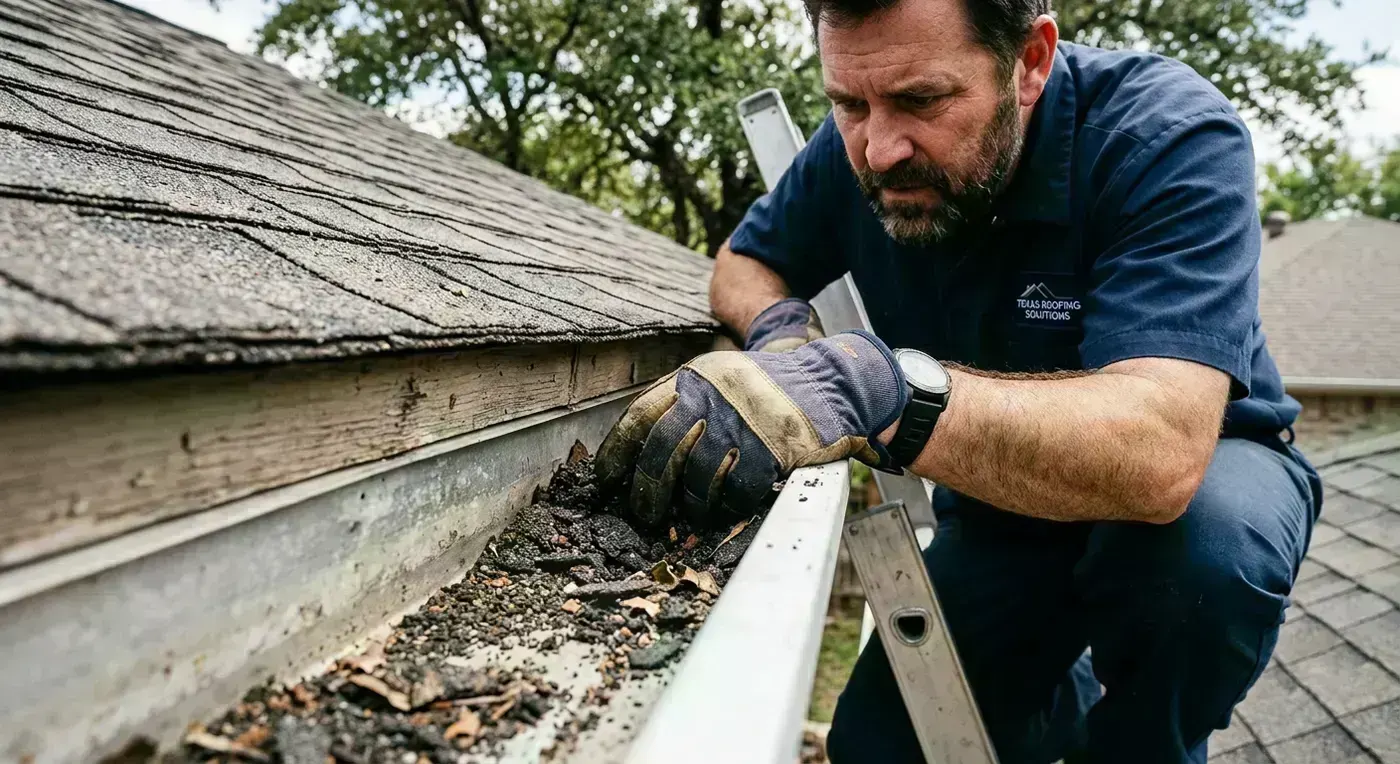
- Clear valleys and gutters so water actually leaves the roof instead of pooling behind debris.
- Inspect after every hail event — the sooner damage is documented, the more repair and claim options you keep open.
Inspection advice
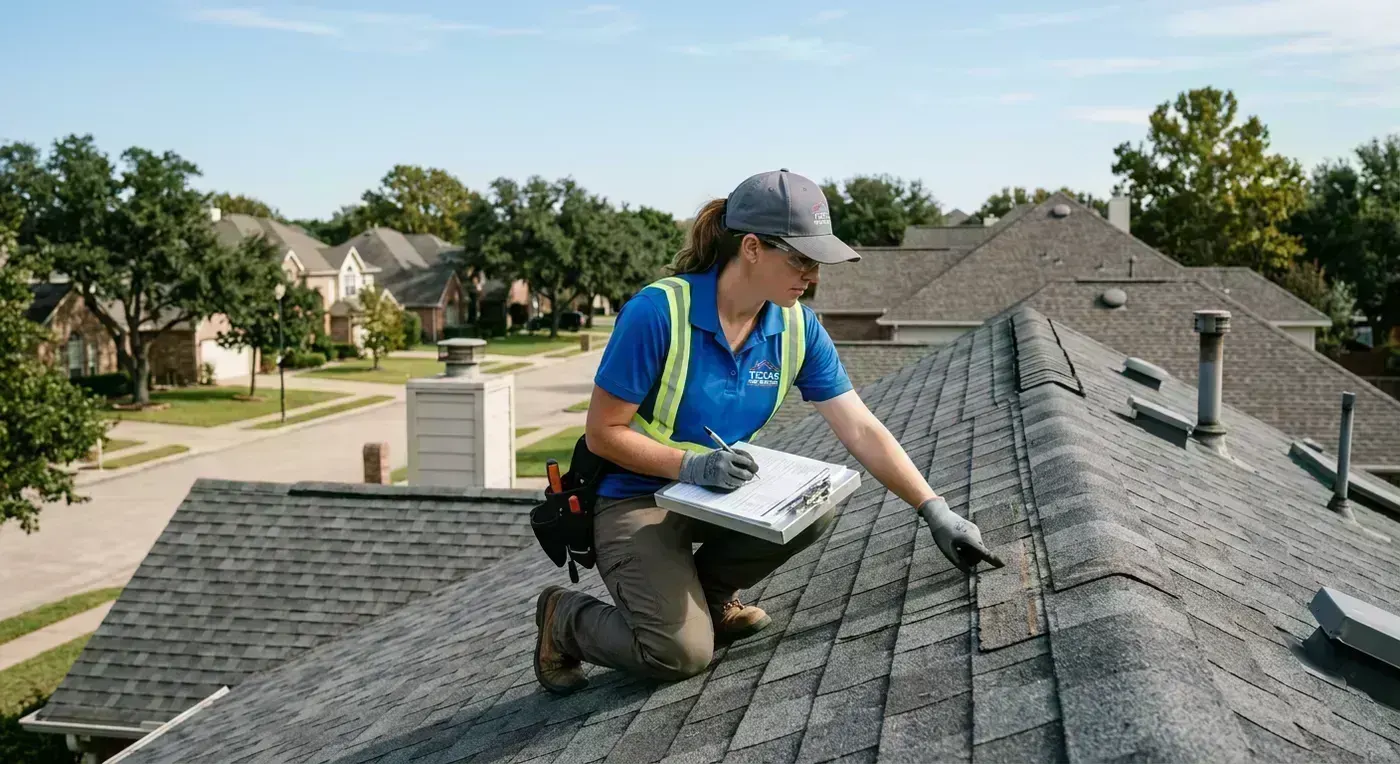
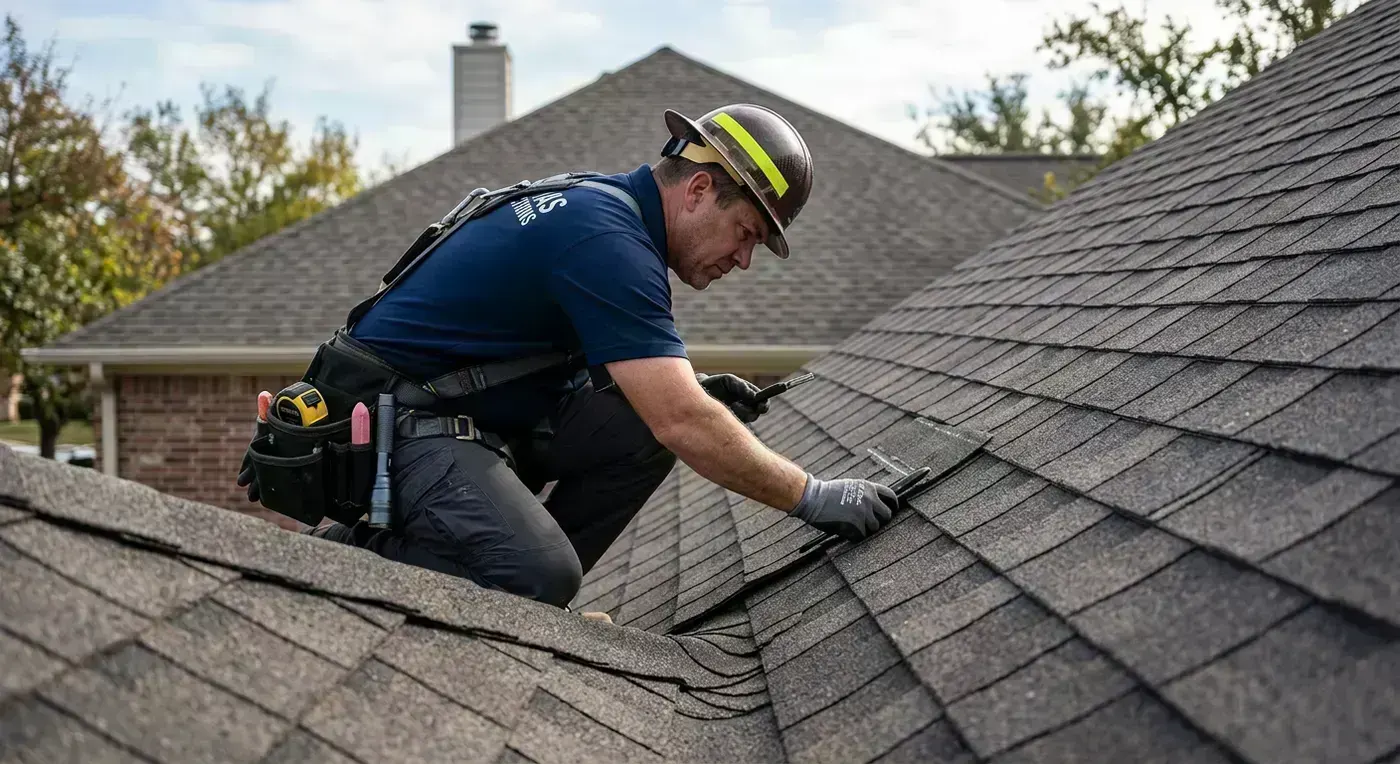
Given how often hail hides its damage, a documented professional inspection is the smartest habit a McKinney homeowner can build. We recommend a full inspection at least once a year, plus a targeted look after any storm that drops hail larger than a quarter or produces damaging wind. Because hail bruising is so hard to spot from the ground — and because walking a wet or steep historic roof is genuinely dangerous — RoofDog uses drone inspections to capture high-resolution, close-up imagery of every slope safely.
If you''re near the age thresholds in the table above, or you''ve been through a couple of storm seasons without a look, it''s worth getting eyes on it now. You can book a roof inspection or go straight to schedule a visit online.
Frequently asked questions
How long do roofs last in McKinney, TX?
It depends on the material: 12–16 years for 3-tab asphalt, 18–25 years for architectural shingles, and 25–40+ years for Class 4 impact-rated or metal. Collin County hail often ends roofs earlier than these ranges suggest.
Why do roofs seem to fail faster in McKinney than in other parts of the country?
Two reasons: intense summer heat that bakes asphalt shingles, and McKinney''s spot in DFW''s "hail alley," where frequent hail storms damage roofs long before they reach their rated lifespan.
My home is near downtown McKinney and over 100 years old. Can it be re-roofed normally?
Historic homes need special care — steep, complex roof geometry, aging wood decking, and sometimes historic-district guidelines all factor in. It''s a custom job, not a production one, and should be handled by a crew experienced with older structures.
My subdivision is only 15 years old. Why would I already need a new roof?
Many McKinney master-planned homes were built with builder-grade shingles rated for around 15–20 years. After a couple of hail seasons, those roofs frequently reach end-of-life right around the 12–18 year mark.
Is a Class 4 impact-rated roof worth it in McKinney?
For most homeowners here, yes. Given the hail frequency in Collin County, impact-rated shingles last longer, resist bruising better, and often qualify for an insurance premium discount that offsets part of the upfront cost.
How often should I have my McKinney roof inspected?
At least once a year, plus a targeted inspection after any storm dropping hail larger than a quarter. Early documentation protects both your roof and your insurance options.
Does hail damage always show up right away?
No. Hail bruising is often invisible from the ground and may not leak for a year or two. That delay is why post-storm inspections are so important in McKinney.
Do the big trees in older McKinney neighborhoods really shorten roof life?
They can. Overhanging limbs drop debris into valleys, keep shaded slopes damp, and cause impact damage in storms — all of which accelerate algae growth and decking rot. Keeping trees trimmed back helps.
What''s the most common roofing problem you see in McKinney?
Hail-related bruising and granule loss, followed by wind-lifted shingles. Both are common across Collin County and both are easy to miss without a close-up inspection.
Can I upgrade to a better shingle without replacing the whole roof?
Upgrades happen at replacement time. If your current roof is near end-of-life or storm-damaged, that''s the moment to step up to architectural or Class 4 shingles rather than matching builder-grade product.
Does RoofDog install in my part of McKinney?
RoofDog has completed installs across McKinney — from historic homes near the square to master-planned communities like Trinity Falls, Craig Ranch, and Stonebridge Ranch. Call 940.828.ROOF to confirm scheduling.
What kind of warranty does RoofDog offer?
Every RoofDog installation carries a lifetime workmanship warranty, in addition to the manufacturer''s material warranty on the shingles themselves.
Why does RoofDog donate to dog rescues?
It''s core to who we are — Protecting Homes. Saving Dogs. We donate 10% of our profits to dog rescue organizations, so every roof we install helps a dog find a home too.
How do I get started?
Call 940.828.ROOF or schedule online. We''ll set up a drone inspection and give you a straight answer about your roof''s condition and remaining life.
Summary
McKinney''s roofs live two lives — the century-old homes shading the historic square and the fast-built rooftops of Trinity Falls, Craig Ranch, and Stonebridge Ranch. Standard architectural shingles last 18–25 years here, but Collin County''s hail-alley storms, straight-line wind, summer heat, and the mature tree canopy in older districts all conspire to cut that short. The best defenses are impact-rated Class 4 shingles, good attic ventilation, trimmed trees, and — above all — a documented inspection after every hail event. RoofDog has installed on both sides of McKinney''s age divide, every job backed by a lifetime workmanship warranty. Call 940.828.ROOF or schedule a drone inspection online. Protecting Homes. Saving Dogs.
You Might Also Need
Need a Roof Inspection?
Get expert advice and a free estimate from North Texas's trusted roofing professionals.
Schedule Free Inspection