How Long Do Roofs Last in Frisco, TX?
Short answer: In Frisco, most builder-grade architectural asphalt roofs last 15 to 22 years — noticeably less than their advertised "30-year" or "lifetime" ratings, because DFW's hail-alley storms, intense UV, and wide temperature swings age shingles faster than in milder climates. Premium Class 4 impact-rated shingles, properly installed and ventilated, can push that to 22 to 30 years while surviving the hail that ends most roofs early.
Bought your Frisco home in a subdivision built between 1999 and 2010? Your roof is likely at or past the point where insurers start scrutinizing it. A free drone inspection from RoofDog can tell you exactly where you stand — call 940.828.ROOF.
Table of contents
- Frisco's climate and why it matters
- DFW hail alley: the number-one roof killer
- The enormous same-age roof cohort
- Builder-grade roof quality in Frisco subdivisions
- Dominant materials and Class 4 upgrades
- Roof lifespan by material in Frisco
- Common problems we see in Frisco
- Inspection advice for Frisco homeowners
- Frequently asked questions
- Summary
Frisco's climate and why it matters
Frisco sits in Collin and Denton counties on the northern edge of the Dallas-Fort Worth metroplex, and its weather is hard on roofs in ways that surprise homeowners moving in from elsewhere. Summers routinely push past 100°F, and dark asphalt shingles can hit 160°F on a July afternoon. That heat bakes the volatile oils out of asphalt, making shingles brittle. Then a January cold snap swings temperatures 60 degrees in a day, and the same shingles expand and contract until granules loosen and edges curl.
Add relentless North Texas UV exposure — Frisco averages well over 230 sunny days a year — and the aging clock runs faster here than the shingle wrapper suggests. A "30-year" shingle rating is a lab number, not a Frisco number. This is the same dynamic we cover in our broader guide on how long roofs last in Texas, but Frisco's growth pattern and hail frequency make the local picture even more pointed.
DFW hail alley: the number-one roof killer
Frisco lives inside what insurers and roofers alike call "hail alley." The stretch of North Texas from Fort Worth up through Frisco, McKinney, and Plano sees some of the most frequent and destructive hail in the United States. Damaging hail events roll through the area most spring seasons, and it only takes one storm with 1.5-inch stones to functionally end a roof's life — even if the shingles look fine from the ground.
Hail rarely punches holes. Instead it bruises the mat and knocks off the protective granule layer, exposing the asphalt to UV and accelerating failure over the following months. Many Frisco roofs that "last 15 years" actually died in a single hailstorm at year 12 and simply weren't replaced until leaks appeared. This is precisely why impact resistance matters so much locally.
Wind matters too. The same spring storm systems that drop hail on Frisco bring straight-line winds of 60-70 mph and the occasional tornado warning. Poorly nailed builder-grade shingles are the first to lift and blow off — and once the seal strip breaks, water finds its way underneath.
The enormous same-age roof cohort
Here's what makes Frisco genuinely unusual. The city was farmland and a small town of roughly 6,000 people in 1990. Over the next three decades it exploded into a city of more than 200,000, one of the fastest-growing in America. That growth came in waves of vast master-planned communities — Stonebriar, Newman Village, Frisco Lakes, Phillips Creek Ranch, and dozens more — built rapidly, block after block, in tight construction windows.
The consequence is a roofing timeline unlike almost anywhere else. Whole neighborhoods went up in the same 18-month period, meaning tens of thousands of roofs were installed within a few years of one another. Those late-1990s and 2000s subdivisions are now squarely inside the 15-to-25-year replacement window — all at once. When a big hail event hits an older Frisco subdivision, it's common to see nearly every house on a street replacing its roof the same summer, because they were all the same age and grade to begin with.
If you own in one of these communities, the practical takeaway is simple: your neighbors' roofs are a preview of yours. When you see the crews arrive up and down the block, it's a strong signal to get your own roof inspected before the next storm forces the decision.
Builder-grade roof quality in Frisco subdivisions
Production builders raced to meet Frisco's demand, and roofing was a line item to control. The vast majority of these homes were topped with entry-level or mid-grade architectural (dimensional) asphalt shingles — a real upgrade over old three-tab, but still the value tier of the product line. Underlayment was often the minimum, ventilation was frequently under-designed, and installation crews moved fast.
None of that means the roofs were defective — they weren't. But it does mean the typical Frisco builder roof was built to a 15-to-20-year real-world service life in this climate, not the 30 years homeowners assume from the shingle name. Undersized attic ventilation in particular cooks shingles from below and voids many manufacturer warranties. When these roofs come off, we routinely find the decking fine but the ventilation and flashing details that never met current best practice.
Dominant materials and Class 4 upgrades
Architectural asphalt shingles dominate Frisco roofs, and they'll remain the default because Frisco's strong HOAs generally require an asphalt-shingle appearance that matches the neighborhood. You'll see very little metal, tile, or exotic material on Frisco rooftops for that reason. The real decision most Frisco homeowners face isn't what type of roof — it's what grade of asphalt shingle.
That's where Class 4 impact-rated shingles have taken over. Adoption in Frisco is heavy and growing, for two reasons: they survive hail that destroys standard shingles, and most Texas insurers offer a meaningful premium discount for a documented Class 4 roof. For a hail-alley city where the roof will almost certainly meet hail during its life, upgrading is often the smartest dollar a Frisco homeowner spends. We break down the specifics in our guides on how long architectural shingle roofs last in Texas and how long Class 4 shingle roofs last in Texas.
Roof lifespan by material in Frisco
| Roof type | Typical Frisco lifespan | Notes |
|---|---|---|
| Builder-grade 3-tab (older/rare) | 10–15 years | Mostly aged out; poor hail resistance |
| Builder-grade architectural asphalt | 15–22 years | The Frisco default; often ended early by hail |
| Premium architectural asphalt | 20–25 years | Thicker mat, better warranty |
| Class 4 impact-rated asphalt | 22–30 years | Best hail survival; insurance discount |
| Standing-seam metal (uncommon) | 30–50 years | HOA appearance rules limit use |
Common problems we see in Frisco
Across Frisco subdivisions, the same handful of issues come up again and again:
- Hail granule loss. The single most common finding — bruised mats and bald spots that shorten remaining life even when there's no active leak.
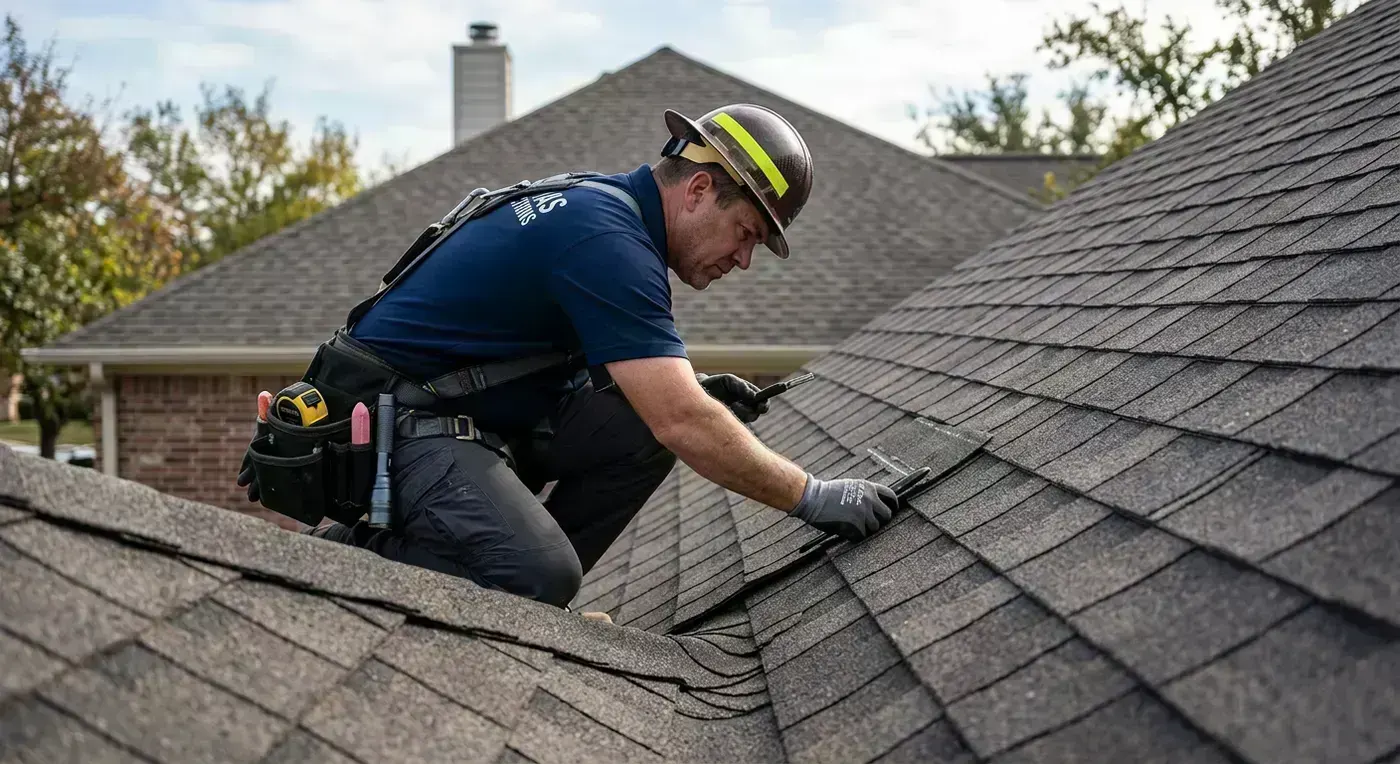
- Wind-lifted and creased shingles. Fast builder installs with minimal nailing lose shingles along ridges and rakes in spring storms.
- Under-ventilated attics. Trapped heat cooks shingles from below and drives up cooling bills across the metroplex's brutal summers.
- Failed pipe-boot and flashing seals. The rubber boots around plumbing vents crack in the UV long before the field shingles fail, and they're a leading source of hidden leaks.
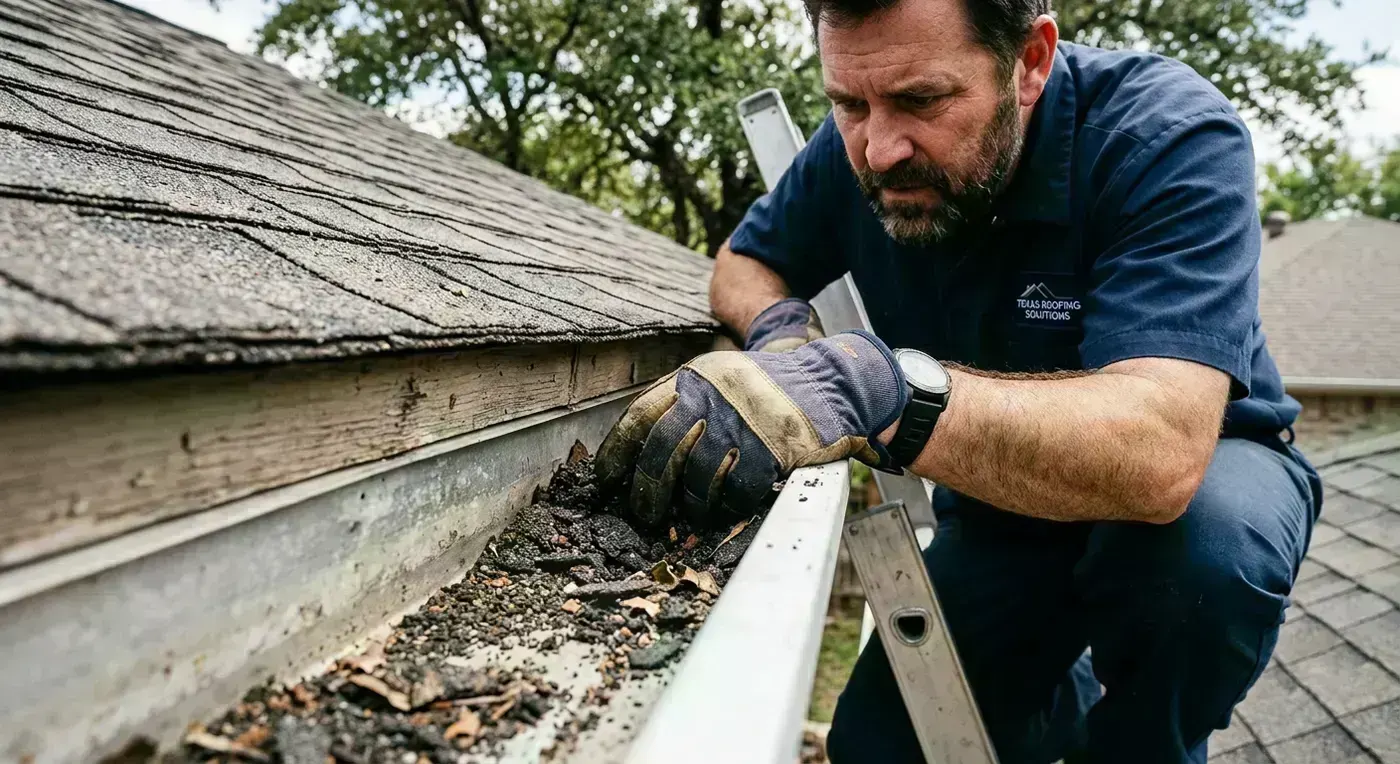
- Young-tree debris. Frisco's tree cover is relatively young and moderate, but maturing shade trees now drop enough debris to clog valleys and hold moisture against shingles.
Inspection advice for Frisco homeowners
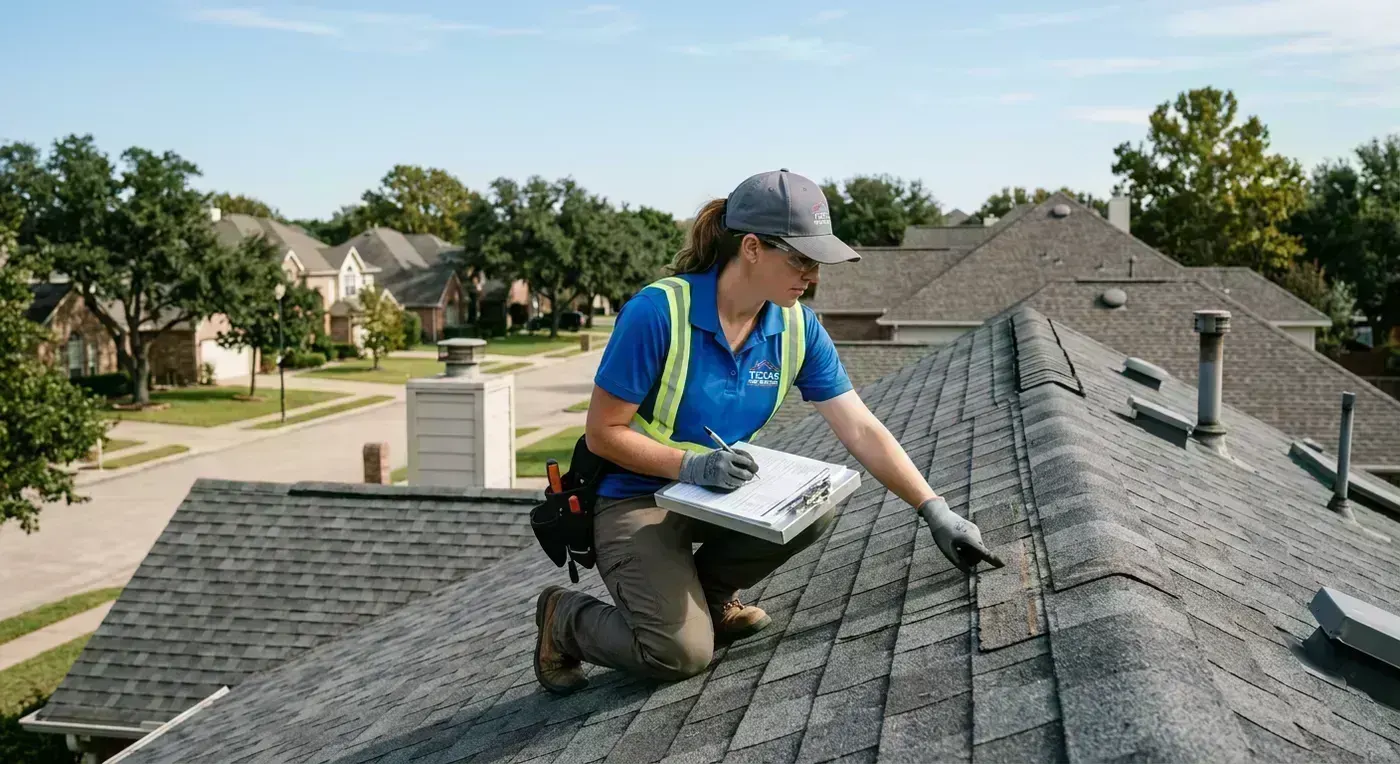
Because Frisco roofs age in cohorts and hail damage is often invisible from the ground, an annual professional inspection — and a same-week inspection after any significant hail or wind event — is the smartest habit you can build. Get on your insurer's radar before a storm claim, not after, so you have documented condition history.
RoofDog inspects Frisco roofs with drones, which means no boot-scuffing across your shingles and a complete, photo-documented look at every slope, valley, and penetration. If the roof is at end of life, we handle full roof replacement as an Owens Corning Platinum Preferred Contractor, backed by a lifetime workmanship warranty. You can see everything we cover for local homeowners on our Frisco roofing services page, or schedule an inspection online in a couple of minutes.
Protecting Homes. Saving Dogs. RoofDog donates 10% of profits to dog rescues, so every Frisco roof we inspect or replace helps a dog find a home. Call 940.828.ROOF to get started.
Frequently asked questions
How long should I expect my Frisco builder-grade roof to last?
Most builder-grade architectural roofs in Frisco last 15 to 22 years in real-world conditions, well short of the 30-year rating on the wrapper, largely because of hail and UV.
Why are so many roofs in my Frisco neighborhood being replaced at the same time?
Frisco's master-planned communities were built in rapid waves, so entire streets share the same roof age and grade. They reach end of life — or get hail-damaged — together.
Does Frisco really get that much hail?
Yes. Frisco sits in DFW's hail alley and sees damaging hail most spring seasons. A single storm with 1.5-inch stones can end a standard shingle roof's life.
Are Class 4 shingles worth it in Frisco?
For most Frisco homeowners, yes. They survive hail that destroys standard shingles, last longer, and typically earn an insurance premium discount that offsets the upgrade cost over time.
Will my HOA let me install metal or tile in Frisco?
Usually not. Most Frisco HOAs require a shingle appearance that matches the neighborhood, which is why Class 4 asphalt is the practical upgrade path here.
My roof looks fine from the ground after a storm — do I still need it checked?
Absolutely. Hail damage is bruising and granule loss, not holes, so it's nearly invisible from the ground. A drone inspection reveals it before leaks appear.
How often should I get my Frisco roof inspected?
At least once a year, plus within a week of any significant hail or high-wind event. Documented condition history helps enormously with insurance claims.
Does the Texas heat really shorten roof life?
Yes. Shingle surfaces can exceed 160°F in Frisco summers, baking oils out of the asphalt and making shingles brittle, especially over poorly ventilated attics.
Will a new roof lower my insurance in Frisco?
Often, particularly if you install a documented Class 4 impact-rated roof. Most Texas insurers offer a discount, and a new roof can improve your overall policy standing.
How long does a roof replacement take in Frisco?
Most single-family Frisco homes are completed in one to two days, weather permitting. RoofDog documents the whole job with drone photos before and after.
My roof is 18 years old but not leaking. Should I wait?
In Frisco, waiting is risky. At 18 years a builder-grade roof is near end of life, and the next hailstorm may force an emergency replacement. Get inspected and plan ahead.
What warranty does RoofDog offer on a new Frisco roof?
As an Owens Corning Platinum Preferred Contractor, RoofDog backs installations with strong manufacturer coverage plus a lifetime workmanship warranty on our labor.
Can you inspect my roof without walking on it?
Yes. We use drones for inspections, so we get complete, high-resolution photo coverage of every slope without scuffing your shingles or risking damage.
Summary
Frisco's roofs age fast and age together. Builder-grade architectural asphalt — the material on the vast majority of the city's master-planned homes — realistically lasts 15 to 22 years here, cut short by hail-alley storms, wind, and punishing UV. Because whole subdivisions went up in tight construction windows from the late 1990s onward, an enormous cohort of same-age roofs is hitting the replacement window right now. Class 4 impact-rated shingles are the standout upgrade for Frisco: they survive the hail that ends most roofs early, satisfy HOA appearance rules, and earn insurance discounts. The smartest move is an annual and post-storm inspection so you replace on your terms, not a storm's. RoofDog offers free drone inspections and full replacements as an Owens Corning Platinum Preferred Contractor with a lifetime workmanship warranty — and gives 10% of profits to dog rescues. Protecting Homes. Saving Dogs. Call 940.828.ROOF or schedule online.
You Might Also Need
Need a Roof Inspection?
Get expert advice and a free estimate from North Texas's trusted roofing professionals.
Schedule Free Inspection