How Long Do Roofs Last in Lake Dallas, TX?
Short answer: In Lake Dallas, most architectural asphalt shingle roofs last 18 to 25 years, while older 3-tab shingles on established homes often tap out around 12 to 18 years. Living beside Lewisville Lake pushes that number toward the lower end — humidity feeds algae on shaded north slopes, and hail plus wind off the open water take a steady toll. A roof that's inspected, cleaned, and ventilated well can beat the average; one that's ignored rarely does.
Wondering whether your roof is aging normally or heading toward early failure? RoofDog offers free drone inspections in Lake Dallas — call 940.828.ROOF and we'll give you an honest read, not a sales pitch.
Table of contents
- Roof lifespan by material in Lake Dallas
- The Lake Dallas climate and your roof
- DFW hail exposure
- Wind off Lewisville Lake
- Humidity and algae streaking
- The lakeside older-and-new housing mix
- Common roof problems we see locally
- Inspection advice for Lake Dallas homeowners
- Frequently asked questions
Roof lifespan by material in Lake Dallas
Drive through Lake Dallas — from the older streets near Main Street and the original townsite up to the newer infill north of Swisher Road — and you'll see a roof landscape dominated by asphalt shingles. Architectural (laminate) shingles are the standard on nearly every home built or reroofed in the last two decades, while a shrinking number of legacy homes still wear the flatter, three-tab shingles that were common through the 1990s.
Here's how the common materials tend to hold up specifically in our lakeside, North Texas conditions — not the optimistic warranty numbers, but realistic service life once you factor in hail, heat, and humidity:
| Roofing material | Typical lifespan (Lake Dallas) | Notes |
|---|---|---|
| 3-tab asphalt shingle | 12–18 years | Common on older homes; least hail- and wind-resistant |
| Architectural asphalt shingle | 18–25 years | The local default; better wind and impact ratings |
| Impact-resistant (Class 4) shingle | 22–30 years | Worth it here; may earn an insurance discount |
| Metal (standing seam) | 40–60 years | Excellent in humidity; higher upfront cost |
| Tile (concrete/clay) | 40–50+ years | Rare locally; underlayment fails before the tile |
For a deeper statewide breakdown, see our guide on how long roofs last in Texas, and if you're specifically weighing laminate shingles, our article on how long architectural shingle roofs last in Texas goes deeper on the material that covers most Lake Dallas homes.
The Lake Dallas climate and your roof
Lake Dallas sits in that humid-subtropical pocket of North Texas where summers are long, brutally hot, and increasingly muggy thanks to the water. July and August routinely push into the upper 90s and low 100s, baking shingles day after day. That heat cycle — scorching afternoons followed by cooler nights — makes asphalt expand and contract repeatedly, which dries out the shingle mat, curls edges, and loosens the granules that protect the surface from UV.
What makes Lake Dallas different from an inland Denton County town a few miles west is Lewisville Lake itself. The lake keeps ambient humidity higher, especially in the mornings, and that lingering moisture is the single biggest reason roofs here often look worse for their age than roofs in drier suburbs. Moisture doesn't just sit on the surface — it soaks into shaded, slow-drying slopes and feeds the biological growth we'll cover below.
DFW hail exposure
Lake Dallas is squarely inside "Hail Alley." The Dallas–Fort Worth metroplex is one of the most hail-battered regions in the country, and spring storms rolling through Denton County regularly drop hail from pea-sized to golf-ball-sized or larger. A single severe storm can knock years off a roof's life in minutes.
Hail damage isn't always dramatic. More often it's subtle bruising — soft spots where the impact fractured the shingle mat and dislodged granules. Those bruises don't leak right away, but they become the failure points where water works in over the following seasons. This is exactly why age alone is a poor predictor of roof life in Lake Dallas: two identical 15-year-old roofs can be in wildly different shape depending on how many storms passed directly overhead.
Local tip: After any storm that brings hail to Lake Dallas, get a professional inspection even if you see no obvious damage from the ground. Insurance claims for storm damage have deadlines, and hidden bruising is easy to miss. RoofDog's drone inspections document the whole roof in high resolution — useful proof if you do need to file.
Wind off Lewisville Lake
Open water means open wind. Homes closer to the shoreline — and anything on an exposed ridge or corner lot — catch stronger, more consistent gusts than a house tucked deep in a sheltered subdivision. Straight-line winds ahead of thunderstorms in this area frequently hit 50–70 mph, and that's more than enough to lift and crease shingles, especially older 3-tab.
Wind failures usually start at the edges: rakes, eaves, ridges, and any shingle that wasn't sealed down tightly. Once one tab lifts, wind gets underneath and peels progressively. Lake-facing slopes and the windward side of a home take the worst of it here, so those are the areas we scrutinize first on a lakeside property.
Humidity and algae streaking
If you've noticed dark, dirty-looking streaks running down roofs around Lake Dallas — especially on north-facing and tree-shaded slopes — that's Gloeocapsa magma, a blue-green algae that thrives in exactly the warm, humid, shaded conditions the lake creates. It's the most common cosmetic complaint we get from lakeside homeowners, and it's not just ugly.
Algae feeds on the limestone filler in asphalt shingles and holds moisture against the roof surface, keeping shingles damp longer than they should be. Over time that retained moisture accelerates granule loss and can create the foothold for moss in the shadiest, wettest spots. Slopes that never get direct afternoon sun — behind mature oaks, on the lake side of a two-story — are where we see the worst wear and the shortest lifespans in town.
This is a genuine lifespan factor, not just an appearance issue. We break down the mechanism in detail in our article on whether moss or algae can reduce roof lifespan. The short version for Lake Dallas: yes, and it's one of the biggest reasons roofs here age faster than the DFW average.
The lakeside older-and-new housing mix
Lake Dallas has an unusual housing profile for its size. The original town core and the older lake-cabin-turned-permanent-home neighborhoods date back decades, and many of those roofs have been reroofed once or twice — sometimes with mismatched materials or over an aging deck. Meanwhile, infill construction and newer subdivisions have added a wave of homes with modern architectural shingles installed within the last 10 to 20 years.
That split matters for lifespan expectations. On an older home, the shingles might be new but the decking, flashing, and ventilation underneath may be original and tired — and a roof is only as good as what's under it. On a newer build, the components are consistent, but builder-grade shingles and sometimes rushed installation mean early problems still show up. In both cases, the lakeside environment is the great equalizer: humidity and storms don't care how old your house is.
Common roof problems we see locally
Across Lake Dallas roofs, these are the issues that come up again and again:
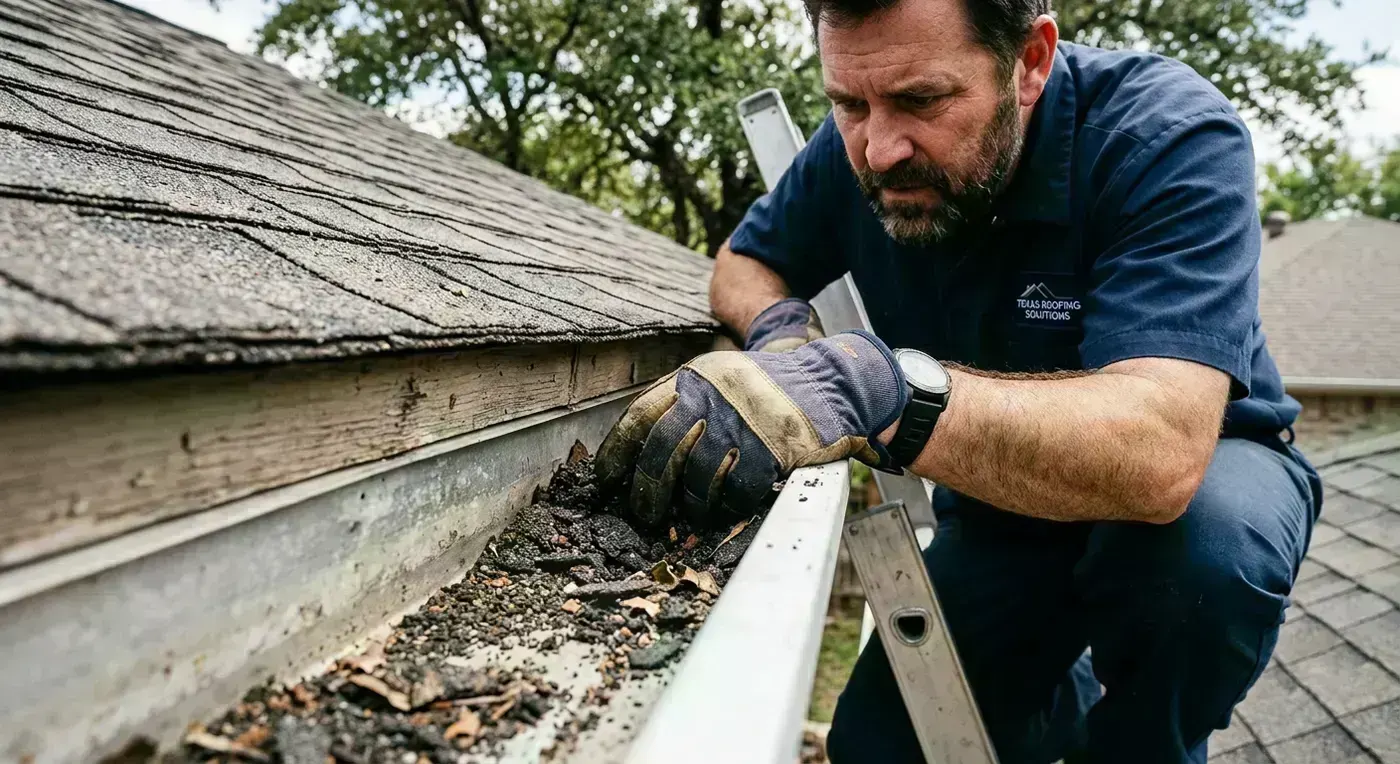
- Algae and moss on shaded slopes — the number-one lakeside complaint, worst on north and tree-covered faces.
- Hail bruising and granule loss — often invisible from the ground; shows up as bald spots and exposed asphalt.
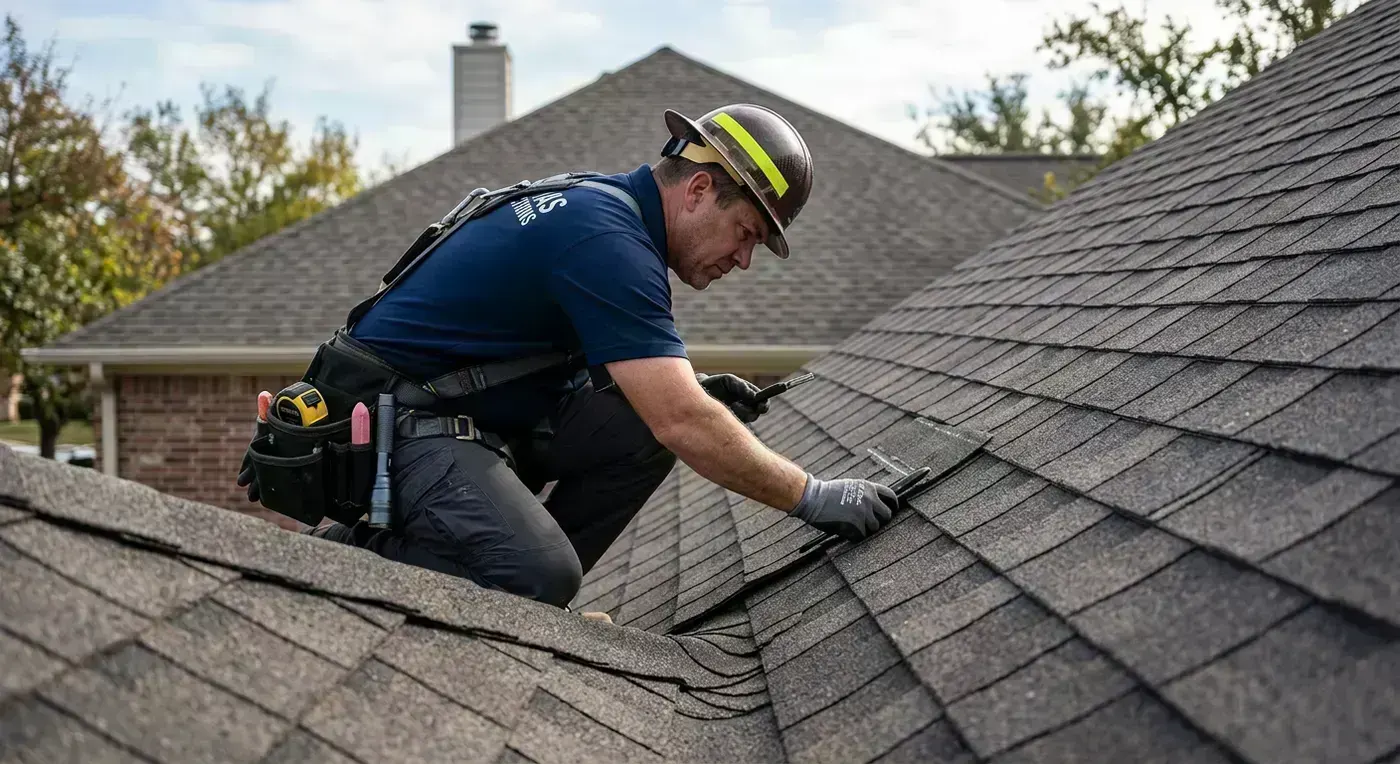
- Wind-lifted and creased shingles — concentrated on lake-facing and edge slopes.
- Failed pipe boots and flashing — the rubber collars around plumbing vents crack in the UV and are a leading leak source.
- Poor attic ventilation — traps heat and humidity, cooking shingles from below and feeding rot on older decks.
- Aging 3-tab on legacy homes — near or past end of life, brittle and prone to blow-offs.
Inspection advice for Lake Dallas homeowners
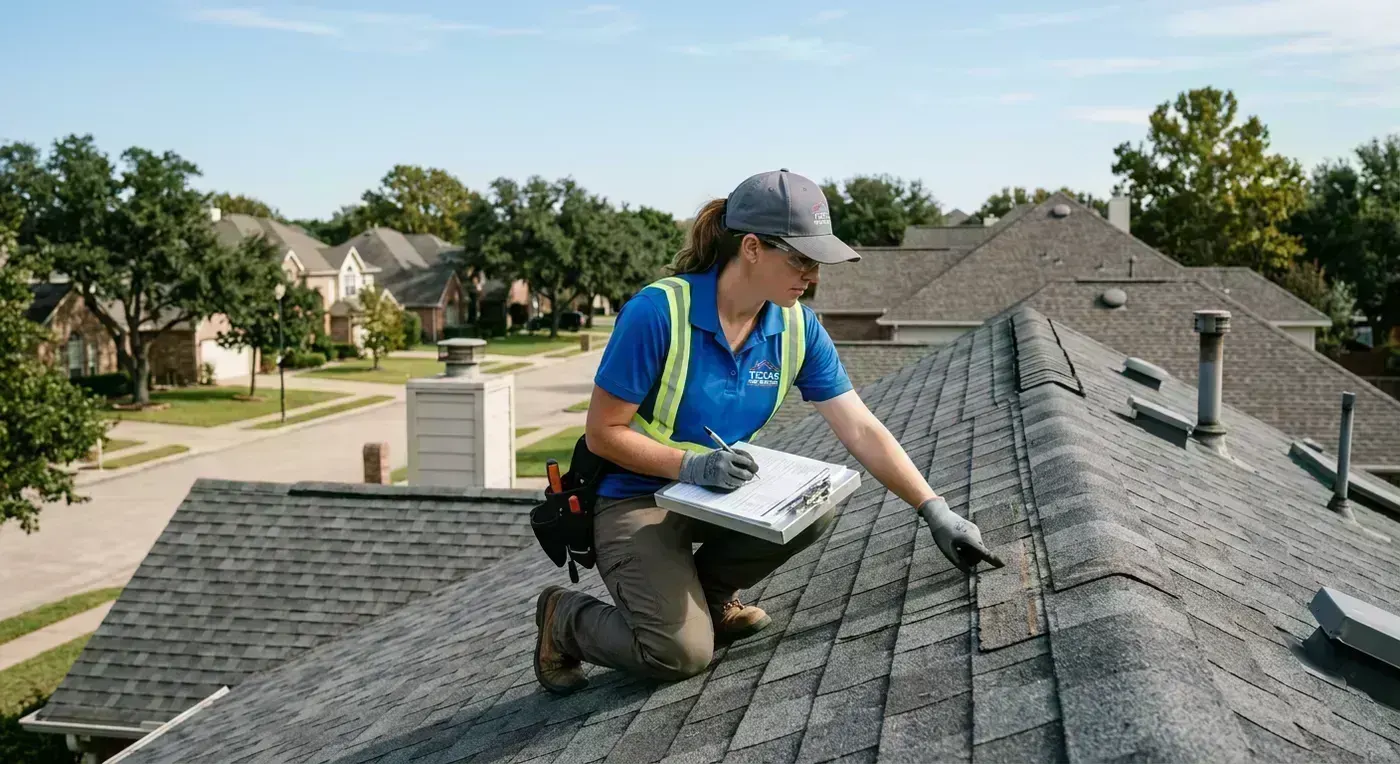
Because storms and humidity can undo a roof faster than the calendar suggests, we recommend Lake Dallas homeowners have their roof professionally inspected once a year, plus after any significant hail or windstorm. A good inspection checks more than the shingles — it looks at flashing, pipe boots, ridge caps, attic ventilation, and the decking condition, and it documents algae growth before it becomes a moss problem.
RoofDog uses drone inspections to photograph every slope in detail without walking (and potentially damaging) your roof, which is especially valuable on steep or fragile older roofs. We'll tell you honestly whether you're looking at a simple cleaning, a targeted repair, or a full replacement — and every job we do is backed by a lifetime workmanship warranty.
Ready to know exactly where your roof stands? RoofDog serves Lake Dallas and the surrounding lake communities with free drone inspections and straight answers.
📞 940.828.ROOF | Lake Dallas roofing services | Schedule your free inspection
Frequently asked questions
How long should my roof last in Lake Dallas?
Most architectural shingle roofs here last 18 to 25 years, and older 3-tab roofs 12 to 18 years. Lakeside humidity and DFW storms tend to push roofs toward the lower end of those ranges unless they're well maintained.
Why does my Lake Dallas roof have dark streaks?
Those streaks are almost always algae (Gloeocapsa magma), which thrives in the warm, humid, shaded conditions near Lewisville Lake. It's most common on north-facing and tree-shaded slopes and can be cleaned and prevented.
Does living near Lewisville Lake shorten roof life?
It can. The lake raises local humidity, keeps shaded slopes damp longer, and exposes shoreline and ridge-top homes to stronger wind. Those factors accelerate algae growth and granule loss compared with drier inland areas.
How often should I get my roof inspected in Lake Dallas?
Once a year at minimum, plus after any major hail or windstorm. Storm damage is often invisible from the ground, and insurance claims have filing deadlines, so a prompt inspection protects both your roof and your coverage.
Is hail really that bad in Denton County?
Yes. Lake Dallas is inside DFW's "Hail Alley," one of the most hail-prone regions in the U.S. Spring storms regularly drop damaging hail, and a single event can take years off a roof's life.
Should I choose impact-resistant shingles in Lake Dallas?
For most homeowners here, yes. Class 4 impact-resistant shingles hold up far better to hail, often last 22 to 30 years locally, and may qualify you for a homeowners insurance discount worth the modest upcharge.
Why do north-facing slopes wear out faster on my house?
North slopes get the least direct sun, so they dry slowly and stay damp. In humid, lake-adjacent Lake Dallas that means more algae, more retained moisture, and faster granule loss than sunnier southern slopes.
Can I just clean the algae instead of replacing my roof?
Often, yes — if the shingles are otherwise sound, a proper soft-wash cleaning and preventive measures like zinc or copper strips can restore appearance and slow future growth. An inspection determines whether cleaning or replacement makes more sense.
My home is older — does that mean my roof is near failure?
Not necessarily. Many older Lake Dallas homes have been reroofed. The bigger questions are the age of the current shingles and the condition of the decking, flashing, and ventilation underneath, which an inspection can confirm.
How does wind off the lake affect my shingles?
Open-water wind lifts and creases shingles at the edges — rakes, eaves, and ridges — especially on lake-facing slopes. Older 3-tab shingles are most vulnerable, and once one tab lifts the damage tends to spread.
Does RoofDog offer free roof inspections in Lake Dallas?
Yes. RoofDog provides free drone inspections throughout Lake Dallas and the surrounding lake communities. Call 940.828.ROOF or schedule online, and you'll get an honest assessment with detailed photos of every slope.
What warranty does RoofDog offer?
Every RoofDog installation is backed by a lifetime workmanship warranty, on top of the manufacturer's material warranty. And because we're RoofDog, 10% of our profits go to dog rescues — Protecting Homes. Saving Dogs.
Summary
In Lake Dallas, plan on roughly 18 to 25 years from an architectural shingle roof and 12 to 18 from older 3-tab — but treat those as starting points, not guarantees. Life beside Lewisville Lake adds real stress: higher humidity that feeds algae on shaded slopes, DFW hail that can bruise a roof in one storm, and open-water wind that attacks the edges. The town's mix of older established homes and newer infill means the roof and the structure beneath it can be at very different stages, so age alone won't tell you much. Annual inspections, prompt post-storm checks, good attic ventilation, and keeping algae in check are what actually stretch a roof's life here. When you want a straight answer, RoofDog offers free drone inspections and a lifetime workmanship warranty — call 940.828.ROOF or schedule online. Protecting Homes. Saving Dogs.
You Might Also Need
Need a Roof Inspection?
Get expert advice and a free estimate from North Texas's trusted roofing professionals.
Schedule Free Inspection