How Long Do Roofs Last in Keller, TX?
Short answer: In Keller, a standard architectural asphalt roof is built to last 25–30 years, but the reality on the ground is closer to 15–20 years — and frequently less. The reason isn't poor workmanship; it's hail. Keller sits squarely inside DFW's "hail alley," and a single severe storm can end a roof's life a decade ahead of schedule. That's why so many local homes are switching to Class 4 impact-rated shingles.
Table of contents
- The short answer, expanded
- Keller's climate and hail exposure
- Wind, mature trees, and shade
- Housing stock age and the replacement wave
- Dominant materials in Keller
- Roof lifespan by material
- Common problems we find in Keller
- HOA rules and color approvals
- Inspection advice for Keller homeowners
- Frequently asked questions
- Summary
The short answer, expanded
Ask a manufacturer and they'll tell you an architectural (dimensional) asphalt shingle carries a "lifetime limited" warranty and should protect a home for 25 to 30 years. Ask a roofer who's spent years on ladders across Keller, Southlake, and Colleyville, and they'll give you a very different number. In North Texas, the calendar rarely gets to decide when a roof comes off. Hail does.
Across Tarrant County, most asphalt roofs are replaced somewhere between 15 and 20 years of age, and in years with back-to-back spring storms, plenty come off well before that. For the statewide picture and how different regions compare, see our overview of how long roofs last in Texas. Keller is a more specific — and more storm-exposed — story.
Keller's climate and hail exposure
Keller endures the full North Texas weather menu: triple-digit summer heat that bakes shingles and accelerates granule loss, sharp temperature swings between seasons that expand and contract roofing materials, and — most damaging of all — a spring severe-weather season that turns the sky green with startling regularity.
The Dallas–Fort Worth metroplex is one of the most hail-battered urban areas in the entire country, and Keller sits right in the middle of the corridor storm chasers call hail alley. From March through June, supercells rolling in from the west routinely drop hail ranging from pea-sized nuisance to baseball-sized destruction. Keller has taken direct or glancing hits in multiple recent seasons, and the cumulative bruising matters as much as any single storm: even sub-severe hail that doesn't crack a shingle knocks protective granules loose, thinning the roof and shortening its usable life.
Wind, mature trees, and shade
Straight-line winds and the occasional tornado-warned cell are a genuine threat here. Gusts of 60–70 mph during a Keller thunderstorm are enough to lift and crease shingles that were installed with too few nails or without proper starter and ridge components — a big reason installation quality matters as much as shingle brand.
Keller's beloved mature tree canopy is a double-edged sword. The big post oaks and live oaks that shade older neighborhoods off Keller Parkway and Bear Creek keep homes cooler, but overhanging limbs scrape shingle surfaces in the wind, drop debris that traps moisture in valleys, and give squirrels a highway to your fascia. North-facing and heavily shaded roof planes also hold moisture longer, encouraging algae streaking and moss in the exact spots that dry out slowest.
Housing stock age and the replacement wave
Keller boomed as a bedroom community from the 1990s into the 2010s, and that timeline is written all over its rooftops. A large share of Keller homes were built between roughly 1995 and 2010, which means an enormous number of them are now hitting — or have already passed — the 15-to-25-year window where original builder-grade roofs give out.
The result is a genuine replacement wave moving through the city right now. Many of these homes are on their first or second roof, and the original 3-tab or entry-level architectural shingles installed by production builders were never premium products to begin with. Layer two decades of hail seasons on top of a builder-grade roof and you get exactly what we see week after week: entire streets going up for replacement within a few years of each other. RoofDog has completed multiple full Keller roof replacements — most recently in Class 4 architectural shingle, Owens Corning — for homeowners in precisely this situation.
Dominant materials in Keller
Architectural (dimensional) asphalt shingle is overwhelmingly the dominant roofing material in Keller, exactly as you'd expect from a suburb built during the era when architectural shingles became the standard upgrade over flat 3-tab. You'll see the occasional concrete tile or standing-seam metal roof on custom builds, but drive any Keller subdivision and the vast majority of what's overhead is asphalt.
What's changed dramatically is the grade of asphalt going back on. Because of the hail exposure, Keller has seen heavy adoption of Class 4 impact-rated shingles — the highest UL 2218 impact rating available. Homeowners who've been burned by a mid-life hail replacement are choosing Class 4 the second time around, both for the durability and for the insurance premium discounts many carriers offer on impact-resistant roofs. For a broader look at the standard product still on most homes, see our guide to architectural shingle lifespan in Texas.
Roof lifespan by material in Keller
| Material | Rated lifespan | Realistic Keller lifespan |
|---|---|---|
| 3-tab asphalt (builder-grade) | 20–25 yrs | 10–15 yrs |
| Architectural asphalt | 25–30 yrs | 15–20 yrs |
| Class 4 impact-rated shingle | 30+ yrs | 20–30 yrs |
| Concrete tile | 40–50 yrs | 30–40 yrs (underlayment sooner) |
| Standing-seam metal | 40–50 yrs | 30–40 yrs (may dent in hail) |
Common problems we find on Keller roofs
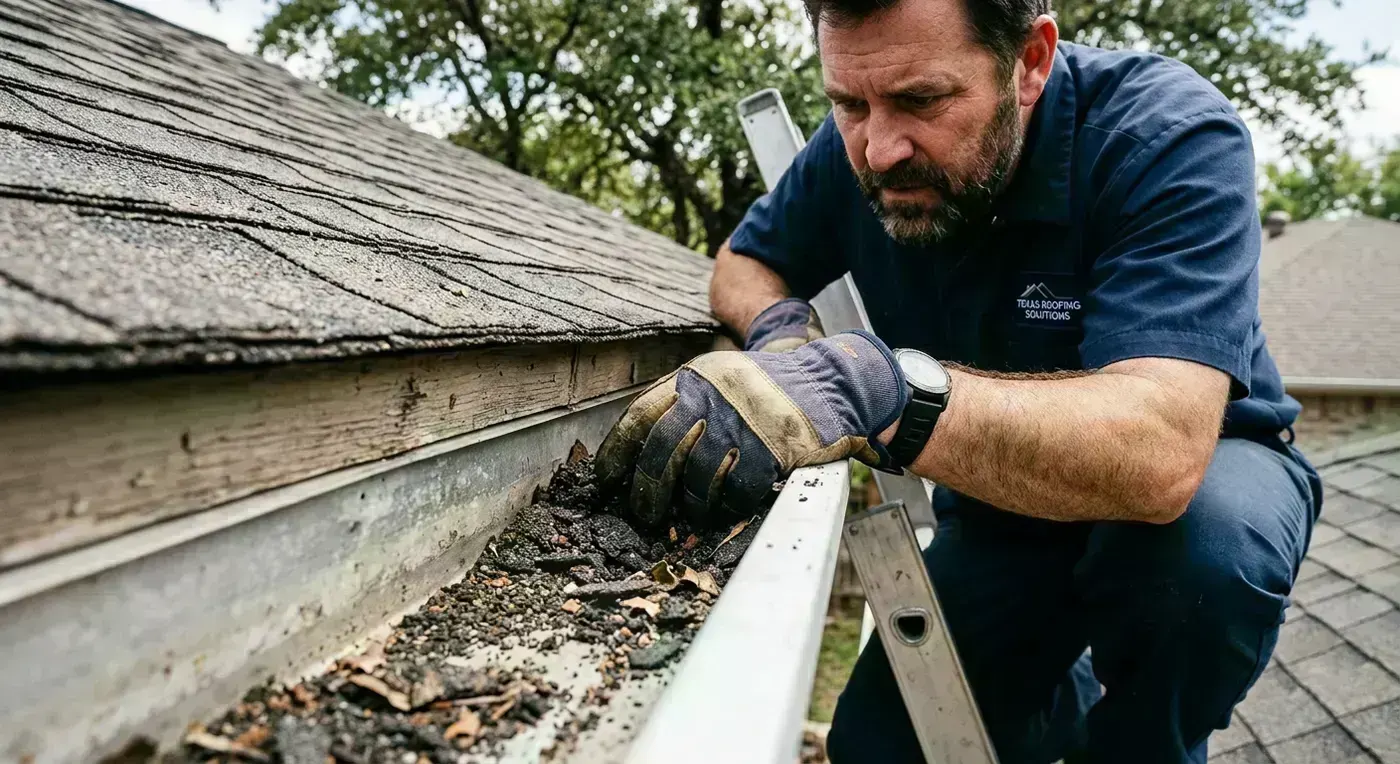
- Granule loss from cumulative hail — the number-one killer, visible as bald spots and clogged gutters full of black grit.
- Bruised and fractured shingles — soft, spongy impact points that don't leak today but will crack and open within a year or two.
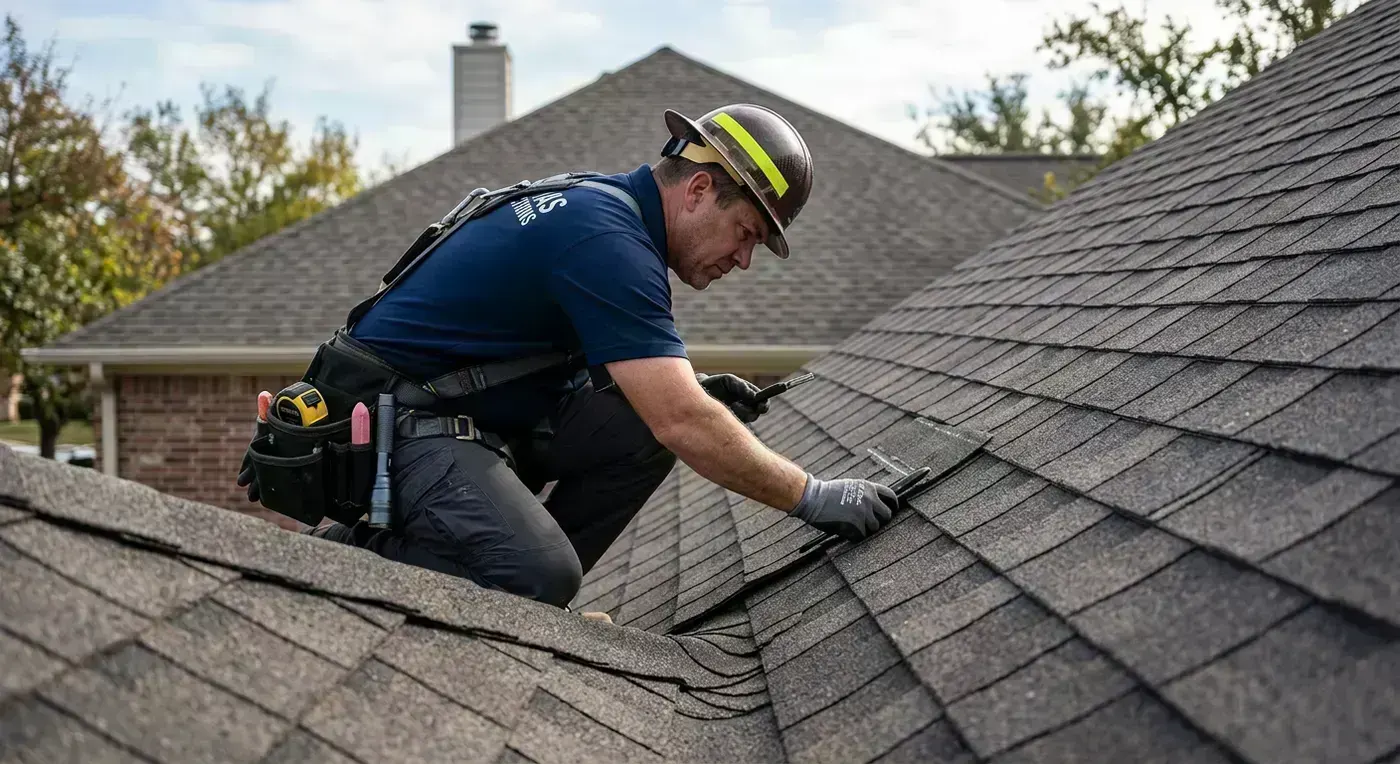
- Wind-creased and lifted shingles — usually on exposed ridges and west-facing planes, often traced to under-nailing.
- Failed pipe-jack and flashing seals — cracked rubber boots around plumbing vents are a top source of ceiling stains in 15-plus-year-old Keller homes.
- Algae streaking on shaded planes — those dark vertical stains under the tree canopy, worst on north-facing slopes.
- Improperly sealed nail pops — a legacy of rushed production-builder installs.
HOA rules and color approvals
Keller has a strong HOA presence, and many neighborhoods require architectural review board approval before a roof replacement — including specific approved shingle colors and, in some communities, minimum shingle grades. This trips up homeowners who assume they can simply pick a color and go. A good local contractor should know how to document the product, provide the manufacturer color samples your board needs, and keep the replacement compliant so you're not asked to redo anything. When RoofDog handles a Keller replacement, we build the HOA paperwork into the timeline rather than treating it as an afterthought.
Inspection advice for Keller homeowners
Given the hail exposure, Keller homeowners shouldn't wait for a leak. Our advice:
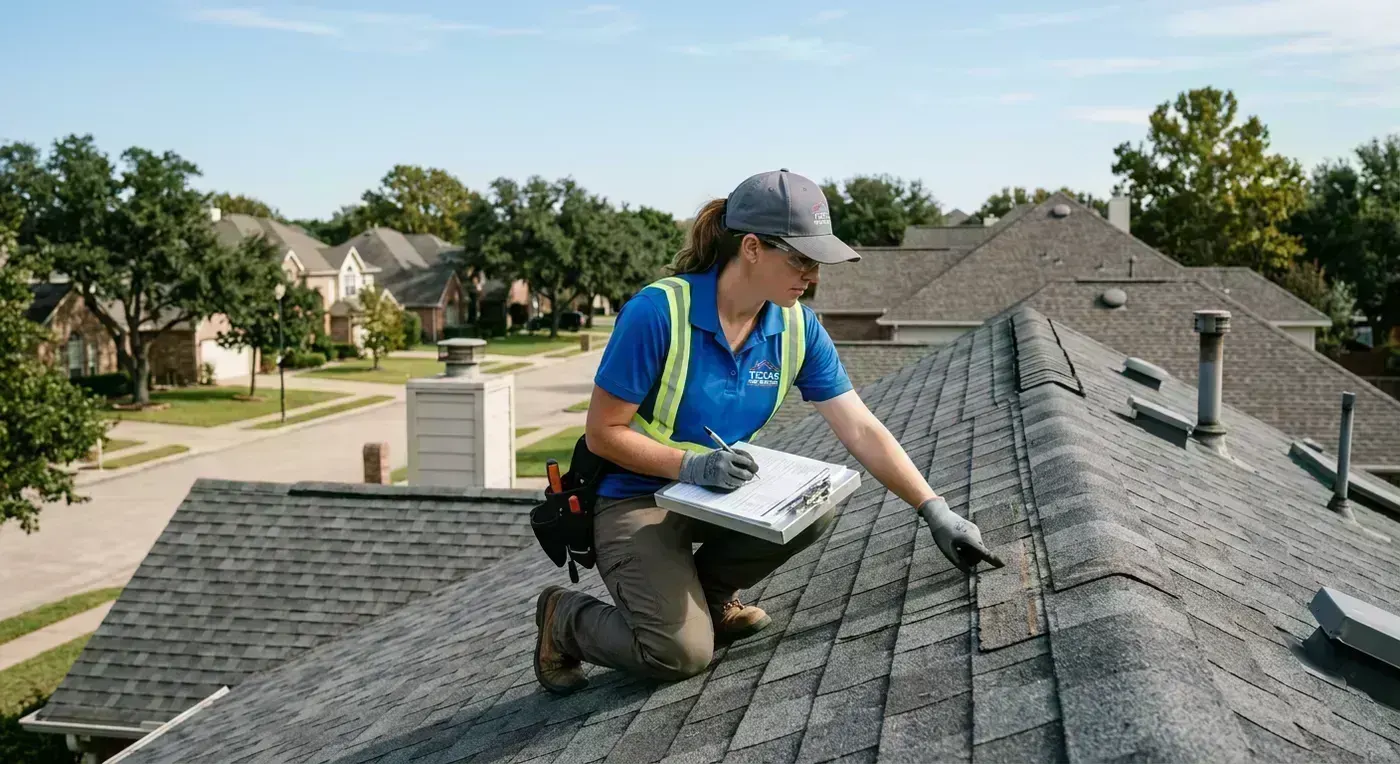
- Get a professional inspection after every significant hail or wind event — even if nothing looks wrong from the ground. Hail damage is notoriously hard to see from the driveway.
- Inspect proactively once your roof passes 12 years old, regardless of storms.
- Document storm dates. Insurance claims in Texas are time-sensitive, and knowing which storm caused the damage matters.
- Don't climb up yourself. Walking a bruised roof causes damage and is genuinely dangerous on Keller's steeper two-story pitches.
Frequently asked questions
How long will my roof last in Keller specifically?
Plan on 15–20 years for a standard architectural asphalt roof, though a bad hail season can shorten that considerably. Class 4 impact-rated roofs commonly reach 20–30 years here.
Why do roofs in Keller fail faster than the warranty says?
Warranties assume normal weathering. Keller's position in DFW's hail alley means cumulative hail and wind damage retires most roofs years before the warranty term ends.
Is my Keller neighborhood really due for a roof replacement wave?
Very likely. Homes built from the mid-1990s through 2010 — a huge share of Keller's stock — are now in the 15-to-25-year replacement window, often on original builder-grade shingles.
Are Class 4 shingles worth it in Keller?
For most Keller homes, yes. They resist hail impact far better and many insurers offer premium discounts for impact-rated roofs, which can offset the upgrade cost over time.
Will my HOA let me install Class 4 shingles?
Almost always — Class 4 products come in the same architectural profiles and standard colors HOAs approve. You'll still need color approval, which we help document.
Does the tree canopy in older Keller neighborhoods hurt my roof?
It can. Overhanging limbs abrade shingles, drop debris into valleys, and keep shaded planes damp, which encourages algae streaking. Trimming limbs back helps.
How do I know if my roof has hail damage?
You often can't tell from the ground. Bruising and granule loss require a close-up inspection — which is exactly why we use drones to document every plane after a storm.
Should I file an insurance claim after a Keller hailstorm?
If an inspection confirms storm damage, usually yes. We document the damage and storm date so you have the evidence your carrier needs before filing.
How often should I have my Keller roof inspected?
After every significant hail or high-wind event, and at minimum annually once the roof passes about 12 years of age.
Can a Keller roof be repaired instead of replaced?
Sometimes — isolated flashing or a few wind-lifted shingles can be repaired. But widespread hail bruising across multiple planes almost always calls for full replacement.
What roofing material lasts longest in Keller?
Metal and concrete tile last longest by rated lifespan, but among practical, HOA-friendly asphalt options, Class 4 impact-rated architectural shingle offers the best longevity for the hail we get here.
Who does RoofDog install for Keller replacements?
We're an Owens Corning Platinum Preferred Contractor and have completed multiple Keller replacements in Class 4 Owens Corning architectural shingle, backed by a lifetime workmanship warranty. See our Keller roofing service area or learn about roof replacement.
What does RoofDog mean by "Protecting Homes. Saving Dogs."?
It's our promise and our mission: we protect Keller homes with quality roofing, and we donate 10% of our profits to dog rescues. Every roof you put on helps a dog find a home.
Summary
In Keller, TX, the honest expectation for a standard architectural asphalt roof is 15–20 years — not the 25–30 the warranty implies — because the city's spot in DFW's hail alley means storms, not age, usually decide when a roof comes off. With a huge share of Keller homes built between the mid-1990s and 2010 now hitting the end of their original builder-grade roofs, a real replacement wave is moving through the city, and homeowners are increasingly choosing Class 4 impact-rated shingles for durability and insurance savings. Get a professional inspection after every major storm and once your roof passes 12 years. When you're ready, RoofDog — Owens Corning Platinum Preferred, drone inspections, lifetime workmanship warranty, and 10% of profits to dog rescues — is here to help. Call 940.828.ROOF or schedule your inspection. Protecting Homes. Saving Dogs.
You Might Also Need
Need a Roof Inspection?
Get expert advice and a free estimate from North Texas's trusted roofing professionals.
Schedule Free Inspection