How Long Do Roofs Last in Roanoke, TX?
Short answer: In Roanoke, TX, a well-installed architectural asphalt shingle roof typically lasts 18 to 25 years, but the DFW hail belt, gusty north-Texas winds, and long stretches of triple-digit summer heat routinely trim that down to the 15-to-20-year range. Upgrading to Class 4 impact-rated shingles can push real-world life toward the upper end — and often earns an insurance discount too.
Roanoke calls itself the "Unique Dining Capital of Texas," and if you have strolled Oak Street on a Friday night you know the town is booming. That same growth story is written across the city's rooftops: weathered roofs on established homes near the historic downtown sit just a few blocks from crisp new shingles on master-planned communities out toward Cleveland-Gibbs and the SH 114 corridor. This guide breaks down exactly how long you can expect your roof to last here, and why.
Table of contents
- Roof lifespan in Roanoke at a glance
- The Roanoke climate & what it does to roofs
- DFW hail exposure
- Wind & storm damage
- Tree coverage & debris
- Old-and-new: Roanoke's housing-stock mix
- Dominant roofing materials
- Common roof problems in Roanoke
- Inspection advice for local homeowners
- Frequently asked questions
- Summary
Roof lifespan in Roanoke at a glance
Manufacturers love to print big numbers on the wrapper — "30-year" or "lifetime" shingles — but those ratings assume mild conditions that Denton County simply does not offer. What actually matters is real-world lifespan under Roanoke's climate. Here is how the common materials stack up locally:
| Roofing material | Rated life | Real-world life in Roanoke |
|---|---|---|
| 3-tab asphalt (older homes) | 20-25 yrs | 12-16 yrs |
| Architectural asphalt | 30-50 yrs | 18-25 yrs |
| Class 4 impact-rated asphalt | 30-50 yrs | 22-28 yrs |
| Metal (standing seam) | 40-70 yrs | 30-50 yrs |
| Concrete/clay tile | 50+ yrs | 40+ yrs (underlayment sooner) |
For the statewide picture, see our overview on how long roofs last in Texas. Roanoke sits squarely in the harsher end of that spectrum because of its position in the DFW hail corridor.
The Roanoke climate & what it does to roofs
Roanoke's weather is classic North Texas: hot, humid summers with a run of 100°F-plus days from July into September, mild but occasionally icy winters, and a violent spring storm season. Each of those seasons wears on a roof differently.
Summer heat is the quiet killer. Attic temperatures under a dark shingle can top 150°F, baking the asphalt binders until granules loosen and shingles grow brittle. Then comes thermal cycling — the daily swing from a scorching afternoon to a cool evening — which expands and contracts materials until sealant strips and flashing fatigue. By the time Roanoke's spring hail arrives, an aged roof is already primed to fail.
DFW hail exposure
If there is one factor that defines roof lifespan in Roanoke, it is hail. Denton County sits inside "Hail Alley," and the Dallas-Fort Worth Metroplex is one of the most hail-battered metro areas in the country. Spring supercells rolling in from the west regularly drop stones from pea-size to baseball-size, and it only takes one bad storm to end a roof's life a decade early.
Hail rarely punches clean holes. Instead it bruises shingles — knocking granules loose and fracturing the mat underneath. Those bruises may not leak for a year or two, which is exactly why so many Roanoke homeowners discover damage only after the insurance claim window has closed. This is the single biggest reason we recommend a professional look after every significant storm.
It is also why Class 4 impact-rated shingles have become the local standard. They are built to survive a 2-inch steel-ball drop test and hold up dramatically better against real hail. Learn more in our guide to how long Class 4 shingle roofs last in Texas.
Wind & storm damage
The same fronts that bring hail bring straight-line winds, and Roanoke's flatter, more open terrain toward the north and west offers little to slow gusts down. Thunderstorm outflow winds of 60-70+ mph are not unusual, and they attack roofs at their weakest points: ridge caps, rake edges, and any shingle whose seal has already been loosened by heat.
Once a few shingles lift or tear away, wind-driven rain gets under the field and the deck starts to rot from below. Newer homes with fully sealed architectural shingles ride out these events well; older 3-tab roofs near the end of their life are the ones that end up with blue tarps the next morning.
Tree coverage & debris
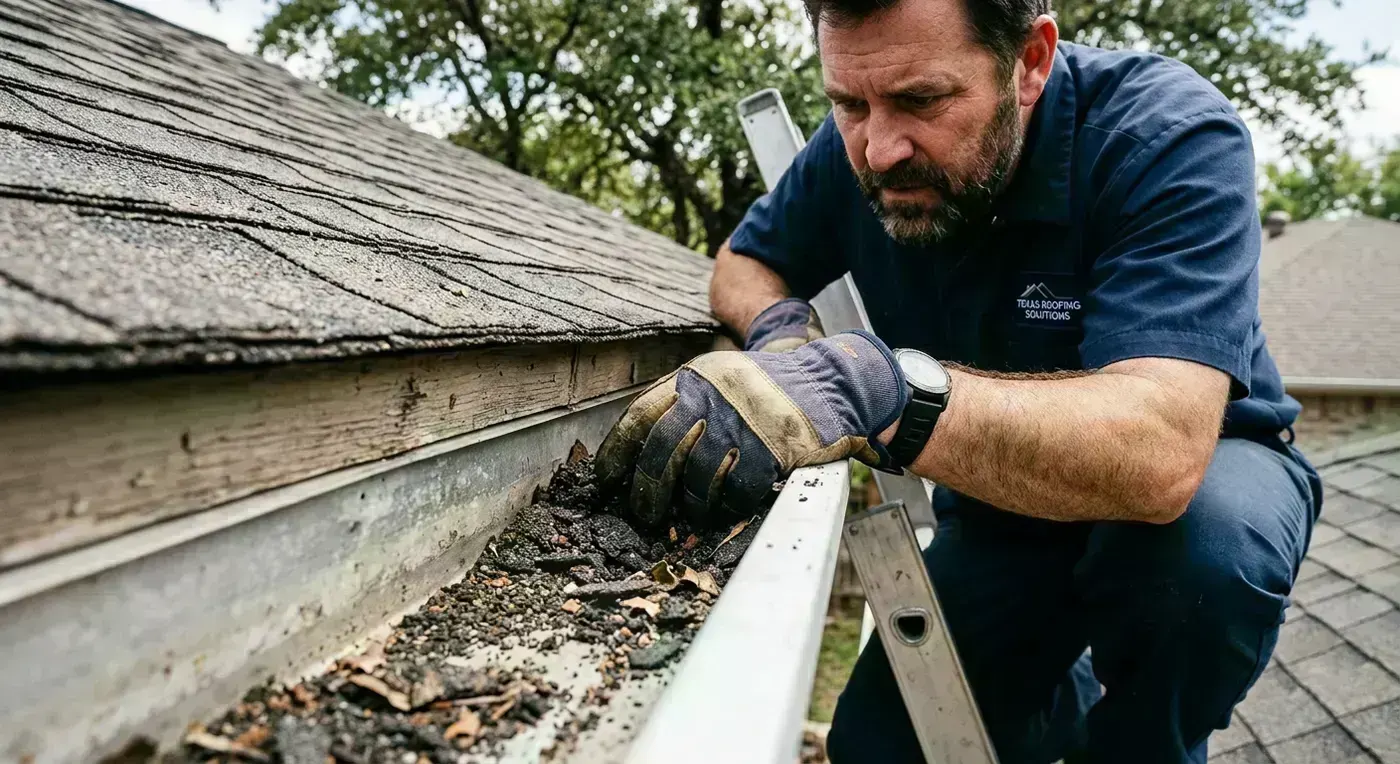
Roanoke's established neighborhoods around the original townsite are shaded by mature live oaks, post oaks, and cedar elms — beautiful, but tough on roofs. Overhanging limbs scrape granules off with every windstorm, dropped leaves and acorns clog valleys and gutters, and shaded, damp roof sections grow moss and algae streaks that hold moisture against the shingle.
Newer master-planned areas out toward the SH 114 growth corridor have younger, smaller trees, so debris is less of a factor there today — but those trees are growing fast, and homeowners should start trimming back branches before they reach the roofline.
Old-and-new: Roanoke's housing-stock mix
One of the things that makes roofing in Roanoke unique is how sharply the housing stock varies from block to block. The city has grown from a sleepy railroad town into a Denton County boomtown, and that history is visible in its roofs.
- Older established homes near downtown and along the original streets may still carry aging 3-tab asphalt, sometimes with a second layer laid over the first — a shortcut that traps heat and shortens life. Many are due, or overdue, for full replacement.
- Early-2000s subdivisions built during the first growth wave are now hitting the 18-25 year mark — right in the replacement window for architectural asphalt.
- Newer master-planned communities generally have modern architectural shingles with better ventilation and code-compliant flashing, so their main threat is simply hail rather than age.
Because homes even a few years apart can have wildly different roof conditions, there is no single "Roanoke answer." An inspection tailored to your specific home age and materials matters far more than any rule of thumb.
Dominant roofing materials
Architectural (dimensional) asphalt shingles are far and away the dominant roofing material in Roanoke, on both new construction and replacements. They offer the best balance of cost, curb appeal, and durability for our climate, and they read well against the region's brick-and-stone homes. For a full breakdown, see how long architectural shingle roofs last in Texas.
The clear local trend is toward Class 4 impact-rated versions of those same shingles. Given Roanoke's hail exposure, the modest upcharge pays for itself through longer life and, with many carriers, a premium discount. Metal and tile appear on higher-end and custom homes but remain a small share of the market.
Common roof problems in Roanoke
- Hail bruising & granule loss — the number-one cause of premature failure locally.
- Wind-lifted & missing shingles along ridges and rake edges after spring storms.
- Cracked, dried-out sealant & brittle shingles from years of intense summer heat.
- Failed flashing around chimneys, vents, and valleys — a top leak source on older homes.
- Clogged valleys & gutters from oak and elm debris in shaded neighborhoods.
- Poor attic ventilation that cooks shingles from underneath, common in older housing stock.
Inspection advice for local homeowners
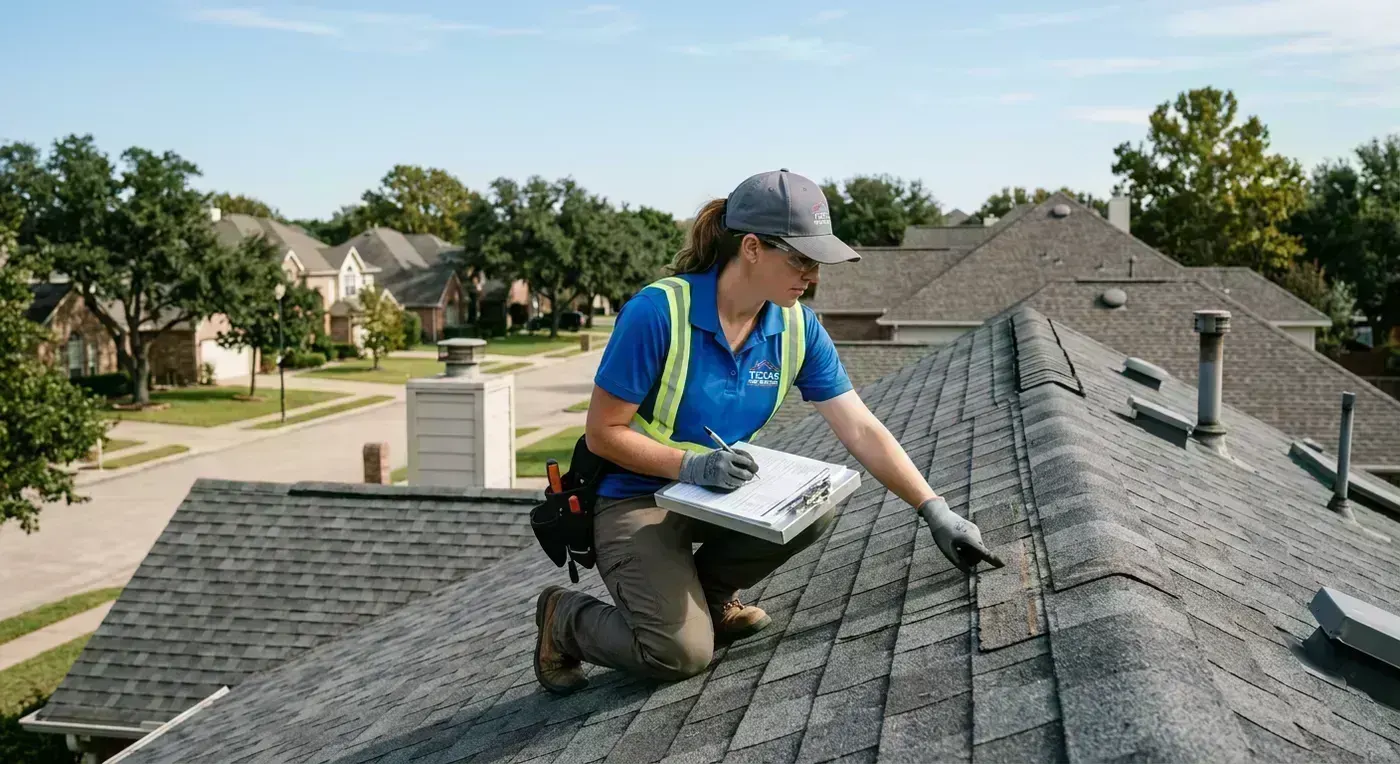
In a hail-prone town like Roanoke, inspection is not a luxury — it is how you protect your investment and your insurance eligibility. A few local guidelines:
- Inspect at least once a year, ideally in late spring after storm season, and again after any storm that drops hail or strong wind.
- Do not wait for a leak. Hail damage often hides for months before water shows up inside.
- Mind your claim window. Texas insurers typically limit how long you have to file after a storm; a timely inspection preserves your options.
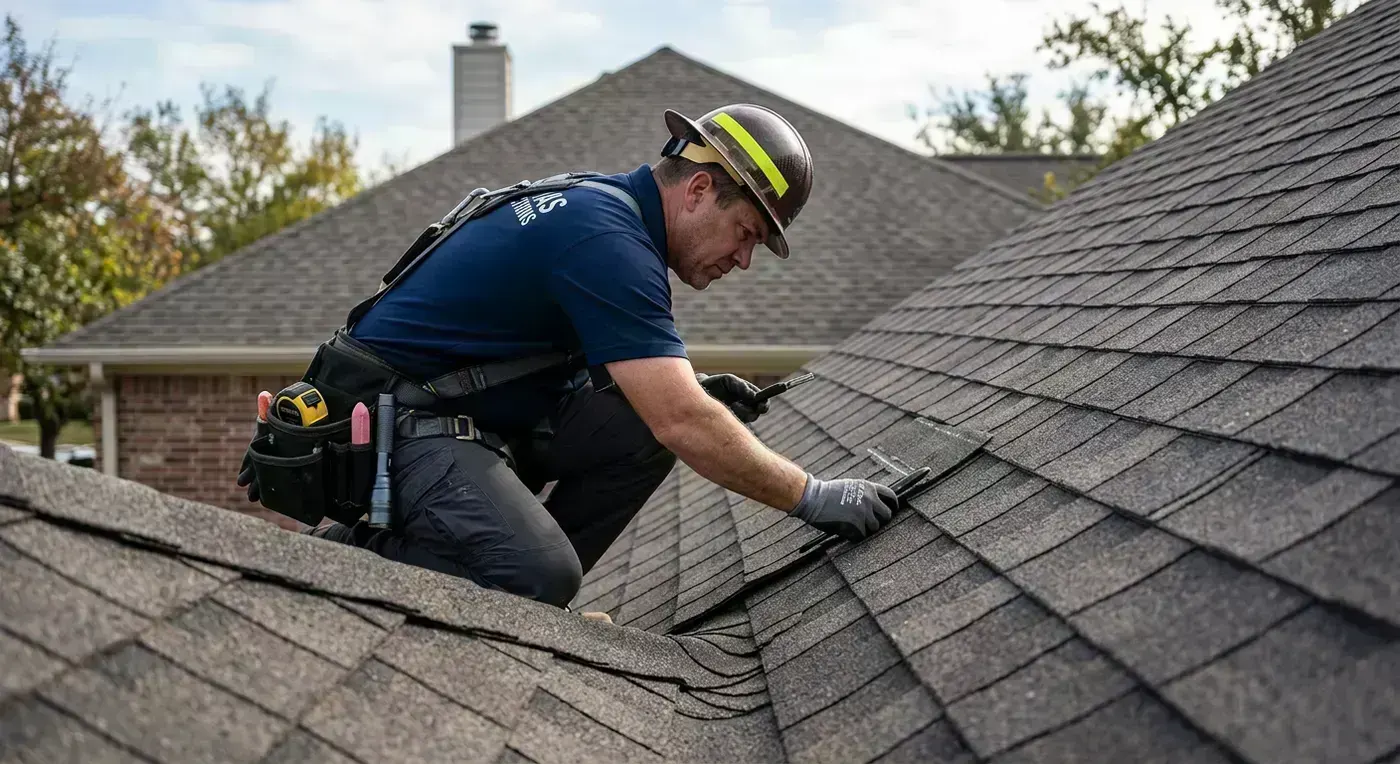
- Use a pro who documents everything. Photos and measurements make claims go smoothly.
RoofDog makes Roanoke inspections easy. We use drone inspections to safely document every slope and valley in high resolution — no ladders leaning on your gutters. Every replacement we do is backed by a lifetime workmanship warranty.
Call 940.828.ROOF, explore our Roanoke, TX roofing services, or learn about our roof inspection service. Ready to go? Schedule an inspection today.
Protecting Homes. Saving Dogs. — we donate 10% of our profits to dog rescues.
Frequently asked questions
How long do most roofs last in Roanoke, TX?
Most architectural asphalt roofs in Roanoke last 18-25 years, though hail and heat frequently shorten that to 15-20 years. Class 4 impact-rated shingles tend to reach the upper end.
Does Roanoke really get that much hail?
Yes. Roanoke sits in Denton County within the DFW "Hail Alley," one of the most hail-prone metro areas in the U.S. Damaging spring hail is an annual expectation, not a rare event.
Are Class 4 shingles worth it in Roanoke?
For most local homeowners, yes. Given our hail exposure they resist damage far better, last longer, and often qualify for an insurance premium discount that offsets the upgrade cost over time.
My roof looks fine after a storm — do I still need an inspection?
Absolutely. Hail damage often looks minor from the ground while the shingle mat is fractured. Undetected bruising can leak a year later and after your claim window has closed.
How often should I have my Roanoke roof inspected?
At least once a year — late spring is ideal — plus after any hail or high-wind event. Older homes near downtown benefit from more frequent checks.
Why do older Roanoke homes need roofs sooner than newer ones?
Many older homes near the original townsite have aging 3-tab shingles, sometimes doubled-up layers, and weaker attic ventilation — all of which shorten lifespan compared with modern architectural shingles on newer builds.
Does tree cover shorten roof life here?
It can. Roanoke's mature oaks and elms drop debris that clogs valleys and abrades granules, and shaded, damp areas encourage algae. Keeping limbs trimmed 6-10 feet back helps significantly.
What roofing material is most common in Roanoke?
Architectural asphalt shingles dominate, on both new construction and replacements, with a strong and growing shift toward Class 4 impact-rated versions because of hail.
Will insurance pay for my roof replacement?
If storm damage is documented within your policy's claim window, often yes. A thorough, photo-backed inspection soon after the storm is key to a successful claim.
How does summer heat affect my roof?
Roanoke's 100°F-plus summers bake shingle binders, loosen granules, and fatigue sealant and flashing through daily thermal cycling — accelerating wear even before hail season arrives.
Can I just add a second layer of shingles over the old one?
We generally advise against it in our climate. A second layer traps heat, shortens shingle life, hides deck problems, and complicates future inspections and claims.
Do you offer drone inspections in Roanoke?
Yes. RoofDog uses drone inspections to safely capture high-resolution imagery of every roof plane, valley, and penetration — and every replacement carries our lifetime workmanship warranty.
How do I schedule a roof inspection with RoofDog?
Call 940.828.ROOF or schedule online. We serve Roanoke and the surrounding Denton County communities.
Summary
In Roanoke, TX, expect an architectural asphalt roof to last roughly 18-25 years, with hail, wind, heat, and tree debris often shortening that in practice. The city's mix of older established homes and fast-growing master-planned neighborhoods means roof condition varies dramatically block to block, so a home-specific inspection beats any rule of thumb. Class 4 impact-rated shingles are the smart local standard, and annual plus post-storm inspections protect both your roof and your insurance options. When you are ready, RoofDog is here to help — 940.828.ROOF. Protecting Homes. Saving Dogs.
You Might Also Need
Need a Roof Inspection?
Get expert advice and a free estimate from North Texas's trusted roofing professionals.
Schedule Free Inspection