How Long Do Roofs Last in Trophy Club, TX?
Short answer: In Trophy Club, a quality architectural asphalt shingle roof typically lasts 18 to 25 years — and because much of Trophy Club was built between the mid-1980s and the early 2000s, a large share of the town's original roofs are now at or past that age. Add DFW hail-alley exposure, high spring winds, and a heavy tree canopy, and it is no surprise that Trophy Club is in the middle of a genuine roof-replacement wave.
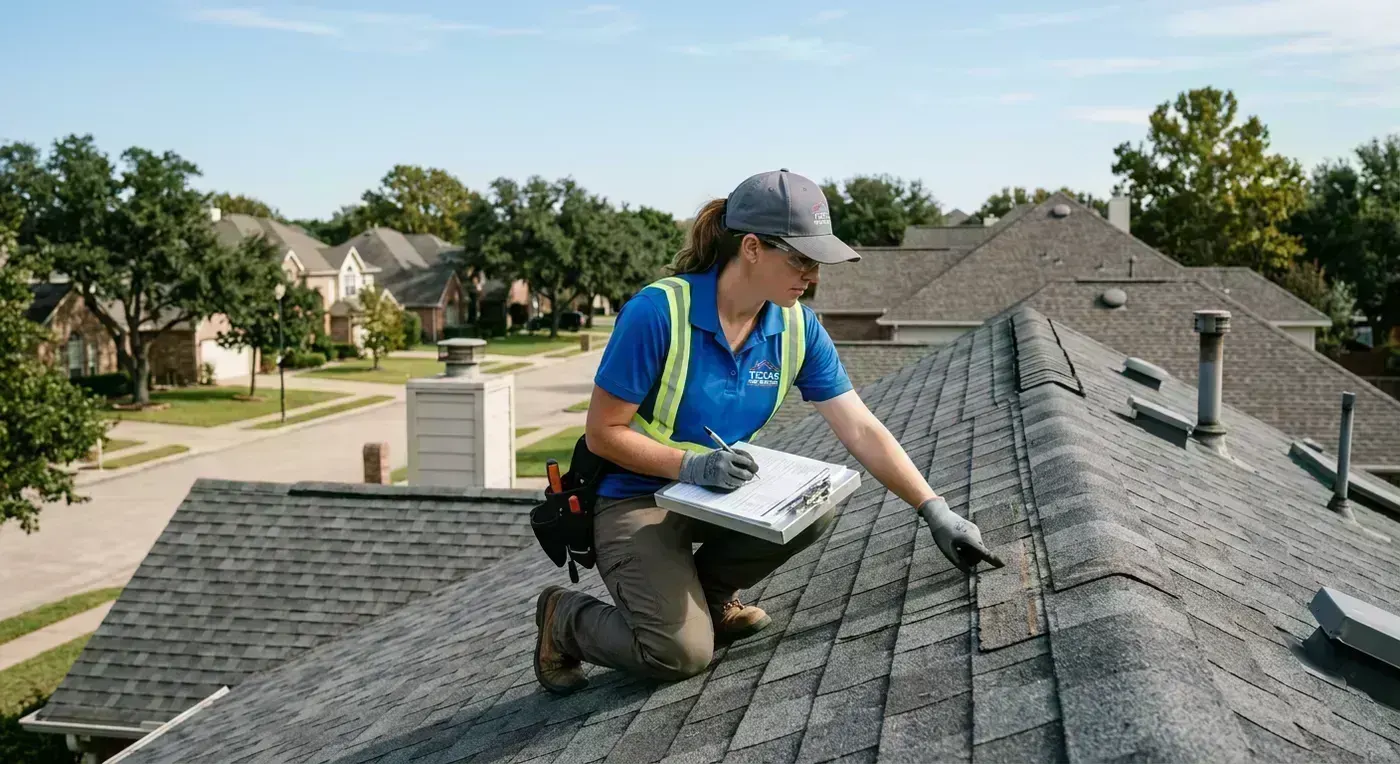
Not sure how old your roof is? If your home was built in the original Trophy Club sections and still wears its first architectural asphalt roof, it is statistically overdue for a hard look. RoofDog offers free drone inspections — call 940.828.ROOF.
Table of contents
- Trophy Club's climate and why it ages roofs faster
- Hail alley, wind, and the North Texas storm season
- Trophy Club's mature tree canopy
- The age of Trophy Club's housing stock — and the replacement wave
- Dominant materials: architectural asphalt and the shift to Class 4
- Roof lifespan by material in Trophy Club
- Common problems on aging Trophy Club roofs
- HOA architectural standards
- Inspection advice for Trophy Club homeowners
- Frequently asked questions
- Summary
Trophy Club's climate and why it ages roofs faster
Trophy Club sits in southern Denton County, tucked between Roanoke, Westlake, and the northwest edge of the DFW metroplex. It shares the same punishing North Central Texas climate as the rest of the region: long, brutally hot summers where rooftop surface temperatures can climb well past 150°F, followed by sharp winter cold snaps and the occasional ice event. That daily thermal cycling — shingles expanding in the afternoon heat and contracting overnight — is one of the quietest but most relentless things aging a Trophy Club roof.
Intense ultraviolet exposure does the rest. Over 15 to 20 years, UV bakes the volatile oils out of asphalt shingles, leaving them brittle and prone to granule loss. This is why a roof that looked fine at year 12 can deteriorate quickly between years 18 and 25. For the regional baseline, see our overview of how long roofs last in Texas.
Hail alley, wind, and the North Texas storm season
Trophy Club sits squarely inside what insurers call "hail alley." Every spring, supercell thunderstorms roll across Denton and Tarrant counties, and hail from pea-sized to baseball-sized is a routine feature of March through June. A single significant hailstorm can end the life of an otherwise healthy roof overnight, bruising shingles, fracturing the mat, and knocking away the protective granule layer.
Straight-line winds and gust fronts ahead of these storms are just as damaging. Trophy Club's mix of two-story homes with steep, exposed gable ends and ridgelines catches a lot of wind, and older three-tab or early architectural shingles lose their seal and begin to lift and crease. Because hail and wind damage is so common here, many Trophy Club replacements are ultimately paid for — in whole or part — through storm insurance claims rather than out of pocket.
RoofDog tip: After any major Trophy Club hail event, document the date and get a professional inspection within a few months. Insurers grow reluctant to honor claims once storm damage is left to sit and worsen. Our drone inspections capture time-stamped, high-resolution evidence you can hand straight to your adjuster.
Trophy Club's mature tree canopy
As a master-planned community wrapped around a golf course, Trophy Club was designed with landscaping in mind — and decades on, that means a genuinely mature tree canopy of live oaks, red oaks, and cedar elms shading many streets and back yards. Trees are wonderful for curb appeal and cooling, but they are hard on roofs.
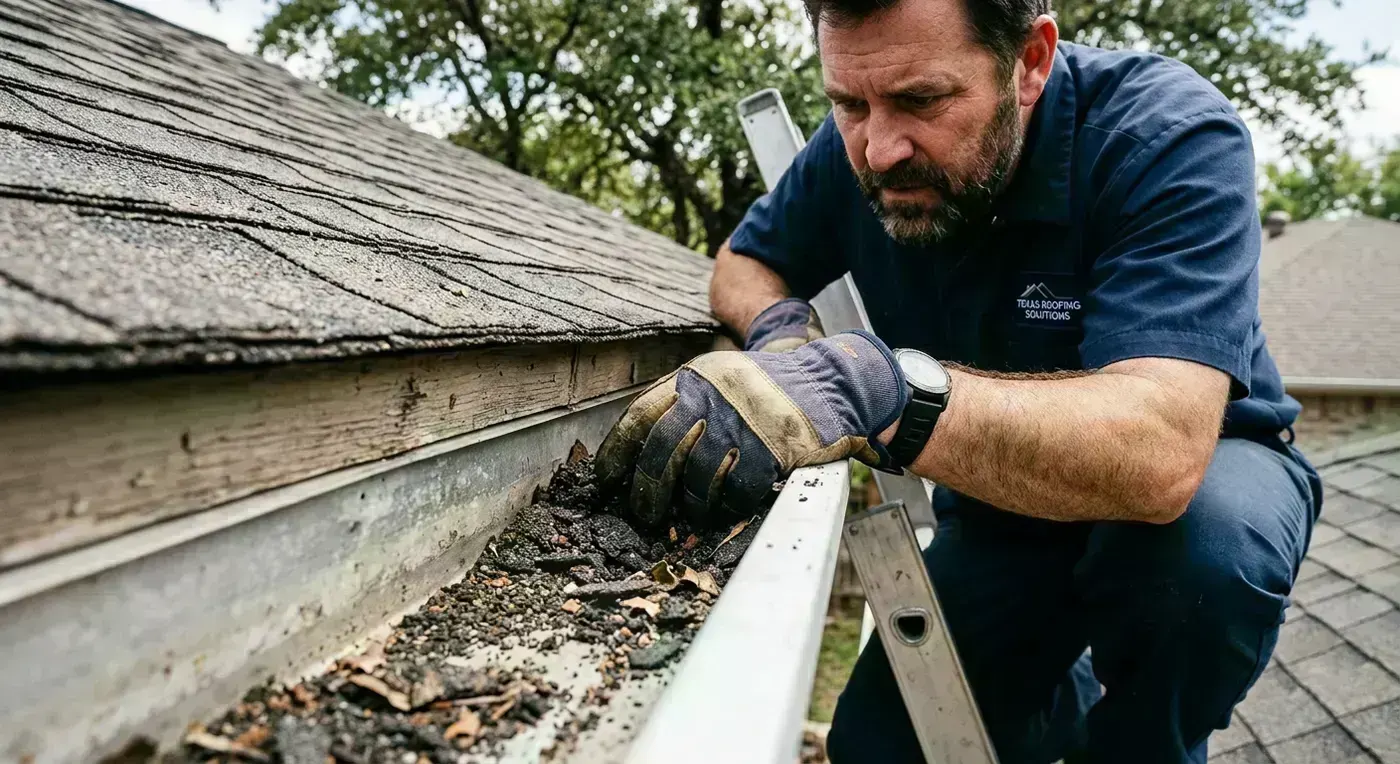
Overhanging limbs abrade shingle surfaces every time the wind blows, dropped leaves and pollen trap moisture in valleys and against flashing, and shaded north-facing slopes stay damp long enough to grow algae and moss. Falling limbs during storms are a leading cause of sudden roof damage in the older, more heavily treed sections of town. Keeping branches trimmed back and gutters clear meaningfully extends the life of a Trophy Club roof.
The age of Trophy Club's housing stock — and the replacement wave
Here is the single most important factor for Trophy Club specifically: the age of the homes. Trophy Club is one of North Texas's earliest master-planned communities, and its residential build-out largely spans the mid-1980s through the early 2000s, with steady infill in the years that followed. That means a huge portion of the town's housing stock is now 20 to 40 years old.
Do the math on roof life. A home built in 1995 with an original architectural asphalt roof rated for around 20 years reached the end of that window years ago. Even homes that were re-roofed once after an early-2000s hailstorm are now, in many cases, staring down a second replacement. This is why longtime residents have noticed so many dumpsters and roofing crews on Trophy Club streets in recent years — the community is moving through a very real replacement wave as its first- and second-generation roofs age out together.
If you own an established Trophy Club home and are not certain when the roof was last replaced, treat that uncertainty as a red flag. A roof replacement planned on your schedule — rather than forced by a leak in the middle of hail season — is almost always the cheaper, calmer path.
Dominant materials: architectural asphalt and the shift to Class 4
The overwhelmingly dominant roofing material in Trophy Club is architectural (dimensional) asphalt shingle. It suits the town's HOA-driven aesthetic, comes in the earth-tone palettes the community favors, and offers a solid balance of cost and longevity. The original homes typically wore standard architectural shingles; today, most replacements upgrade to heavier, better-warrantied lines.
The biggest trend, though, is the move to Class 4 impact-rated shingles. In a hail zone like Trophy Club, Class 4 is close to a no-brainer: these shingles are laboratory-tested against impact, resist hail bruising far better than standard products, and — critically — qualify most homeowners for a meaningful annual insurance premium discount. Over a 20-plus-year roof life, those discounts often offset a large share of the upgrade cost.
Roof lifespan by material in Trophy Club
| Roofing material | Typical Trophy Club lifespan | Notes |
|---|---|---|
| 3-tab asphalt (older/original) | 12–18 years | Rare on new installs; still found on unremodeled older homes |
| Architectural asphalt (standard) | 18–25 years | The community's most common roof; hail can shorten this |
| Class 4 impact-rated asphalt | 25–30 years | Best hail value; qualifies for insurance discounts |
| Metal (standing seam) | 40–60 years | Limited by HOA aesthetics; used selectively |
| Tile / concrete | 40–50+ years | Found on some upscale homes; underlayment fails first |
Common problems on aging Trophy Club roofs
Because so many Trophy Club roofs are in their late years, the same handful of problems show up again and again during inspections:
- Granule loss — bare, shiny asphalt patches and granules collecting in gutters signal a roof near the end of its UV-protected life.
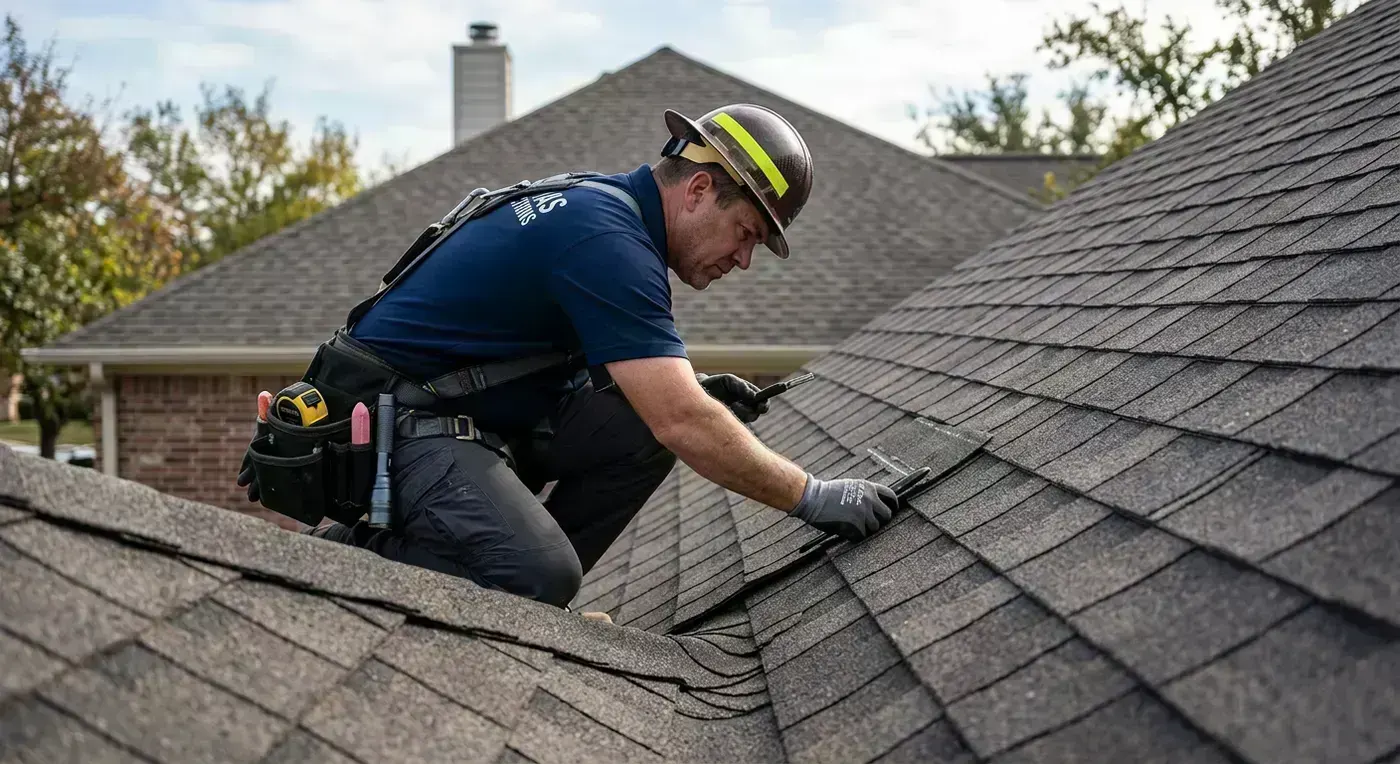
- Cracked and curling shingles — classic age-plus-heat deterioration, especially on hot south- and west-facing slopes.
- Hail bruising — soft, fractured spots that may not leak yet but have shortened the roof's remaining life.
- Failed pipe boots and flashing — rubber boots around plumbing vents typically crack and leak around the 10–15 year mark, well before the shingles themselves fail.
- Sealant and ridge-cap breakdown — wind lifts loose tabs once the factory adhesive strip gives out.
- Attic and decking issues — slow leaks from tree-shaded valleys can rot decking long before a homeowner sees a ceiling stain.
HOA architectural standards
As a master-planned community, Trophy Club takes appearance seriously, and homeowners association architectural standards often govern acceptable shingle colors, profiles, and materials. Before you replace a roof here, it is worth confirming any color or product requirements so your new roof is approved without friction — and so it complements the cohesive look the neighborhood is known for. A roofer experienced in Trophy Club, like our crews at RoofDog's Trophy Club roofing service, will already be familiar with what tends to pass muster locally.
Inspection advice for Trophy Club homeowners
Given the age of the housing stock and the storm exposure, we recommend Trophy Club homeowners have their roof professionally inspected at least once a year, and again after any significant hail or wind event. Between inspections, watch for granules in the gutters, daylight or water stains in the attic, and lifted or missing shingles after storms.
RoofDog inspects Trophy Club roofs with drones — no boots scuffing your shingles, and detailed imagery of every slope, valley, and flashing detail. Every replacement we install is backed by our lifetime workmanship warranty. And because we believe in “Protecting Homes. Saving Dogs.,” we donate 10% of our profits to dog rescues. Book your free inspection at roofdog.com/schedule or call 940.828.ROOF.
Frequently asked questions
How long do most roofs last in Trophy Club?
Most architectural asphalt roofs in Trophy Club last 18 to 25 years. Hail and wind can shorten that, while a Class 4 impact-rated upgrade can push it toward 25 to 30 years.
Why do so many Trophy Club homes seem to need new roofs right now?
Because much of Trophy Club was built between the mid-1980s and early 2000s, a large share of original architectural roofs have reached the end of their 20-ish-year life at roughly the same time — creating the replacement wave residents are seeing today.
My Trophy Club home was built in the 1990s. Is my roof due?
If it still wears its original roof, almost certainly yes. A 1990s architectural asphalt roof has passed its expected lifespan. Even a home re-roofed after an early-2000s hailstorm may now be nearing a second replacement.
Does Trophy Club really get that much hail?
Yes. Trophy Club sits inside DFW's "hail alley," and spring supercells regularly drop damaging hail across Denton and Tarrant counties. Hail is the leading reason roofs here are replaced ahead of schedule.
Should I choose Class 4 shingles in Trophy Club?
For most homeowners, yes. Class 4 impact-rated shingles resist hail far better and typically qualify you for an insurance premium discount that offsets much of the upgrade cost over the roof's life.
Will my HOA restrict what roof I can install?
Trophy Club's architectural standards often specify acceptable shingle colors and profiles. Confirm requirements before you buy, and work with a roofer who knows the community so your new roof is approved smoothly.
How does Trophy Club's tree canopy affect my roof?
Overhanging limbs abrade shingles, trapped leaves hold moisture in valleys, and shaded north slopes grow algae. Trimming branches and keeping gutters clear noticeably extends roof life.
Can I get my Trophy Club roof replaced through insurance?
Often, yes. Hail and wind damage from North Texas storms is frequently covered. Document the storm date and get a prompt professional inspection — insurers resist claims on damage left to worsen.
How often should I have my roof inspected?
At least once a year, and again after any major hail or wind event. Given the age of Trophy Club's roofs, annual inspections catch problems while they are still cheap to fix.
What are the first signs my Trophy Club roof is failing?
Granules collecting in gutters, cracked or curling shingles, cracked pipe boots, and water stains in the attic are the earliest warning signs. Many leaks start at flashing, not the shingle field.
Do you offer drone inspections in Trophy Club?
Yes. RoofDog uses drones to inspect Trophy Club roofs safely and thoroughly, capturing high-resolution, time-stamped imagery of every slope and detail — ideal for both homeowners and insurance adjusters.
How much does a roof replacement cost in Trophy Club?
Cost depends on roof size, pitch, material, and complexity. The best way to get an accurate number is a free inspection. Call RoofDog at 940.828.ROOF for a no-pressure estimate.
What warranty does RoofDog offer?
Every RoofDog replacement is backed by a lifetime workmanship warranty, on top of the manufacturer's material warranty on the shingles themselves.
Summary
In Trophy Club, expect roughly 18 to 25 years from an architectural asphalt roof, and 25 to 30 from a Class 4 impact-rated upgrade. But the defining factor here is age: as an established 1980s–2000s master-planned community in hail-prone Denton County, Trophy Club is moving through a real replacement wave, with many original roofs now overdue. Between the climate, the storms, and the mature tree canopy, an annual inspection is your best defense. When it is time, RoofDog inspects with drones, backs every install with a lifetime workmanship warranty, and gives 10% of profits to dog rescues — because we are about Protecting Homes. Saving Dogs. Call 940.828.ROOF or book at roofdog.com/schedule.
You Might Also Need
Need a Roof Inspection?
Get expert advice and a free estimate from North Texas's trusted roofing professionals.
Schedule Free Inspection