How Long Do Roofs Last in Argyle, TX?
Short answer: In Argyle, most architectural asphalt roofs last 15–22 years, Class 4 impact-rated shingles push 22–28, and premium metal, tile, and synthetic slate can run 40–70+ years. But out here, the number that matters isn't the manufacturer's warranty — it's how your roof holds up to DFW hail, open-country wind on a five-acre lot, and decades of oak and pecan debris grinding down your shingles.
Argyle isn't a typical suburb, and its roofs don't age like typical suburban roofs. Between the mature tree canopy, the custom-home mix of materials, and the exposure that comes with big lots, roof longevity here is a genuinely local question. Let's break it down honestly.
Table of contents
- Argyle's climate and why it ages roofs faster
- DFW hail alley: the #1 factor in Argyle
- Open-country wind on acreage lots
- The tree-canopy problem: oaks, pecans, and overhang
- Dominant roofing materials in Argyle & their real lifespans
- Neighborhood and home age around town
- Common roof problems we see in Argyle
- Inspection advice for Argyle homeowners
- Frequently asked questions
Argyle's climate and why it ages roofs faster
Argyle sits in North Central Texas, where roofs endure a brutal annual cycle: summer surface temperatures on dark shingles can exceed 150°F, followed by sharp winter cold snaps and the occasional ice storm. That thermal expansion and contraction — day after day, year after year — is what quietly cracks shingle mats, dries out sealant strips, and loosens fasteners long before any single storm hits.
Add the intense UV load of the Texas sun and you get accelerated granule loss on asphalt roofs. This is why a shingle rated for "30 years" in a lab rarely delivers 30 years here. Statewide, the pattern is consistent — we cover it in depth in our guide to how long roofs last in Texas — but Argyle's specific combination of exposure and tree cover puts it toward the harder end of that curve.
DFW hail alley: the #1 factor in Argyle
If there's one thing that decides how long an Argyle roof actually lasts, it's hail. Denton County sits inside "hail alley," the corridor stretching up through North Texas that sees some of the most frequent and severe hail in the country. It's completely normal for an Argyle roof to take multiple hail events in a single decade, and a single large storm can end the useful life of an otherwise healthy asphalt roof overnight.
Hail damage isn't always dramatic. More often it's bruising — soft spots where the impact fractured the mat and knocked off protective granules. The roof looks fine from the driveway, but water infiltration and premature aging are already underway. This is exactly why so many Argyle homeowners with the budget for it choose Class 4 impact-rated shingles, which are engineered to survive strikes that would total a standard architectural shingle.
Open-country wind on acreage lots
In a packed subdivision, houses shelter each other from wind. Argyle's acreage estates don't get that luxury. On a three-, five-, or ten-acre lot — especially the ones bordering open pasture or the fields west toward the county line — wind hits the roof plane with far less obstruction. Straight-line winds from spring thunderstorm complexes routinely gust 60–70 mph, and roof edges, ridges, and rakes take the brunt of it.
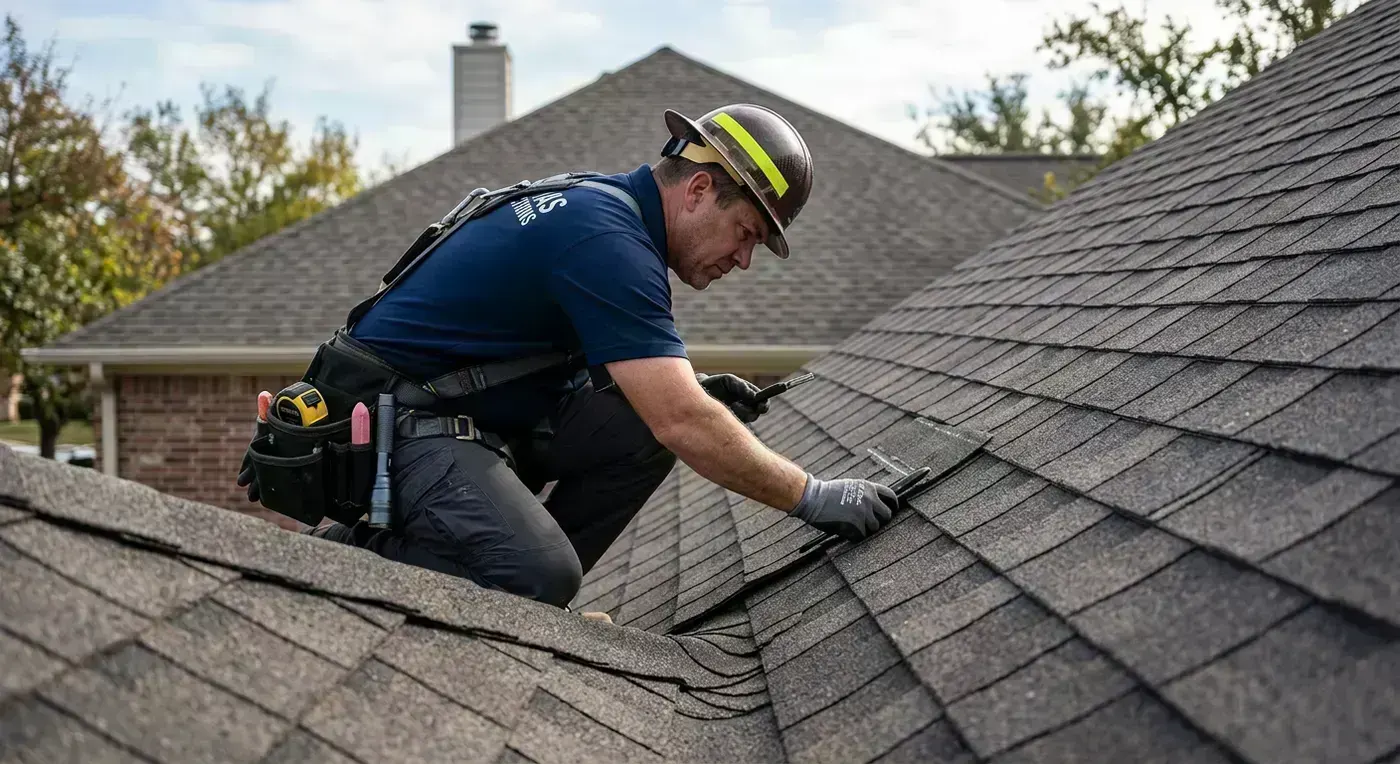
Wind failures in Argyle usually start at the perimeter: lifted starter courses, peeled ridge caps, and shingles whose sealant strip never fully bonded. Once one shingle lets go, the ones behind it are exposed to uplift and the failure cascades. Proper edge-metal detailing and high-wind-rated installation matter more on an exposed Argyle lot than almost anywhere else in the Metroplex.
The tree-canopy problem: oaks, pecans, and overhang
Argyle's mature tree cover is one of its most beautiful features — and one of the hardest things on a roof. Those big post oaks, live oaks, and pecans do real, ongoing damage in several ways:
- Abrasion: Overhanging limbs sweep back and forth in the wind, scraping granules off shingles along a narrow track until the mat is exposed.
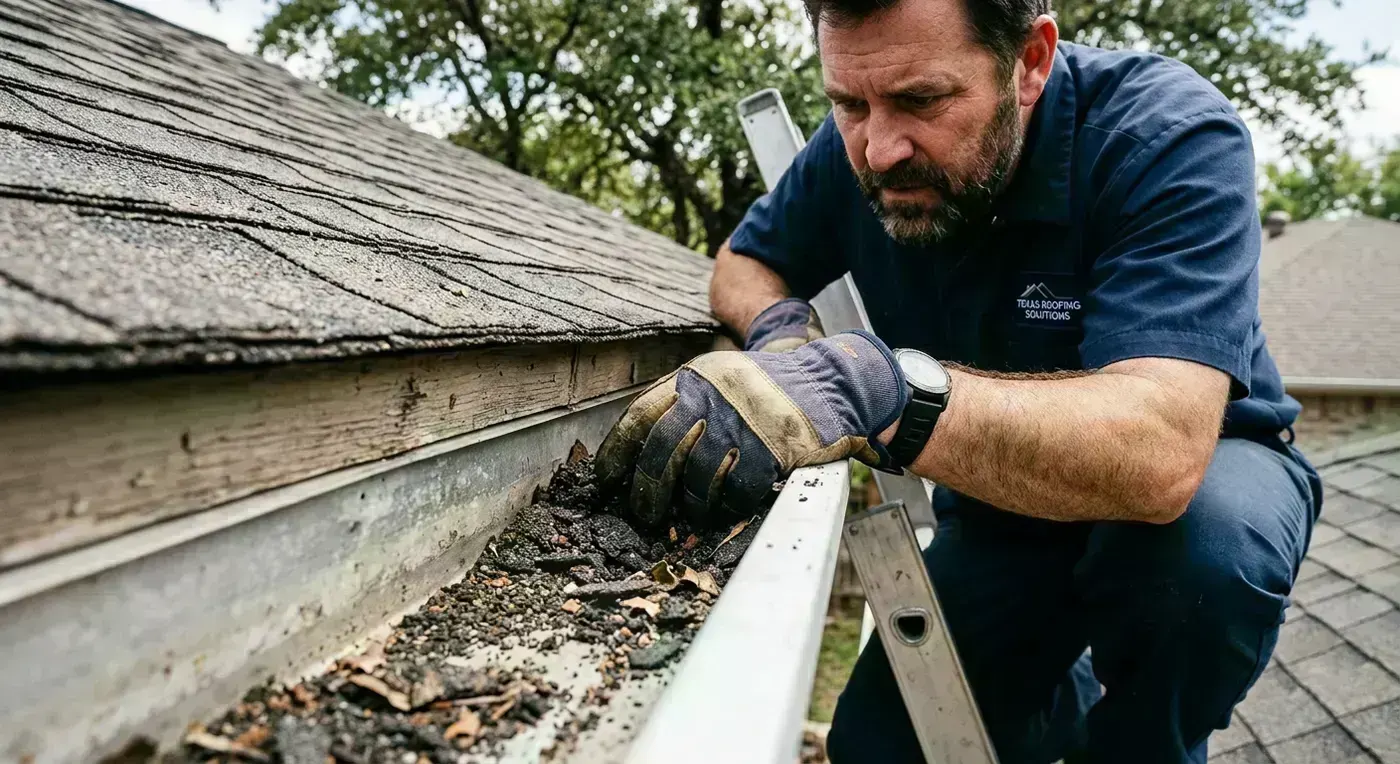
- Debris load: Pecan husks, acorns, small branches, and heavy leaf drop pile up in valleys and behind chimneys, trapping moisture against the roof.
- Clogged drainage: Leaf-packed gutters and valleys hold water where it should be shedding, rotting decking and fascia from below.
- Impact damage: Every ice storm and high-wind event brings the risk of falling limbs — and Argyle's oaks and pecans drop big, heavy wood.
- Moss and organic growth: Persistently shaded, damp north-facing slopes under heavy canopy grow moss and algae that degrade shingles.
The practical takeaway: two identical roofs in Argyle can have very different lifespans purely based on tree exposure. A roof shaded and overhung by a stand of pecans may need attention years earlier than the same roof on a cleared part of the lot.
Dominant roofing materials in Argyle & their real lifespans
Because Argyle is a custom-home market, you'll find a much wider range of roofing materials here than in a builder-grade subdivision. Here's what we actually see on the ground, with realistic local lifespans that account for hail, wind, and tree exposure — not lab conditions:
| Material | Typical Argyle lifespan | Notes for this area |
|---|---|---|
| Architectural (dimensional) asphalt | 15–22 years | Most common; hail often cuts it short of the top range. |
| Class 4 impact-rated shingles | 22–28 years | Best hail value; insurance discounts common. |
| Standing-seam metal | 40–60 years | Excellent wind performance; can dent in extreme hail. |
| Concrete / clay tile | 40–60+ years | Tiles crack under hail; underlayment is the weak link. |
| Synthetic slate / composite | 40–50 years | Impact-resistant and light; popular on upscale Argyle builds. |
| Natural slate | 75–100 years | Rare; heavy, and vulnerable to large hail. |
Synthetic slate deserves a special mention in Argyle. It gives estate homes the high-end look owners want while shrugging off the hail that would crack real slate or clay tile — a real advantage in this market. We go deeper in our guide to how long synthetic slate roofs last in Texas.
Neighborhood and home age around town
Argyle has grown in waves, and roof age tracks that growth. Older established properties — the original acreage homesteads and horse properties along the FM 407 corridor and toward Bartonville — often carry roofs that are on their second or third replacement. Newer custom developments like those near Harvest and the growing subdivisions off Crawford Road tend to have younger roofs, many still on their original builder-installed shingles.
If your Argyle home was built or last re-roofed 12–18 years ago and still wears standard architectural asphalt, you're in the window where hail and age start compounding. That's the time to get a baseline inspection rather than waiting for a leak to announce the problem.
Common roof problems we see in Argyle
Across Argyle roofs, the same issues come up again and again:
- Hidden hail bruising that hasn't leaked yet but has shortened the roof's remaining life.
- Wind-lifted ridge and edge shingles on exposed acreage lots.
- Abrasion tracks and granule loss under overhanging oak and pecan limbs.
- Debris-clogged valleys and gutters holding moisture and rotting decking.
- Failed flashing around the many chimneys, dormers, and roof-to-wall transitions common on custom homes.
- Deteriorated pipe boots and sealants — often the first place a Texas roof leaks.
- Cracked tiles and compromised underlayment on tile roofs that took hail.
We're a North Texas roofer serving Argyle with drone-based inspections that safely document every slope of a large estate roof without a boot ever touching your shingles. Every job is backed by our lifetime workmanship warranty, and 10% of our profits go to dog rescues. Call 940.828.ROOF or schedule an inspection online.
Inspection advice for Argyle homeowners
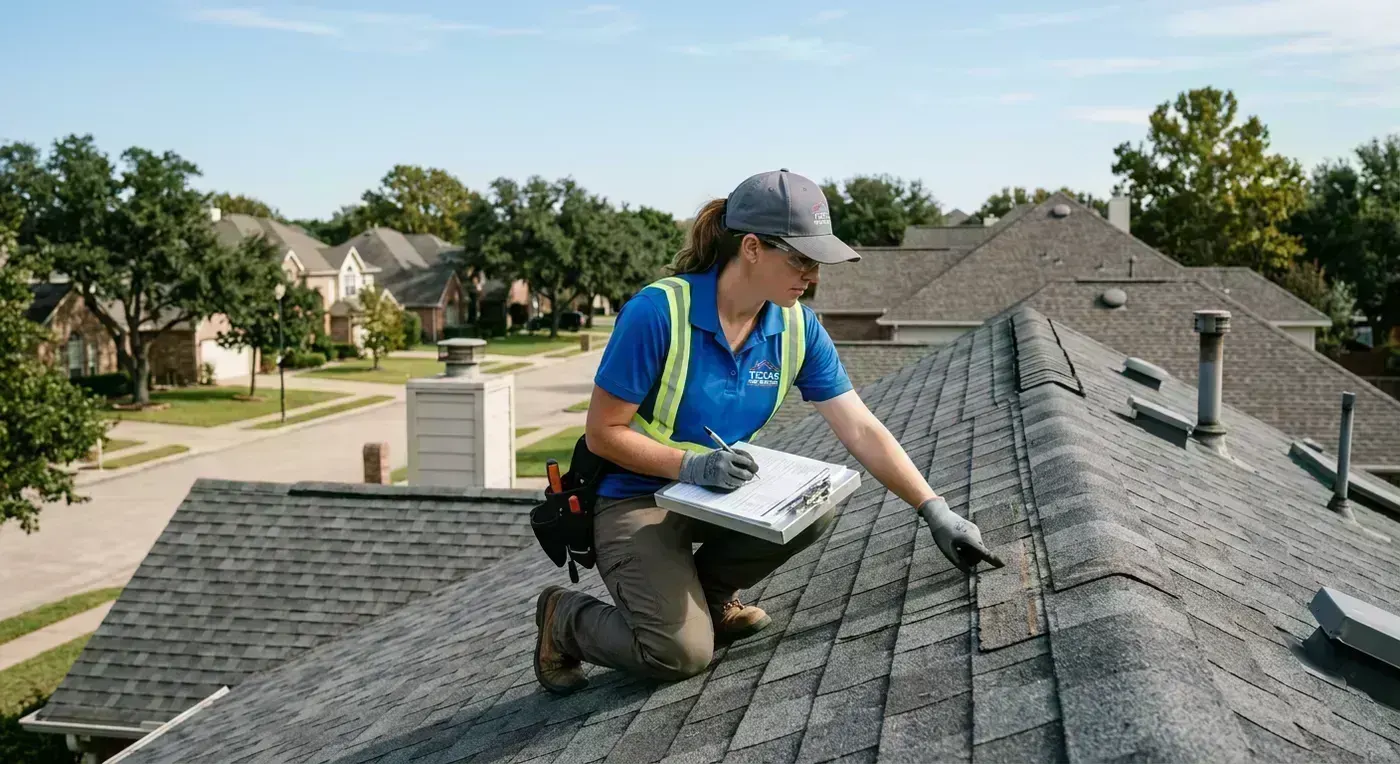
Given the hail, wind, and tree exposure here, we recommend Argyle homeowners get a professional roof inspection at least once a year, plus after any significant hail or wind event. Waiting until you see a ceiling stain almost always means the damage — and the repair bill — is bigger than it needed to be.
A few Argyle-specific tips:
- Inspect after storms, not on a schedule alone. A single spring hailstorm can change everything.
- Keep limbs trimmed back at least 6–10 feet from the roof plane to stop abrasion and reduce debris and falling-limb risk.
- Clear valleys and gutters after pecan and oak drop each fall.
- Document hail dates. Insurance claims in Denton County often hinge on tying damage to a specific storm.
- Use drone inspections on big roofs. On sprawling estate rooflines, a drone captures detail that's hard to reach safely on foot.
RoofDog's professional roof inspection service uses high-resolution drone imagery to give you an honest, documented assessment of exactly where your roof stands. If you're in town, you can learn more about our roofing services in Argyle, TX.
Frequently asked questions
How long should I expect my asphalt roof to last in Argyle?
Plan on 15–22 years for architectural asphalt in Argyle, but understand that hail can end its life earlier. Homes under heavy tree cover often land at the lower end because of abrasion and debris.
Is Class 4 shingle worth the extra cost out here?
For most Argyle homes, yes. The added hail resistance and the insurance premium discount typically offset the upfront cost over the life of the roof, especially given how often this area sees hail.
Do the oak and pecan trees on my lot really shorten my roof's life?
They can, significantly. Overhanging limbs abrade shingles, debris traps moisture in valleys, and falling limbs cause impact damage. Keeping limbs trimmed back and valleys clear is one of the cheapest ways to extend roof life in Argyle.
Why do roofs on acreage lots seem to have more wind damage?
Homes on open Argyle acreage don't get the wind-sheltering effect of a dense subdivision. The roof plane and edges take fuller force from straight-line winds, so perimeter and ridge details fail more often.
My roof looks fine after the last hailstorm — do I still need it checked?
Yes. Most hail damage is bruising that isn't visible from the ground. A roof can look perfect while its remaining lifespan has already been cut in half. A documented inspection catches it early.
What roofing material lasts longest in Argyle?
Metal, tile, and natural slate lead on raw longevity. But for the best balance of lifespan, hail resistance, and estate-home aesthetics, many Argyle owners choose standing-seam metal or synthetic slate.
How often should I have my Argyle roof inspected?
At least once a year, plus after any major hail or wind event. Given Denton County's storm frequency, an annual baseline plus post-storm checks is the sensible cadence here.
Can a drone inspection really cover my whole estate roof?
Yes — that's a big reason we use them. On large, complex Argyle rooflines, a drone documents every slope, valley, and penetration in high resolution without the safety risk of walking the roof.
Does my insurance discount for an impact-resistant roof apply in Argyle?
Most Texas carriers offer a discount for Class 4 impact-rated roofs statewide, including Denton County. Confirm the exact amount with your insurer, but the savings are real and recurring.
My home is about 15 years old and still has the original roof. What should I do?
That's the classic window where age and accumulated hail exposure start to compound. Get a baseline inspection now so you can plan — and catch any storm damage that may still be claimable.
Are tile roofs a good choice with all the hail here?
Tile lasts a long time but individual tiles can crack under large hail, and the underlayment beneath is the real lifespan driver. If you love the tile look but want better hail performance, synthetic slate is worth considering.
What's the first thing that usually leaks on an Argyle roof?
Usually flashing and pipe boots — the transitions and penetrations, not the field of the roof. Custom Argyle homes have lots of chimneys, dormers, and roof-to-wall joints, so flashing is a frequent culprit.
How do I get started with RoofDog?
Call 940.828.ROOF or schedule online. We'll run a drone inspection, give you an honest assessment, and back any work with our lifetime workmanship warranty — all while donating 10% of profits to dog rescues.
Summary
In Argyle, roof lifespan is decided less by the warranty on the box and more by the realities of this community: DFW hail alley, high open-country wind on big lots, and a heavy oak-and-pecan canopy that grinds and clogs roofs over time. Architectural asphalt runs 15–22 years, Class 4 shingles 22–28, and premium metal, tile, and synthetic slate stretch far longer — if they're installed and maintained for local conditions. Annual and post-storm inspections are the single best way to protect your investment. When you're ready, RoofDog is here with drone inspections, a lifetime workmanship warranty, and a mission to protect homes and save dogs. Call 940.828.ROOF.
You Might Also Need
Need a Roof Inspection?
Get expert advice and a free estimate from North Texas's trusted roofing professionals.
Schedule Free Inspection