Repair vs. Replace an Aging Roof: How to Decide
Short answer: Repair an aging roof when the damage is isolated, the roof still has meaningful life left (roughly under 75% of its expected lifespan), and the repair cost is well under 25% of a replacement. Replace it when damage is widespread, the roof is within a few years of its expected end of life, you are on your second or third repair in the same decade, or a single repair approaches 40–50% of replacement cost. The math almost always tips toward replacement once a roof is both old and repeatedly failing.
If you own a home in Dallas, Fort Worth, Plano, McKinney, or anywhere across North Texas, this is one of the most expensive homeowner decisions you will make — and one where bad advice costs thousands. The goal of this guide is to give you a clear, unemotional way to decide, using the same framework our crews at RoofDog use when we walk a roof. Call us at 940.828.ROOF if you want a second opinion, but read this first so you know what questions to ask.
Table of contents
- The five-question decision framework
- The 25% and 50% rules of thumb
- Age relative to expected lifespan
- Extent and recurrence of damage
- Insurance vs. out-of-pocket math
- The matching-shingle problem
- Energy efficiency and resale value
- When repeated repairs stop making sense
- Honest scenarios: repair vs. replace
- Frequently asked questions
The five-question decision framework
Most repair-or-replace confusion comes from looking at only one variable — usually the price of the immediate repair. A roof is a system, and the right decision depends on how several factors line up together. Run your roof through these five questions before you sign anything.
- How old is the roof relative to its expected life? A 9-year-old roof and a 22-year-old roof with identical hail dents are entirely different decisions.
- How widespread is the damage? One flashing leak is not the same as granule loss and curling across three slopes.
- Is this a repeat problem? First repair or fourth repair in the same area changes everything.
- What does the money actually look like? Repair cost as a percentage of replacement, plus insurance eligibility.
- What are your plans for the home? Selling in two years and staying twenty years point to different answers.
Notice that none of these questions is "does it leak right now?" A roof that is not leaking today can still be the wrong candidate for repair, and a roof with an active leak can sometimes be a perfectly good repair. The condition of the whole roof matters more than any single symptom. If you are still learning how to read those symptoms, our companion guide on the signs your roof is nearing the end of its life walks through what to look for from the ground and the attic.
The 25% and 50% rules of thumb
Contractors and adjusters lean on two simple percentage tests to sanity-check a repair. They are not laws of physics, but they are surprisingly good guardrails for an aging roof.
The 25% rule: If a repair would cost more than about 25% of a full replacement, you are usually better off replacing — especially on a roof that is more than halfway through its life. You are pouring meaningful money into old materials you will still have to tear off soon.
The 50% rule: If a single repair approaches half the cost of a new roof, replacement is almost always the smarter dollar. At that point you are effectively buying a partial roof at a premium per square.
Here is why these rules work. Roofing has real fixed costs baked into every job — mobilization, tear-off, disposal, labor setup, and permit. A small repair spreads those costs across a tiny area, so the per-square cost is high. Once a repair grows large enough to trigger the 25% threshold, you are paying near-replacement fixed costs without getting a replacement's lifespan or warranty. Put simply, a big repair on an old roof is the worst value in roofing.
The percentages shift with age. On a 5-year-old roof, spending 25% of replacement cost to fix legitimate storm damage can be entirely reasonable — you are protecting 15+ years of remaining life. On a 20-year-old roof, that same 25% is money you will likely re-spend within a few years. Always read the percentage through the lens of remaining lifespan, which brings us to age.
Age relative to expected lifespan
Age is the single most important variable, because it determines how much value a repair actually buys you. A repair does not reset the clock — it keeps the existing roof limping to its original finish line. The question is how far away that finish line is.
Expected lifespan varies by material and by how brutal the local climate is. North Texas is genuinely hard on roofs: intense UV, wide temperature swings, and a hail alley reputation that insurers price in. For a deeper breakdown of realistic service life by material, see our pillar guide on how long roofs last in Texas. As a working reference:
| Roof type | Typical NTX lifespan | "Repair-friendly" window | "Lean replace" window |
|---|---|---|---|
| 3-tab asphalt | 15–18 years | 0–10 years | 13+ years |
| Architectural asphalt | 20–25 years | 0–14 years | 18+ years |
| Metal (standing seam) | 40–50 years | 0–32 years | 38+ years |
| Tile (concrete/clay) | 40–50 years | 0–35 years | 40+ years (deck/underlayment) |
A useful mental model: draw the line at roughly 75% of expected life. Below it, repairs generally buy you enough remaining years to be worth it. Above it, you are gambling that a patched-together old roof will outlast the next hailstorm — and in North Texas, the next hailstorm is never far off. When a roof is past 75% of its life and showing damage across multiple areas, replacement is usually the honest recommendation.
Extent and recurrence of damage
Two roofs can have "damage" and require opposite decisions. What matters is whether the damage is localized or systemic.
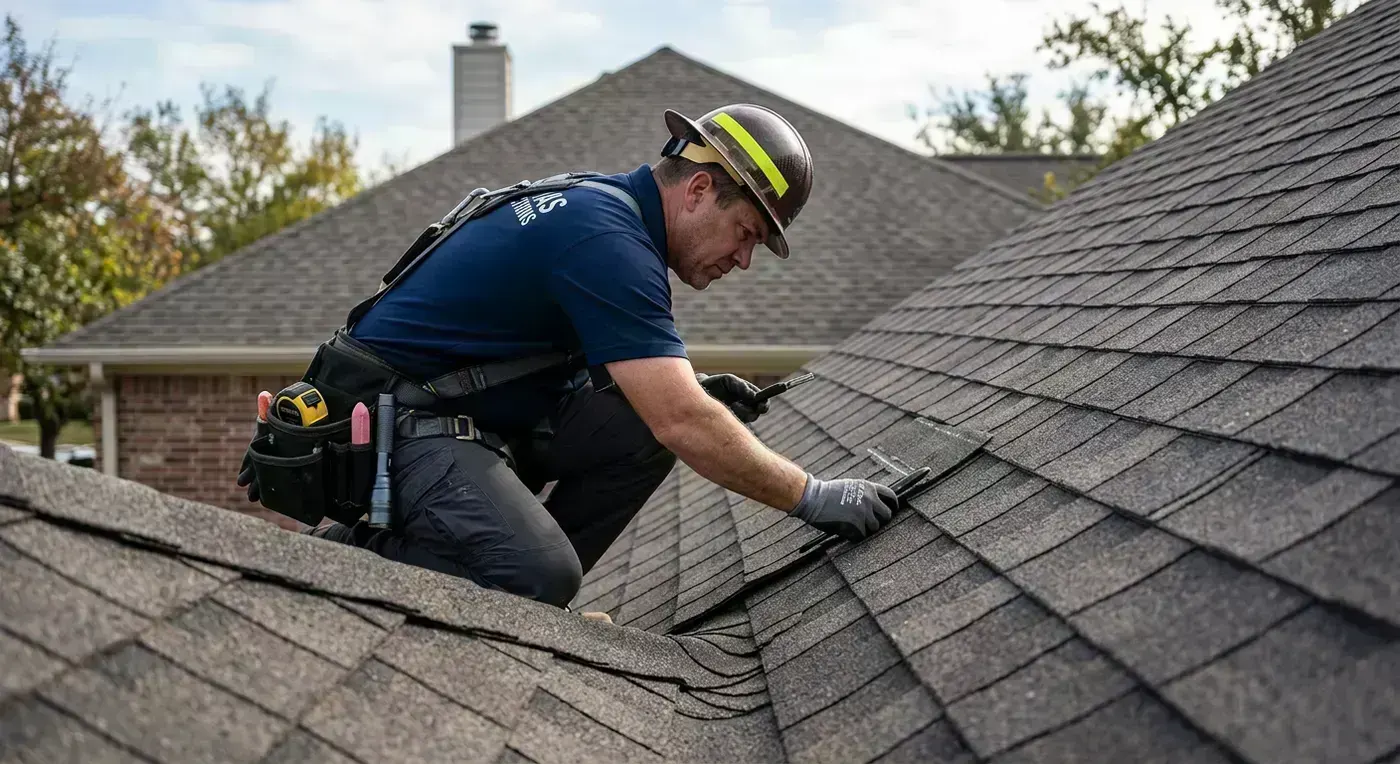
Localized damage is repair-friendly: a handful of shingles lost to wind, a single pipe boot cracked by UV, one section of step flashing that was installed poorly, a small area of ice-and-water membrane failure at a valley. These are point failures. The rest of the roof is doing its job. Repairing them — ideally through our roof repair service — is exactly the right call, particularly on a younger roof.
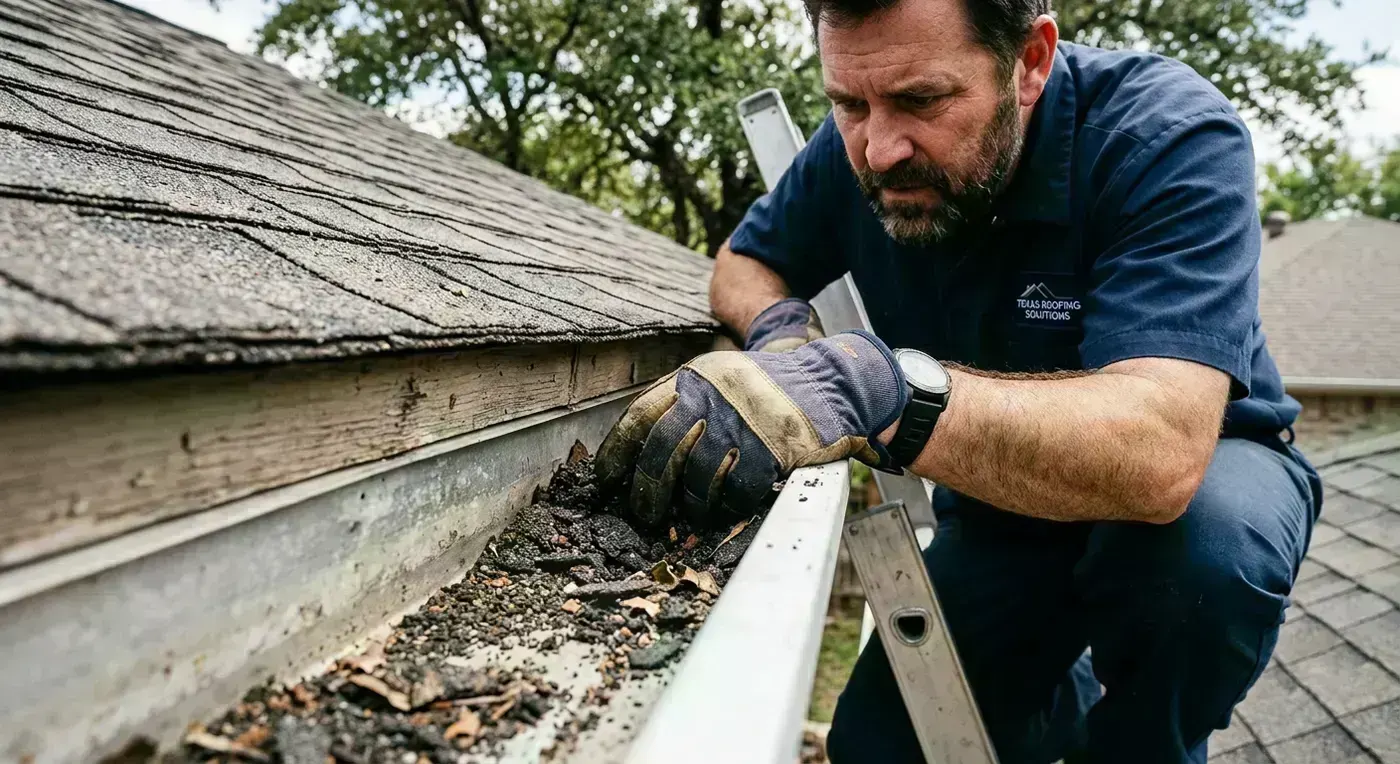
Systemic damage is a replacement signal even when no single spot looks catastrophic. Widespread granule loss (bald patches, granules filling the gutters), curling or cupping edges across whole slopes, brittle shingles that crack when flexed, and multiple soft spots in the decking all indicate the roof is failing as a system. Patching one slope of a systemically aged roof is like replacing one bald tire on a car with four worn ones.
Recurrence is the tiebreaker. The first repair in a given area is data. The second repair in the same area within a few years is a pattern. When you find yourself calling about the same leak, the same valley, or the same slope more than once, the roof is telling you the underlying system — not just the surface — has aged out. Recurring repairs almost always cost more over three years than a replacement would have.
Insurance vs. out-of-pocket math
In North Texas, insurance changes the math dramatically — because so much roof damage here comes from covered perils like hail and wind. Before you decide, understand which bucket you are in.
If your damage traces to a specific storm event, you may have a claim that covers a full replacement minus your deductible. In that case the "repair vs. replace" question can flip entirely: a repair you would pay for out of pocket might become a replacement that insurance largely funds. This is why a proper inspection before you commit to a small repair is so valuable — a quick patch can waste a legitimate claim.
A few realities worth knowing:
- Older roofs may be on Actual Cash Value (ACV), not Replacement Cost Value (RCV). Many carriers depreciate roofs past a certain age, so your payout shrinks the older the roof gets — another reason not to wait too long.
- Deductibles are often percentage-based (e.g., 1–2% of dwelling coverage) on Texas wind/hail policies. Know your number before assuming a claim "pays for itself."
- Cosmetic-damage exclusions can apply to metal roofs. Read your policy.
- Never let anyone pressure you to commit fraud by inflating damage or absorbing your deductible. Reputable contractors do not do this.
When you do pay out of pocket, run the 25%/50% rules honestly. A $1,200 repair on a roof that would cost $18,000 to replace is under 7% — easy repair if the roof has life left. A $6,000 repair on that same roof is 33% — and on a 19-year-old roof, that is replacement money.
The matching-shingle problem
This one surprises homeowners more than any other factor. When you repair an aging asphalt roof, the new shingles almost never match the old ones — and not just because of dirt. Shingle lines get discontinued, manufacturers tweak color blends, and older shingles have weathered and faded from years of Texas sun. The result is a visible patch.
On a rear slope no one sees, mismatch is a non-issue. On a prominent street-facing slope, a patchwork repair can hurt curb appeal and signal to future buyers that the roof has been limping along. There is also a functional angle: new shingles have thicker, stiffer sealant strips and may not bond cleanly to brittle old shingles around them, which can create wind-vulnerable seams.
Rule of thumb: If a color-matched repair is impossible and the damaged area is highly visible, factor the aesthetic hit into your decision. Sometimes the "cheaper" repair leaves you with a roof you dislike looking at for the next several years — and a harder sale when you list the home.
Energy efficiency and resale value
Two forward-looking factors rarely make it into the repair-vs-replace conversation, and both favor replacement more than people expect on an aging roof.
Energy efficiency. A worn roof with degraded shingles, gaps, and aging or nonexistent attic ventilation runs hotter. In North Texas summers, that translates directly into higher cooling bills. A modern replacement lets you upgrade to reflective or "cool roof" shingles, correct intake/exhaust ventilation, and add or refresh underlayment — improvements that a spot repair cannot deliver. The monthly savings will not pay for the roof, but over a 20-year roof they are real and worth weighing.
Resale value. Roof age is one of the first things buyers, inspectors, and buyer's-agent negotiations focus on in Texas. A roof at 90% of its life is a negotiating chip against you — buyers will ask for a credit or a replacement contingency. A new roof (especially with a transferable workmanship warranty) removes that friction and is a strong selling point. If you plan to list within a couple of years and the roof is already aging, replacing before you sell often nets more than the cost and speeds the transaction.
For a full side-by-side of costs, warranties, and timelines, our detailed roof repair vs. replacement guide compares the two paths in depth. This article stays focused on the aging-roof decision specifically.
When repeated repairs stop making sense
There is a point where continuing to repair is no longer thrift — it is denial with a price tag. Watch for these signals that the repair era is over:
| Signal | What it means | Lean toward |
|---|---|---|
| 3rd repair in 5 years | System-wide aging, not point failures | Replace |
| Repairs total >50% of a new roof | You have paid for a roof without getting one | Replace |
| Same leak keeps returning | Underlying deck/underlayment failing | Replace |
| Single new storm hit, roof <12 yrs | Isolated, plenty of life remaining | Repair |
A quick way to cut through the emotion: add up every roof dollar you have spent in the last three to five years, then compare it to a replacement quote. Homeowners are routinely shocked to find they have already spent 40–60% of a new roof on patches that are still failing. At that point the repairs were the expensive option all along.
Honest scenarios: repair vs. replace
Rules are abstract; decisions are concrete. Here are realistic North Texas situations and the recommendation the framework produces.
Scenario 1: The 8-year-old roof with wind-lifted shingles
A spring storm peeled two dozen architectural shingles off one slope. The roof is 8 of an expected 22 years — well under 75% of life. Damage is localized. Repair cost is roughly 6% of replacement. Verdict: Repair. This is exactly what a repair is for, and if the shingle line is still available the color match will be good.
Scenario 2: The 19-year-old roof with a recurring valley leak
This is the third time the same valley has leaked in four years. Granules are collecting in the gutters and a couple of slopes show curling. The roof is at ~86% of expected life. Verdict: Replace. The recurrence plus the age plus systemic wear is a clean three-signal case. Another repair is money spent on a roof that will need full replacement within a year or two anyway.
Scenario 3: The 14-year-old roof after a hail event
A hailstorm bruised shingles across multiple slopes. An insurance claim is likely, and the roof is at ~64% of life. Verdict: File the claim; a full replacement is probable and likely funded (minus deductible). Do not rush a small out-of-pocket repair before an adjuster and a qualified contractor have looked — you could forfeit a covered replacement.
Scenario 4: The 16-year-old roof, no leaks, planning to sell in 18 months
No active problems, but the roof is at ~73% of life and will be a negotiating liability at sale. Repairs are minor. Verdict: Judgment call leaning replace. If you are staying, ride it out with maintenance. If you are selling soon, a new roof with a transferable warranty often pays for itself in a faster, cleaner sale. Our roof replacement service can time the work to your listing.
Scenario 5: The 6-year-old roof, one cracked pipe boot
A single UV-cracked rubber boot is dripping into the attic. Everything else is pristine. Verdict: Repair — and it is inexpensive. This is routine maintenance, not a roof decision at all.
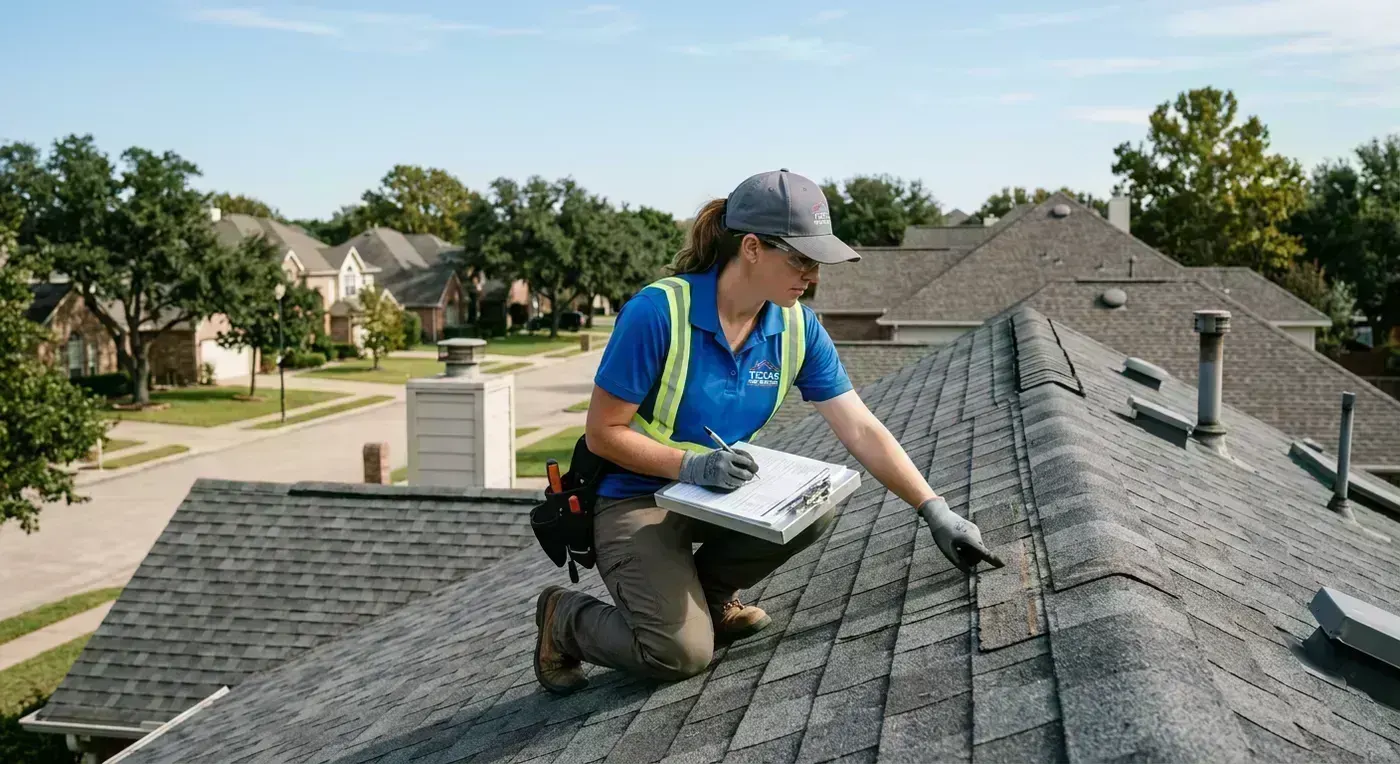
Not sure which scenario is yours? RoofDog uses drone inspections to document your roof's real condition from every angle — no guesswork, no scare tactics, and photos you keep. Every replacement we do is backed by our lifetime workmanship warranty. Schedule a free roof inspection or call 940.828.ROOF and we will give you the honest recommendation, even when that recommendation is "your roof is fine, keep it."
Frequently asked questions
Does a roof repair extend the life of the whole roof?
No. A repair fixes the repaired area, but it does not reset the aging clock on the rest of the roof. Every other shingle keeps weathering on its original timeline. On an aging roof, repairs buy time on one spot while the surrounding materials continue toward the same finish line.
What is the 25% rule for roof repairs?
It is a rule of thumb: if a repair costs more than about 25% of a full replacement — particularly on a roof more than halfway through its life — replacement is usually the better value. You avoid paying near-replacement fixed costs for a fraction of a replacement's lifespan.
At what age should I stop repairing my roof?
There is no single number, but once a roof passes roughly 75% of its expected lifespan and shows damage in more than one area, repairs rarely pay off. For a typical North Texas architectural asphalt roof, that is around 18–20 years.
Is it cheaper to repair or replace a roof?
A single repair is always cheaper than a replacement in the moment. The real question is cost over time. On an aging roof that needs repeated repairs, the running total often reaches 40–60% of a new roof within a few years — making repairs the more expensive path in hindsight.
Will my new repair match my old shingles?
Usually not exactly. Shingle colors fade in the Texas sun, and product lines get discontinued. On hidden slopes this does not matter. On street-facing slopes, an obvious patch can hurt curb appeal and future resale, which is worth weighing in the decision.
Does insurance pay for a roof replacement on an old roof?
It can, if the damage comes from a covered peril like hail or wind. However, many carriers put older roofs on Actual Cash Value, which depreciates the payout by age. The older the roof, the smaller the check — so waiting can cost you money on a claim.
How many times can you repair a roof before replacing it?
There is no hard limit, but three repairs in five years — or the same leak returning — is a strong signal the roof has aged out as a system. At that point additional repairs tend to be throwing good money after bad.
Can a repaired roof leak again in the same spot?
Yes, and recurrence is one of the clearest replacement signals. When a leak keeps returning to the same area despite proper repairs, the underlying decking or underlayment — not just the surface — is usually failing.
Does a new roof really help with energy bills in Texas?
Modestly but genuinely. A replacement lets you add reflective shingles, correct attic ventilation, and refresh underlayment — upgrades a spot repair cannot provide. In North Texas summers, that reduces cooling load. It will not pay for the roof, but the savings are real over 20 years.
Should I replace my roof before selling my house?
If the roof is already aging, often yes. Buyers, inspectors, and appraisers scrutinize roof age in Texas, and an old roof becomes a negotiating tool against you. A new roof with a transferable warranty removes that objection and can speed the sale.
What is a drone roof inspection and why does it matter?
It uses a camera drone to photograph your roof from angles a ground view cannot reach, capturing granule loss, lifted shingles, and flashing issues in detail. RoofDog uses drone inspections so you get documented, honest evidence of your roof's condition — not a sales pitch.
How do I know if my roof damage is localized or systemic?
Localized damage is confined to one area — a few shingles, one flashing, a single boot. Systemic damage shows up across multiple slopes: widespread granule loss, curling edges, brittle cracking, and soft decking. Localized favors repair; systemic favors replacement.
Is a full replacement worth it if only one slope is damaged?
On a young roof, no — repair the slope. On an old roof where the other slopes are also worn, replacing everything at once is usually smarter than repairing one slope now and the rest in two years, both for cost and for a consistent appearance.
Does RoofDog really give away part of its profits?
Yes. RoofDog donates 10% of profits to dog rescues — it is the heart of our motto, "Protecting Homes. Saving Dogs." Choosing us for your repair or replacement helps fund rescue work across the region.
How much does a roof replacement cost in North Texas?
It varies widely by size, pitch, material, and access, so a real number requires an inspection. What we can promise is a transparent, itemized quote with no pressure. Call 940.828.ROOF or schedule a free inspection for an accurate figure.
Summary
Deciding whether to repair or replace an aging North Texas roof comes down to five variables working together: age relative to lifespan, extent of damage, whether the problem keeps recurring, the real dollar math (including insurance), and your plans for the home. Use the 25% and 50% rules as guardrails, and read every repair through the lens of remaining life. Repair when damage is isolated and the roof has years left; replace when the roof is old, damaged in multiple places, or on its second or third repair in the same decade. When repeated repairs start stacking toward half the cost of a new roof, the repairs were the expensive choice all along.
RoofDog is here to give you the honest answer either way — backed by drone inspections, a lifetime workmanship warranty, and a mission that puts 10% of profits toward dog rescues. Protecting Homes. Saving Dogs. Call 940.828.ROOF or schedule your free inspection today.
You Might Also Need
Need a Roof Inspection?
Get expert advice and a free estimate from North Texas's trusted roofing professionals.
Schedule Free Inspection