How Long Do Roofs Last in Bartonville, TX?
Short answer: In Bartonville, most roofs last far longer than the regional average because the housing stock skews premium. A standing-seam metal roof here can reasonably run 40–70 years, synthetic slate 40–50, concrete or clay tile 50+, and heavy architectural asphalt 22–30 years. The catch is Bartonville's wide-open, elevated acreage: high wind exposure and DFW hail can knock years off any roof if flashing, fasteners, and edges aren't detailed for it.
Table of contents
- Bartonville's climate and what it does to roofs
- DFW hail exposure on the estates
- Why open acreage means elevated wind
- The estate and rural housing stock
- Dominant premium materials and lifespans
- Common problems on Bartonville roofs
- Inspecting large estate roofs
- Frequently asked questions
Bartonville's climate and what it does to roofs
Bartonville lives in the North Texas transition zone — hot, sun-heavy summers, mild but occasionally icy winters, and a spring storm season that arrives with real teeth. Summer surface temps on a dark asphalt roof can push past 160°F, and the daily heat-and-cool cycle slowly bakes the flexibility out of asphalt shingles. That thermal cycling is the quiet killer of the cheaper roofs; it's exactly why so many estate owners out here paid up for metal or tile that shrugs off UV and heat.
Winter brings the occasional ice event and freeze-thaw, which finds every hairline crack in aging sealant and tile. And because Bartonville is genuinely rural — open pasture broken up by wooded acreage — roofs also contend with organic debris: leaf litter, oak tannins, and shade-driven algae streaking on the north slopes of homes tucked into tree cover. For the bigger picture on how the whole region ages roofs, see our overview on how long roofs last in Texas.
DFW hail exposure on the estates
Denton County sits squarely in one of the most hail-active corridors in the country. Spring supercells rolling out of the west and northwest regularly drop pea-to-golf-ball hail across the Argyle–Bartonville–Flower Mound stretch, and a single hard hail day can end the useful life of an asphalt roof that otherwise had years left. This is the single biggest reason Bartonville roofs skew toward impact-resistant materials.
Premium roofs handle hail very differently. Class 4 impact-rated shingles, stone-coated steel, and standing-seam metal all resist hail bruising far better than three-tab or lightweight architectural asphalt — and many carriers offer premium discounts for Class 4 systems, which matters on a large estate roof where square footage is high.
Why open acreage means elevated wind
Here's a Bartonville-specific reality most roofing articles miss: a roof on a two-acre lot in open terrain faces meaningfully higher wind loads than the same roof crammed into a dense subdivision. In a tight neighborhood, homes shelter each other and knock the wind down. Out on Bartonville's estates and equestrian properties, there's often nothing upwind but pasture — the roof takes the full gust.
North Texas straight-line winds in a strong thunderstorm complex routinely hit 60–80 mph, and that pressure concentrates at the edges: eaves, rakes, ridges, and hips. Wind rarely peels a field of shingles first — it lifts a poorly nailed starter course or an under-sealed ridge cap, then works underneath. On metal roofs, wind exploits loose fasteners and lifted panel edges. This is why edge detailing and fastening quality matter more in Bartonville than almost anywhere else in the metroplex.
The estate and rural housing stock
Bartonville isn't a starter-home town. The housing stock runs to large custom homes on multi-acre lots — sprawling footprints, complex rooflines with multiple gables, dormers, valleys, and long ridge runs. Add equestrian outbuildings, barns, and covered arenas, and a single property might have several distinct roof systems aging at different rates.
Two things follow from that. First, roof area is big, so material and labor decisions carry real money — owners tend to choose long-life systems that amortize well over decades. Second, complexity means more penetrations, more flashing, and more valleys — which is to say, more of the details that actually fail before the field material does. A big custom roof doesn't usually die of old shingles; it dies at a chimney cricket or a valley that was never detailed right.
Dominant premium materials and lifespans
Here's how the materials common on Bartonville estates typically perform, assuming quality installation and regular maintenance:
| Roofing material | Typical Bartonville lifespan | Notes for open acreage |
|---|---|---|
| Standing-seam metal | 40–70 years | Concealed fasteners resist wind lift; excellent hail and heat performance. |
| Stone-coated steel | 40–50 years | Great hail resistance; looks like tile/shake with lower weight. |
| Synthetic slate | 40–50 years | Class 4 impact rating; premium look without slate's fragility or weight. |
| Concrete / clay tile | 50+ years | Tiles outlast the underlayment; plan an underlayment reset mid-life. |
| Heavy architectural asphalt | 22–30 years | Choose Class 4; wind and hail are the limiting factors here, not age. |
| Natural slate | 75–100 years | Rare but present; heavy, and vulnerable to large hail. |
Metal dominates the newer custom builds — for its wind performance and near-maintenance-free longevity, dig into how long metal roofs last in Texas. For owners who want the estate look of slate without the weight or the hail fragility, synthetic slate lifespans are worth a close read before you spec your next roof.
Common problems on Bartonville roofs
Even 50-year materials fail early when the vulnerable details aren't maintained. On Bartonville estates, the recurring culprits are:
- Wind-lifted edges and ridges — the open-terrain penalty; starter courses, rakes, and ridge caps go first.
- Loosened metal fasteners — thermal expansion plus wind slowly backs out exposed screws on panel and trim edges.
- Cracked or slipped tiles — from hail, foot traffic, or falling limbs off adjacent oaks.
- Failed underlayment under long-life tile — the tile outlives the felt beneath it; leaks appear while the tile still looks perfect.
- Valley and flashing failures — complex custom rooflines have many valleys and penetrations; sealant and flashing age faster than field material.
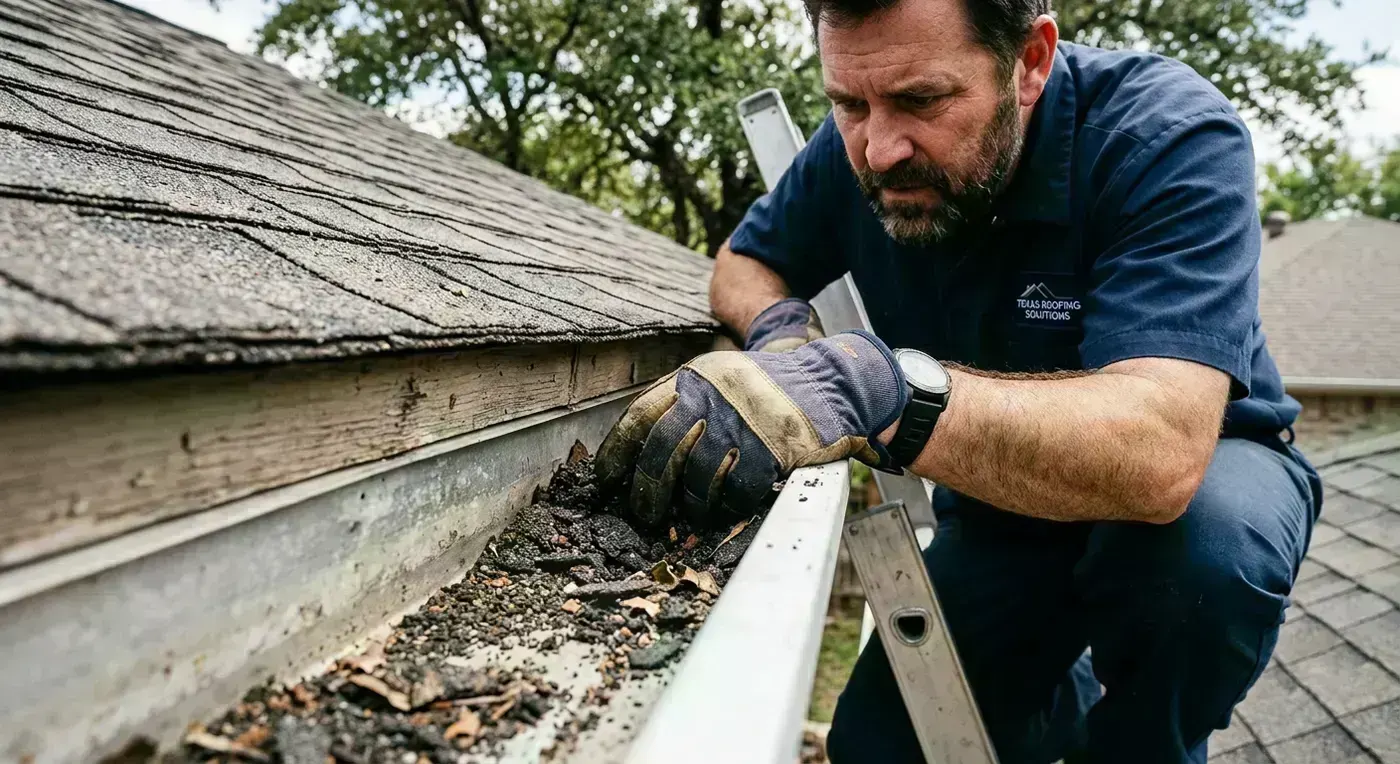
- Debris and algae on shaded slopes — wooded acreage drops leaf litter into valleys and feeds algae streaks on north faces.
- Hail bruising — often invisible from the ground, especially on metal and tile.
Inspecting large estate roofs
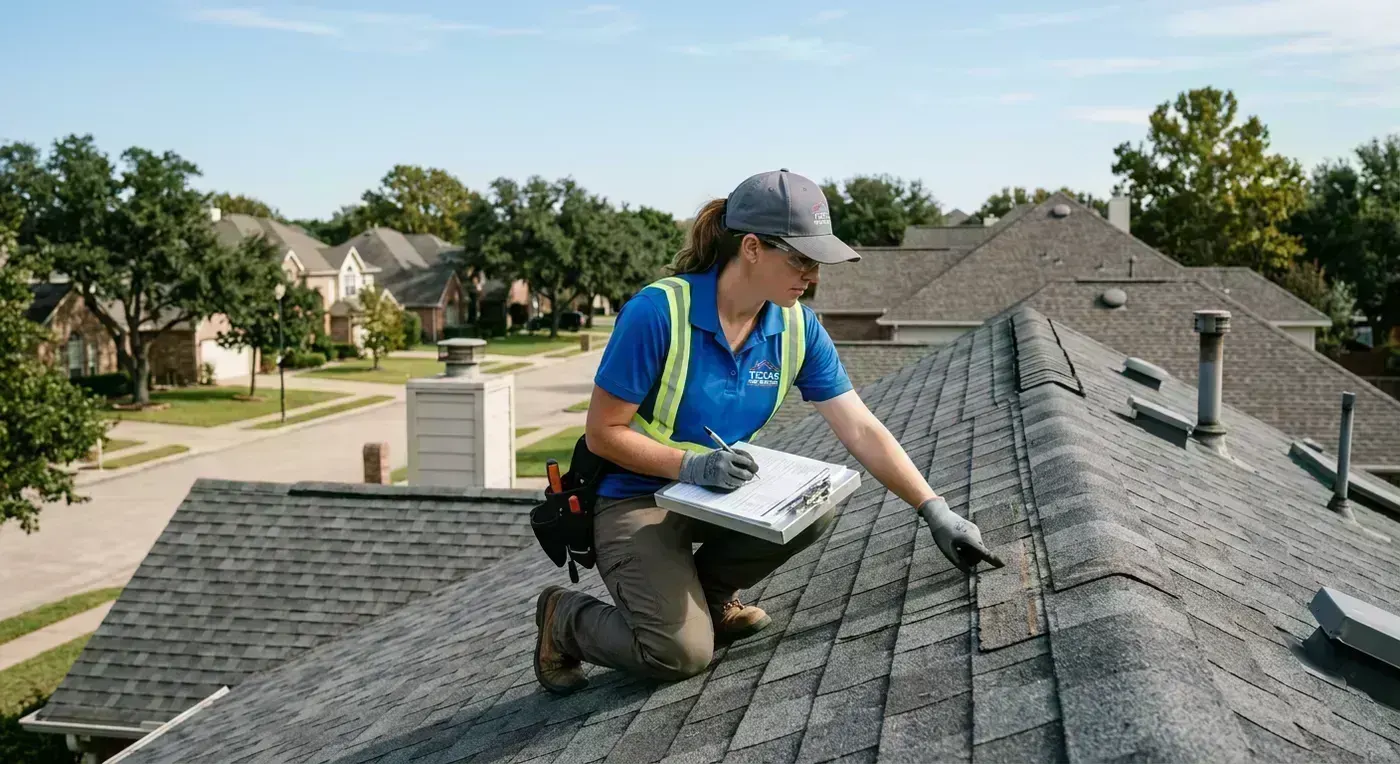
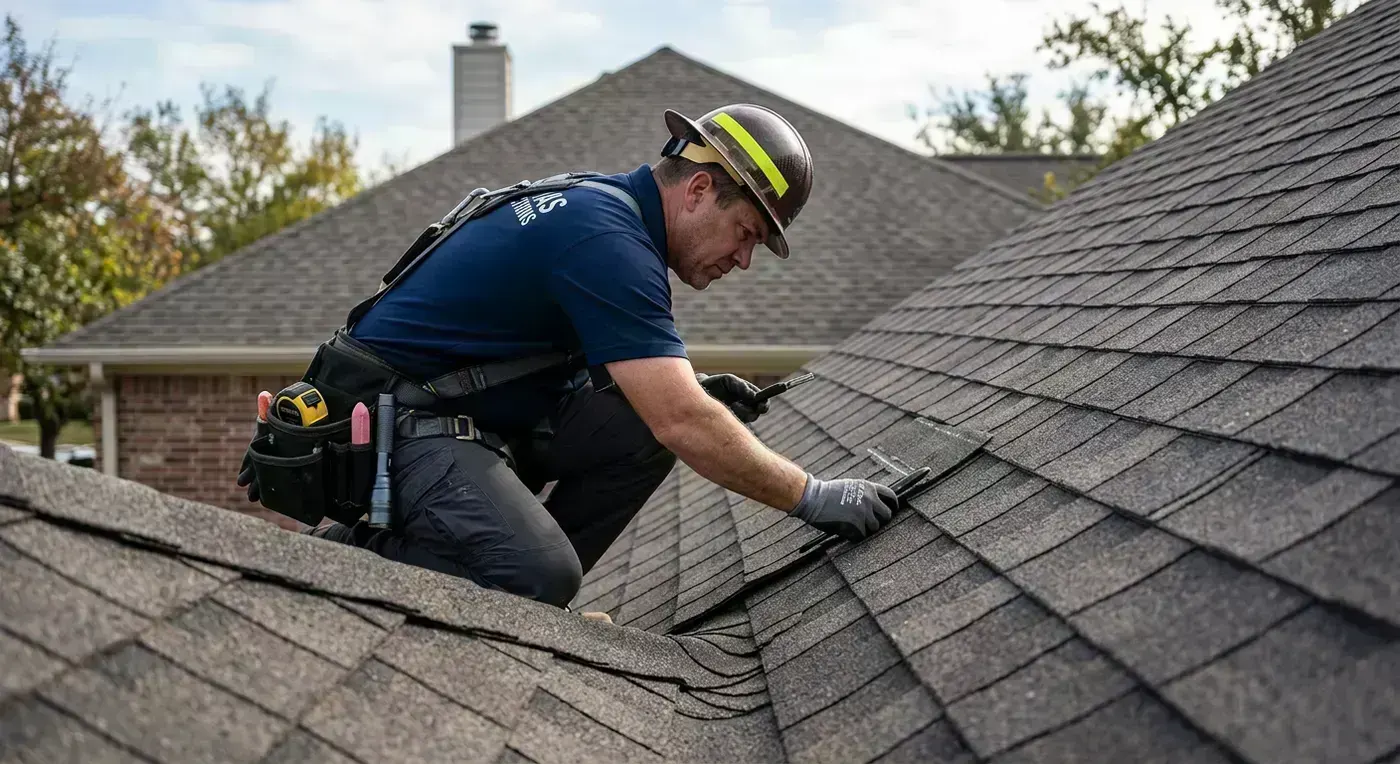
A big, complex Bartonville roof is exactly the kind of roof that's hard — and risky — to inspect the old-fashioned way. Walking a standing-seam metal roof or a tile field can scratch finishes and crack tiles, and a person on the ground simply can't see every valley and ridge on a sprawling custom home. That's where drone roof inspection earns its keep: full high-resolution coverage of every slope, valley, and penetration, with zero foot traffic on delicate materials.
Our recommended cadence for Bartonville estates: a professional inspection every year for older or asphalt roofs, every two years for metal and tile, and always within a week of any significant hail or high-wind event. Keep dated inspection reports — on premium roofs, that documentation is invaluable for both maintenance planning and insurance claims. RoofDog serves the area through our Bartonville, TX roofing team, and every job is backed by our lifetime workmanship warranty.
Frequently asked questions
How long should I expect my roof to last in Bartonville?
It depends heavily on material. Standing-seam metal can run 40–70 years, synthetic slate and stone-coated steel 40–50, tile 50+, and heavy architectural asphalt 22–30. Because Bartonville homes skew premium, most roofs here outlast the regional average — provided the edges, flashing, and fasteners are maintained against wind.
Why does my roof on open acreage seem to take more wind damage than my old subdivision home?
Because it does. In a dense subdivision, neighboring homes break the wind. On a multi-acre Bartonville lot with open pasture upwind, your roof takes the full gust — and that pressure concentrates at the edges. Superior edge and fastener detailing is the fix.
Is metal really the best choice for a Bartonville estate?
For many owners, yes. Standing-seam metal handles the region's hail, heat, and elevated wind exceptionally well, and its concealed-fastener design resists wind lift better than exposed-fastener panels. It's a big reason metal dominates newer custom builds out here.
How does DFW hail affect premium roofs?
Class 4 impact-rated materials — synthetic slate, stone-coated steel, standing-seam metal — resist hail far better than lightweight asphalt. Hail can still bruise finishes or crack tile invisibly, so a post-storm drone inspection matters even on premium roofs.
My tile roof looks perfect but I have a leak. How?
Very common. Tile can last 50+ years, but the underlayment beneath it typically doesn't — it ages out in 20–30 years. When the felt fails, water gets in while the tile above still looks flawless. Plan an underlayment reset at mid-life.
How often should I inspect a large estate roof?
Annually for older or asphalt roofs, every two years for metal and tile, and always within a week of a major hail or wind event. On a big custom roofline with many valleys, regular professional eyes catch small flashing failures before they become interior damage.
Do you inspect barns, arenas, and equestrian outbuildings too?
Yes. Many Bartonville properties have multiple roof systems aging at different rates. Our drone inspections cover the main home plus outbuildings efficiently, so you get one clear picture of the whole property.
Why drone inspection instead of someone walking my roof?
Walking a metal or tile roof risks scratching finishes and cracking tiles, and a person can't safely reach every slope on a sprawling custom home. Drones capture high-resolution imagery of every valley, ridge, and penetration with zero foot traffic on delicate premium materials.
Does having a premium roof lower my insurance?
Often. Many carriers offer discounts for Class 4 impact-resistant roofing, which is meaningful on a large estate roof with high square footage. Keep your dated inspection reports and material documentation to support that.
What usually fails first on a Bartonville custom roof?
Rarely the field material. It's the details — wind-lifted ridge caps and rakes, backed-out metal fasteners, valley flashing, and underlayment beneath long-life tile. Complex custom rooflines simply have more of these vulnerable points.
Do wooded lots cause roof problems?
They add two: organic debris (leaf litter and oak tannins collecting in valleys) and algae streaking on shaded north slopes. Neither is catastrophic, but both accelerate wear if you don't keep valleys clear and slopes cleaned.
Is asphalt shingle a bad choice out here?
Not necessarily — but choose heavy architectural shingles with a Class 4 impact rating and quality wind-rated edge detailing. In Bartonville, hail and wind, not age, are what typically end an asphalt roof's life early.
Does RoofDog serve Bartonville and the surrounding estates?
Yes — Bartonville, Saddlebrook Estates, and the wider southern Denton County area. Call 940.828.ROOF or schedule a drone inspection. Every job is backed by our lifetime workmanship warranty, and 10% of our profits go to dog rescues.
Summary
Bartonville roofs tend to last a long time because the estates were built with premium materials — standing-seam metal (40–70 years), stone-coated steel and synthetic slate (40–50), and tile (50+). But the town's open, elevated acreage and DFW hail corridor mean wind and impact, not age, are usually what shortens a roof's life. Detail the edges, maintain the flashing, reset underlayment under tile at mid-life, and inspect on a smart cadence — by drone, so nobody's boots damage your premium roof. RoofDog protects Bartonville estates with drone inspections and a lifetime workmanship warranty, and gives 10% of profits to dog rescues. Protecting Homes. Saving Dogs. Call 940.828.ROOF or schedule an inspection.
You Might Also Need
Need a Roof Inspection?
Get expert advice and a free estimate from North Texas's trusted roofing professionals.
Schedule Free Inspection