How Long Do Roofs Last in Grapevine, TX?
Short answer: In Grapevine, TX, a quality architectural asphalt roof typically lasts 18 to 25 years, while a Class 4 impact-rated upgrade can push that toward 25 to 30 years — assuming proper installation and regular maintenance. The biggest thing shaving years off Grapevine roofs isn't age; it's the DFW hail belt and the wind that funnels in off Grapevine Lake. Tree cover from the city's mature neighborhoods adds a second, slower kind of wear.
The Grapevine reality: Two homes on the same street can have wildly different roof lifespans. A 1970s ranch near Historic Main Street shaded by 50-year-old post oaks ages differently than a 2015 build out toward the lake catching open, unbroken wind. Lifespan here is local — right down to the block.
Table of contents
- Grapevine's climate and what it does to shingles
- DFW hail exposure — the #1 lifespan killer
- Wind off Grapevine Lake
- Tree coverage in Grapevine's mature neighborhoods
- The historic-and-lakeside housing mix
- Dominant roofing materials in Grapevine
- Realistic lifespan by material
- Common roof problems we see in Grapevine
- Inspection and maintenance advice
- Frequently asked questions
Grapevine's climate and what it does to shingles
Grapevine sits in Tarrant County squarely inside North Texas's humid-subtropical climate, and every part of that description is hard on a roof. Summers routinely climb past 100°F, and dark asphalt shingles — including the Owens Corning Onyx Black we've installed on plenty of Grapevine homes — can hit surface temperatures well above 150°F on a July afternoon. That heat cooks the asphalt binder in shingles, driving off the volatile oils that keep them flexible.
Then comes the daily thermal cycle. A Grapevine roof can swing 40-50 degrees between a summer afternoon and the following dawn, and in winter it repeats the freeze-thaw dance. Every cycle expands and contracts the shingle mat and the decking beneath. Over 15-20 years that flexing loosens sealant strips, curls edges, and works fasteners loose. UV exposure at this latitude accelerates the granule loss that eventually exposes the asphalt to direct sun — the beginning of the end for any asphalt roof.
None of this is unique to Grapevine — it's a regional pattern we cover in our guide to how long roofs last in Texas — but Grapevine gets an extra dose of trouble from its position and geography, which we'll get into next.
DFW hail exposure — the #1 lifespan killer
If you own a home in Grapevine, hail is the single biggest threat to your roof's lifespan — full stop. The Dallas-Fort Worth Metroplex is one of the most hail-prone urban areas in the country, and Grapevine sits right in the crosshairs of the spring supercell corridor that develops when Gulf moisture collides with dry air pushing down from the plains. March through June is prime season, and it only takes one bad storm.
Hail damage doesn't always look dramatic. A single storm dropping 1-inch to golf-ball-sized stones can bruise a shingle mat, fracture the fiberglass backing, and knock off protective granules without leaving an obvious hole. Those bruises don't leak immediately — but they accelerate aging dramatically, and a roof rated for 25 years can effectively lose a decade of life in fifteen minutes. This is exactly why so many Grapevine homeowners upgrade to impact-resistant shingles.
Why Class 4 matters in Grapevine: A Class 4 impact-rated shingle survives a steel-ball impact test that cracks standard shingles. In a hail zone like Grapevine, it means fewer bruises per storm, a longer functional lifespan, and often a meaningful discount on your homeowners insurance premium. For most Grapevine roofs, it's the highest-value upgrade you can make.
Wind off Grapevine Lake
Grapevine Lake is a defining feature of the city — and a quiet factor in roof wear that a lot of homeowners overlook. Large open water surfaces don't slow wind the way a built-up neighborhood does. Gusts sweep across the reservoir and hit lakeside and north-side neighborhoods with more force and less turbulence-breaking obstruction than homes tucked deeper into older, tree-dense parts of town.
The practical effect: homes near the lake and in newer, more open developments see more wind uplift stress on shingle edges, ridge caps, and flashing. Straight-line winds during a severe DFW thunderstorm — often 60+ mph — pry at any shingle whose sealant strip has weakened with age. Once a few tabs lift, wind gets underneath and peels progressively. Proper starter strips, six-nail installation, and sealed ridge caps matter more here than they would in a sheltered inland subdivision.
Tree coverage in Grapevine's mature neighborhoods
Walk the streets around Historic Main Street and the older established neighborhoods and you'll see decades-old post oaks, live oaks, and pecans arching over homes. That canopy is beautiful and it keeps homes cooler — but it's a double-edged sword for a roof.
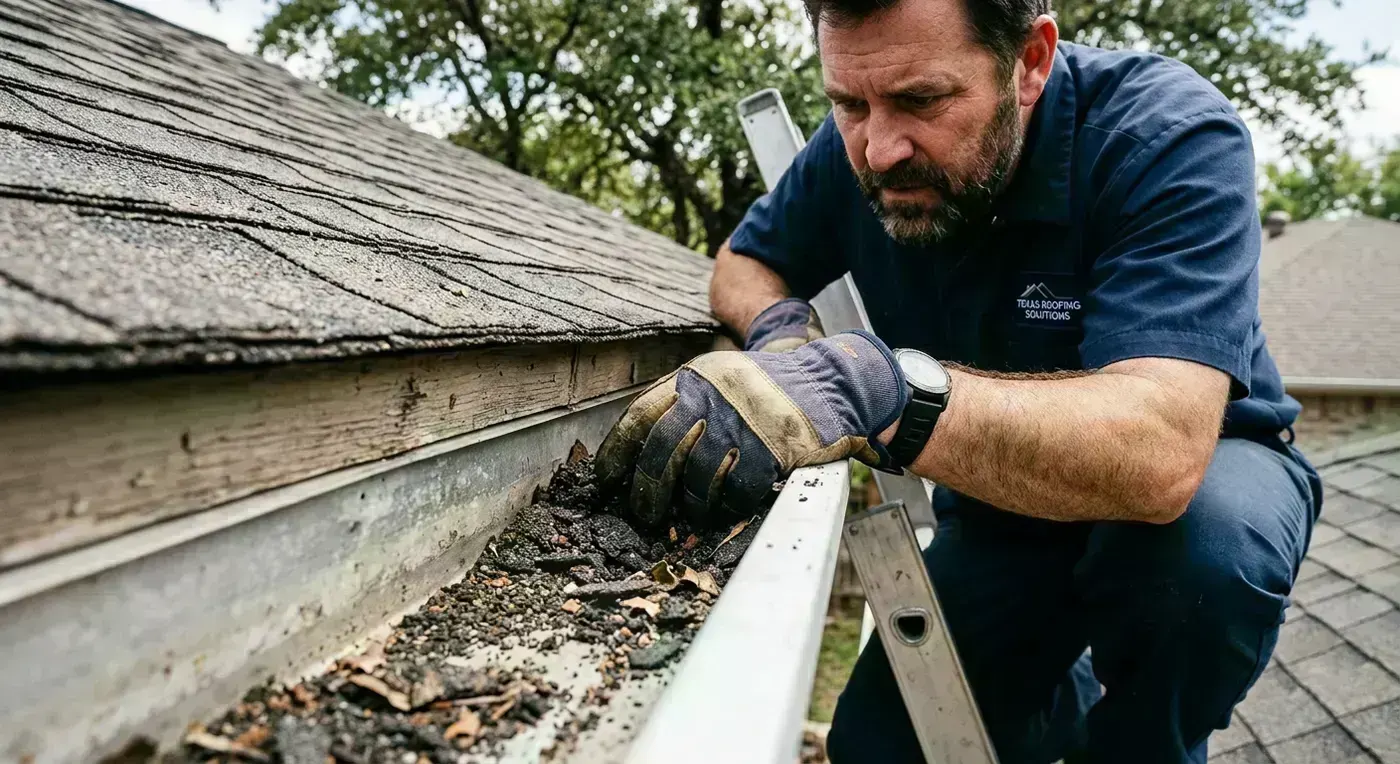
Overhanging limbs abrade shingle granules every time they sway in the wind, and they drop leaves and debris that clog valleys and gutters. Trapped moisture and organic matter feed the black-streak algae (Gyanoglea-type staining) common on shaded North Texas roofs and can hold dampness against decking long enough to encourage rot. Shaded roof planes also dry more slowly after rain, extending the time moisture sits on the surface. And in a severe storm, a single dropped limb can do in one afternoon what hail takes years to accomplish. In Grapevine's leafier neighborhoods, keeping branches trimmed back six to ten feet from the roof is one of the cheapest lifespan extensions available.
The historic-and-lakeside housing mix
Grapevine's housing stock is genuinely mixed, and that mix shapes roofing decisions across town. Near Historic Main Street and the older established neighborhoods you'll find homes dating back decades — some with multiple roof layers, older decking, and structures that predate modern building-code fastening standards. Out toward the lake and in the newer developments that have filled in over the past 20-30 years, you get contemporary framing, code-compliant decking, and roofs that were mostly first installed as architectural asphalt.
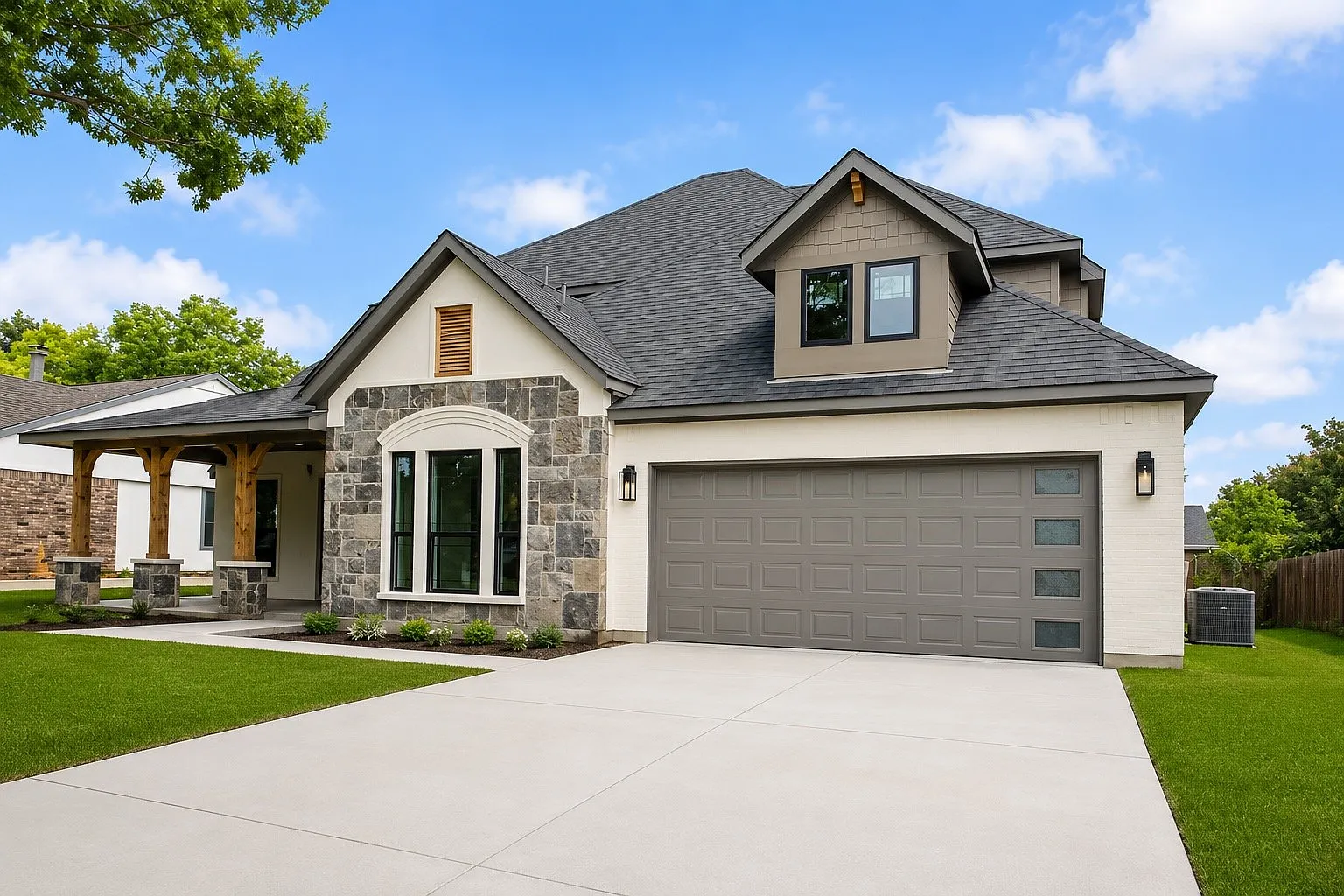
For older homes, a re-roof is often the moment to correct decades of accumulated issues — removing extra layers, replacing soft decking, and bringing ventilation up to spec. For newer lakeside homes, the question is usually whether the builder-grade roof that came with the house should be upgraded to a Class 4 product on replacement. In both cases, the right answer depends on the specific home, which is why an on-roof assessment beats any generic rule of thumb. RoofDog knows this housing mix firsthand — our Grapevine installs include clean Owens Corning Onyx Black roofs on exactly these kinds of homes.
Dominant roofing materials in Grapevine
By a wide margin, the dominant roofing material in Grapevine is architectural (dimensional) asphalt shingle. It's the sweet spot of cost, appearance, and durability for the North Texas market, and it's what most Grapevine subdivisions were built with. Increasingly, homeowners replacing a storm-damaged roof are choosing Class 4 impact-rated versions of those same architectural shingles — same look, dramatically better hail resistance.
You'll also see some tile and metal on higher-end and custom lakeside homes, and the occasional older three-tab roof still hanging on in the historic neighborhoods. But for the vast majority of Grapevine homes, the practical conversation is architectural asphalt versus Class 4 architectural asphalt.
Realistic lifespan by material in Grapevine
| Roofing material | Typical Grapevine lifespan | Notes |
|---|---|---|
| 3-tab asphalt | 12-18 years | Rare on new installs; poor hail resilience |
| Architectural asphalt | 18-25 years | The Grapevine standard |
| Class 4 impact-rated asphalt | 25-30 years | Best value in a hail zone; possible insurance discount |
| Standing-seam metal | 40-50+ years | Can dent in severe hail but rarely fails |
| Concrete/clay tile | 40-50+ years | Seen on custom lakeside homes; individual tiles crack in hail |
These ranges assume correct installation, adequate attic ventilation, and no catastrophic single storm. In Grapevine, the low end of each range usually reflects hail — not natural wear.
Common roof problems we see in Grapevine
Across hundreds of North Texas roofs, a handful of issues show up again and again on Grapevine homes:
- Hail bruising and granule loss — often invisible from the ground, the most common and most consequential problem.
- Wind-lifted and creased shingles — especially on lake-facing and open-development roof planes.
- Damaged or displaced ridge caps — the first thing high wind attacks.
- Clogged valleys and algae streaking — in the tree-shaded historic neighborhoods.
- Failed pipe-boot and flashing seals — cracked rubber boots are a leading source of "mystery" leaks.
- Inadequate attic ventilation — common on older Grapevine homes, it cooks shingles from below and shortens lifespan.
- Multiple roof layers — found on some older homes; they trap heat and hide decking problems.
Inspection and maintenance advice for Grapevine homeowners
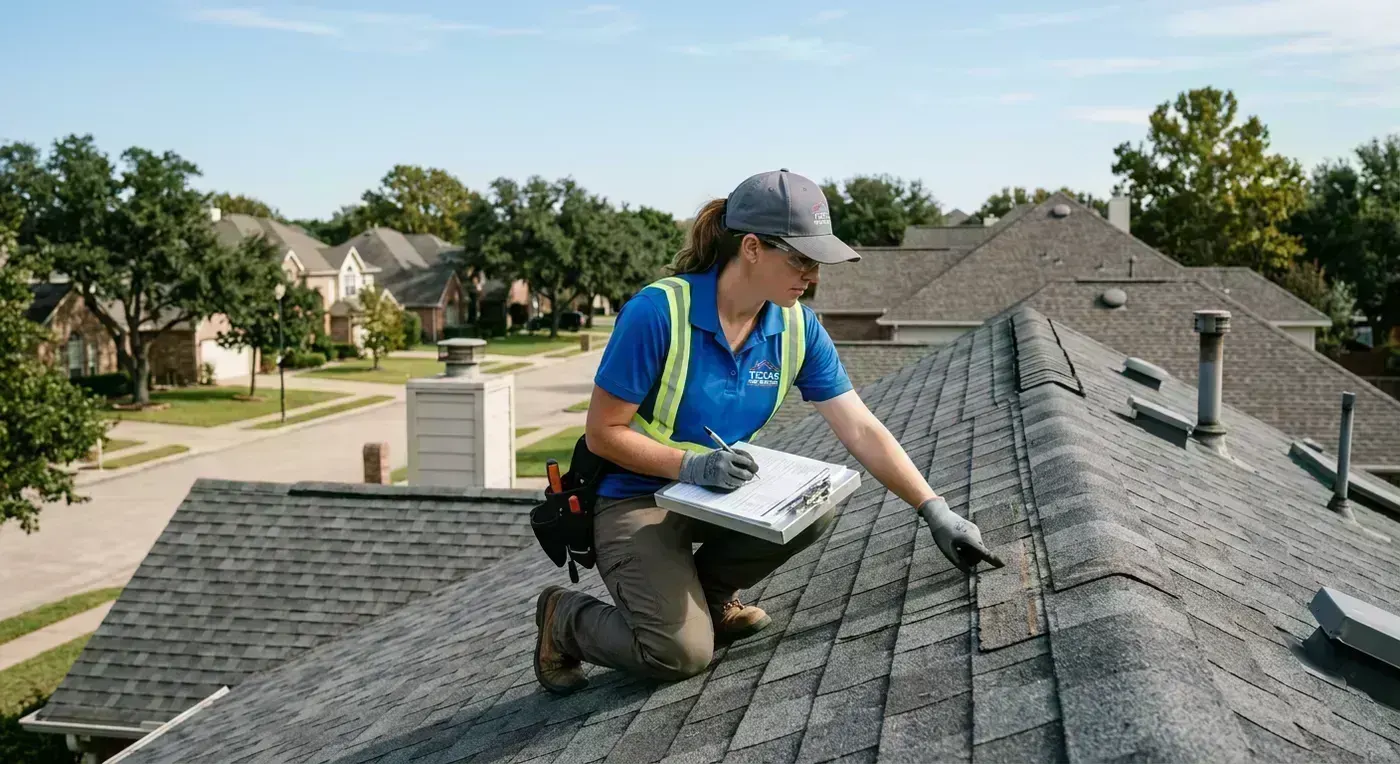
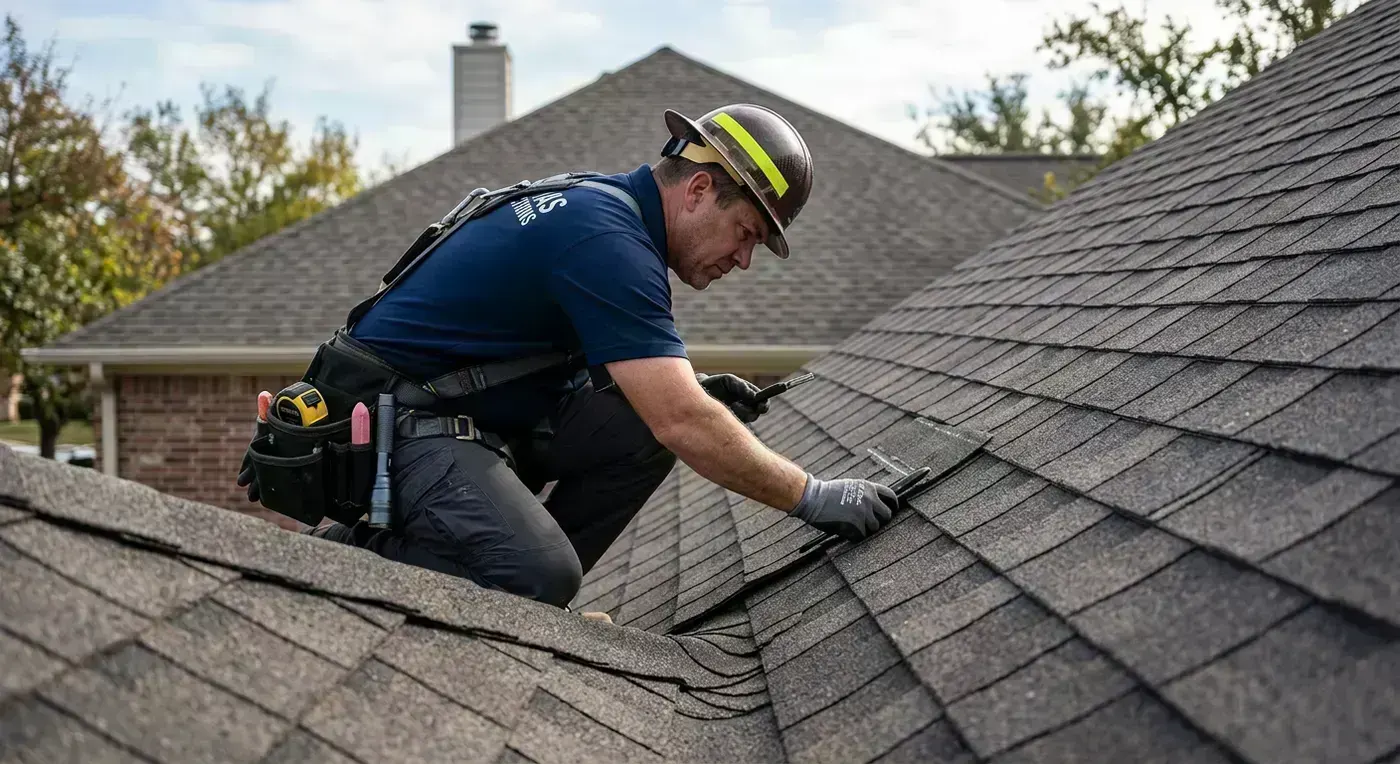
Because so much Grapevine roof damage is invisible from the ground — especially hail bruising — the best habit you can build is a professional inspection after every significant storm and at least once a year otherwise. That's the difference between catching a $400 flashing repair and discovering a $12,000 deck-rot problem.
How RoofDog inspects Grapevine roofs: We use drone inspections to document every plane of your roof in high resolution — no ladder-shuffling, no missed valleys, and a clear photo record for insurance. Every RoofDog replacement is backed by our lifetime workmanship warranty, and we're proud to run on a simple promise: "Protecting Homes. Saving Dogs." We donate 10% of profits to dog rescues. Book a roof inspection or reach us at 940.828.ROOF.
Beyond inspections, the highest-value maintenance in Grapevine is straightforward: keep gutters and valleys clear of leaf debris, trim tree limbs back from the roof, replace cracked pipe boots before they leak, and make sure your attic is properly ventilated. When it's time to replace, seriously consider a Class 4 shingle — in this hail zone, it pays for itself. RoofDog serves the whole city; you can learn more on our Grapevine roofing page, and when you're ready, schedule your visit online.
Frequently asked questions
How long do most roofs last in Grapevine, TX?
Most architectural asphalt roofs in Grapevine last 18-25 years. Class 4 impact-rated roofs commonly reach 25-30 years. Hail is usually what pulls a roof toward the low end of those ranges rather than normal wear.
Does hail really shorten a Grapevine roof's life that much?
Yes. Grapevine sits in the DFW hail corridor, and a single spring storm can bruise a shingle mat and knock off granules, effectively erasing years of lifespan in minutes — often without any visible hole. It's the number-one lifespan factor here.
Are homes near Grapevine Lake harder on roofs?
They can be. Open water and less-obstructed developments let wind hit roofs with more uplift force, stressing shingle edges, ridge caps, and flashing. Proper starter strips and six-nail installation matter more on lake-facing homes.
My home is in a historic Grapevine neighborhood with big trees. What should I watch for?
Watch for limb abrasion, clogged valleys, and black algae streaking from constant shade and dampness. Trim branches back six to ten feet from the roof and keep valleys and gutters clear to prevent moisture from sitting against shingles and decking.
Is a Class 4 shingle worth it in Grapevine?
For most Grapevine homes, yes. In a hail zone it survives impacts that crack standard shingles, extends functional lifespan, and often earns a homeowners insurance discount. It's usually the highest-value upgrade available on a replacement.
What roofing material is most common in Grapevine?
Architectural (dimensional) asphalt shingle by a wide margin, increasingly in Class 4 impact-rated versions. Tile and metal appear on some higher-end and custom lakeside homes, and a few older three-tab roofs remain in historic neighborhoods.
How often should I have my Grapevine roof inspected?
At least once a year, and after every significant hail or wind storm. Because most Grapevine damage is invisible from the ground, a professional drone inspection catches problems early — often the difference between a small repair and a major one.
Can I tell if I have hail damage from the ground?
Usually not. Hail bruising and granule loss are difficult to spot without getting on the roof or using aerial imagery. RoofDog's drone inspections document every plane in high resolution, giving you and your insurer a clear record.
Does poor attic ventilation really shorten roof life in Grapevine?
Significantly. In North Texas heat, an under-ventilated attic bakes shingles from below, accelerating granule loss and curling. Many older Grapevine homes have inadequate ventilation, so it's worth correcting during a re-roof.
Should I remove old roof layers when I replace my roof?
Generally, yes. Some older Grapevine homes carry multiple layers that trap heat and hide decking damage. A full tear-off lets us inspect and replace soft decking and correct ventilation, giving the new roof its full expected lifespan.
What shingle does RoofDog install in Grapevine?
We've completed Grapevine installs using Owens Corning Onyx Black — a deep, clean-looking architectural shingle that suits both historic-neighborhood and modern lakeside homes. We'll help you choose between standard and Class 4 options based on your home and budget.
How do I get a roof inspection or estimate in Grapevine?
Call RoofDog at 940.828.ROOF or schedule online. We serve all of Grapevine, provide drone inspections, back replacements with a lifetime workmanship warranty, and donate 10% of profits to dog rescues.
Summary
In Grapevine, TX, architectural asphalt roofs typically last 18-25 years, and Class 4 impact-rated roofs 25-30 years. The city's position in the DFW hail corridor is the dominant lifespan factor, with wind off Grapevine Lake and abrasion from the mature trees in historic neighborhoods adding wear. Given the local storm risk, Class 4 shingles and annual professional inspections are the smartest moves a Grapevine homeowner can make. RoofDog serves the entire city with drone inspections, a lifetime workmanship warranty, and a mission we stand behind — Protecting Homes. Saving Dogs. Call 940.828.ROOF or schedule online.
You Might Also Need
Need a Roof Inspection?
Get expert advice and a free estimate from North Texas's trusted roofing professionals.
Schedule Free Inspection