How Long Do Roofs Last in Colleyville, TX?
Short answer: In Colleyville, roof lifespan depends heavily on the material you chose to match the city's upscale aesthetic. Architectural asphalt shingles typically last 20–30 years here, while the premium systems common on Colleyville's custom homes go far longer: concrete and clay tile 40–60+ years, standing-seam and stone-coated metal 40–70 years, and synthetic slate 40–50 years. The catch is that North Texas hail and wind can shorten any of those numbers, and on tile roofs the underlayment usually gives out long before the tiles do.
Colleyville sits in the heart of Tarrant County, a community defined by large lots, custom architecture and homeowners associations that care deeply about how a roof looks from the street. That combination pushes the local roofing conversation in a very different direction than a typical builder-grade subdivision. Below, we'll walk through the climate that actually ages your roof, which materials dominate Colleyville rooflines, how each holds up to DFW's punishing hail, and how to protect a six- or seven-figure home with the right inspection habits.
Table of contents
- Colleyville's climate and what really ages a roof
- The luxury housing stock and why materials matter
- Dominant materials and how long they last
- DFW hail exposure and how premium roofs handle it
- Wind and mature landscaping
- Common problems on Colleyville roofs
- Inspection advice for high-value homes
- Frequently asked questions
- Summary
Colleyville's climate and what really ages a roof
Colleyville experiences the full North Texas weather spectrum: long, brutally hot summers with roof-surface temperatures that can exceed 160°F, mild but occasionally ice-glazed winters, and violent spring storm seasons rolling in from the west. Ultraviolet exposure and thermal cycling — the daily expansion and contraction as surfaces heat and cool — are the quiet, constant forces that age every roof in the region, regardless of material.
But the headline threat here is severe convective weather. Tarrant County sits squarely in a corridor that sees frequent large-hail events and straight-line winds every spring. That's why, in Colleyville, the question is rarely just "how long will this roof last in normal conditions" — it's "how long until the next hailstorm forces a conversation." For a broader statewide picture, see our overview of how long roofs last in Texas.
The luxury housing stock and why materials matter
Colleyville isn't a starter-home market. The city is known for estate lots, custom builds, and neighborhoods where architectural review boards and deed restrictions set a high bar for exterior appearance. A cheap three-tab shingle roof simply doesn't belong on most of these homes — and in many HOAs it wouldn't be approved.
That aesthetic pressure has a practical upside: Colleyville homeowners tend to install roofing systems engineered to last decades, not years. Clay and concrete tile, standing-seam metal, stone-coated steel, and synthetic slate are common precisely because they look the part and deliver long service lives. When you're roofing a large, architecturally distinctive home, the premium material often makes sense not just for curb appeal but for lifetime cost per year.
Dominant materials and how long they last
Here's a realistic look at the roofing systems you'll actually find across Colleyville, with lifespans reflecting local hail, heat and installation quality — not best-case lab numbers.
| Roofing material | Typical Colleyville lifespan | Notes |
|---|---|---|
| Architectural asphalt shingle | 20–30 years | Common on upscale homes; often cut short by hail claims |
| Concrete tile | 40–50+ years | Underlayment usually fails first (~20–30 yrs) |
| Clay tile | 50–60+ years | Extremely durable color; brittle to impact |
| Standing-seam metal | 40–70 years | Hail is often cosmetic, not functional |
| Stone-coated steel | 40–50 years | Textured finish hides minor dents well |
| Synthetic slate / composite | 40–50 years | Impact-rated options resist hail well |
Two of these deserve a closer look because they're so popular on Colleyville's custom homes. Our deep dives on how long standing-seam metal roofs last in Texas and how long synthetic slate roofs last in Texas break down the details, warranties and cost-per-year math for each.
DFW hail exposure and how premium roofs handle it
Hail is the single biggest reason Colleyville roofs get replaced before the end of their natural life. The good news is that premium materials respond to hail very differently than standard asphalt.
Standing-seam and stone-coated metal are the standouts. In most storms, metal takes cosmetic dents rather than functional damage — the panel still sheds water perfectly. On a textured stone-coated product, small dents are often invisible from the ground. That resilience is a major reason metal is trending upward across Colleyville estates.
Synthetic slate and composite shingles are frequently available in Class 4 impact ratings, the highest UL 2218 tier. A Class 4 synthetic roof can shrug off hail that would total an asphalt roof, and it may qualify you for an insurance premium discount — worth confirming with your carrier.
Tile is more nuanced. Concrete and clay tile are heavy and durable, but large hail can crack or chip individual tiles. The upside is that tile is repairable piece by piece; you replace cracked tiles rather than the whole roof. The bigger long-term issue with tile is underlayment, which we cover below.
Wind and mature landscaping
Colleyville's spring storms bring straight-line winds that can lift and peel poorly installed shingles and flashing. Premium systems anchor better — standing-seam panels are mechanically locked, and tile is heavy — but wind still finds weak points at ridges, hips, edges and penetrations. Proper edge-metal and fastening detail matter as much as the material itself.
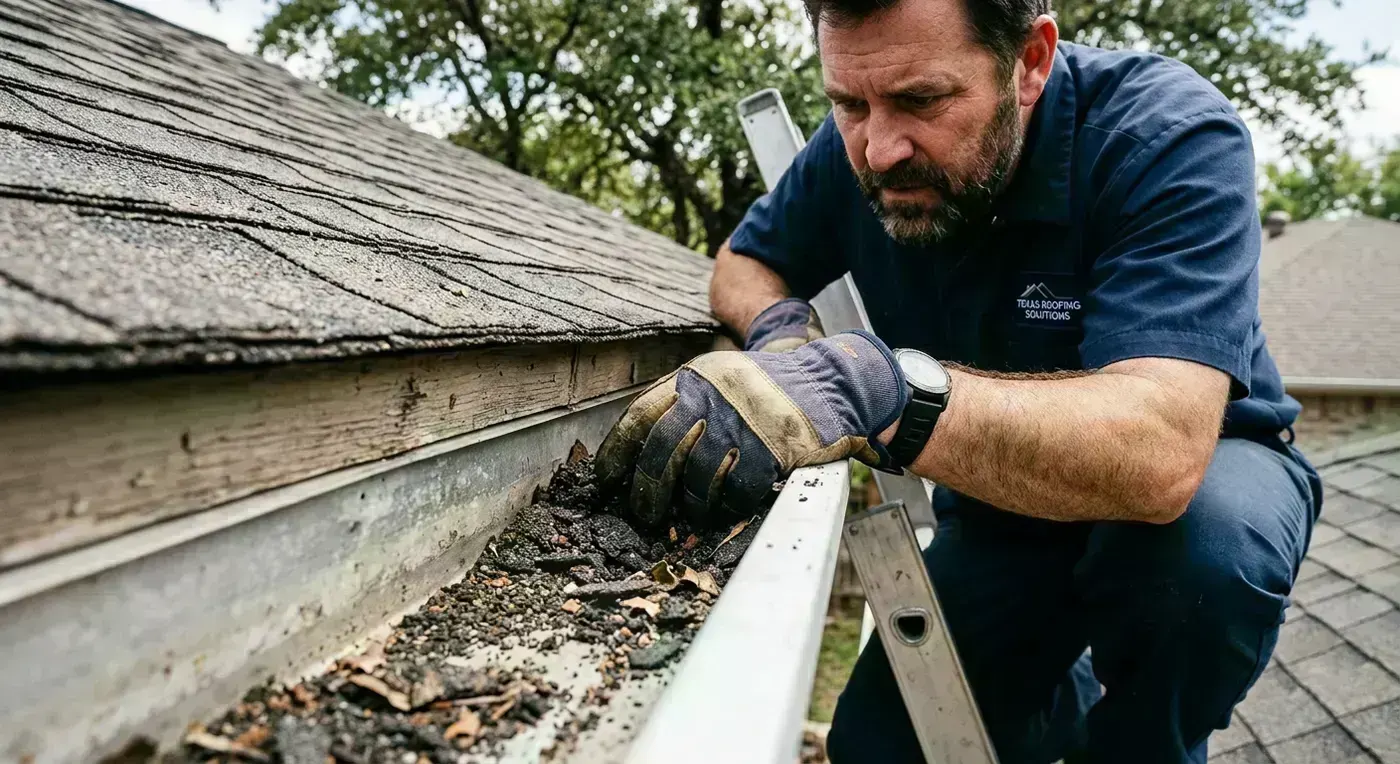
Then there's Colleyville's beautiful mature landscaping. Those big, established oaks and elms that make the neighborhoods so appealing also drop limbs in storms, deposit debris in valleys, and hold moisture against the roof from overhanging branches. Leaf litter trapped in valleys and behind chimneys accelerates underlayment and flashing decay. Keeping branches trimmed back and valleys clear is one of the cheapest ways to extend a Colleyville roof's life.
Common problems on Colleyville roofs
Tile underlayment aging
This is the classic Colleyville roofing surprise. Homeowners assume a 50-year tile roof means 50 years of protection — but the tiles are only the outer armor. Beneath them, an underlayment membrane does the actual waterproofing, and traditional felt underlayment often ages out in 20–30 years. When it fails, you get leaks despite perfectly good-looking tile above. The fix is a "lift and relay": crews carefully remove and stack the existing tile, install fresh high-performance synthetic underlayment, and reset the tile. It's a smart, cost-effective way to reset the clock without buying new tile.
Cosmetic metal denting
Metal roofs can develop dimpling from hail that is purely cosmetic. This creates tension with insurance: is the damage functional or just visual? On premium homes where appearance is everything, denting can be a real concern even when the roof performs fine. Choosing a thicker gauge panel or a textured stone-coated product up front reduces the risk of noticeable denting.
Flashing and penetration failures
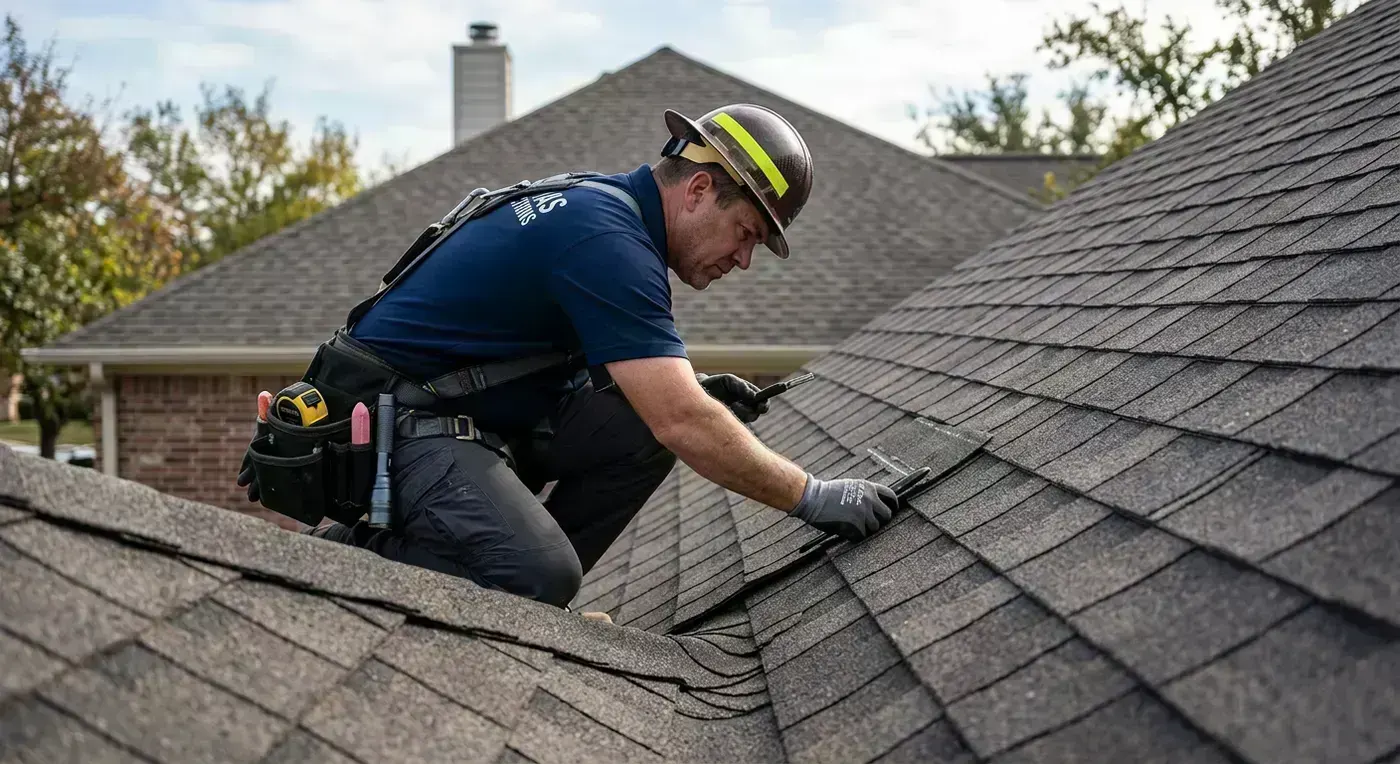
Colleyville's custom homes tend to have complex rooflines — multiple chimneys, dormers, valleys, skylights and turret features. Every one of those transitions is a potential leak point, and flashing failures are a far more common cause of leaks than the field of the roof itself. Long-lived roofs demand meticulous flashing work.
Ventilation and heat buildup
Large attics under expansive roofs need proper intake and exhaust ventilation. Poor ventilation cooks underlayment and shingles from below, quietly shaving years off lifespan in the Texas heat.
Inspection advice for high-value homes
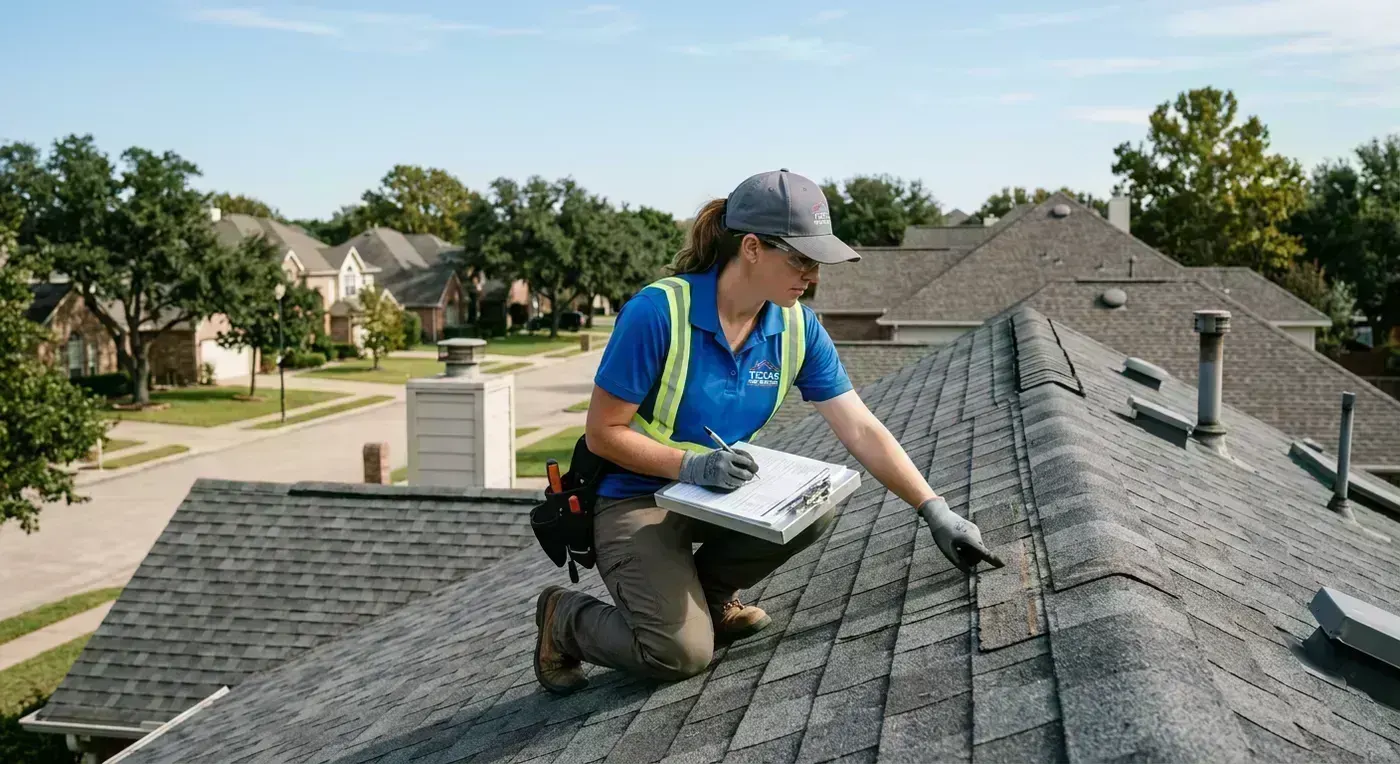
When your roof is protecting a substantial investment, a reactive "wait until it leaks" approach is the wrong strategy. Here's what we recommend for Colleyville homeowners:
- Inspect annually and after every major storm. Spring hail season alone justifies a professional look each year.
- Insist on drone documentation. Steep, multi-plane custom roofs are dangerous and difficult to inspect on foot. Drone imagery captures every slope and gives you a dated visual record — invaluable for insurance claims.
- Track your underlayment age separately from your tile age. If your tile roof is pushing 25–30 years and has never had the underlayment replaced, budget for a lift-and-relay before leaks start.
- Document before storms, not just after. A baseline inspection makes it far easier to prove new hail or wind damage to an adjuster.
- Work with a roofer who understands premium systems. Tile, metal and synthetic slate each require specialized installation and repair knowledge.
RoofDog specializes in exactly this kind of high-value work. Our roof inspection service pairs drone imaging with a detailed slope-by-slope report, and every project we complete is backed by a lifetime workmanship warranty. We serve the community directly — see our Colleyville roofing service area page for local details.
Frequently asked questions
How long does a tile roof last on a Colleyville custom home?
The tiles themselves last 40–60+ years (clay longer than concrete), but the underlayment beneath usually needs replacing at 20–30 years. Plan for at least one lift-and-relay during the tile's lifetime.
Are metal roofs worth it in Colleyville?
For many owners, yes. Standing-seam and stone-coated metal last 40–70 years, resist hail far better than asphalt (usually only cosmetic denting), and satisfy most HOA aesthetic standards. The higher upfront cost often wins on cost-per-year.
Will hail total my premium roof like it does asphalt?
Usually not. Metal typically takes cosmetic dents rather than functional damage, and Class 4 synthetic slate resists impact that would destroy asphalt. Tile can crack individually but is repairable piece by piece.
Does my Colleyville HOA restrict roofing materials?
Many neighborhoods do, limiting approved tile profiles, metal finishes and colors. Always check your architectural guidelines before ordering material. We help homeowners select HOA-compliant systems.
How often should I have my roof inspected?
At least once a year, plus after any significant hail or windstorm. On high-value Colleyville homes, an annual drone inspection is inexpensive insurance against unnoticed damage.
Why does my tile roof leak if the tiles look fine?
Because the tiles aren't the waterproofing layer — the underlayment beneath them is. When aged felt underlayment fails, you get leaks under perfectly intact tile. A lift-and-relay solves it.
Can you inspect a steep, multi-story custom roof safely?
Yes. RoofDog uses drone inspections to document every slope on tall, steep, multi-plane rooflines without putting anyone at risk, and to create a dated visual record for insurance.
Is cosmetic hail denting on metal covered by insurance?
It varies by policy. Some carriers cover functional damage only, while others address cosmetic denting. We document damage thoroughly with drone imagery so you can make the strongest possible claim.
What roof lasts longest in Colleyville?
Clay tile (50–60+ years) and standing-seam metal (up to 70 years) top the list. Synthetic slate and stone-coated steel follow at 40–50 years. Architectural asphalt trails at 20–30.
Do mature trees shorten my roof's life?
They can. Overhanging branches drop debris into valleys, hold moisture against the roof, and risk limb damage in storms. Trimming branches back and keeping valleys clear meaningfully extends roof life.
Should I repair or replace my aging tile roof?
If the tiles are sound but leaks have started, a lift-and-relay with new underlayment is usually far more economical than full replacement. We assess this on every tile inspection.
Does RoofDog offer a warranty?
Yes — every RoofDog installation is backed by a lifetime workmanship warranty, on top of the manufacturer warranty for your chosen premium material.
How do I get started with RoofDog in Colleyville?
Call 940.828.ROOF or schedule online. We'll perform a drone inspection, walk you through findings, and help you plan for your home's specific roof.
Summary
Colleyville's affluent, aesthetically strict housing market favors premium roofing — and those systems reward you with long lifespans: 40–60+ years for tile, 40–70 for metal, and 40–50 for synthetic slate, versus 20–30 for architectural asphalt. The real-world limiters here are DFW hail, spring wind, mature-tree debris, and, on tile roofs, underlayment that ages out decades before the tiles do. Protect your investment with annual and post-storm drone inspections, track your underlayment age, and work with a roofer fluent in premium systems. RoofDog is ready to help — Protecting Homes. Saving Dogs. Call 940.828.ROOF or schedule an inspection today.
You Might Also Need
Need a Roof Inspection?
Get expert advice and a free estimate from North Texas's trusted roofing professionals.
Schedule Free Inspection