How Long Do Roofs Last in Coppell, TX?
Short answer: In Coppell, TX, a typical architectural asphalt shingle roof lasts about 15 to 22 years — not the 30 the wrapper advertises. Our North Texas climate, recurring hailstorms, gusty spring winds, and Coppell's unusually heavy tree canopy all shorten real-world roof life. A Class 4 impact-rated upgrade, good attic ventilation, and regular inspections can push a roof toward the longer end of that range.
Coppell is one of those neighborhoods where the roofs are, quite literally, aging together. Most of the city filled in during the 1990s and early 2000s, which means thousands of homes hit replacement age within the same handful of years. If your street is starting to sprout yard signs from roofing companies, that's why — and it's worth understanding what's normal before you make a decision. Call RoofDog at 940.828.ROOF for a straight answer.
Table of contents
- Coppell's climate and what it does to a roof
- DFW hail: the number-one lifespan killer
- Wind and spring storm season
- Coppell's tree canopy and debris load
- The "built-out, aging together" housing stock
- Dominant materials in Coppell
- How long each roof type really lasts here
- Common problems we see on Coppell roofs
- Inspection advice for Coppell homeowners
- Frequently asked questions
- Summary
Coppell's climate and what it does to a roof
Coppell sits in the heart of the Metroplex, wedged between DFW Airport and the Grapevine Lake watershed, and it lives under the same punishing North Texas weather as the rest of Dallas County. Summers are long and brutal — weeks of triple-digit heat that bake shingles and cook attics. Winters are mild but throw the occasional hard freeze and the odd ice event, like the one that shut the region down a few winters back. That temperature swing, from 105°F rooftop surface temps in August to sub-freezing nights in January, forces asphalt shingles to expand and contract thousands of times over their life. That thermal cycling is what dries out the asphalt binder, curls edges, and eventually cracks shingles years before the warranty says they should fail.
Add the intense Texas UV load and a roof in Coppell simply ages faster than the same shingle would in a cooler, cloudier climate. This is a statewide reality — we cover the fundamentals in our guide to how long roofs last in Texas — but Coppell has a few local twists that make it its own case.
DFW hail: the number-one lifespan killer
Nothing ends a Coppell roof's life faster than hail. The Dallas-Fort Worth corridor is squarely inside "Hail Alley," and Coppell has been clipped by major storms repeatedly over the past two decades. A single significant hail event can bruise a shingle field so badly that the roof is functionally done — even if it doesn't leak the next day. Hail knocks the protective granules off asphalt shingles, exposing the asphalt mat to UV, which then dries and fails prematurely.
The frustrating part for homeowners is that hail damage is often invisible from the ground. You may not see a single missing shingle, yet the roof has lost years of life. This is exactly why we lean on drone inspections at RoofDog — we can document granule loss, soft spots, and bruising across the whole roof plane without a boot ever touching your shingles, and give you photo evidence to take to your insurer.
Wind and spring storm season
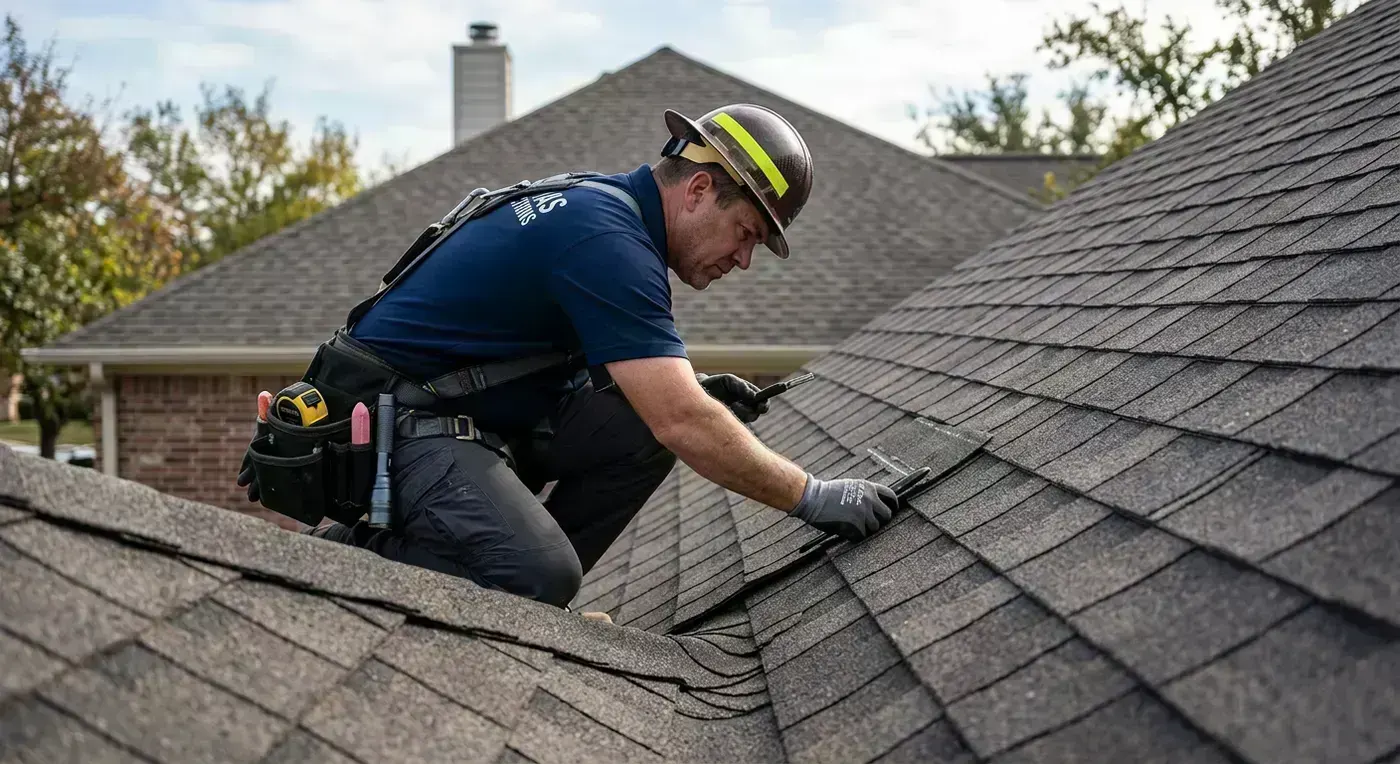
From March through June, the Metroplex gets its most violent weather. Straight-line winds ahead of a squall line routinely hit 60-70 mph, and it doesn't take a tornado to lift shingles. Wind tends to attack the same weak points every time: ridge caps, rake edges, and any shingle whose sealant strip has already been weakened by age or heat. Once a few tabs lift, wind-driven rain gets underneath and the failure spreads.
Coppell homes with steeper front-facing gables and tall two-story elevations catch more wind than low ranch profiles, and those are common in the city's 1990s-2000s subdivisions. Proper nailing and quality installation matter enormously here — a roof installed correctly to wind spec will outlast a bargain job by years.
Coppell's tree canopy and debris load
Here's where Coppell really differs from newer, treeless suburbs further out. Because the city has been established for decades, it has a genuinely mature tree canopy — big live oaks, red oaks, cedar elms, and pecans shading established neighborhoods like Riverchase, The Woods, and the older sections near Sandy Lake Road. Those trees are beautiful and great for your energy bill, but they're hard on roofs.
Overhanging limbs drop leaves and twigs that clog valleys and gutters, holding moisture against the shingles and accelerating rot at the decking. Limbs that rub the roof in the wind scour off granules. And in a big storm, mature limbs come down — a single falling branch can puncture decking and cause a leak overnight. If your Coppell home sits under a canopy, expect to clean debris more often and inspect valleys after every big blow.
Coppell tip: Trim any limb that hangs within about 10 feet of your roof. It reduces debris, cuts the risk of impact damage, and denies squirrels and raccoons an easy jump onto your shingles — a surprisingly common source of damage in tree-heavy Coppell streets.
The "built-out, aging together" housing stock
Coppell is essentially built out. There's very little raw land left, and the vast majority of the housing stock went up in a concentrated boom from the late 1980s through the mid-2000s. That history creates a distinctive pattern: entire subdivisions were roofed within a year or two of each other with the same generation of materials, so they reach the end of their service life at roughly the same time.
If your home was built in 1998 and still wears its second roof from, say, 2008, that roof is now well into replacement territory. Multiply that across the neighborhood and you understand why so many Coppell streets are seeing back-to-back roof replacements right now. The upside: contractors are everywhere and competition is real. The downside: it's also prime hunting season for storm-chasing outfits with out-of-state plates. A local company that will still be here for warranty work matters. RoofDog backs every replacement with a lifetime workmanship warranty, and we're not going anywhere.
Dominant materials in Coppell
Drive through Coppell and you'll see a sea of architectural (dimensional) asphalt shingles, usually in weathered wood and driftwood tones that HOAs favor. Architectural shingles replaced the old flat three-tab standard years ago and are far and away the dominant material on Coppell's brick-and-stone homes. A growing share of homeowners — especially those replacing a hail-damaged roof — are upgrading to Class 4 impact-rated shingles, which resist hail far better and often earn an insurance premium discount.
You'll also spot some tile and metal on custom and higher-end homes near the lake and in newer infill, but for the average Coppell family home, the decision comes down to standard architectural versus a Class 4 upgrade. We break both down in our guides to architectural shingle lifespan in Texas and Class 4 shingle lifespan in Texas.
How long each roof type really lasts here
Manufacturer lifespans assume mild climates and no hail. Here are realistic Coppell numbers:
| Roof type | Advertised life | Realistic Coppell life |
|---|---|---|
| 3-tab asphalt (older homes) | 20-25 yrs | 10-15 yrs |
| Architectural asphalt | 30 yrs | 15-22 yrs |
| Class 4 impact-rated asphalt | 30-50 yrs | 20-28 yrs |
| Metal (standing seam) | 40-70 yrs | 30-50 yrs |
| Concrete/clay tile | 50+ yrs | 40+ yrs (underlayment sooner) |
The single biggest variable isn't the shingle — it's whether a major hailstorm rolls through before the roof ages out naturally. In Coppell, storms often make the decision for you.
Common problems we see on Coppell roofs
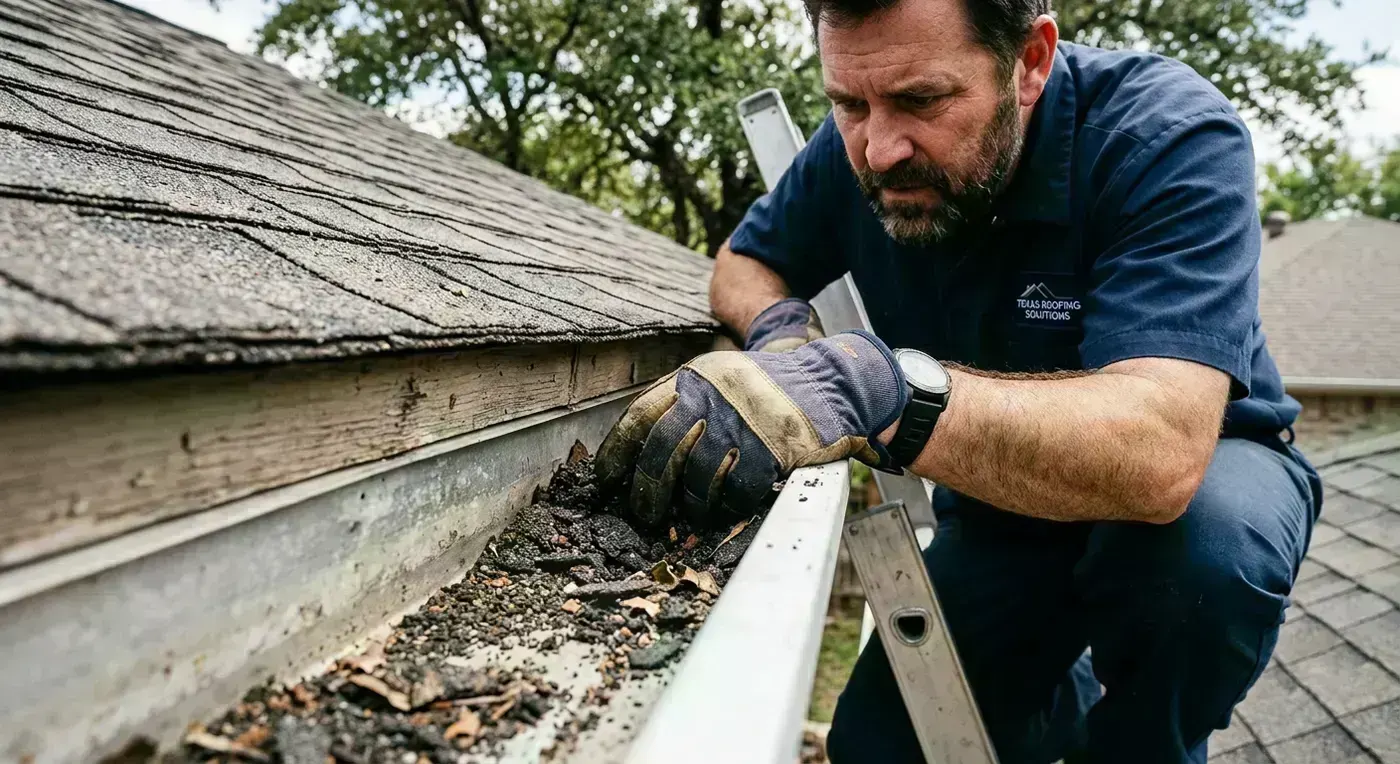
- Granule loss in gutters — the classic sign of an aging or hail-hit roof; look for what resembles coarse black sand.
- Clogged, moss-prone valleys from tree debris, especially on north-facing slopes that stay damp.
- Lifted or missing ridge caps and rake shingles after spring wind events.
- Failing pipe-boot seals — the rubber collars around plumbing vents crack in the Texas sun and are a top leak source on 12-to-15-year-old roofs.
- Attic ventilation problems that overheat the deck and shorten shingle life from below.
- Storm-chaser patch jobs from previous quick fixes that hide bigger underlying damage.
Inspection advice for Coppell homeowners
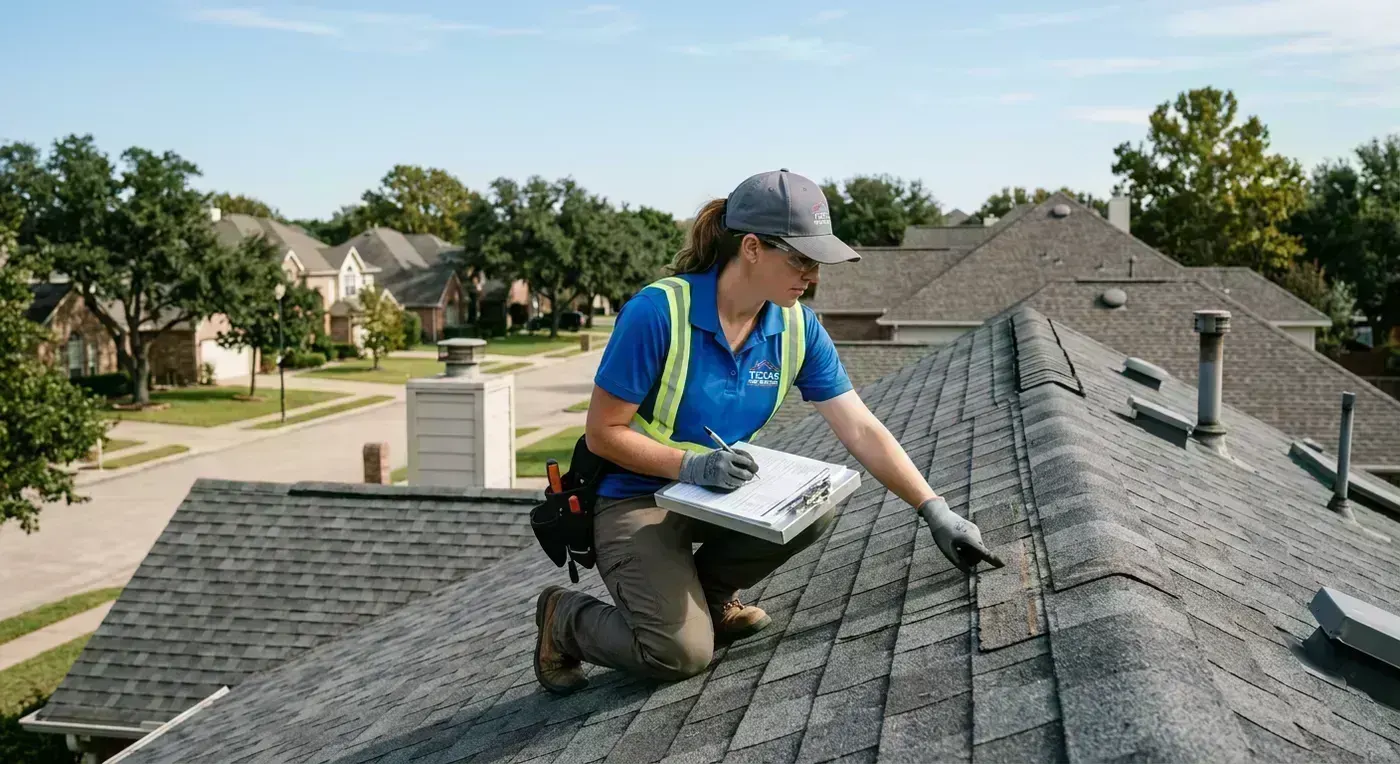
Because Coppell roofs are clustered by age and constantly exposed to hail, a set-it-and-forget-it approach doesn't work here. Have your roof professionally inspected once a year and again after any storm that drops hail bigger than a quarter or brings damaging wind. Don't wait for a ceiling stain — by the time water shows inside, the decking has usually been wet for a while.
If your home is 15-plus years into its current roof, get a documented assessment now so you know where you stand and aren't scrambling after the next storm. RoofDog's drone inspections capture high-resolution imagery of every slope, so you get proof of condition — invaluable whether you're filing an insurance claim, planning a roof replacement, or just buying peace of mind. We serve the whole city; you can learn more about our Coppell roofing services or simply schedule an inspection online.
RoofDog is a local, family-minded roofer with a soft spot for rescues — we donate 10% of profits to dog rescues because we believe in Protecting Homes. Saving Dogs. Call 940.828.ROOF for a no-pressure Coppell inspection.
Frequently asked questions
How long should I expect my Coppell roof to last?
If it's standard architectural asphalt, plan on 15-22 years — assuming a big hailstorm doesn't shorten that. Class 4 shingles can stretch to the mid-20s or beyond.
Why did my roof fail before its 30-year warranty?
Those warranties assume ideal conditions. Coppell's heat, UV, hail, and wind age shingles far faster, and most warranties are prorated and exclude storm damage anyway.
Is hail really that common in Coppell?
Yes. Coppell sits in the DFW hail corridor and has been hit by multiple significant storms over the past two decades. Hail is the leading reason roofs get replaced here.
My neighbors are all getting new roofs — do I need one too?
Possibly. Coppell subdivisions were built and roofed around the same time, so whole streets age out together. Get an inspection to confirm rather than assuming.
Do all the trees in my neighborhood shorten my roof's life?
They can. Coppell's mature canopy drops debris that clogs valleys and traps moisture, and overhanging limbs scour granules and risk impact damage. Trim limbs back about 10 feet.
Are Class 4 shingles worth it in Coppell?
For most Coppell homeowners, yes. They resist hail far better and frequently earn an insurance premium discount that helps offset the upfront cost over time.
Will my HOA let me change roof color or material?
Coppell has a strong HOA presence, and many communities restrict shingle color and style. Always check your HOA guidelines before choosing materials — we can help match approved options.
How do I know if my roof has hidden hail damage?
You often can't from the ground. A drone inspection documents granule loss and bruising across every slope so you have proof for your insurer and a clear picture of remaining life.
Should I file an insurance claim after a Coppell hailstorm?
Get a professional inspection first. If there's legitimate storm damage, documentation strengthens your claim. We provide photo evidence and can walk you through the process.
How often should I have my roof inspected in Coppell?
Once a year at minimum, plus after any hail or high-wind event. Roofs over 15 years old should be checked more closely so you're never caught off guard.
What are the first signs my Coppell roof is failing?
Granules collecting in gutters, curled or cracked shingles, lifted ridge caps after wind, and cracked pipe-boot seals. Interior ceiling stains mean the problem is already advanced.
Should I worry about storm-chasing roofers in Coppell?
Yes. After big storms, out-of-town crews flood the area and often disappear before warranty issues surface. Choose a local company that will be here for the long haul.
How much does a roof replacement cost in Coppell?
It depends on size, pitch, material, and access, so we give a firm quote after inspecting. Class 4 upgrades cost more upfront but can pay back through insurance savings.
Can RoofDog help with the whole process?
Absolutely — from drone inspection and insurance documentation to installation backed by our lifetime workmanship warranty. Call 940.828.ROOF or schedule online.
Summary
In Coppell, TX, expect a standard architectural asphalt roof to last roughly 15-22 years, with Class 4 shingles reaching into the mid-20s or beyond. North Texas heat and UV age shingles quickly, DFW hail is the leading cause of early replacement, spring wind attacks aging edges, and Coppell's mature tree canopy adds debris and impact risk. Because the city was largely built out in the 1990s-2000s, entire neighborhoods are hitting replacement age together — so an annual inspection and post-storm check are essential. Whether you need documentation for an insurance claim or a full replacement, RoofDog is your local, family-minded roofer. Call 940.828.ROOF, explore our Coppell roofing services, or schedule an inspection today. Protecting Homes. Saving Dogs.
You Might Also Need
Need a Roof Inspection?
Get expert advice and a free estimate from North Texas's trusted roofing professionals.
Schedule Free Inspection