How Long Do Roofs Last in Denton, TX?
Short answer: In Denton, TX, most asphalt shingle roofs last about 15 to 22 years — but that range is unusually wide here because Denton's housing stock is so mixed. A budget 3-tab roof on a rental near campus may only reach 12–15 years, while a properly installed architectural shingle roof runs 20–25, and a Class 4 impact-rated or Decra stone-coated steel system can protect a home for 40 to 50+ years. The single biggest factor shaving years off a Denton roof isn't age — it's hail.
Denton sits at the northern edge of the Dallas–Fort Worth metroplex, and that means it lives squarely inside one of the most active hail corridors in the country. Add relentless summer UV, gusty spring storm fronts rolling in off the plains, and the mature tree canopy shading the historic neighborhoods around the Square, and you get a city where two houses on the same block can be on completely different roof-replacement timelines. This guide breaks down what actually determines roof lifespan in Denton — and how to know where yours stands.
Table of contents
- Denton's climate and what it does to roofs
- Roof lifespan by material in Denton
- The historic-vs-new age split
- Hail, wind, and the DFW factor
- Tree coverage in older neighborhoods
- Common roofing problems in Denton
- Rentals and investor-owned roofs
- When and how to inspect your roof
- Frequently asked questions
- Summary
Denton's climate and what it does to roofs
Denton's weather is hard on roofing in ways that quietly compound over the years. Summers push well past 100°F, and the intense North Texas UV bakes asphalt shingles until the oils that keep them flexible cook out. Once shingles dry out, granules loosen and the mat underneath becomes brittle — which is exactly when the next hailstorm does the most damage. Winters bring the occasional ice event (the region hasn't forgotten February 2021), and those freeze-thaw swings work at flashing seams and any spot where water can pool.
Then there's the wind. Denton catches strong straight-line gusts ahead of spring storm systems, and roofs with aging or improperly nailed shingles start shedding tabs long before they'd otherwise wear out. For a broader look at how Texas conditions govern roof life statewide, see our guide on how long roofs last in Texas.
Roof lifespan by material in Denton
The material on your roof — and how well it was installed — is the biggest lever you control. Here's what we typically see holding up across Denton, adjusted for local hail and heat:
| Roof material | Typical Denton lifespan | Notes |
|---|---|---|
| 3-tab asphalt shingle | 12–18 years | Common on older and rental homes; least hail-resistant |
| Architectural (dimensional) asphalt | 20–25 years | The Denton default for new construction and re-roofs |
| Class 4 impact-rated asphalt | 25–30 years | Better hail survival; may earn an insurance discount |
| Metal / standing seam | 40–60 years | Excellent wind and heat performance |
| Decra stone-coated steel | 40–50+ years | Installed by RoofDog in Denton; hail-tough with a shingle look |
| Clay / concrete tile | 40–50 years | Seen on some Spanish-style and upscale homes |
Because architectural shingles are the workhorse of Denton roofing, it's worth understanding their real-world behavior — read our deep dive on how long architectural shingle roofs last in Texas. And if your home still wears older 3-tab, our breakdown of how long 3-tab shingle roofs last in Texas explains why those years add up faster.
The historic-vs-new age split
Few North Texas cities have a housing stock as split as Denton's. As the county seat and home to both the University of North Texas and Texas Woman's University, Denton grew in distinct waves — and you can read them straight off the rooflines.
- Historic districts (Oak-Hickory, Bell Avenue, around the Square): Century-old homes, some with steep pitches and complex framing. Many have been re-roofed several times; the challenge is matching modern materials to older structures and dealing with layered tear-offs.
- Mid-century neighborhoods: Post-war ranch homes with simpler, lower-slope roofs. These often carry aging 3-tab that's overdue for replacement.
- Rental belt near campus: Investor-owned properties where roofs are frequently patched rather than replaced, so effective lifespan gets stretched thin.
- New construction on the edges: Sprawling developments toward the loop and out past Robson Ranch, almost all wearing builder-grade architectural shingles installed within the last decade.
The practical takeaway: knowing your neighborhood tells you a lot about where your roof likely sits on its lifespan curve — but only an inspection confirms it.
Hail, wind, and the DFW factor
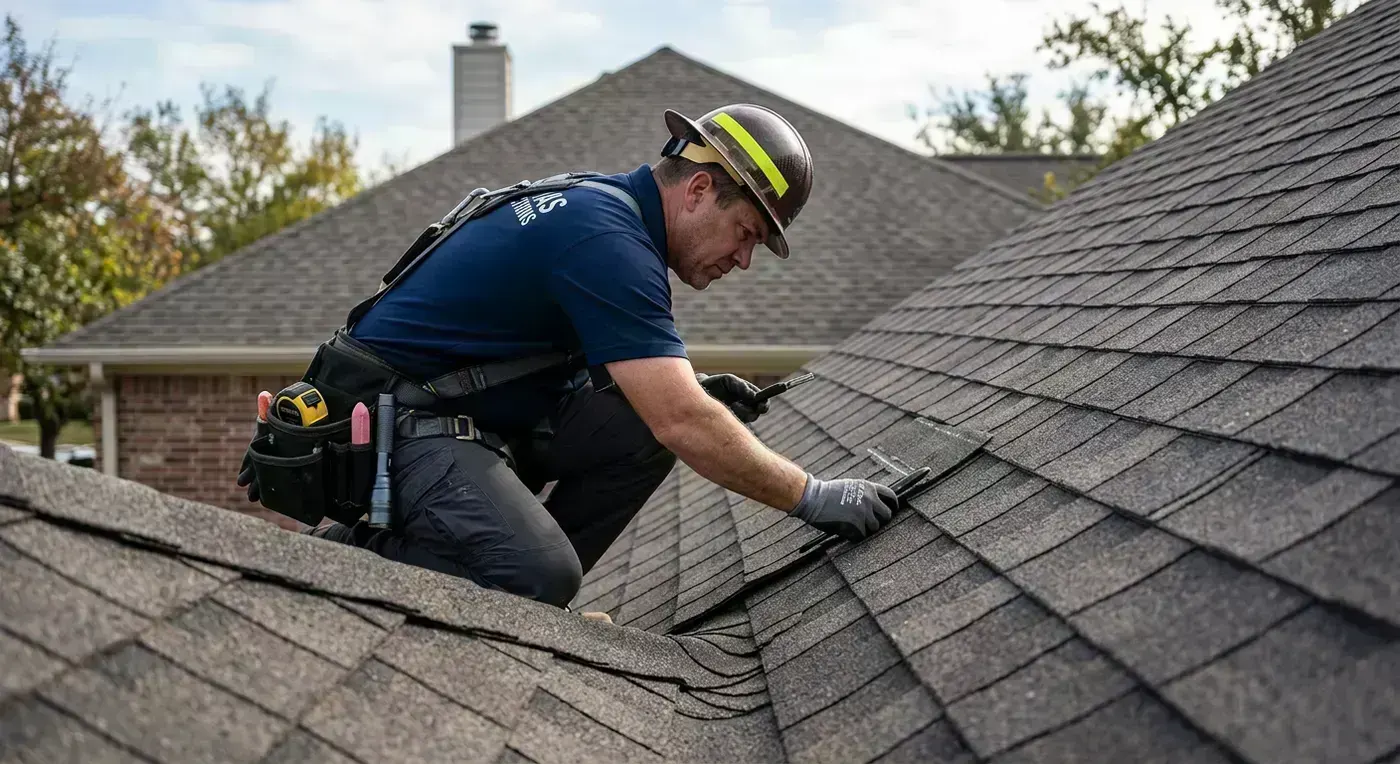
If Denton has a roofing villain, it's hail. The greater DFW area ranks among the most hail-prone regions in the United States, and Denton County catches its share of spring storms that drop stones from pea-sized up to golf ball and larger. A single significant hail event can end a roof's life a decade early — not always by obvious punctures, but by fracturing shingle mats and knocking off the granules that shield asphalt from UV. That damage often isn't visible from the ground, which is why so many "surprise" leaks in Denton trace back to a storm two or three years earlier.
Wind compounds the problem. Straight-line gusts ahead of storm fronts lift and crease shingles, breaking their seal strips so the next rain finds its way underneath. This is exactly where RoofDog's drone inspections earn their keep — we document the whole roof from above in high resolution, catching bruising, lifted tabs, and flashing gaps without a boot ever touching your shingles.
Tree coverage in older neighborhoods
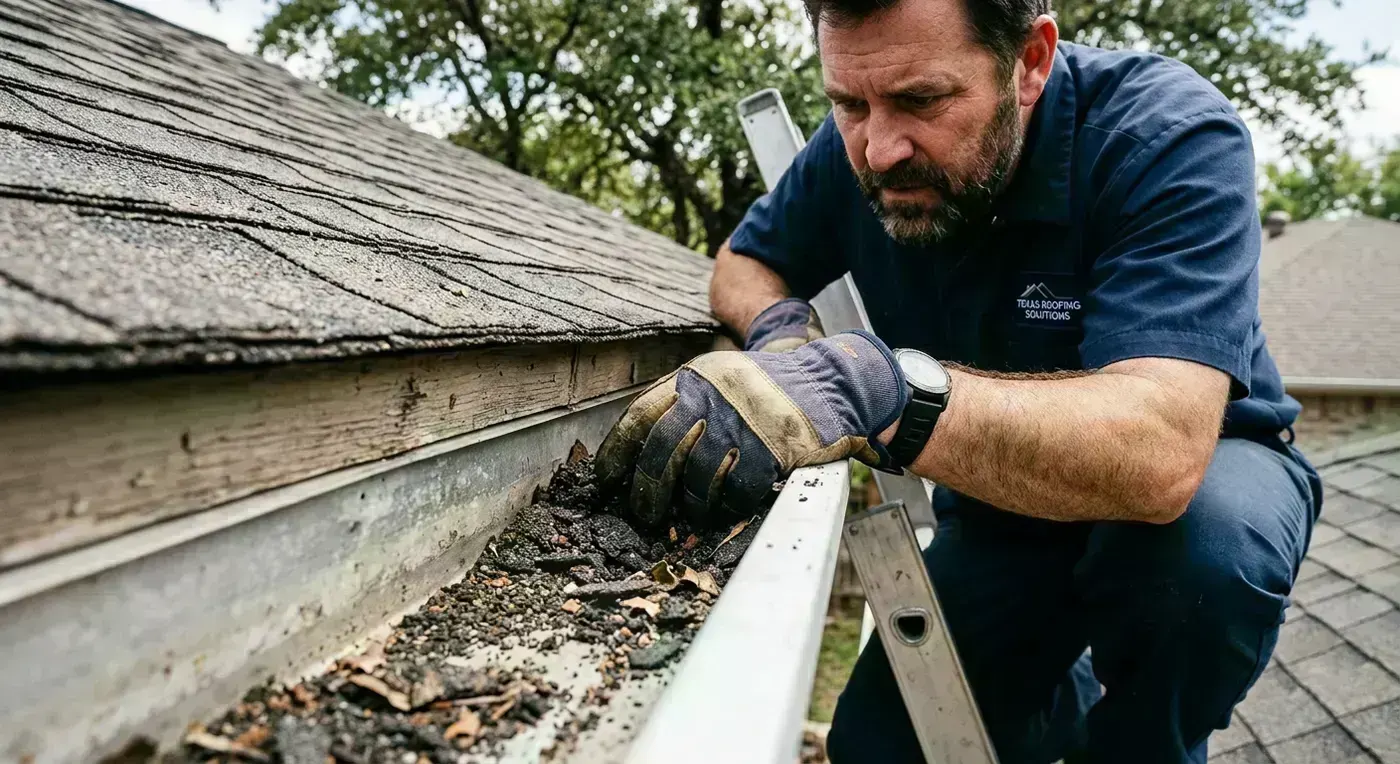
Denton's historic and established neighborhoods are shaded by big, beautiful post oaks, pecans, and cedar elms — and that canopy is a mixed blessing for roofs. Shade lowers attic temperatures and slows UV aging, which is genuinely good. But overhanging limbs scrape granules off shingles with every windy day, drop debris that clogs valleys and gutters, and give squirrels and rodents a bridge onto the roof. Wet leaf litter that sits in valleys holds moisture against the shingles and accelerates rot in the decking beneath.
Common roofing problems in Denton
Across the Denton roofs we inspect, a handful of issues come up again and again:
- Aging 3-tab shingles: Widespread on older and rental homes, curling and cracking well before their nominal warranty ends thanks to heat and hail.
- Granule loss from hail and trees: Bare asphalt showing through means UV protection is gone and the countdown is on.
- Deferred maintenance on rentals: Small leaks patched instead of fixed, letting decking quietly rot.
- Failed flashing and pipe boots: The cracked rubber boots around plumbing vents are one of the most common leak sources we find.
- Improper prior repairs: Mismatched shingles and over-driven nails from quick fixes that create new failure points.
- Ventilation problems: Under-ventilated attics cook shingles from below and shorten lifespan in Denton's heat.
Rentals and investor-owned roofs
With two universities driving strong rental demand, a large slice of Denton's homes are investor-owned — and their roofs tell a specific story. Because a new roof is a big capital expense that doesn't immediately raise rent, owners often stretch roofs with repeated patching. The result is roofs that are chronologically 15 years old but functionally much older, with layered repairs and hidden decking damage. If you're buying a former rental near campus, treat the roof age on the disclosure with healthy skepticism and get an independent inspection before closing.
When and how to inspect your roof
In a hail corridor like Denton's, the calendar isn't the only trigger for a roof inspection — the weather is. We recommend:
- Every 1–2 years as a baseline, more often once your roof passes 12 years.
- After any significant hail or windstorm, even if you see no damage from the ground.
- Before buying or selling any Denton home — especially historic properties and former rentals.
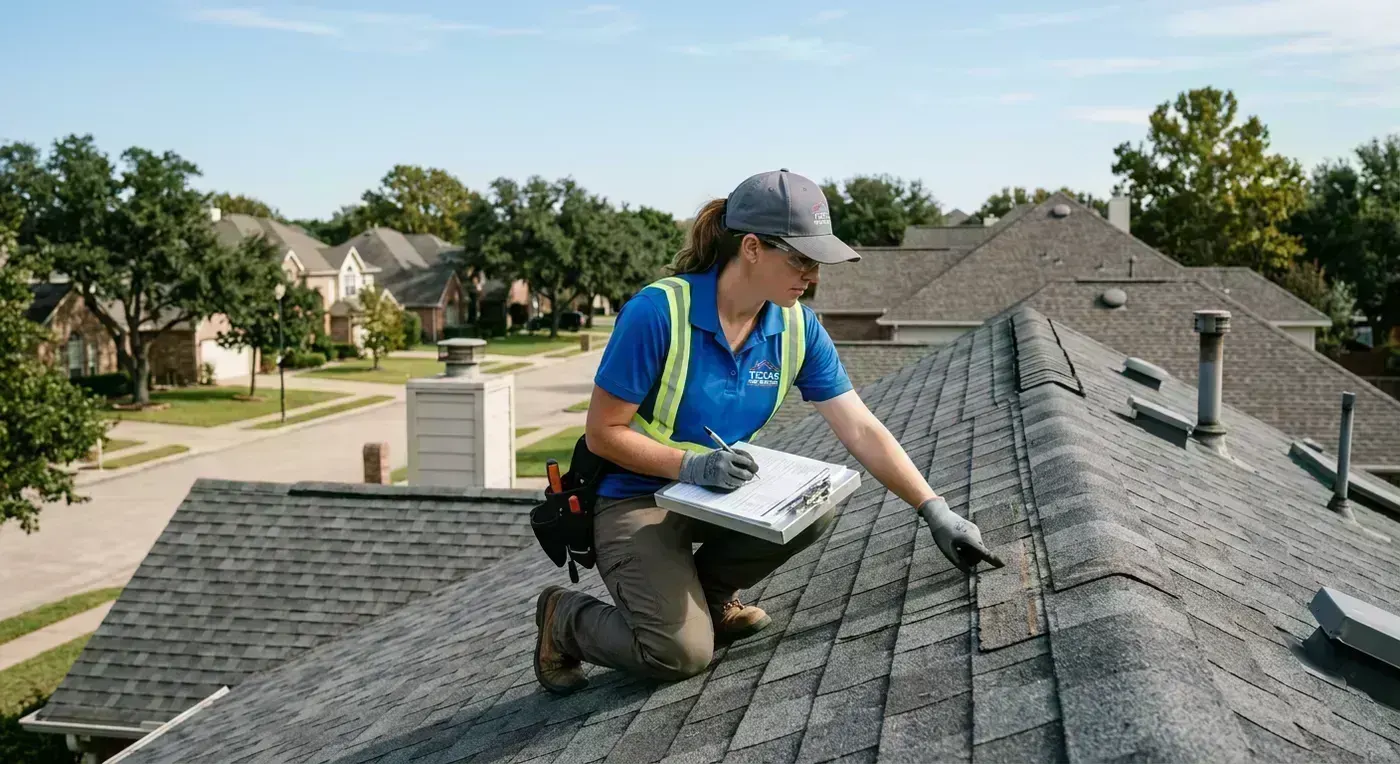
RoofDog's roof inspection service uses drones to safely document every slope, valley, and flashing detail, so you get a clear picture of remaining lifespan — not a sales pitch. We serve homeowners across the area; you can see our full Denton, TX roofing service area for details on what we cover locally. When it's time to act, every RoofDog installation is backed by our lifetime workmanship warranty.
Frequently asked questions
How long should I expect my roof to last in Denton, TX?
Most asphalt roofs in Denton last 15–22 years, but the range is wide. Budget 3-tab on a rental may only reach 12–15 years, architectural shingles 20–25, and Decra stone-coated steel 40–50+. Hail exposure is usually what determines the real number.
Why do roofs seem to fail faster in Denton than the shingle warranty says?
Warranties assume mild conditions. Denton's intense UV, 100°F-plus summers, and frequent hail age shingles far faster than the lab. A "30-year" shingle here often performs like a 20-year product without impact upgrades.
Does hail really shorten a Denton roof's life that much?
Yes. A single serious hailstorm can knock a decade off a roof by fracturing shingle mats and stripping protective granules — damage that's rarely visible from the ground but leads to leaks a year or two later.
My home is in a historic Denton district. Does that affect my roof options?
It can. Older homes may have steeper pitches, complex framing, and multiple existing layers. Some historic districts also have appearance guidelines, so material and color choices matter. An experienced local inspection helps you plan the right approach.
I own a rental near UNT. How do I know if the roof is actually failing?
Rental roofs are often patched rather than replaced, so age on paper is misleading. Look for widespread granule loss, curling, soft decking, and interior stains. A drone inspection reveals the true condition beneath repeated repairs.
Are Class 4 impact-rated shingles worth it in Denton?
For most Denton homes, yes. Class 4 shingles resist hail far better than standard asphalt and can qualify you for an insurance premium discount, which helps offset the higher upfront cost over the roof's life.
What is a Decra stone-coated steel roof, and does RoofDog install them here?
Decra is a stone-coated steel roofing system that looks like shingles or tile but resists hail and wind like metal, lasting 40–50+ years. Yes — RoofDog has completed Decra installs right here in Denton.
How do the big trees in my older neighborhood affect my roof?
Shade slows UV aging, which helps, but overhanging limbs scrape granules, drop debris into valleys, and give rodents roof access. Trim branches back and keep valleys clear to protect your roof's lifespan.
How often should I have my Denton roof inspected?
Every 1–2 years as a baseline, more often past year 12, and always after a major hail or wind event. Also inspect before buying or selling any home in the area.
Can you inspect my roof without walking on it?
Yes. RoofDog uses drone inspections to document your entire roof in high resolution — catching hail bruising, lifted shingles, and flashing gaps without foot traffic that could cause damage.
Is a new roof in Denton covered by insurance after a storm?
Often, yes, if the damage is storm-related and your policy covers it. Documentation matters, which is why a thorough post-storm inspection is worth getting before you file a claim.
What warranty does RoofDog offer on a new roof?
Every RoofDog installation is backed by a lifetime workmanship warranty, in addition to the manufacturer's material warranty. Call 940.828.ROOF to learn more.
How much of a roof's life can maintenance actually add in Denton?
A well-maintained roof — clear valleys, trimmed trees, prompt flashing repairs, and good attic ventilation — can realistically add 3–5 years versus a neglected one, sometimes more.
Summary
Roof lifespan in Denton, TX ranges widely — roughly 15–22 years for most asphalt roofs, but as low as 12 for aging 3-tab on rentals and as high as 40–50+ years for Class 4, metal, or Decra stone-coated steel. Denton's mix of century-old historic homes, mid-century ranches, campus rentals, and new construction means your neighborhood and materials matter as much as the calendar. Hail is the dominant threat, with UV, wind, and tree debris close behind. The smartest move is a regular, drone-based inspection — especially after storms — so you know exactly where your roof stands. RoofDog serves Denton with drone inspections, a lifetime workmanship warranty, and a mission: Protecting Homes. Saving Dogs. Call 940.828.ROOF or schedule online.
You Might Also Need
Need a Roof Inspection?
Get expert advice and a free estimate from North Texas's trusted roofing professionals.
Schedule Free Inspection