How Long Do Roofs Last in Copper Canyon, TX?
Short answer: In Copper Canyon, TX, a well-installed roof lasts roughly 18–25 years for heavy architectural asphalt, 40–70 years for standing-seam metal, and 40–50+ years for synthetic slate — but the town's dense oak canopy, DFW hail, and deep forest shade routinely knock 5–10 years off those numbers when a roof is neglected. Tree debris, overhanging limbs, and algae on shaded slopes are the local lifespan killers here far more than sun.
Wondering whether your acreage estate's roof is aging normally or prematurely? RoofDog offers free drone inspections across Copper Canyon — call 940.828.ROOF. Protecting Homes. Saving Dogs.
Table of Contents
- Copper Canyon's climate & why it matters
- The dominant issue: tree canopy & debris
- DFW hail & wind funneling through the woods
- Estate housing stock & roof materials
- Roof lifespan by material in Copper Canyon
- Common problems we see locally
- Inspection advice for wooded lots
- Frequently asked questions
- Summary
Copper Canyon's climate & why it matters
Copper Canyon sits in the heart of Denton County's cross-timbers belt — a rural-estate town of large acreage lots buried in mature post oak, blackjack oak, and cedar elm. The climate is classic North Texas: brutally hot, humid summers pushing past 100°F, mild but occasionally icy winters, and violent spring storm seasons. But what sets Copper Canyon apart from open DFW suburbs isn't the weather chart — it's the forest that sits on top of it.
That dense canopy changes the equation entirely. Roofs here spend far more of the day in shade than a roof in, say, an open Frisco subdivision. Shade means slow-drying surfaces, trapped moisture, and a microclimate that favors algae and moss growth. The same trees that make Copper Canyon beautiful also make it one of the tougher environments in the county for roof longevity. For the regional baseline, see our guide on how long roofs last in Texas.
The dominant issue: tree canopy & debris
If there is one thing that ages a Copper Canyon roof faster than anything else, it's the trees. On a two-acre wooded estate lot, overhanging oak limbs are not the exception — they're the norm. This creates three compounding problems:
1. Constant organic debris
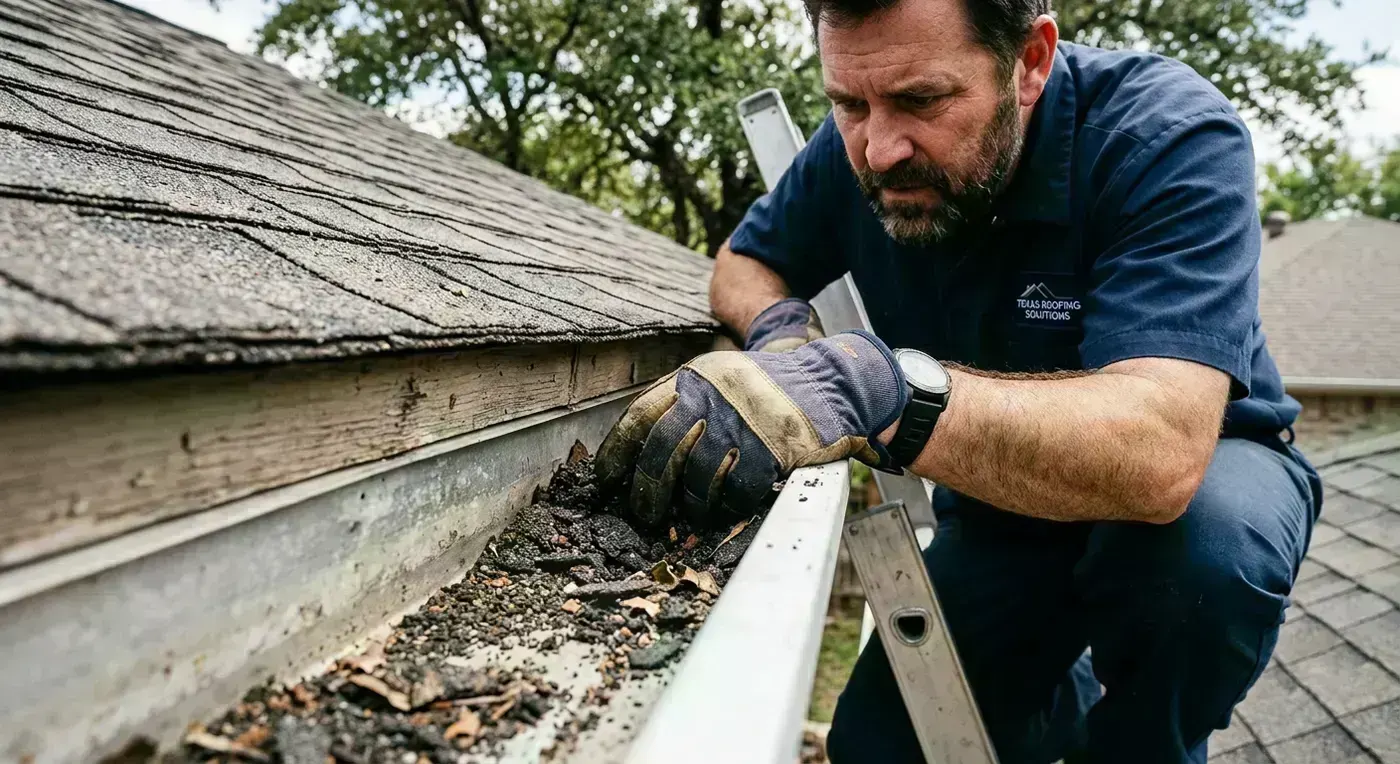
Oak leaves, acorns, twigs, and catkins pile into valleys and behind chimneys. That debris holds moisture against the roof deck and dams up water flow. On a shaded north slope, wet leaf litter can sit for days, feeding rot at the deck and rusting fasteners on metal panels.
2. Abrasion from overhanging limbs
Every time the wind blows — and it blows hard here — branches rub the surface. On architectural asphalt, that scrubs away the protective granules. On metal and synthetic slate it scratches finishes and coatings. A single low limb can wear a bare stripe into a shingle field in a couple of seasons.
3. Deep shade driving algae and moss
Those dark streaks on north- and east-facing slopes are Gloeocapsa magma algae, and in Copper Canyon's shade they thrive. Left unchecked, algae gives way to moss, which lifts shingle edges and wicks water underneath. This is the single most common premature-failure mode we see on shaded Copper Canyon roofs.
Local tip: Keep limbs trimmed back at least 8–10 feet from the roof plane. It reduces debris, kills the abrasion, and lets sunlight dry the surface — the cheapest lifespan extension available to a Copper Canyon homeowner.
DFW hail & wind funneling through the woods
Copper Canyon sits squarely in North Texas hail alley. Spring supercells routinely drop 1" to golf-ball-sized hail across Denton County, and a single severe hailstorm can end the life of an asphalt roof overnight. Estate roofs with large surface areas simply present more target for impact damage.
Wind behaves oddly in wooded terrain. While mature trees break up straight-line gusts, they also create funneling and turbulence — swirling downdrafts that lift shingle tabs at ridges and edges, and that snap dead limbs onto the roof during storms. Impact strikes from falling branches are a genuine, recurring cause of roof damage in Copper Canyon that flat-suburb roofs rarely face. This is a major reason many estate owners here upgrade to metal or synthetic slate, which shrug off both hail and limb strikes far better than asphalt.
Estate housing stock & roof materials
Copper Canyon is a custom-home town. You won't find rows of production builder roofs here — instead you'll see large, architecturally distinctive estates with complex rooflines: multiple gables, long valleys, dormers, and steep pitches. That complexity is beautiful but it also means more valleys and penetrations where debris collects and leaks start.
Because these are premium homes, the material mix skews high-end:
- Standing-seam & stone-coated metal — increasingly the estate default for its hail resistance and 40–70 year life. See how long metal roofs last in Texas.
- Synthetic slate & composite shake — the look of natural slate or cedar without the weight or the rot, rated 40–50+ years.
- Heavy architectural asphalt — still common, especially on older estates; premium laminated shingles that outlast three-tab but remain the most hail-vulnerable option.
Roof lifespan by material in Copper Canyon
| Material | Typical TX life | Realistic Copper Canyon life* | Biggest local threat |
|---|---|---|---|
| Heavy architectural asphalt | 22–28 yrs | 18–25 yrs | Hail & algae/moss on shaded slopes |
| Standing-seam metal | 50–70 yrs | 40–70 yrs | Debris in valleys, limb-strike dents |
| Stone-coated steel | 40–50 yrs | 35–50 yrs | Granule loss under abrasion |
| Synthetic slate / composite | 45–50+ yrs | 40–50+ yrs | Moss between courses on deep-shade slopes |
*Ranges assume routine maintenance. Neglected roofs on heavily shaded, tree-covered lots can lose 5–10 years off the low end.
Common problems we see locally
After inspecting roofs all over Denton County, these are the issues that show up again and again on Copper Canyon's wooded estate lots:
- Clogged valleys and gutters from relentless oak debris, causing backup and deck rot.
- Algae streaking and moss on shaded north/east slopes — the number-one premature-aging culprit here.
- Abrasion wear where limbs contact the roof, stripping asphalt granules or scratching metal.
- Limb-strike punctures and dents after storms, especially from dead oak branches.
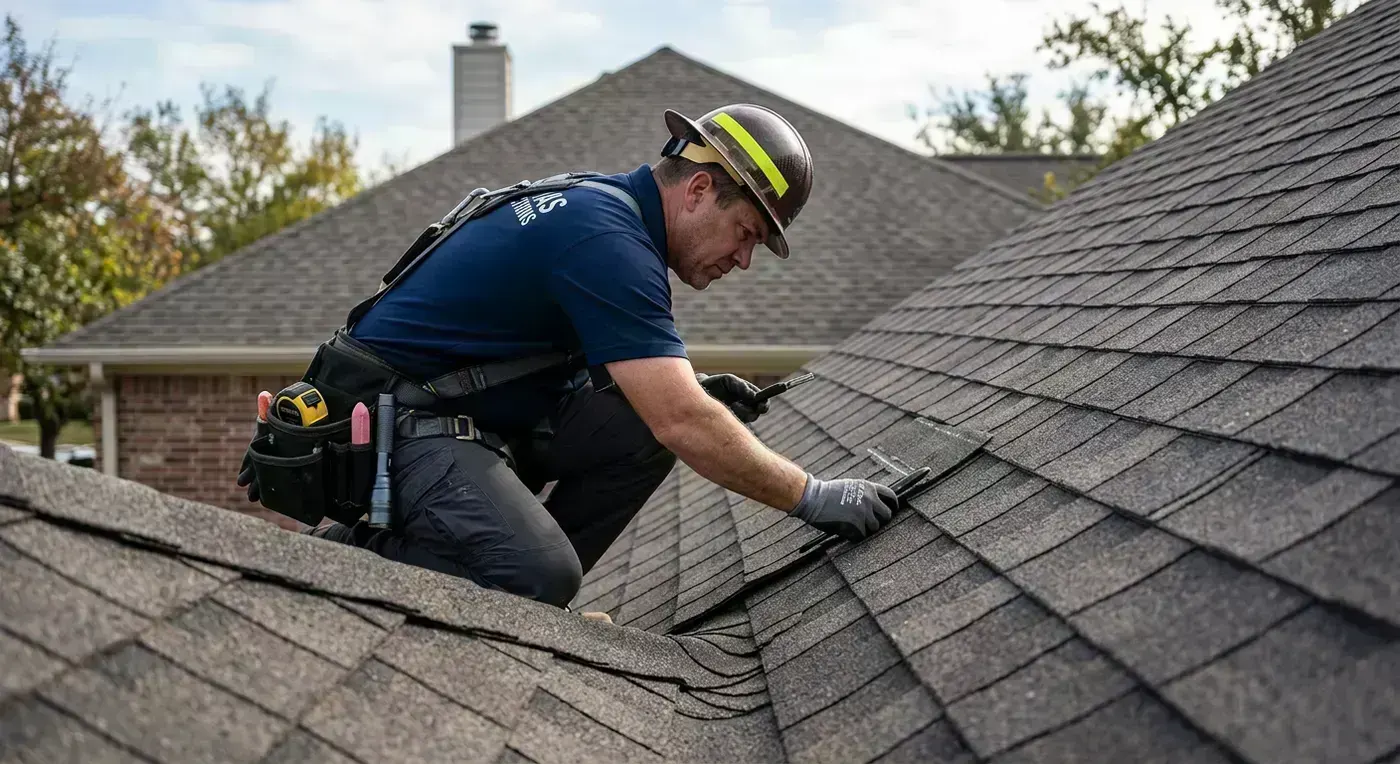
- Flashing failures at the many valleys, chimneys, and dormers on complex custom rooflines.
- Hail bruising that isn't visible from the ground but shortens shingle life dramatically.
Inspection advice for wooded lots
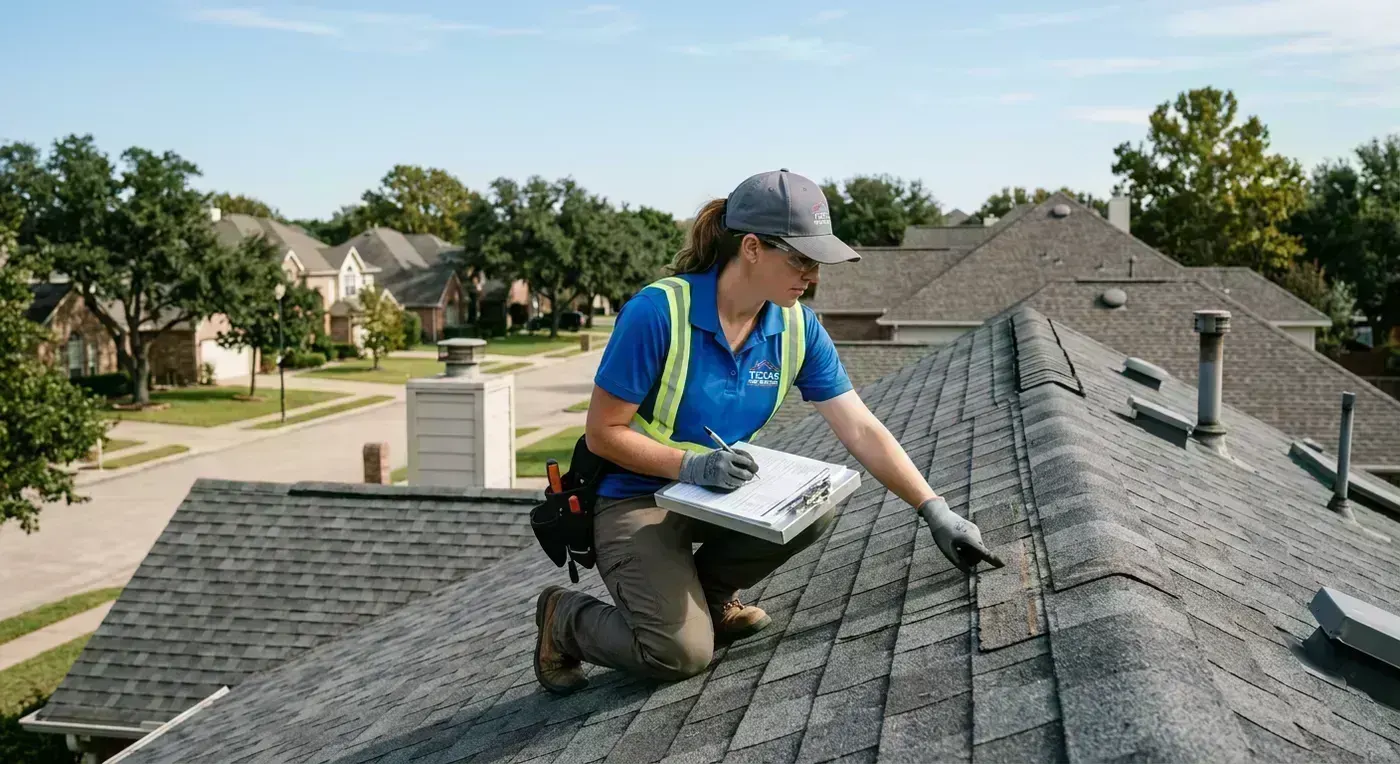
On a large, tree-shrouded estate roof, ground-level inspection tells you almost nothing — the canopy hides most of the surface. That's exactly why RoofDog uses drone inspections: we fly the whole roofline, get high-resolution images of every valley and shaded slope, and spot debris dams, algae, abrasion, and hail bruising without a boot ever touching your steep custom pitch.
For Copper Canyon homeowners we recommend:
- A professional inspection once a year, plus after any hailstorm or high-wind event.
- Clearing valleys and gutters of oak debris at least twice a year — fall and late spring.
- Trimming overhanging limbs back 8–10 feet from the roof.
- Treating or washing algae/moss on shaded slopes before it takes hold.
RoofDog serves Copper Canyon and the surrounding Denton County estates with drone inspections and a lifetime workmanship warranty on our installs. And because we believe in giving back, 10% of our profits go to dog rescues.
Explore our Copper Canyon roofing services or schedule a free inspection. Call 940.828.ROOF.
Frequently asked questions
How long will a metal roof really last on my Copper Canyon estate?
A properly installed standing-seam metal roof here should give you 40–70 years. The main local caveat is keeping debris out of valleys and trimming limbs so branches don't dent panels or abrade the finish.
Why is my north-facing slope covered in dark streaks?
That's algae — and in Copper Canyon's deep tree shade it spreads fast because the slope never fully dries. It's cosmetic at first but leads to moss, which shortens shingle life. It's the most common issue we treat locally.
Do the oak trees around my house really shorten my roof's life?
Yes, significantly. Between debris buildup, limb abrasion, deep shade driving algae, and falling branches during storms, the canopy is the biggest lifespan factor for most Copper Canyon roofs.
Is my asphalt roof going to survive DFW hail?
Maybe once, but repeated hail seasons are hard on asphalt. A single golf-ball hailstorm can bruise shingles enough to require replacement. Many estate owners here upgrade to metal or synthetic slate for that reason.
How often should I have my roof inspected out here?
Once a year at minimum, plus after any significant hail or windstorm. On heavily wooded lots, an annual drone inspection catches debris and algae problems before they become leaks.
Can you inspect my steep custom roofline safely?
Absolutely. Copper Canyon roofs tend to be steep and complex, which is why we use drones to photograph every valley and slope in detail without risking a ladder on your pitch.
Should I remove the trees near my house to protect the roof?
Rarely necessary — the trees are part of why you live here. Trimming limbs back 8–10 feet from the roof usually solves the debris and abrasion issues without losing your canopy.
What's the best roof material for a wooded lot like mine?
Standing-seam metal and synthetic slate both excel in Copper Canyon: they resist hail and limb strikes, don't hold moisture like asphalt, and shed debris more easily. Both are popular choices among local estates.
How do I know if the last hailstorm damaged my roof?
Hail bruising often isn't visible from the ground. A drone inspection reveals impact marks, granule loss, and dented flashing so you can file a claim or plan repairs before leaks develop.
Why does debris matter so much more here than in the suburbs?
Open suburban roofs get sun and airflow that dry them out. Copper Canyon roofs sit under dense canopy, so trapped leaf litter stays wet against the deck, accelerating rot and rust. Debris is a bigger deal here.
Does RoofDog actually serve Copper Canyon?
Yes — Copper Canyon and the surrounding Denton County area are core to our service area. Call 940.828.ROOF or visit our Copper Canyon roofing page.
What warranty do you offer?
We back our installations with a lifetime workmanship warranty, on top of the manufacturer's material warranty. And 10% of our profits go to dog rescues — Protecting Homes. Saving Dogs.
Summary
In Copper Canyon, TX, roof lifespan is dictated by the forest, not just the calendar. Expect 18–25 years from heavy architectural asphalt, 40–70 from standing-seam metal, and 40–50+ from synthetic slate — provided you fight the local enemies: oak debris, limb abrasion, DFW hail, and algae on deep-shade slopes. Trim your limbs, clear your valleys, treat algae early, and get an annual drone inspection. RoofDog is ready to help across Copper Canyon with drone inspections and a lifetime workmanship warranty. Call 940.828.ROOF or schedule your free inspection. Protecting Homes. Saving Dogs.
You Might Also Need
Need a Roof Inspection?
Get expert advice and a free estimate from North Texas's trusted roofing professionals.
Schedule Free Inspection