How Long Do Roofs Last in Justin, TX?
Short answer: In Justin, TX, most asphalt shingle roofs realistically last 12 to 20 years — not the 25, 30, or "lifetime" number printed on the wrapper. Open-country wind off the North Texas prairie and repeated DFW hail seasons are the two forces that quietly shave years off every roof in town, and the builder-grade shingles on much of the new master-planned stock start the clock even earlier.
Justin sits in southwestern Denton County, a place that has changed more in the last decade than in the fifty years before it. Drive through the old town core and you will still see modest ranch homes and rural properties with roofs that have weathered a lot of Texas. Turn onto the new arterials feeding subdivisions like Timberbrook and you will see hundreds of nearly identical rooflines — architectural asphalt, production-grade, installed fast. Both kinds of roof age here, and both age faster than their owners expect. This guide explains why, and how long you can actually count on a roof lasting in Justin.
Table of contents
- Justin's climate and why it matters for roofs
- DFW hail exposure
- Open-country wind: Justin's quiet roof killer
- The small-town-plus-new-growth mix
- Dominant materials and lifespans
- Class 4 impact-rated options
- Builder-grade concerns on new homes
- Common problems we see in Justin
- Inspection advice for Justin homeowners
- Frequently asked questions
- Summary
Justin's climate and why it matters for roofs
Justin lives squarely in North Central Texas' humid-subtropical-meets-prairie transition zone. Summers are long and brutal — weeks of 95°F-plus days with intense UV that bakes asphalt shingles and drives off the volatile oils that keep them flexible. Winters are mild but punctuated by sharp freeze-thaw swings and the occasional ice event, which stresses sealant strips and flashing. Spring is the violent season: this is when supercell thunderstorms roll across the prairie carrying hail, straight-line winds, and the odd tornado warning.
The combination matters because roofing materials don't fail from one thing — they fail from cumulative stress. A shingle that has been thermally cycled hundreds of times, UV-degraded through a decade of summers, and then hit by a hard hail season is far more likely to crack, granulate, and lift than a lab sample. That's why the national lifespan numbers, and even the statewide figures in our overview of how long roofs last in Texas, tend to run optimistic for a town like Justin.
DFW hail exposure
Justin sits inside one of the most active hail corridors in the United States. The broader Dallas–Fort Worth region gets pounded most springs, and Denton County is regularly in the path. You don't need a catastrophic, roof-shredding storm to lose roof life — small, repeated hail is what does most of the damage. Pea- to quarter-sized hail bruises shingles and knocks off protective granules. Those granule-loss spots then age far faster under UV, so a roof can look "fine" from the ground while its effective lifespan has already been cut by years.
Open-country wind: Justin's quiet roof killer
Here is where Justin differs from a leafy, established suburb. Much of the town — especially the newer master-planned edges — sits on open prairie with sparse mature trees. There are no dense tree canopies or tightly packed older neighborhoods to break the wind before it reaches your roof. That means shingles here take the full force of gusts that a more sheltered lot would never feel.
Sustained prairie winds plus thunderstorm downbursts repeatedly stress the shingle seal strips, especially along ridges, hips, rakes, and eaves. Once a shingle's adhesive bond breaks, wind gets underneath, and from there it's a matter of time until tabs tear or blow off entirely. Wind damage is cumulative and easy to underestimate — we cover the mechanism in detail in does wind damage shorten roof life. In Justin specifically, exposure is the single most under-appreciated factor in premature roof failure.
The small-town-plus-new-growth mix
Justin's housing stock is unusually split, and roof life follows that split:
- The older rural/town core: Modest ranch and farmstead homes, some with roofs well past their intended life, occasionally with layered-over shingles or aging metal on outbuildings. These roofs often survive on borrowed time until a storm forces the issue.
- The new master-planned stock: Communities like Timberbrook built out with production-grade architectural asphalt, installed at volume on tight builder schedules. These roofs look great on move-in day but frequently carry the compromises of speed and cost.
This matters because the "average roof age" in Justin is a misleading number — you really have two populations. If you bought a five-year-old home in a new community, your risk profile is about installation quality and shingle grade. If you own in the older core, it's about accumulated age and deferred maintenance.
Dominant materials and lifespans
Asphalt shingles dominate Justin overwhelmingly, and within that, architectural (dimensional) shingles are standard on the new stock. Here's how the common options actually perform under Justin conditions:
| Material | Typical Justin lifespan | Notes |
|---|---|---|
| Builder-grade 3-tab | 10–15 years | Rare on new builds now, but present on some older core homes; poor wind and hail resistance. |
| Standard architectural asphalt | 15–22 years | The Justin default. Real-world life sits well below the printed warranty due to wind and hail. |
| Class 4 impact-rated asphalt | 22–30 years | Best asphalt value here; resists hail bruising and often earns an insurance discount. |
| Standing seam metal | 40–60 years | Excellent wind performance for open lots; higher upfront cost, seen on some rural properties. |
For a deeper look at the workhorse material on nearly every Justin home, see our guide to how long architectural shingle roofs last in Texas.
Class 4 impact-rated options
Given Justin's hail exposure, Class 4 impact-rated shingles are the single smartest upgrade most homeowners here can make. Class 4 is the highest impact rating (UL 2218), meaning the shingle withstands a steel ball drop test without cracking. In practice, that translates to shrugging off the small-to-moderate hail that quietly ages standard shingles — exactly the hail Justin gets most springs.
Two bonuses matter locally. First, many Texas insurers offer a premium discount for Class 4 roofs, which can offset a meaningful chunk of the upgrade cost over the roof's life. Second, the longer real-world lifespan means you replace less often — a big deal in a hail corridor. We break down the economics and performance in how long Class 4 shingle roofs last in Texas.
Builder-grade concerns on new homes
If you own in one of Justin's newer communities, this section is for you. Production builders roof at volume and on price. That usually means:
- Entry-tier architectural shingles chosen for cost, not for hail or wind rating.
- Minimal or standard-code underlayment and ventilation, which shortens effective life in Texas heat.
- Fast installation where nailing accuracy and seal-strip alignment aren't always perfect — and improperly nailed shingles are the first to blow off in prairie wind.
None of this means your roof is defective — it means it was built to a budget. The practical takeaway: a new-construction roof in Justin still deserves an independent inspection within its first few years, especially after the first big storm season. Don't assume "new" equals "no worries."
Common problems we see in Justin
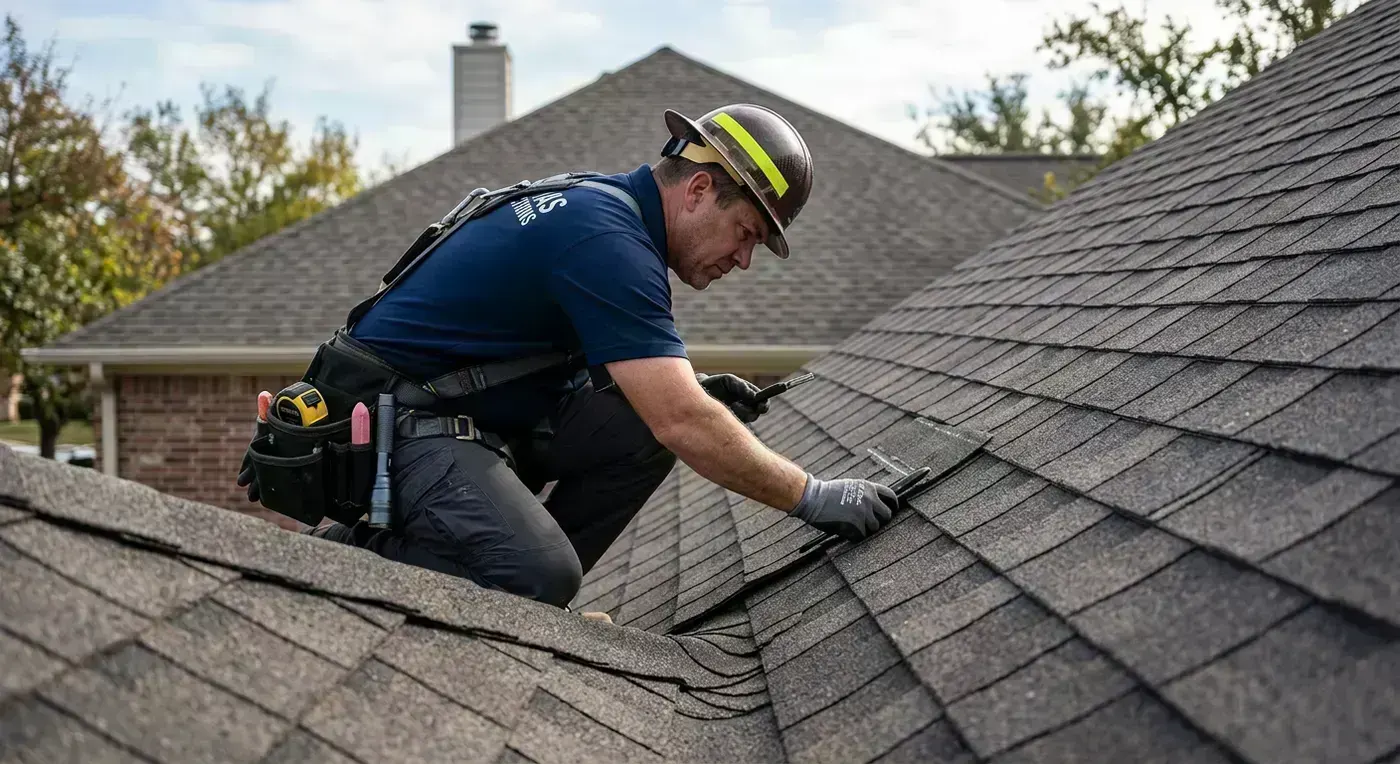
- Wind-lifted and missing shingles along ridges, rakes, and edge-lot perimeters — the number-one call in newer subdivisions.
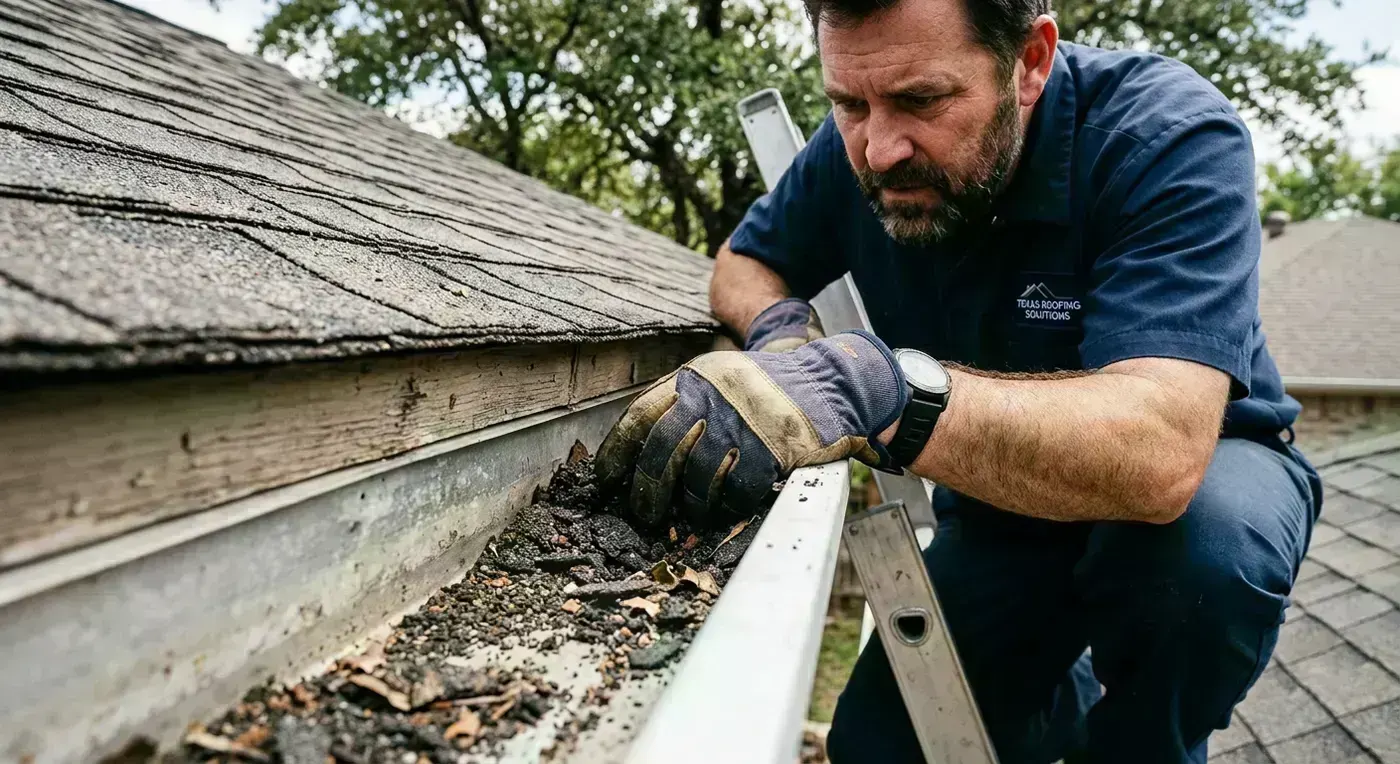
- Granule loss from repeated hail showing up as bald patches and clogged gutters full of granule grit.
- Failed or brittle sealant at flashings, valleys, and pipe boots after years of UV and thermal cycling.
- Under-ventilated attics cooking shingles from below, common on fast builder installs.
- Deferred replacement on older core homes where a roof has quietly outlived its material.
- Storm damage mistaken for wear — insurable hail/wind damage that homeowners miss because it isn't leaking yet.
Inspection advice for Justin homeowners
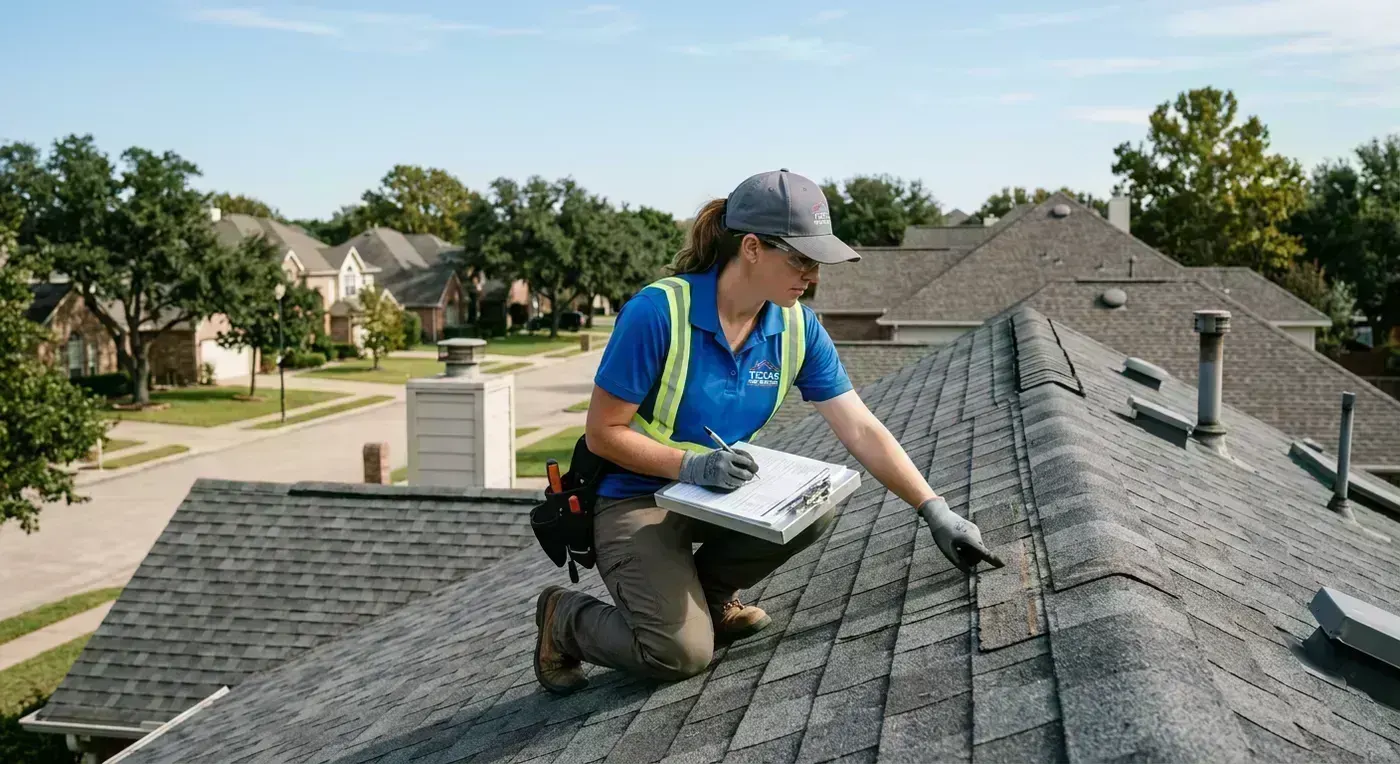
Because so much Justin roof damage is invisible from the ground — bruised granules, lifted seals, hairline cracks — the smart move is a professional inspection after every significant hail or wind event, and at minimum once a year. RoofDog uses drone inspections to document your entire roof up close without anyone tromping across your shingles, and to catch the small hail and wind damage that determines whether you file a claim now or replace out of pocket later.
A few Justin-specific habits pay off: watch your gutters after spring storms for a wash of granules, glance at ridge and edge shingles after high-wind days, and keep dated photos so you can prove storm timing to your insurer. When it's time for work, RoofDog backs every installation with a lifetime workmanship warranty, and we serve the whole area — see our Justin, TX roofing page for local details.
Frequently asked questions
How long do roofs really last in Justin, TX?
Most asphalt roofs in Justin last 12 to 20 years in practice. Open-prairie wind and repeated DFW hail pull real-world life below the printed warranty, while Class 4 shingles can push it toward 25–30 years.
Why does my Justin roof age faster than the warranty says?
Warranties assume ideal conditions. Justin roofs face intense UV, sharp temperature swings, high open-country wind, and frequent hail — cumulative stresses that no lab test accounts for.
Do homes in Timberbrook and other new Justin communities have good roofs?
They have adequate production-grade architectural shingles installed to budget and schedule. They look great new but often use entry-tier materials and fast installs, so an independent inspection in the first few years is wise.
Is hail really that common in Justin?
Yes. Justin sits in the active DFW hail corridor and Denton County is regularly in the path most springs. It's the small, repeated hail — not just the big storms — that quietly shortens roof life.
Why is wind such a big deal in Justin specifically?
Much of Justin sits on open prairie with sparse mature trees, so roofs take the full force of gusts a sheltered suburb would never feel. Edge lots backing to fields are especially exposed.
Are Class 4 shingles worth it in Justin?
For most Justin homeowners, yes. They resist the hail bruising that ages standard shingles, often last 22–30 years here, and can qualify for an insurance discount that offsets the upgrade cost.
My roof isn't leaking — does that mean it's fine?
Not necessarily. Most hail and wind damage in Justin shows up as granule loss and broken seals long before any leak. A dry attic today doesn't mean the roof hasn't lost years of life.
How often should I get my Justin roof inspected?
At least once a year, plus after any significant hail or high-wind event. Spring storm season is the most important time to check.
Should a brand-new construction roof be inspected?
Yes. Fast builder installs can have nailing and seal-strip issues that surface after the first storm season. An independent drone inspection catches them while they're still small.
What's the most common roof problem you see in Justin?
Wind-lifted and missing shingles along ridges and edge-lot perimeters in newer subdivisions, followed closely by granule loss from repeated hail.
Is metal roofing a good idea in Justin?
Standing seam metal performs excellently against open-country wind and lasts 40–60 years. It costs more upfront and is most common on rural properties, but it's a strong long-term choice for exposed lots.
Does RoofDog serve Justin, TX?
Yes. RoofDog serves Justin and the surrounding Denton County area with free drone inspections, a lifetime workmanship warranty, and 10% of profits going to dog rescues. Call 940.828.ROOF.
What does a drone inspection actually find?
It documents your whole roof up close — hail bruising, lifted seals, cracked shingles, flashing issues — without anyone walking your shingles, and gives you dated evidence for insurance claims.
Summary
Roofs in Justin, TX typically last 12 to 20 years — with builder-grade shingles at the low end and Class 4 impact-rated asphalt pushing 25 to 30. The town's two forces are open-prairie wind, amplified by sparse trees and exposed subdivision edges, and the relentless DFW hail corridor. Whether you own in the older rural core or a new master-planned community like Timberbrook, the smart play is the same: understand your shingle grade, inspect after every storm season, and consider a Class 4 upgrade at your next replacement. RoofDog is here to help — free drone inspections, a lifetime workmanship warranty, and 10% of profits to dog rescues. Protecting Homes. Saving Dogs. Call 940.828.ROOF or schedule online.
You Might Also Need
Need a Roof Inspection?
Get expert advice and a free estimate from North Texas's trusted roofing professionals.
Schedule Free Inspection