How Long Do Roofs Last in The Colony, TX?

Short answer: In The Colony, TX, a typical architectural asphalt shingle roof lasts about 15 to 22 years. Legacy 3-tab shingles on older homes often tap out closer to 12 to 16 years, while premium Class 4 impact-rated systems can stretch toward 25 years or more. Because so much of The Colony was built between the 1980s and early 2000s, a huge cohort of local roofs is hitting that replacement window at the same time — and Lewisville Lake wind, North Texas hail, and summer heat all shorten the odds.
Wondering where your roof falls on that timeline? RoofDog offers free drone roof inspections across The Colony. Call 940.828.ROOF or schedule online — and remember, we give 10% of profits to dog rescues. Protecting Homes. Saving Dogs.
Table of Contents
- The short answer for The Colony homeowners
- The Colony's climate and what it does to a roof
- DFW hail exposure
- Wind off Lewisville Lake
- Tree coverage and debris
- The aging housing stock and the replacement wave
- Dominant roofing materials in The Colony
- Roof lifespan by material
- Common roof problems we see locally
- Inspection advice for local homeowners
- Frequently asked questions
- Summary
The short answer for The Colony homeowners
The Colony sits in Denton County along the western edge of Lewisville Lake, and its housing story is unusual. This is a community that went from a sparsely populated lakeshore to a fully built-out suburb largely between the 1980s and the early 2000s. That means whole subdivisions were roofed within a few years of each other — and now they are aging out within a few years of each other. If your neighbors are all getting new roofs, that is not a coincidence. It is a demographic wave.
For a broader statewide picture, see our overview of how long roofs last in Texas. But The Colony has its own local pressures, and they matter more than any national average.
The Colony's climate and what it does to a roof
North Texas throws a full deck of weather at a roof. Summers in The Colony routinely push past 100°F, and the surface of a dark asphalt roof can climb 40–60 degrees hotter than the air. That heat cooks the volatile oils out of asphalt shingles, making them brittle. Then winter cold fronts and the occasional ice event force the material to contract. This constant expansion-and-contraction cycle is one of the biggest silent killers of roofs in the region — it opens seams, curls edges, and cracks the shingle mat long before the shingle ever sees a hailstone.
The lake adds another wrinkle: humidity. Air rolling off Lewisville Lake keeps the moisture level higher than you might expect for the DFW area, which encourages algae streaking, moss in shaded valleys, and slower drying after storms. Wet decking that never fully dries is how small leaks become expensive deck replacements.
Local tip: Those black streaks on north-facing slopes near the lake are usually Gloeocapsa magma algae, not shingle failure. But they signal a slope that stays damp — worth a closer look during inspection.
DFW hail exposure
The Colony sits squarely inside one of the most hail-prone corridors in the United States. The DFW metro averages several significant hail events per year, and it only takes one supercell dropping quarter-to-golf-ball-sized stones to end a roof's life in ten minutes. Hail bruises the shingle mat and knocks the protective granules loose; even when the damage is not visible from the ground, those bruises accelerate UV breakdown and lead to leaks a year or two later.
This is why so many The Colony homeowners are moving to Class 4 impact-rated shingles when they replace. They resist hail bruising better and frequently qualify for insurance premium discounts in Texas. For a deeper comparison of shingle types, read about architectural shingle lifespan in Texas and how it stacks up against older 3-tab shingles.
Wind off Lewisville Lake
Homes closer to the lakeshore — in neighborhoods along the eastern side of The Colony and near Stewart Creek and the marina areas — catch wind with far less obstruction than homes tucked deep in the interior. Open fetch across the water means gusts hit these roofs with more force and fewer breaks. Over years, that wind lifts and flutters shingle tabs, works fasteners loose, and peels back ridge caps. The first shingles to blow off a roof are almost always the ones that were already loosened by years of thermal cycling and wind flutter.
Straight-line winds from spring thunderstorms regularly exceed 60 mph here, and that is well within the range that damages a roof already 15-plus years old. Proper starter strips, six-nail patterns, and sealed ridge and hip caps make an enormous difference in how a lake-adjacent roof holds up.
Tree coverage and debris
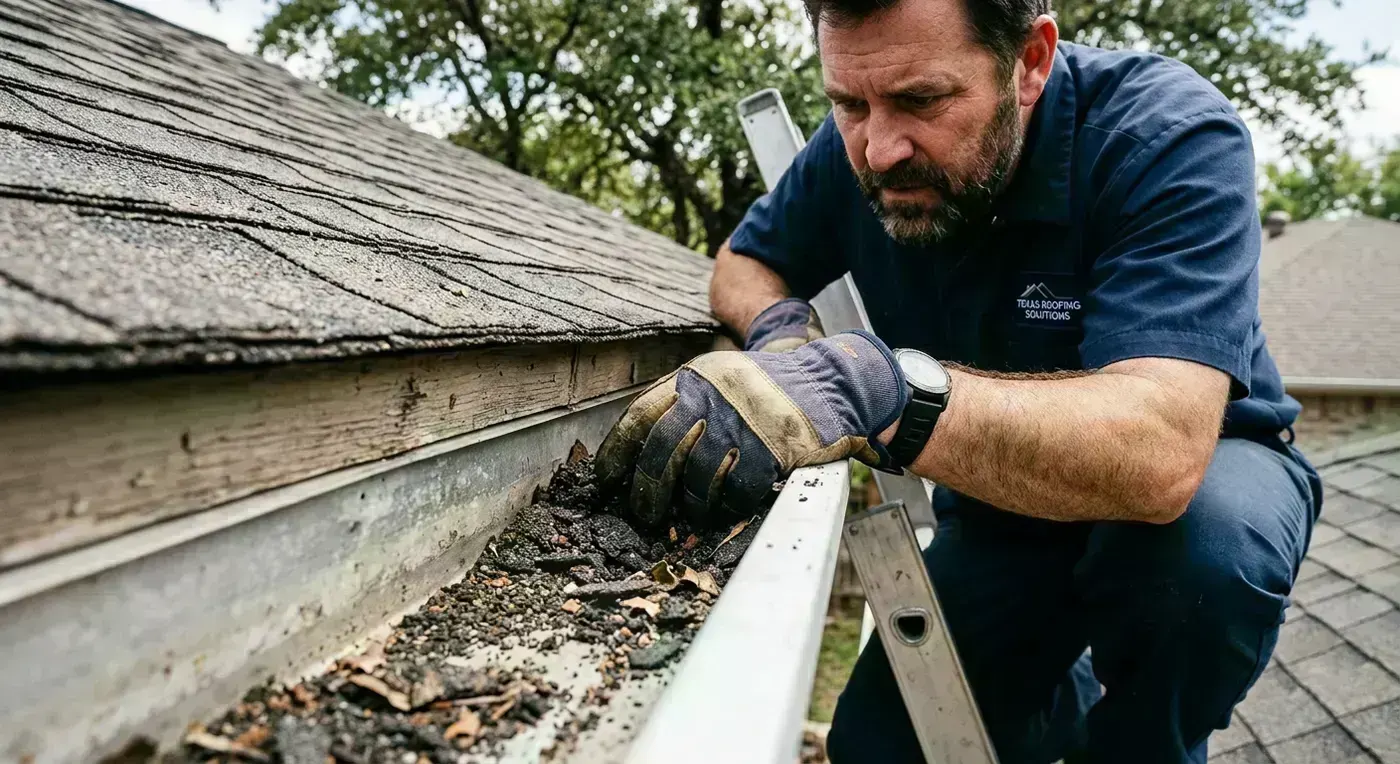
The Colony has moderate, mature tree cover — not the dense canopy of older East Dallas neighborhoods, but plenty of established live oaks, cedar elms, and red oaks planted when the subdivisions went in decades ago. Those trees are now big enough to matter. Overhanging limbs scrape granules off shingles in the wind, drop leaf litter that clogs valleys and gutters, and give squirrels a highway onto the roof. Clogged valleys trap water and humidity against the shingles, and that is exactly where lake-area roofs tend to fail first.
The aging housing stock and the replacement wave
Here is the fact that shapes almost every roofing conversation in this city: The Colony experienced its major residential build-out from the 1980s through the early 2000s. A home framed in 1992 that got its first roof then, a re-roof around 2008, and nothing since is right at the end of its second roof today. Multiply that across thousands of homes built in the same window and you get a genuine replacement wave — which is exactly what The Colony is living through right now.
Older homes from the earlier part of that period frequently still carry legacy 3-tab shingles, which are thinner, lighter, and far more vulnerable to wind and hail than modern laminated products. If your home is original-construction 3-tab, its realistic clock is shorter than a newer architectural roof next door — even if they were installed the same year.
Dominant roofing materials in The Colony
The overwhelming majority of The Colony roofs are asphalt shingle. Within that, you will see three tiers:
- Architectural (laminated) asphalt shingles — the standard on most homes and nearly every re-roof done in the last 15 years.
- Legacy 3-tab shingles — still found on original roofs of older homes, thinner and shorter-lived.
- Class 4 impact-rated shingles — the fast-growing upgrade choice, driven by hail and insurance incentives.
Metal and tile exist here but are a small minority. For most The Colony homeowners, the decision is really between staying with architectural shingles or upgrading to Class 4 for the hail resistance.
Roof lifespan by material in The Colony
| Roofing material | Typical local lifespan | Notes for The Colony |
|---|---|---|
| Legacy 3-tab asphalt | 12–16 years | Common on original older homes; weak against lake wind and hail. |
| Architectural asphalt | 15–22 years | The local standard; heat and hail usually decide the real endpoint. |
| Class 4 impact-rated | 22–28 years | Best hail resistance; often earns Texas insurance discounts. |
| Metal | 40–60 years | Rare here; excellent for wind but higher upfront cost. |
Common roof problems we see locally
Across The Colony, RoofDog's drone inspections turn up the same handful of issues again and again:
- Hail bruising and granule loss — the number one lifespan-killer in the DFW corridor.
- Wind-lifted and missing tabs — heaviest on lake-facing slopes with open exposure.
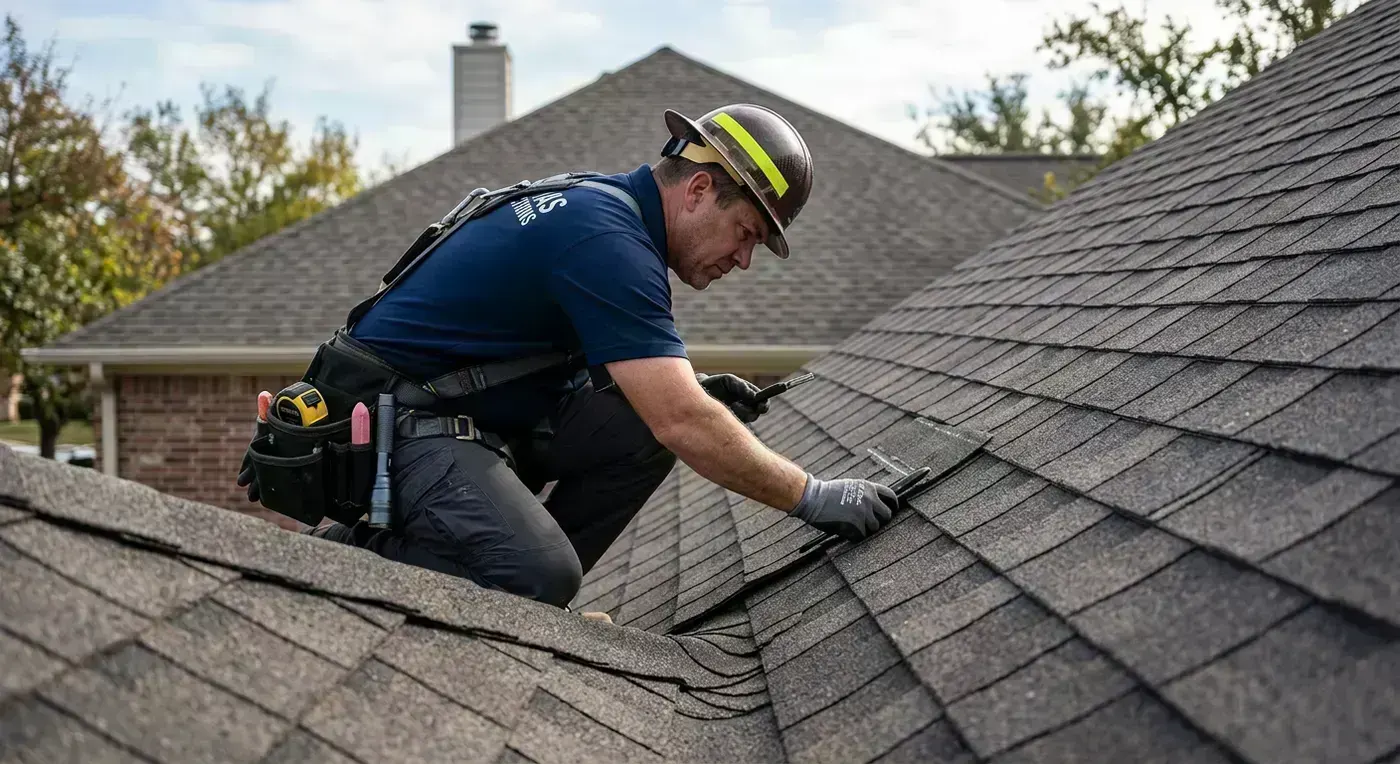
- Thermal cracking and curling — from relentless summer heat cycling.
- Algae streaking and valley moss — driven by lake humidity on shaded slopes.
- Failed pipe boots and flashing — the rubber gaskets dry-rot and crack around year 10–12, a leading source of "mystery" leaks.
- Clogged valleys under mature trees — trapping moisture against shingles.
Don't wait for a ceiling stain. A cracked pipe boot can leak into the attic for months before it shows inside. RoofDog's drone inspections catch these small failures early — before they become a decking-and-drywall project. Every RoofDog replacement is backed by our lifetime workmanship warranty.
Inspection advice for local homeowners
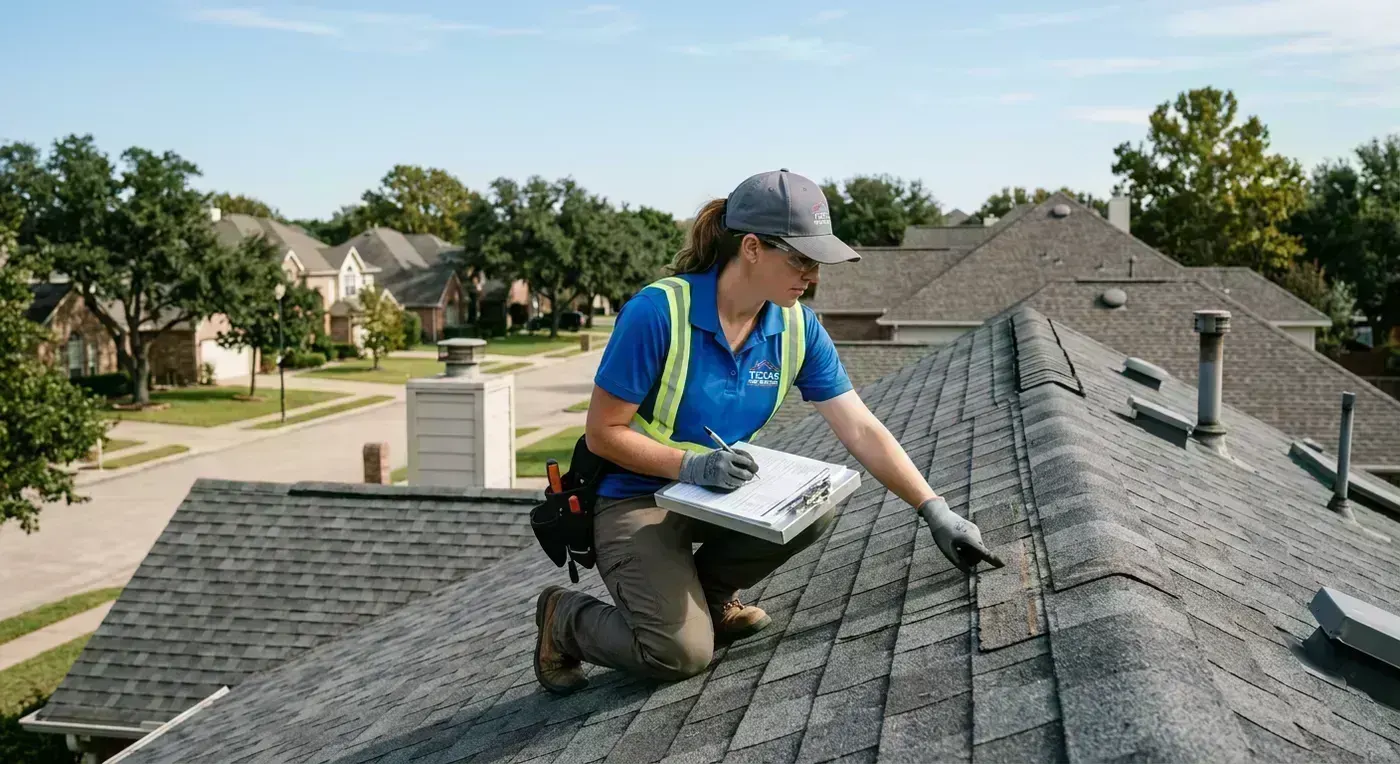
If your The Colony home is 15 years old or older, or if a significant hail or wind event has rolled through, get a professional inspection. Here is what a smart inspection routine looks like locally:
- Inspect after every major hail or wind storm — damage is often invisible from the ground.
- Book a checkup every 2–3 years once past year 12.
- Ask for a drone inspection so you can see actual images of your slopes, valleys, and flashing rather than take someone's word for it.
- Keep documentation. Dated inspection reports are gold when you file an insurance claim in a hail-prone county.
- Clean valleys and gutters seasonally, especially under those mature trees.
When a roof reaches the end of its service life, patching stops making sense. Learn what a full roof replacement involves, and see everything RoofDog offers across our The Colony roofing service area.
Frequently asked questions
How long do most roofs last in The Colony, TX?
Most architectural asphalt roofs in The Colony last 15–22 years. Older 3-tab roofs run 12–16 years, and Class 4 impact-rated roofs can reach 22–28 years. Lake wind, hail, and heat all push toward the lower end of those ranges.
Why do so many homes in The Colony seem to need roofs at the same time?
Because The Colony was largely built out between the 1980s and early 2000s, entire subdivisions were roofed within a few years of each other. Those roofs — often on their second life now — are aging out together, creating the replacement wave homeowners are noticing across the city.
Does living near Lewisville Lake shorten my roof's life?
It can. Lake-adjacent homes catch stronger, less-obstructed wind that lifts shingle tabs and loosens fasteners, and higher humidity off the water encourages algae and slower drying. Homes with open fetch toward the lake tend to see wind-related wear sooner.
Are Class 4 impact-rated shingles worth it in The Colony?
For most homeowners here, yes. The Colony sits in a heavy DFW hail corridor, and Class 4 shingles resist hail bruising far better while frequently qualifying for Texas insurance premium discounts that offset the upfront cost over time.
My home still has original 3-tab shingles. Should I be worried?
If your 3-tab roof is 12+ years old, it is at or near the end of its realistic life in this climate. 3-tab shingles are thinner and far more vulnerable to lake wind and hail than modern architectural products. An inspection will tell you whether to replace now or monitor.
How can I tell if hail damaged my roof if I can't see anything from the ground?
You usually can't from the ground — hail bruising is subtle. A drone inspection lets you see actual close-up images of bruising, granule loss, and dented flashing. RoofDog provides these inspections free for The Colony homeowners.
How often should I have my roof inspected here?
Every 2–3 years once your roof passes age 12, plus after any major hail or wind storm. Given how often storms roll through Denton County, storm-triggered inspections are just as important as scheduled ones.
Does homeowners insurance cover roof replacement in The Colony?
Storm damage from hail or wind is often covered, subject to your policy and deductible. Normal age-related wear is not. Dated inspection reports and storm documentation strengthen a claim, which is why we recommend keeping records.
What are the first signs my The Colony roof is failing?
Watch for granules collecting in gutters, curling or cracked shingles, missing tabs after windstorms, black algae streaks on shaded slopes, and any ceiling stains. Cracked pipe boots around year 10–12 are a common hidden leak source.
Do mature trees really affect my roof that much?
Yes. The Colony's mature live oaks and cedar elms drop debris that clogs valleys and traps moisture against shingles, and overhanging limbs abrade granules in the wind. Keeping limbs trimmed and valleys clear meaningfully extends roof life.
Is repair or replacement the better choice for an aging roof?
Isolated damage on a roof under 12–15 years old is usually repairable. Once a roof is near the end of its service life and showing widespread granule loss or wind damage, repeated repairs cost more than a replacement that resets the clock with a warranty.
How long does a roof replacement take in The Colony?
Most single-family homes here are completed in one to two days, weather permitting. RoofDog schedules around North Texas storm windows and backs every replacement with a lifetime workmanship warranty.
How do I get started with RoofDog?
Call 940.828.ROOF or schedule online for a free drone inspection. We serve The Colony and all of North Texas — and we give 10% of profits to dog rescues. Protecting Homes. Saving Dogs.
Summary
In The Colony, TX, plan on roughly 15–22 years from an architectural asphalt roof, less from legacy 3-tab, and more from Class 4 impact-rated systems. The city's 1980s–2000s build-out means a large cohort of roofs is aging out simultaneously, and Lewisville Lake wind, DFW hail, summer heat, and mature-tree debris all trim that lifespan. If your roof is 15-plus years old or has weathered a recent storm, get it inspected. RoofDog offers free drone inspections and a lifetime workmanship warranty across The Colony — call 940.828.ROOF or schedule online. Protecting Homes. Saving Dogs.
You Might Also Need
Need a Roof Inspection?
Get expert advice and a free estimate from North Texas's trusted roofing professionals.
Schedule Free Inspection