How Long Do Roofs Last in Plano, TX?

Short answer: In Plano, a typical architectural asphalt shingle roof lasts about 15 to 20 years, while older 3-tab roofs often tap out at 12 to 16 years — and any single severe hailstorm can end a roof's life in an afternoon, regardless of age. Plano's combination of North Texas hail, straight-line winds, intense summer heat, and one of the densest mature tree canopies in Collin County means most local roofs never reach the lifespan printed on the shingle wrapper.
Plano sits squarely in DFW "hail alley." A brand-new 30-year architectural roof and a 3-tab roof one year from failure both face the exact same golf-ball-sized hail. That's why real-world lifespan here is driven far more by storms than by the manufacturer's warranty number.
Table of contents
- The short answer for Plano homeowners
- Plano's climate and hail-alley exposure
- The mature tree canopy problem
- Plano's aging housing stock
- Common roofing materials in Plano
- Roof lifespan by material
- Common roof problems we see locally
- When and how to get inspected
- Frequently asked questions
The short answer for Plano homeowners
If you own a home in Plano — whether it's an early-'80s ranch off Los Rios on the east side, a '90s two-story near Legacy, or newer construction out toward the western edge near the Dallas North Tollway — your roof's realistic lifespan depends less on the shingle brand and more on how many hail events it has survived. Statewide, we cover this in depth in our guide on how long roofs last in Texas, but Plano is a particularly aggressive environment even by North Texas standards.
The honest numbers: expect 15–20 years from architectural (dimensional) shingles and 12–16 years from legacy 3-tab. Many Plano roofs are replaced years earlier because a storm forces the issue. The good news is that hail damage is usually an insurable event, and a well-installed Class 4 impact-resistant roof can genuinely extend that timeline while lowering your premium.
Plano's climate and hail-alley exposure
Plano's weather is hard on roofs in four distinct ways, and they compound each other:
- Hail. Collin County is one of the most hail-prone areas in the entire country. Spring storms rolling in from the west regularly drop hail ranging from pea-sized to baseball-sized. Even hail that doesn't crack shingles outright bruises the asphalt mat and knocks off protective granules, quietly shortening the roof's life.
- Wind. The same supercells bring straight-line winds and the occasional tornado warning. Gusts of 60–70 mph lift and crease shingle tabs, and once the seal is broken, water infiltration and further wind damage accelerate.
- Heat and UV. Plano summers routinely push past 100°F for weeks. Attic temperatures soar, cooking shingles from below while UV bakes them from above. This thermal cycling dries out the asphalt and makes shingles brittle.
- Temperature swings. North Texas can swing 40+ degrees in a single day, and the occasional ice storm adds freeze-thaw stress. Expansion and contraction fatigues the roof and its flashings over time.
Because hail is so routine here, Plano has seen heavy adoption of Class 4 impact-resistant shingles after repeated storm cycles. Many major insurers offer a premium discount for Class 4 roofs — one of the few upgrades that can pay for itself over the life of the roof.
The mature tree canopy problem
Plano is a proud "Tree City USA," and decades of growth mean many neighborhoods — especially the older east-side developments and established streets around downtown Plano — sit under a dense canopy of mature oaks, elms, and pecans. That shade is wonderful for your energy bill and terrible for your roof.
- Abrasion. Overhanging limbs scrape shingles with every wind gust, wearing away granules along contact lines.
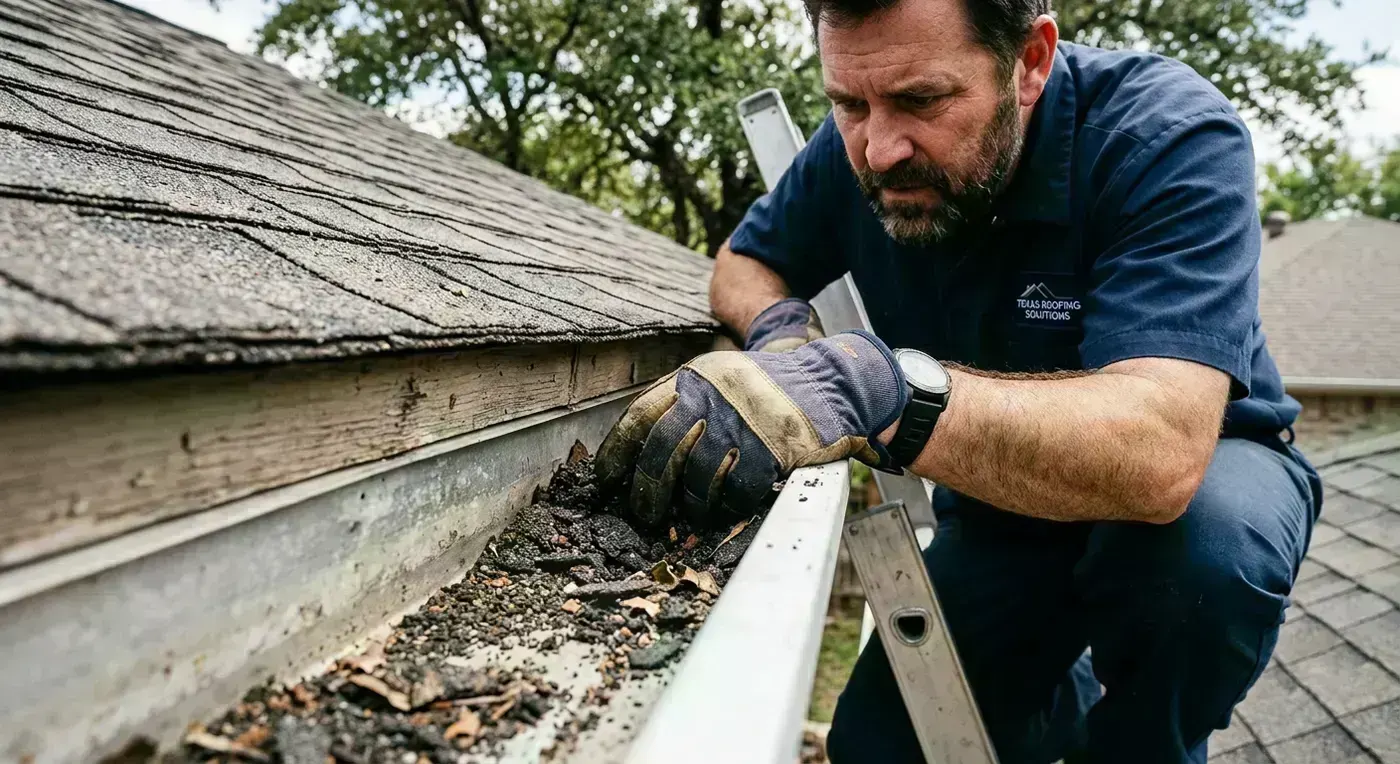
- Debris and moisture retention. Leaves and pecan husks pile in valleys and clog gutters, holding moisture against the roof and encouraging rot and algae streaking.
- Shade slows drying. Perpetually shaded north-facing slopes stay damp longer, which promotes moss, algae, and premature deterioration.
- Impact hazard. During the same storms that bring hail, mature limbs snap and puncture decking — a common source of sudden, localized roof failure in Plano.
Keeping limbs trimmed back at least a few feet from the roofline and keeping gutters clear does more for roof longevity here than almost any other maintenance step.
Plano's aging housing stock
This is the part that catches many homeowners off guard. Plano exploded in growth from the 1980s through the early 2000s, adding tens of thousands of homes in a relatively short window. The result: an enormous population of roofs that are simultaneously reaching the end of their service life.
A home built in 1995 that has never had a full replacement is on borrowed time — that roof is nearly 30 years old and has weathered dozens of hail events. Even homes that were re-roofed once after a big storm in the mid-2000s or early 2010s are now approaching that second replacement. Meanwhile, newer construction on Plano's western edge is starting to hit the age where the builder-grade roof (often a basic 3-tab or entry-level architectural shingle) begins showing wear.
If you're not sure how old your roof is, that alone is a reason to get it looked at. Many Plano homes are on their original or first-replacement roof without the owner realizing how far past prime it has drifted.
Common roofing materials in Plano
Architectural (dimensional) asphalt shingles are the dominant roof in Plano today. They're thicker, more wind-resistant, and better looking than 3-tab, which is why nearly every replacement and most newer homes use them. Learn more in our guide to how long architectural shingle roofs last in Texas.
Legacy 3-tab shingles remain common on Plano's older east-side homes and on builder-grade roofs that were never upgraded. They're flatter, thinner, and noticeably less durable in hail and wind — see our breakdown of how long 3-tab shingle roofs last in Texas. If you have 3-tab in Plano, you're near the top of the risk pile.
Class 4 impact-resistant shingles have become popular here after repeated hail seasons. They cost more up front but resist hail bruising and typically earn an insurance discount. Metal, tile, and synthetic roofs exist in Plano but are a small minority, usually on higher-end or custom homes.
Roof lifespan by material in Plano
| Material | Brochure rating | Realistic Plano lifespan | Hail resilience |
|---|---|---|---|
| 3-tab asphalt | 20–25 yrs | 12–16 yrs | Low |
| Architectural asphalt | 30–50 yrs | 15–20 yrs | Moderate |
| Class 4 impact-resistant | 30–50 yrs | 20–25 yrs | High |
| Metal (standing seam) | 40–70 yrs | 30–50 yrs | High (may dent) |
| Tile / synthetic | 50+ yrs | 30–50 yrs | Varies |
Remember: these ranges assume the roof survives Plano's storm seasons intact. A single qualifying hail event can shorten any of them to "right now."
Common roof problems we see in Plano
- Hail bruising and granule loss. The most common finding by far. Bruised shingles may look fine from the ground but have a compromised mat that fails early.
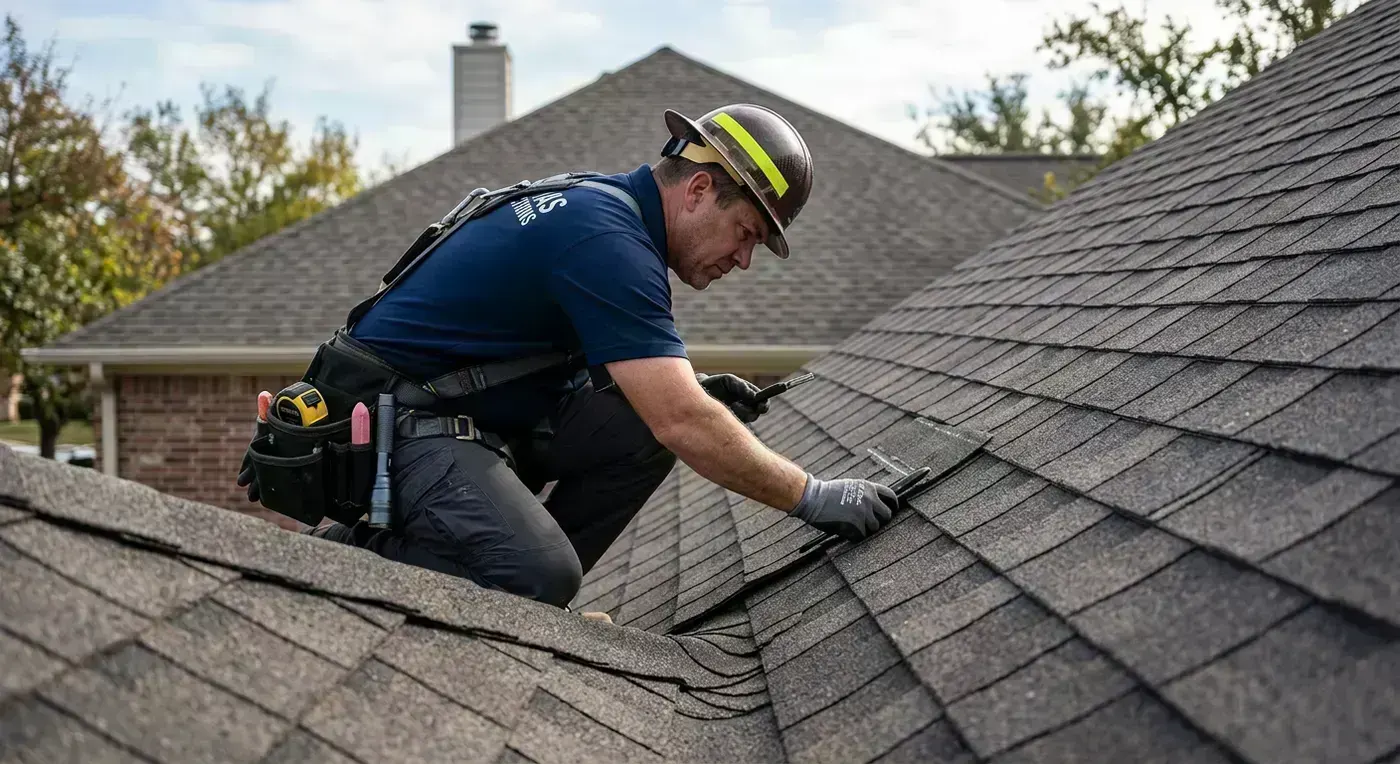
- Wind-creased and lifted shingles. Broken seals let water in and set up the next storm for bigger damage.
- Failed flashing and pipe boots. Around chimneys, vents, and skylights, sun-baked rubber boots crack after a decade of Plano heat — a leading source of quiet leaks.
- Clogged valleys and gutters. Tree debris traps water and rots decking, especially on shaded slopes.
- Inadequate attic ventilation. Trapped heat cooks shingles from beneath and shortens lifespan across the whole roof.
- Aging original roofs. On '80s and '90s homes, we frequently find brittle, end-of-life shingles that simply ran out the clock.
When and how to get inspected
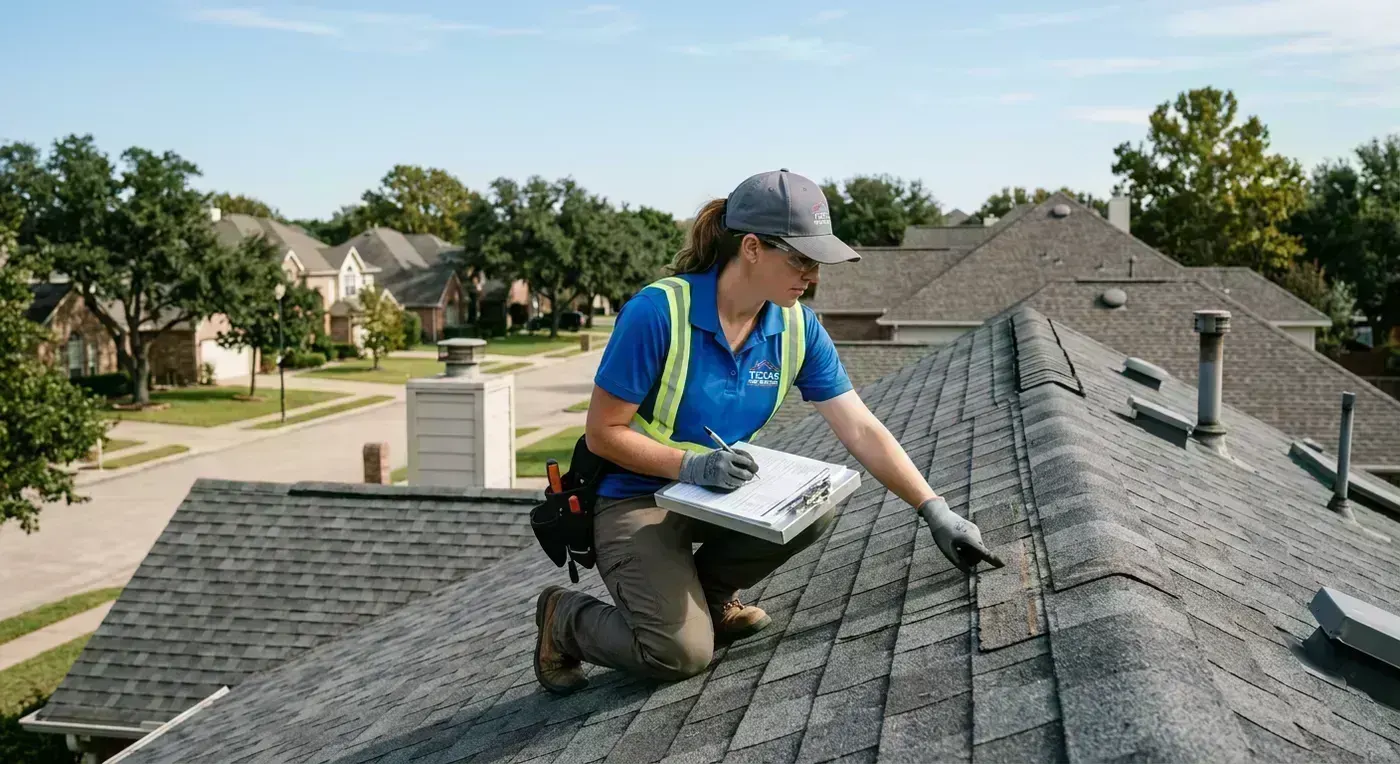
In Plano, the smart cadence is a professional roof inspection once a year and after every significant hail or wind event. Because insurance claims for storm damage typically have filing deadlines, catching damage promptly matters. Waiting until you see a ceiling stain usually means the leak has been working for months.
RoofDog uses drone inspections to document your Plano roof safely and thoroughly — no boots scuffing your shingles, and clear imagery you can share with your insurer. Every replacement we do is backed by a lifetime workmanship warranty.
Call 940.828.ROOF or schedule your inspection online. And because we're "Protecting Homes. Saving Dogs," RoofDog donates 10% of profits to dog rescues.
If your roof is past its prime, a full roof replacement is often the most cost-effective path — especially when paired with a Class 4 upgrade. We serve the whole city; see our Plano roofing service area for details. Many established Plano HOAs have shingle color and style guidelines, and we help homeowners stay compliant during replacement.
Frequently asked questions
How long do most roofs actually last in Plano?
Realistically, 15–20 years for architectural shingles and 12–16 for 3-tab. Hail frequently forces replacement sooner, so many Plano roofs are replaced before reaching those numbers.
Why doesn't my roof last as long as the 30-year warranty says?
Those ratings assume mild conditions and prorate heavily. Plano's hail, 100°+ summers, wind, and tree debris age shingles far faster than the lab conditions behind the warranty number.
Is my older east-side Plano home more at risk?
Often, yes. Older neighborhoods tend to have original or 3-tab roofs plus the densest mature tree canopy, which combine to accelerate wear compared with newer west-side homes.
Should I get Class 4 impact-resistant shingles?
In Plano, it's usually worth it. Class 4 shingles resist hail bruising and typically qualify for an insurance premium discount, which helps offset the higher upfront cost over time.
How do I know how old my roof is?
Check closing documents, permit records with the City of Plano, or prior insurance claims. If you can't find it, an inspection can estimate age from shingle wear, granule loss, and flashing condition.
Does the tree canopy really shorten roof life?
Yes. Overhanging limbs abrade shingles, debris traps moisture in valleys, and shade slows drying, encouraging algae and rot. Trimming limbs and cleaning gutters meaningfully extends roof life in Plano.
How often should I have my Plano roof inspected?
At least once a year, plus after any notable hail or windstorm. Prompt inspection protects your roof and keeps you inside insurance claim deadlines.
Will insurance pay for a hail-damaged roof?
Storm damage is usually a covered peril in Texas policies, subject to your deductible. Documentation matters — RoofDog's drone inspection imagery helps support a clean claim.
Can I just repair instead of replacing?
Sometimes. Localized damage on a newer roof can be repaired. But on a widely aged or repeatedly hail-struck Plano roof, spot repairs are often throwing good money after bad.
Do Plano HOAs restrict my roofing choices?
Many established Plano HOAs have guidelines on shingle color and style. We help homeowners select compliant, approved products so your replacement clears architectural review.
What are the first signs my roof is failing?
Granules in gutters, curling or missing shingles, cracked pipe boots, daylight or stains in the attic, and shingles that look bruised or dimpled after a storm.
How much does a new roof cost in Plano?
It varies with size, pitch, material, and access. The best way to get an accurate figure is a free inspection and detailed estimate — call 940.828.ROOF or schedule online.
Does RoofDog serve all of Plano?
Yes — from older east-side neighborhoods to newer west-side developments and everything around Legacy and downtown. Visit our Plano roofing service area page to get started.
Summary
In Plano, plan on roughly 15–20 years from architectural asphalt and 12–16 from 3-tab — with any severe hailstorm capable of ending a roof's life early. DFW hail alley, straight-line winds, brutal summer heat, and a dense mature tree canopy all conspire against local roofs, and Plano's huge stock of 1980s–2000s homes means a vast number of roofs are at or past replacement age right now. Get inspected yearly and after every storm, consider a Class 4 upgrade, and keep those tree limbs trimmed. When you're ready, RoofDog is here with drone inspections, a lifetime workmanship warranty, and a mission: Protecting Homes. Saving Dogs. Call 940.828.ROOF or schedule online.
You Might Also Need
Need a Roof Inspection?
Get expert advice and a free estimate from North Texas's trusted roofing professionals.
Schedule Free Inspection