How Long Do Roofs Last in Ponder, TX?
Short answer: In Ponder, TX, a well-installed architectural asphalt shingle roof lasts about 15 to 22 years, while a standing-seam metal roof commonly lasts 40 to 60 years. The catch out here on the open prairie is that our brutal straight-line winds and DFW hail exposure — with almost no tree buffer to slow anything down — tend to shave years off the low end of those ranges. Installation quality and regular inspections matter more in Ponder than almost anywhere in Denton County.
Ponder sits in a stretch of exposed ranch and farm country where the wind has a long, clear run at your house. A roof that would coast to 25 years in a sheltered Dallas subdivision often ages faster here. Knowing that up front helps you choose the right material and inspection schedule.
Table of contents
- Ponder's climate and what it does to roofs
- DFW hail exposure on the prairie
- Extreme open-country wind
- Rural housing character in Ponder
- Why metal is so common out here
- Dominant materials and how long each lasts
- Common roof problems in Ponder
- Inspection advice for rural properties
- Frequently asked questions
- Summary
Ponder's climate and what it does to roofs
Ponder is a very small town tucked into the ranch country west of Denton, and its climate is classic North Texas: hot, sun-baked summers, mild but occasionally icy winters, and a spring storm season that can turn violent in a hurry. What makes Ponder different from the leafier neighborhoods closer to Denton or Dallas is the lack of shade. Most homes here sit on open acreage or prairie lots with few mature trees, so the roof takes the full force of the sun for hours every day.
That constant UV load bakes asphalt shingles, dries out their protective granules, and accelerates the aging of any petroleum-based material. Summer surface temperatures on a dark asphalt roof out here can climb well past 150°F. Over a decade of that thermal cycling — scorching days followed by cool nights — the mats underneath shingles get brittle. This is one big reason asphalt roofs in Ponder tend to land at the shorter end of the statewide roof lifespan range.
DFW hail exposure on the prairie
Ponder sits squarely in the Dallas–Fort Worth hail corridor, one of the most hail-battered regions in the entire country. Every spring, supercells rolling across the prairie can drop stones ranging from pea-sized to baseball-sized. Because there's so little tree cover in and around Ponder, hail hits roofs directly and at full velocity — there are no branches to intercept or slow the stones the way you'd find in an older, tree-lined town.
Hail is the single most common reason Ponder roofs get replaced before their expected lifespan. A hailstorm can bruise asphalt shingles (knocking granules loose and exposing the mat), dent soft metals, and crack aging sealant in one afternoon. The damage isn't always obvious from the ground, which is exactly why open-country homes benefit from a professional post-storm look.
RoofDog tip: After any hailstorm, get a drone inspection before you file a claim. RoofDog's drone inspections document granule loss, dents, and bruising in high resolution so you know whether you're looking at a repair, a claim, or nothing at all — no ladders, no guesswork. Call 940.828.ROOF.
Extreme open-country wind
If hail is Ponder's most famous roof threat, wind is its most underrated one. Out on the prairie there is almost nothing to break the wind — no dense neighborhoods, no tree lines, no hills. Straight-line winds ahead of a thunderstorm regularly hit 50, 60, even 70+ mph, and they slam into houses with the full force that open terrain allows. Gusts that a suburban roof would barely notice can peel back shingles on a Ponder farmhouse.
Wind works on a roof in two ways: it lifts and creases individual shingles (breaking the seal strips so water can get underneath), and it drives rain sideways into any gap. Ridge caps, rakes, and eaves — the edges — take the worst of it. Once a shingle's seal is broken, that spot becomes a launch point for the next storm. This is why wind damage genuinely shortens roof life in exposed areas like ours, sometimes by years.
Rural housing character in Ponder
Ponder's housing stock is a mix that reflects its ranch-country roots. You'll find older farmhouses and homesteads that have stood through decades of North Texas weather, working ranch properties with barns and outbuildings, and a growing trickle of newer custom builds as folks look for elbow room west of the Denton sprawl. That variety means there's no single "Ponder roof."
What these homes share is exposure. Whether it's a 1970s farmhouse or a brand-new build on five acres, the roof is usually the tallest thing for a good distance, catching sun, hail, and wind with nothing to hide behind. Larger rural footprints — long ranch homes, attached porches, detached shops — also mean more roof area and more edges for the wind to find. All of that shapes which materials make sense here.
Why metal is so common out here
Drive around Ponder and you'll notice a lot of metal roofs, far more than in a typical Dallas suburb. There are good reasons ranch and rural homeowners keep choosing it:
- Wind performance. A properly installed standing-seam metal roof has concealed fasteners and interlocking panels rated for very high wind speeds — a huge advantage on the open prairie.
- Longevity. Metal simply lasts far longer than asphalt, so a rancher can install it once and mostly forget about it.
- Hail resilience. While big hail can still dent metal cosmetically, quality panels rarely fail structurally from hail the way aged asphalt does.
- Fit with the setting. Metal suits the agricultural, barn-and-homestead aesthetic that defines Ponder, and it sheds the intense summer sun well.
For a deeper look at what to expect, see our guide on how long metal roofs last in Texas.
Dominant materials and how long each lasts
Here's a realistic breakdown of the two roofing materials you'll see most in Ponder, with lifespans adjusted for our specific prairie exposure rather than generic national averages.
| Roof type | Typical Ponder lifespan | Best fit for | Main local risk |
|---|---|---|---|
| Standing-seam metal | 40–60 years | Ranch homes, homesteads, high-wind lots | Cosmetic hail dents; fastener/seam workmanship |
| Exposed-fastener metal (ag panel) | 25–40 years | Barns, shops, budget-conscious builds | Screw gaskets drying out; wind at fasteners |
| Architectural asphalt shingle | 15–22 years | Newer custom builds, farmhouses | Hail bruising, wind uplift, UV aging |
| 3-tab asphalt shingle | 10–15 years | Older/economy roofs (not recommended here) | Blows off in high wind; hail-prone |
Architectural shingles are a solid, affordable choice for newer Ponder builds — just go in knowing our climate pushes them toward the lower end of the range. Our full guide on how long architectural shingle roofs last in Texas covers the details.
Common roof problems in Ponder
Because of the exposure, certain issues show up again and again on Ponder roofs:
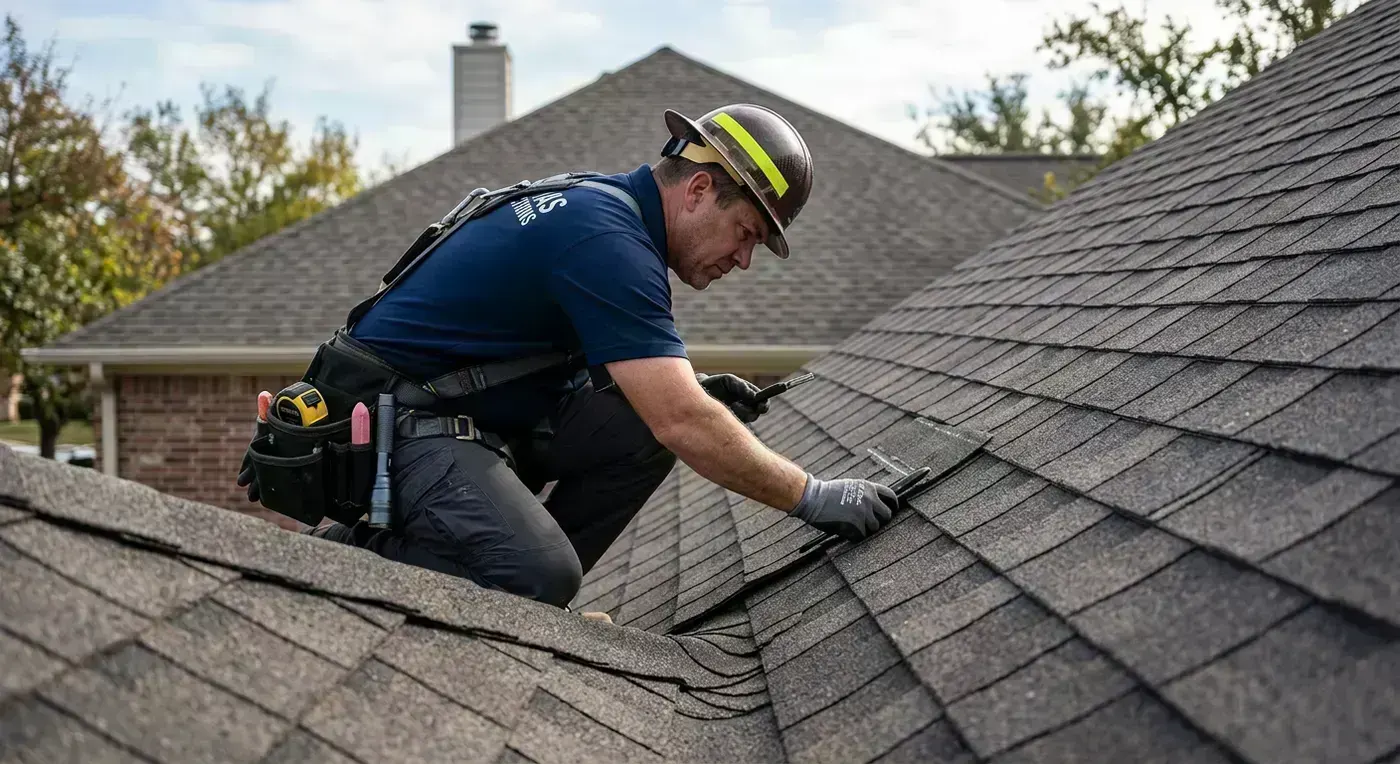
- Wind-lifted and creased shingles. The most frequent asphalt problem — broken seals along ridges, rakes, and eaves after straight-line winds.
- Hail bruising and granule loss. Especially on the sun-baked, brittle south and west slopes.
- Loosened or backed-out fasteners on ag-panel metal. Screw gaskets dry out under UV and thermal cycling, opening tiny leak paths.
- Flashing failures around chimneys, vents, and porch tie-ins. Wind-driven rain finds every gap on long rural rooflines.
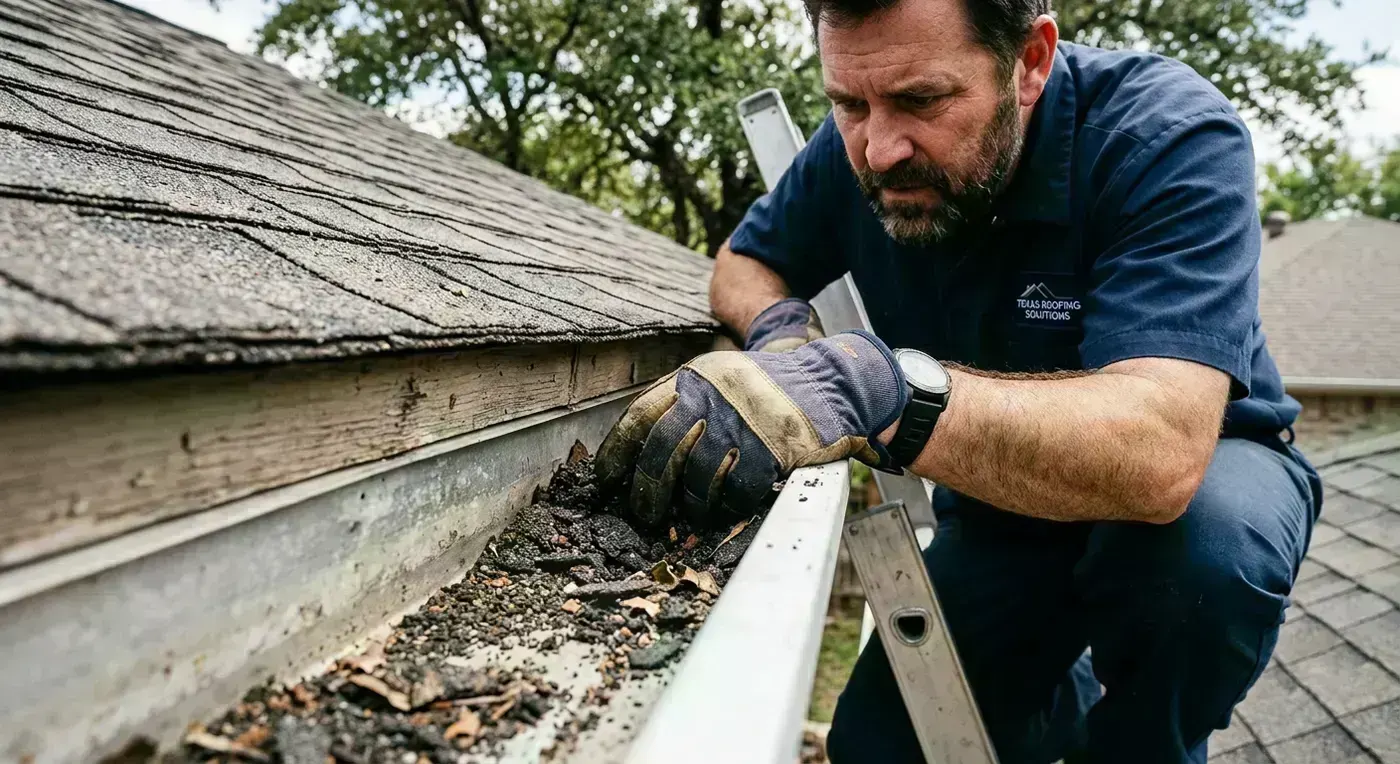
- Debris impact. With no tree buffer, wind carries grit, branches, and even outbuilding debris across open lots and into roofs.
- Sealant and pipe-boot cracking. Intense UV degrades rubber boots faster here than in shaded areas.
Inspection advice for rural properties
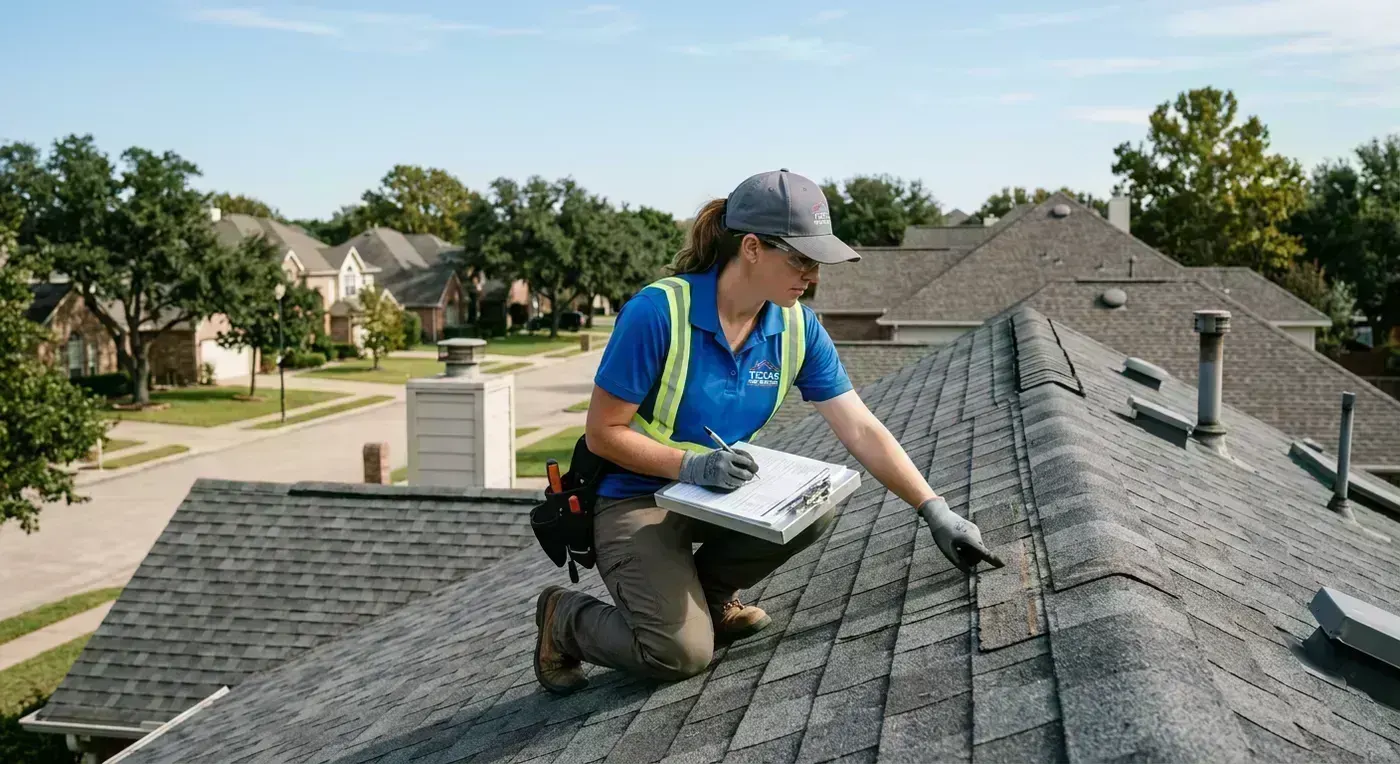
Rural roofs in Ponder are often big, steep, and far from the nearest ladder-friendly access point — and climbing a wind-exposed ranch roof yourself is a genuinely bad idea. A smarter approach:
- Inspect twice a year — once after spring storm season and once before winter — plus after any significant hail or high-wind event.
- Use a drone. Drone inspections cover large rural roof areas and outbuildings quickly and safely, capturing detail you'd never see from the ground.
- Check the edges first. Ridges, rakes, and eaves fail before the field of the roof out here because that's where wind attacks.
- Don't forget the barn and shop. Ag-panel outbuildings leak just like the house and are easy to overlook.
- Document everything before filing an insurance claim so you have dated evidence of storm damage.
Local roofing help in Ponder. RoofDog serves Ponder and the surrounding Denton County ranch country. We back every replacement with a lifetime workmanship warranty, use drone inspections to keep crews off risky roofs, and we're the company with a heart — Protecting Homes. Saving Dogs. We donate 10% of our profits to dog rescues.
See our Ponder, TX roofing services, call 940.828.ROOF, or schedule an inspection.
Frequently asked questions
How long does a roof really last in Ponder, TX?
Expect 15–22 years from architectural asphalt shingles and 40–60 years from standing-seam metal. Ponder's open-prairie wind and hail exposure tend to push asphalt toward the lower end of that range.
Why do so many Ponder homes have metal roofs?
Metal handles the extreme open-country wind far better than asphalt, lasts decades longer, resists hail failure, and suits the ranch-and-barn character of the area — so rural homeowners keep choosing it.
Is metal or asphalt better for an exposed prairie lot near Ponder?
For high-wind, no-tree-buffer lots, standing-seam metal is usually the better long-term investment. Architectural asphalt is fine for budget-conscious builds if you commit to regular inspections.
Does the lack of trees in Ponder actually shorten roof life?
Yes. With no tree buffer, roofs take full sun (faster UV aging), unbroken wind (more uplift), and direct hail impact — all of which shorten lifespan compared to a shaded, sheltered lot.
How much can hail cut into my roof's lifespan here?
A single severe DFW hailstorm can end an aging asphalt roof's life outright, or knock several years off a newer one through granule loss and bruising. Metal usually survives with cosmetic dents.
How often should I inspect a rural roof in Ponder?
Twice a year — after spring storms and before winter — plus after any major hail or high-wind event. Drone inspections make this safe and thorough on large rural roofs.
What wind speeds do Ponder roofs face?
Straight-line winds ahead of storms regularly reach 50–70+ mph on the open prairie, hitting homes with full force because there's little terrain or vegetation to slow them.
Can I inspect my own ranch roof?
We strongly advise against it. Large, steep, wind-exposed rural roofs are dangerous to walk. A professional drone inspection captures more detail safely — RoofDog offers them at 940.828.ROOF.
Do metal roofs get damaged by Ponder hail?
Big hail can dent metal cosmetically, but quality standing-seam panels rarely fail structurally. That's a major reason metal is popular on hail-prone open lots around Ponder.
My barn and my house have different roofs — should both be inspected?
Absolutely. Ag-panel outbuildings develop leaks from dried-out screw gaskets and wind-loosened fasteners just like homes, and they're easy to overlook until water gets in.
Will insurance cover storm damage on my Ponder roof?
Often yes for documented hail and wind damage. The key is dated evidence — get a professional inspection and photos before filing, so your claim is well supported.
How do I know if my roof is nearing the end of its life?
Watch for widespread granule loss, curling or missing shingles, backed-out fasteners on metal, cracked pipe boots, and interior water stains. An inspection confirms whether it's repair or replace time.
Does RoofDog actually serve Ponder?
Yes. RoofDog covers Ponder and the surrounding Denton County ranch country, backs work with a lifetime workmanship warranty, and donates 10% of profits to dog rescues.
Summary
Roof lifespan in Ponder, TX comes down to material choice and exposure. On the open prairie west of Denton, architectural asphalt shingles typically last 15–22 years, while standing-seam metal — hugely popular on ranch homes for good reason — runs 40–60 years. Relentless straight-line wind, direct DFW hail, and full sun with no tree buffer all push roofs toward the shorter end of their ranges, which makes twice-a-year drone inspections and quality installation especially important out here. Whether you're on an older farmhouse or a new build on acreage, RoofDog is here to help: 940.828.ROOF, a lifetime workmanship warranty, and Protecting Homes. Saving Dogs.
You Might Also Need
Need a Roof Inspection?
Get expert advice and a free estimate from North Texas's trusted roofing professionals.
Schedule Free Inspection