How Heat Damages Roofs in Texas
Short answer: Heat is the single most persistent stress a Texas roof endures. Shingle surfaces here routinely climb past 150°F on summer afternoons, and the daily swing between that scorching peak and a cooler night forces the roof to expand and contract thousands of times a year. That repeated movement, combined with ultraviolet radiation cooking the asphalt binder, dries shingles brittle, sheds their protective granules, and warps them into curls and blisters — which is why a roof in Frisco or Fort Worth often wears out years before the number printed on its warranty.
If you have ever pressed your palm against a rooftop in July, you already understand the problem instinctively. What follows is the physics behind that heat, the specific ways it dismantles a roof one layer at a time, and the practical steps — ventilation, material selection, and reflective coatings — that measurably slow the damage down.
Table of contents
- How hot does a Texas roof actually get?
- Thermal cycling: the roof that never stops moving
- Asphalt binder drying and embrittlement
- Granule loss and the domino effect
- Blistering, curling, and cupping
- UV degradation and why it compounds heat
- Why south- and west-facing slopes fail first
- The role of attic ventilation
- Reflective and cool-roof options
- A realistic heat-damage timeline
- What you can do to protect your roof
- Frequently asked questions
- Summary
How hot does a Texas roof actually get?
Air temperature is the number the weather app shows you. Roof-surface temperature is a different, far more punishing figure. When the ambient air reads 100°F on a cloudless afternoon in Plano, a dark asphalt shingle absorbing direct sun can reach 150°F to 175°F. Field measurements on black and dark-gray shingles in the southern United States regularly land in that band, and lighter colors run cooler but still climb well above the air temperature.
The reason is straightforward: asphalt is nearly black, and dark surfaces absorb most of the solar energy that strikes them instead of reflecting it. That absorbed energy becomes heat, and the shingle has nowhere fast to dump it — the plywood deck beneath conducts some down into the attic, but the surface stays hot for hours. In North Texas, where summer delivers long strings of triple-digit days, a roof spends much of June through September operating at temperatures that would be considered a heat emergency for a human being.
Thermal cycling: the roof that never stops moving
A roof is not a static object. Every material in the assembly — asphalt, fiberglass mat, the mineral granules, the metal flashing, the nails, the wood deck — expands when it heats and contracts when it cools. Each of these materials expands at a slightly different rate, so as the roof heats up in the morning and cools down at night, its components are constantly straining against one another.
In North Texas the daily temperature swing is dramatic. A summer surface can go from a 90°F pre-dawn low to a 160°F afternoon peak — a 70-degree cycle, every single day, for months. Multiply that by years and you have hundreds of thousands of expansion-and-contraction events. This is called thermal cycling, and it is a fatigue process much like bending a paperclip back and forth: no single bend breaks it, but the accumulated stress eventually does.
Thermal cycling loosens the adhesive seal strips that hold shingle tabs down, works nails slightly loose over time, opens tiny gaps at flashing joints, and creates microscopic cracks in the shingle body that later grow. It is the quiet engine behind most heat-related aging, and it is the reason a roof can look fine from the street while its integrity is steadily eroding. It also compounds with our region's shorter roof lifespans overall — if you want the broader picture, see our guide on how long roofs last in Texas.
Asphalt binder drying and embrittlement
To understand heat damage you have to understand what an asphalt shingle actually is. At its core is a fiberglass mat saturated in asphalt — a petroleum product full of volatile oils that keep it flexible and slightly tacky. Those oils are what allow a healthy shingle to flex with the deck, seal itself in the sun, and shrug off hail and wind without cracking.
Heat cooks those oils out. Every hot day drives a little more of the volatile content out of the asphalt, and over years the binder dries, hardens, and shrinks. A new shingle is pliable; an old, heat-baked one is stiff and brittle, like a cracker. Once the binder loses its flexibility, thermal cycling stops merely stressing the shingle and starts fracturing it. You can often hear the difference — a brittle shingle makes a dry crack rather than a soft bend when you lift its edge.
This embrittlement is largely irreversible. There is no coating you can apply that puts the oils back. It is the fundamental clock ticking inside every asphalt roof, and Texas heat runs that clock fast. This is one big reason our asphalt shingle roofs don't last as long in Texas as the national averages suggest.
Granule loss and the domino effect
The colored mineral granules embedded in a shingle's top surface are not decorative — they are the shingle's sunscreen. They reflect a portion of sunlight and, critically, physically shield the asphalt beneath from direct UV exposure. As long as the granule blanket is intact, the binder underneath ages more slowly.
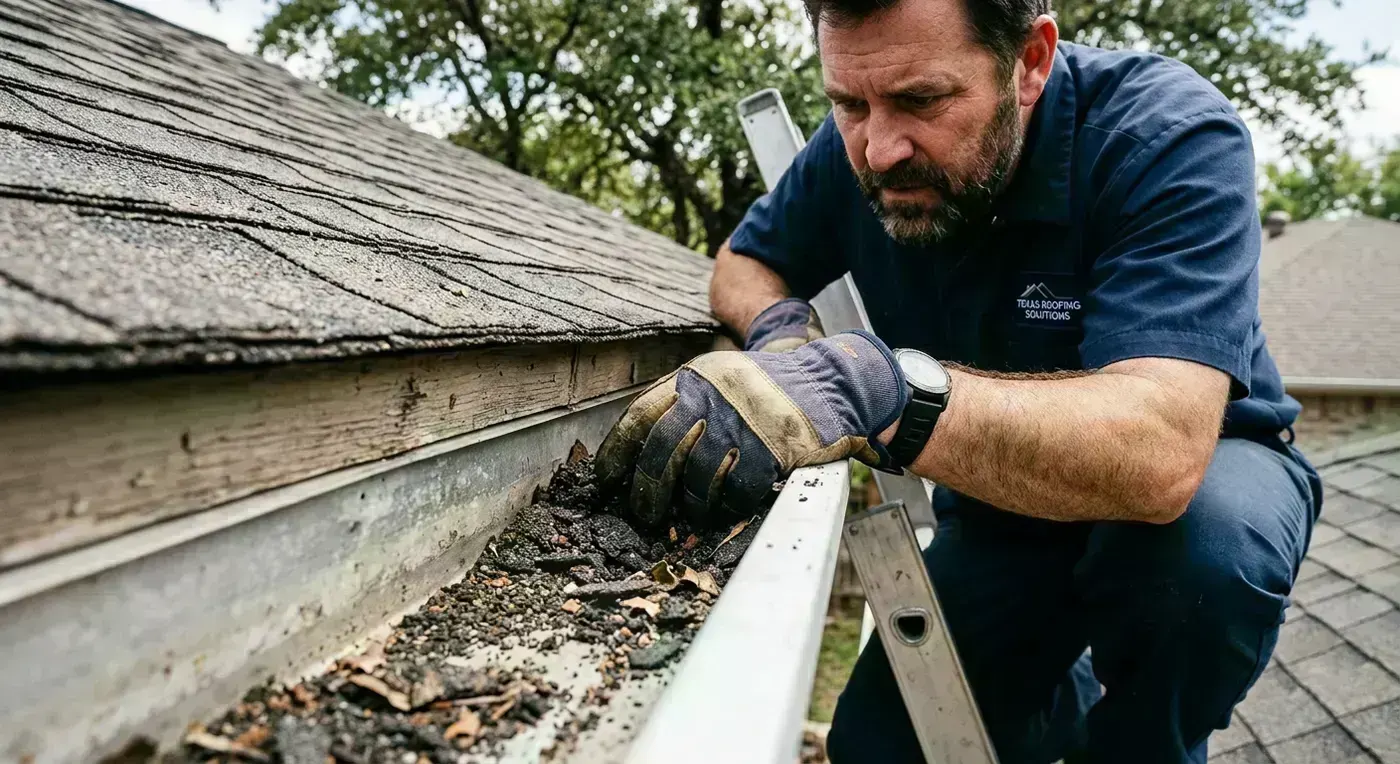
Heat undermines that blanket in two ways. First, as the binder dries and shrinks, its grip on the granules weakens, so they release more easily. Second, thermal cycling and weather knock loose granules downhill toward the gutters. Once bare spots appear, the exposed asphalt takes the full force of the sun, dries even faster, and sheds granules from the edges of the bare patch — a self-accelerating domino effect. Granule loss is one of the most reliable visible indicators that a roof is losing the fight.
Blistering, curling, and cupping
Heat produces three distinct, visible deformations, and each tells a slightly different story.
Blistering shows up as small raised bumps on the shingle surface. Most blisters form when trapped moisture or gas pockets inside the asphalt expand under intense heat and push up against the granule layer. When a blister pops, it leaves a small crater of exposed asphalt — effectively a new granule-loss site. Poor attic ventilation, which traps heat and humidity against the underside of the deck, makes blistering worse.
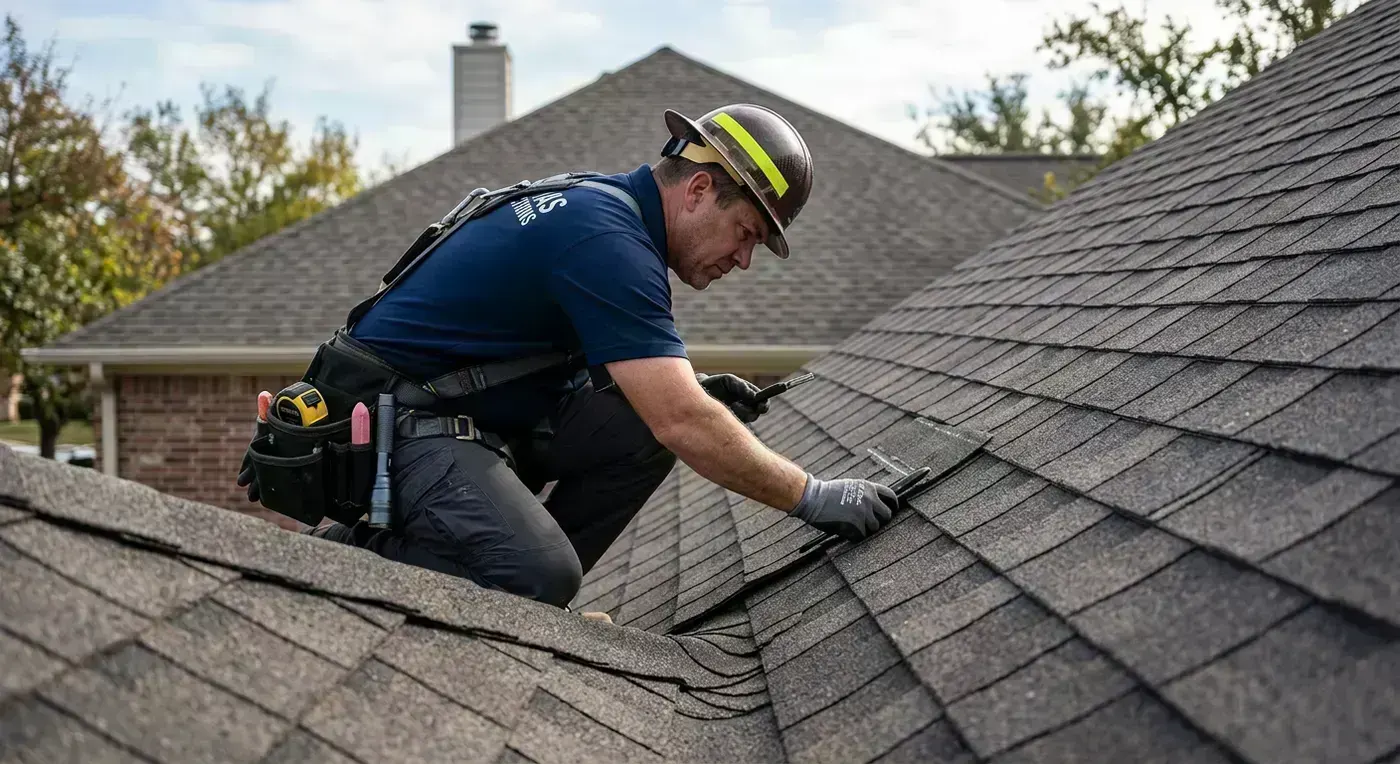
Curling is when the edges of a shingle turn upward while the center stays down. It usually signals that the shingle has dried and shrunk unevenly, with the exposed top surface contracting faster than the shaded underside. Curled edges catch wind, admit wind-driven rain, and are prone to snapping off in a storm.
Cupping is the opposite geometry — the center of the shingle rises while the edges stay down, giving a concave, dished appearance. Cupping frequently points to heat and moisture stress from below, again tied closely to attic conditions. Both curling and cupping mean the shingle has lost its flat, sealed relationship with its neighbors, and once that happens the roof's weather barrier is compromised.
| Symptom | What causes it | What it means for the roof |
|---|---|---|
| Granule loss | Dried binder loses grip; UV and cycling dislodge granules | Loss of UV shield; accelerating aging |
| Blistering | Trapped gas/moisture expanding under heat | Craters expose asphalt when they pop |
| Curling | Uneven drying and shrinkage of the top surface | Wind uplift and water intrusion risk |
| Cupping | Heat and moisture stress from below | Broken seal with neighboring shingles |
| Cracking | Brittle binder fracturing under thermal cycling | Direct paths for water to the deck |
UV degradation and why it compounds heat
Ultraviolet radiation and heat are separate mechanisms that happen to arrive together in the same sunlight. Heat drives the volatile oils out of asphalt; UV photons break the molecular bonds in the binder directly, a process called photo-oxidation. North Texas gets abundant sunshine and high solar intensity, so both mechanisms run hard here.
The two compound one another. UV degrades and hardens the binder, which makes the shingle more brittle, which makes thermal cycling more damaging, which opens cracks that expose fresh asphalt to more UV. This feedback loop is why sun-exposed roofs age so much faster than shaded ones, and why the granule layer — the roof's only real defense against UV — matters so much. When granule loss exposes bare asphalt, UV degradation on that spot jumps immediately.
Why south- and west-facing slopes fail first
If you inspect an aging Texas roof carefully, you will almost always find that one or two slopes look markedly worse than the others. In the Northern Hemisphere, south-facing slopes receive the most total sun over the course of a day, and west-facing slopes catch the intense afternoon sun at the hottest part of the day, when air temperatures peak. Those two orientations absorb the most heat and the most UV, hour for hour, year after year.
The practical result is that the south and west slopes reach the brittle, granule-losing, curling stage well before the north and east slopes — sometimes by several years. This is useful diagnostic information. When our crews perform a roof evaluation, the condition gap between slopes tells us how heat-driven the aging is and helps distinguish sun damage from, say, storm damage, which tends to be more randomly distributed. It is also why a "spot repair" on a sunny slope is often a short-lived fix: the surrounding shingles are close behind.
The role of attic ventilation
Heat attacks the roof from above through the sun, but it also attacks from below through the attic — and this second front is the one homeowners most often overlook. When an attic is poorly ventilated, the heat that conducts down through the deck has nowhere to go. It builds up, and attic temperatures in a Texas summer can soar to 150°F or higher, essentially cooking the shingles from underneath while the sun cooks them from on top.
A properly balanced ventilation system — intake at the soffits or eaves and exhaust near the ridge — lets hot air escape and pulls cooler air in, keeping the deck and the underside of the shingles substantially cooler. That reduces the peak temperatures the shingles reach, softens the daily thermal cycle, and slows binder drying. It also carries away moisture that would otherwise contribute to blistering and cupping. Good ventilation will not make a Texas roof last forever, but it is one of the few levers that measurably extends its life. We break down the mechanics in detail in our article on whether attic ventilation affects roof lifespan.
Reflective and cool-roof options
If dark surfaces are the problem, reflective surfaces are part of the solution. "Cool roof" is the umbrella term for roofing designed to reflect more sunlight and absorb less heat, quantified by two properties: solar reflectance (how much sunlight is bounced away) and thermal emittance (how readily the surface sheds absorbed heat).
Homeowners in North Texas have several practical paths:
- Lighter-colored shingles. Even within asphalt, lighter and specially formulated "reflective" shingles run meaningfully cooler than black or dark gray, reducing peak surface temperature and the aging that comes with it.
- Metal roofing with reflective coatings. Metal reflects a large share of solar energy and sheds heat quickly. Many standing-seam and stone-coated products carry cool-roof ratings and hold up extremely well to Texas sun.
- Reflective granules and factory coatings. Some modern asphalt shingles use specially engineered granules that reflect more of the sun's infrared energy without changing the visible color much.
- Tile and other high-mass materials. Concrete and clay tile resist heat aging well and allow air movement beneath, though they carry weight and cost considerations.
A cooler roof does double duty: it ages more slowly and it puts less heat into your attic, which can trim summer cooling bills. The right choice depends on your home's structure, your budget, and your HOA, and it is exactly the kind of trade-off our team walks homeowners through before a replacement.
A realistic heat-damage timeline
Heat damage is gradual, so it helps to know what to expect at each stage of a typical North Texas asphalt roof's life. The exact pace depends on shingle quality, color, ventilation, and slope orientation, but the pattern is consistent.
| Age | Typical heat-related condition |
|---|---|
| Years 1–5 | Shingles still flexible; minor initial granule settling; seals fully intact |
| Years 6–10 | Binder begins drying; south/west slopes show first granule loss and slight color fade |
| Years 11–15 | Visible granule loss on sunny slopes; early curling or blistering; stiffening shingles |
| Years 16–20 | Widespread curling/cupping; brittle, cracking shingles; bare asphalt patches |
| Years 20+ | End of service life for most Texas asphalt roofs; leaks and replacement likely |
What you can do to protect your roof
You cannot turn off the Texas sun, but you can slow its damage considerably:
- Ventilate properly. Balanced intake and exhaust is the highest-value, lowest-cost defense against heat aging.
- Choose heat-smart materials at replacement. Lighter or reflective shingles, or a cool-rated metal roof, buy you years.
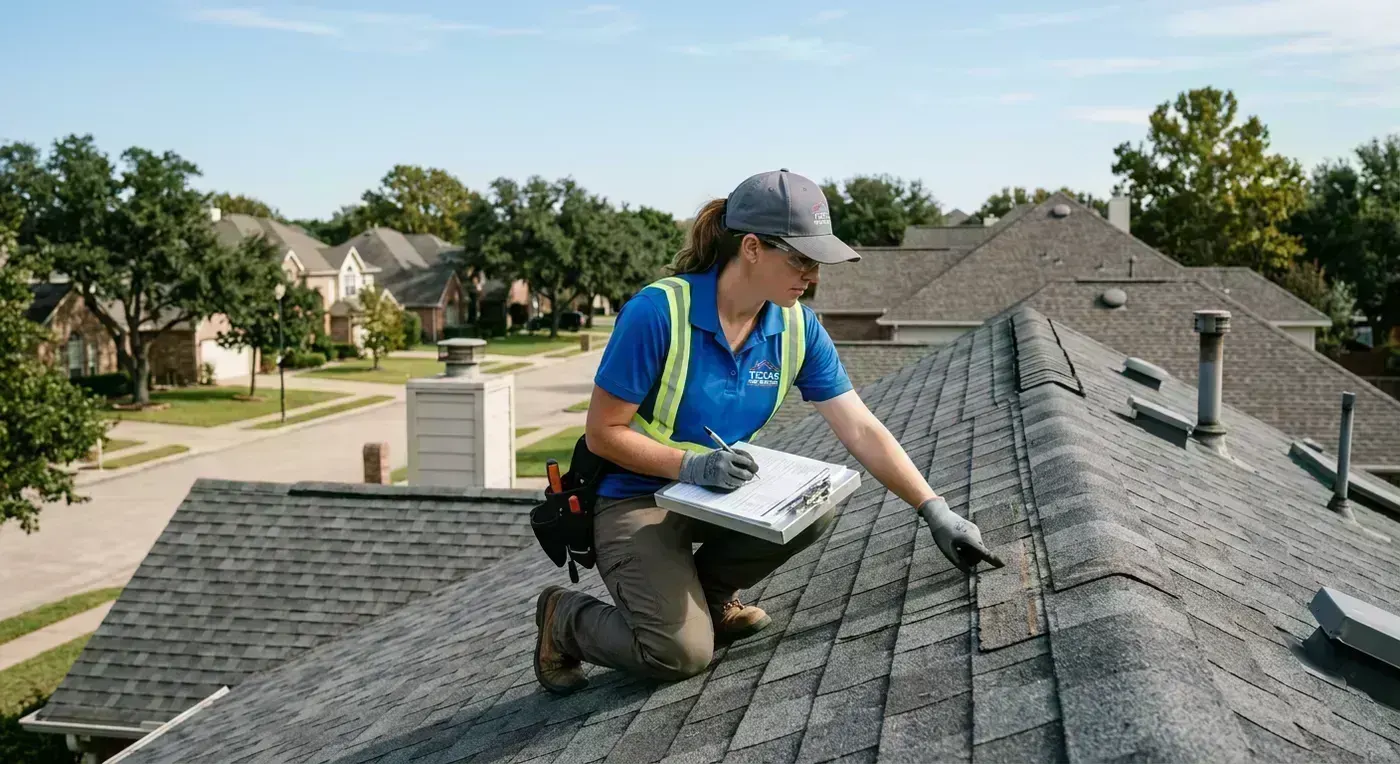
- Inspect regularly — especially the sunny slopes. Catching granule loss and early curling lets you plan rather than react to a leak.
- Address minor damage promptly. A single bare or cracked shingle exposes the deck; small fixes prevent big ones.
- Keep records. Knowing your roof's install date and material tells you where you sit on the timeline above.
Frequently asked questions
How hot does a roof get in Texas during summer?
On a 100°F afternoon, a dark asphalt shingle in direct sun commonly reaches 150°F to 175°F. The surface runs far hotter than the air because dark asphalt absorbs most of the sunlight that hits it and is slow to release that heat.
Does heat really shorten a roof's lifespan, or is that a myth?
It is very real. The chemical reactions that age asphalt roughly double for every 18°F rise in temperature, so a roof running hot in Texas ages several times faster than the same roof in a mild climate. Heat is the primary reason Texas roofs often fall short of their rated life.
Why do the south and west sides of my roof look worse than the others?
South-facing slopes get the most total sun each day, and west-facing slopes catch the intense afternoon sun when temperatures peak. Both absorb more heat and UV than the north and east slopes, so they dry out, lose granules, and curl years earlier.
What does heat damage look like on shingles?
Common signs include heavy granule loss (bare, darker patches), small raised blisters, edges curling upward, centers cupping into a dish shape, faded color, and shingles that feel stiff or crack when lifted. Sunny slopes usually show it first.
Can attic ventilation really slow heat damage?
Yes. Balanced ventilation lets built-up attic heat escape and keeps the roof deck and the underside of the shingles cooler. That lowers peak temperatures, softens the daily thermal cycle, and slows the drying and blistering that heat causes.
Are lighter-colored shingles worth it in Texas?
Generally yes. Lighter and reflective shingles run cooler than dark ones, which slows binder drying and granule loss and can reduce attic heat and cooling costs. The difference is modest per day but adds up over decades of Texas sun.
What is a "cool roof"?
A cool roof reflects more sunlight and releases absorbed heat more readily than a standard dark roof. It is measured by solar reflectance and thermal emittance. Options include reflective shingles, coated metal roofing, and tile, all of which age more slowly under heat.
Does heat cause roof leaks directly?
Not immediately, but it sets the stage. Heat makes shingles brittle and curls their edges, and thermal cycling loosens seals and flashing. Those weaknesses then let wind-driven rain and storm water find their way to the deck, producing leaks.
Is granule loss from heat something to worry about?
Some minor granule shedding is normal, but heavy loss is a warning. Granules are the shingle's UV shield, so once bare asphalt is exposed, aging accelerates on that spot. Significant granules in your gutters after a hot summer warrant an inspection.
Can I reverse heat damage to my shingles?
No. Once heat has driven the volatile oils out of the asphalt and the shingle has gone brittle, that change is permanent. You can slow further damage with ventilation and prompt repairs, but embrittled, curling shingles need replacement, not restoration.
How often should I have my roof inspected in North Texas?
At least once a year is wise given the heat and storm load here, and again after any major hail or wind event. Regular inspections catch heat-driven aging on the sunny slopes early, letting you plan repairs or replacement instead of reacting to a leak.
Why does RoofDog use drones for inspections?
Drones let us photograph every slope of your roof at high resolution safely, without walking on hot, brittle shingles that heat damage can make fragile. It also makes it easy to compare the sun-baked south and west slopes against the shaded ones so you can see the aging for yourself.
Will a new roof lower my energy bills in Texas?
It can, especially if you pair a reflective or cool-rated material with proper attic ventilation. A cooler roof puts less heat into your attic, which eases the load on your air conditioning during the long North Texas cooling season.
Does the RoofDog warranty cover heat-related problems?
Our lifetime workmanship warranty covers the quality of our installation. Heat aging of the shingles themselves falls under the manufacturer's material warranty. During your inspection we will explain exactly what each warranty covers so there are no surprises.
Summary
Texas heat is the dominant force aging roofs in our region. Surface temperatures past 150°F, daily thermal cycling, and intense UV combine to dry the asphalt binder brittle, strip away protective granules, and warp shingles into blisters, curls, and cups — with south- and west-facing slopes leading the decline. You cannot dim the sun, but you can fight back with balanced attic ventilation, reflective or cool-rated materials, and regular inspections that catch heat aging before it becomes a leak. If you want a clear, no-pressure read on where your roof stands, RoofDog is a phone call away at 940.828.ROOF. Protecting Homes. Saving Dogs.
You Might Also Need
Need a Roof Inspection?
Get expert advice and a free estimate from North Texas's trusted roofing professionals.
Schedule Free Inspection