Does Hail Reduce Roof Lifespan?
Short answer: yes. Hail almost always shortens the usable life of a roof in North Texas, and it often does so without leaving a mark you can see from the driveway. A single severe storm can fracture the fiberglass mat inside your shingles, strip away the protective granules that block UV, and set off a slow decline that shows up as leaks and premature failure years later. In DFW's hail alley, this is not a rare event—it is the single biggest reason roofs here wear out faster than the manufacturer's rating suggests.
If you have lived through even one hard hail season in Dallas, Collin, Denton, or Tarrant County, your roof has almost certainly taken a hit. The question is rarely "did hail touch my roof" and almost always "how much life did it cost me, and what do I do about it." This guide walks through the mechanics of hail damage, the difference between cosmetic and structural harm, and how to tell whether you are looking at a repair, a monitored roof, or a replacement.
Table of contents
- How hail actually ages a roof
- Bruising and mat fracture vs. surface granule loss
- Latent damage: why the clock speeds up
- Why one big storm can take years off a roof
- Class 4 impact-rated shingles and how they change the math
- When hail damage is repairable vs. a full replacement
- The insurance and inspection angle
- DFW hail alley: the North Texas context
- What to do after a hailstorm
- Frequently asked questions
How hail actually ages a roof
To understand why hail shortens roof life, it helps to know what an asphalt shingle is doing when it is healthy. A modern architectural shingle is a sandwich: a fiberglass mat gives it structure, a thick layer of asphalt makes it waterproof, and a coating of ceramic-coated mineral granules on top shields the asphalt from the sun. That granule layer is the sunscreen. Without it, ultraviolet light bakes the asphalt, the shingle dries out, becomes brittle, and cracks.
Hail attacks all three layers at once. On impact, a stone can knock granules loose, deform or fracture the asphalt, and—if it hits hard enough—crack the fiberglass mat underneath. Each of those outcomes matters on its own, but the reason hail is so destructive is that it compresses damage that would normally take a decade of weathering into a few violent seconds. A roof that might have aged gracefully to its 20- or 25-year rating instead arrives at "old" far ahead of schedule. If you want the broader picture of roof longevity in this climate, our overview of how long roofs last in Texas puts hail in context alongside heat and wind.
Bruising and mat fracture vs. surface granule loss
Not all hail damage is equal, and the distinction is the whole game when it comes to lifespan. There are two very different things happening on a hail-struck roof, and homeowners routinely confuse them.
Surface granule loss
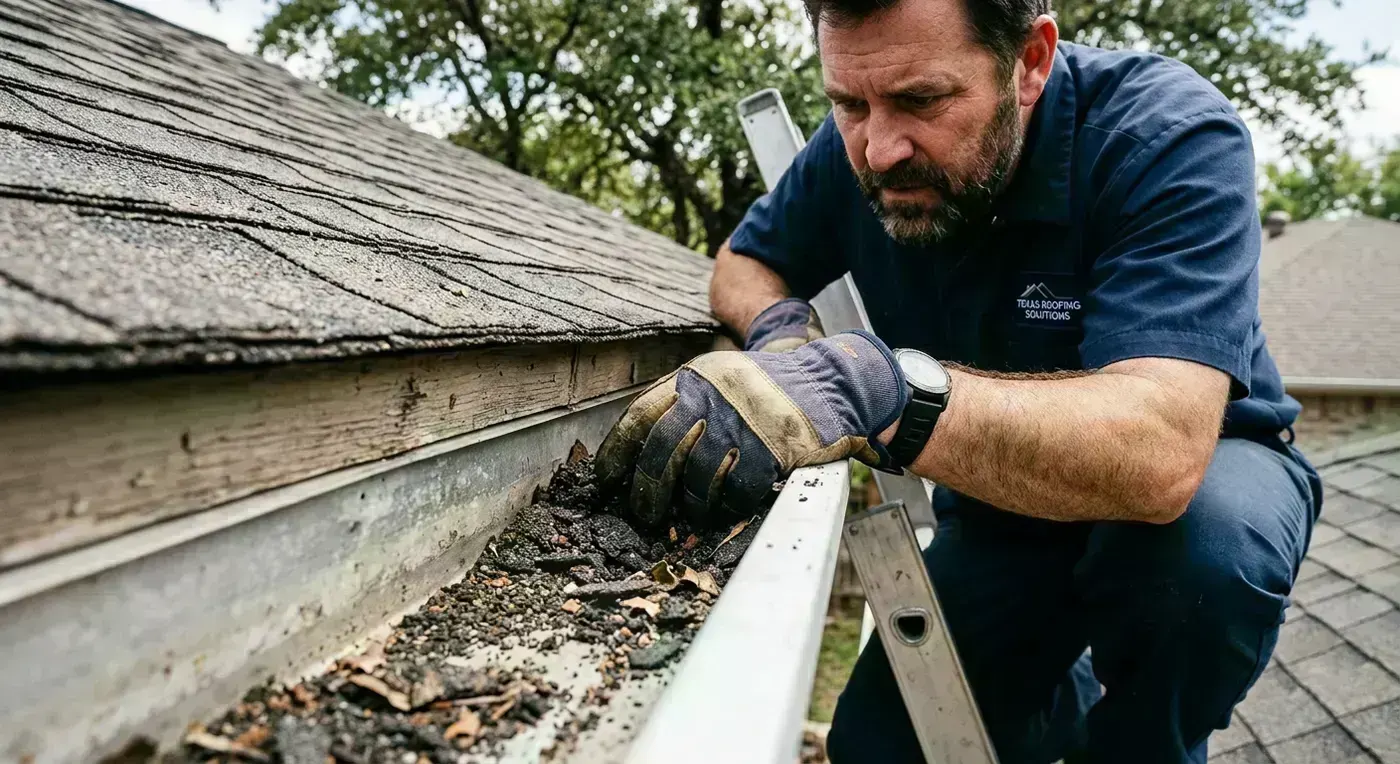
When small or glancing hail hits, it tends to scatter granules without harming the mat below. You will often see this as scuffed patches, or you will find a suspicious amount of granule sediment in your gutters and at the base of downspouts after a storm. Granule loss is a real problem—it exposes asphalt to UV and speeds up drying—but it is a gradual injury. A roof with modest granule loss ages faster, yet it may still shed water for years.
Bruising and mat fracture
Bruising is the dangerous one. A bruise is what you get when a hailstone strikes hard enough to crack or fracture the fiberglass mat while leaving the surface looking almost normal. Press your thumb on a bruise and it feels soft, like the bruise on a piece of fruit—hence the name. That fracture is a structural failure. It creates a spot where water can eventually work through, where the shingle will crack open as it flexes through Texas heat cycles, and where the shingle can no longer be trusted to keep its rated life. Bruising frequently does not leak on day one. It leaks in year three, which is exactly why hail damage is so easy to underestimate.
The key insight: Granule loss makes a roof age faster. A fractured mat makes a roof fail early. You can often see granule loss from the ground; you almost never can spot bruising without getting on the roof and feeling the shingles by hand or reviewing high-resolution drone imagery. This is precisely the gap that catches homeowners off guard.
Latent damage: why the clock speeds up
"Latent" simply means hidden and delayed. Latent hail damage is the category of harm that does not announce itself. There is no active drip, no water stain on the ceiling, no missing shingle—just a roof that is quietly weaker than it was the day before the storm. Latent damage accelerates aging in several compounding ways:
- Exposed asphalt oxidizes. Every spot stripped of granules starts drying out and hardening in the Texas sun. Brittle asphalt cracks; cracks admit water.
- Fractured mats propagate. A hairline crack in the fiberglass mat does not stay small. Thermal expansion and contraction—brutal in North Texas, where a roof can swing 60 degrees or more between night and afternoon—widen the fracture over time.
- Sealant strips loosen. Hail impacts and the wind that accompanies storms can break the adhesive bond between shingle courses, leaving edges free to lift and channel water underneath.
- Damaged spots collect moisture. Once water reaches the mat or the decking, rot and mold begin, and the failure spreads outward from the original impact.
The net effect is that a hail-hit roof depreciates on a steeper curve. It is worth understanding that wind and hail usually travel together—the same storms that pelt your shingles also try to peel them—so our piece on whether wind damage shortens roof life is a natural companion to this one. And if you are trying to read your own roof, the tell-tale signs your roof is nearing the end of its life often show up first on the slopes that took the worst of the hail.
Why one big storm can take years off a roof
People expect roofs to wear out slowly, and under gentle conditions they do. Hail breaks that expectation because it delivers a decade's worth of weathering in a single afternoon. Consider what a severe DFW hail event—stones from quarter-size to golf-ball-size or larger, driven by 50-plus mph winds—does in a matter of minutes: it can pit an entire slope, fracture mats across hundreds of square feet, tear the granule coating off exposed faces, and dent every soft metal component on the roof.
The roof does not necessarily leak the next morning. But its remaining service life has been rewritten. A roof rated for 25 years that is caught by a major hailstorm at year eight may have only a fraction of the life it appeared to have. The manufacturer's rating assumes normal weathering; it never assumed golf balls of ice at terminal velocity. This is why a roof can look "fine" and still be functionally near the end of its usefulness. The following table shows how different impact severities tend to affect expected remaining life.
| Hail severity | Typical visible signs | Primary damage type | Effect on remaining lifespan |
|---|---|---|---|
| Light (pea to marble) | Minor granule loss, gutter sediment | Surface granule loss | Modest—accelerated aging over years |
| Moderate (dime to quarter) | Scattered dark spots, dented vents | Mixed granule loss and bruising | Meaningful—can cut years off |
| Severe (golf ball+) | Widespread bruising, cracked shingles, metal dents | Mat fracture, structural failure | Severe—often warrants replacement |
| Extreme (baseball+) | Punctures, exposed mat, torn shingles | Immediate breach | Catastrophic—full replacement |
Class 4 impact-rated shingles and how they change the math
If hail is the enemy, Class 4 impact-rated shingles are the best armor a North Texas homeowner can put between the sky and the decking. The rating comes from the UL 2218 test, in which a steel ball is dropped onto a shingle from a set height to simulate hail impact. A Class 4 shingle—the highest rating—must withstand a two-inch steel ball dropped from twenty feet without the mat cracking. In practical terms, Class 4 products use a more resilient, polymer-modified (SBS) asphalt that flexes and absorbs impact instead of fracturing.
The practical payoff is twofold. First, these shingles resist the exact bruising and mat fracture that quietly kills ordinary roofs, so they hold their rated life far better through repeated hail seasons. Second, most Texas insurers offer a premium discount for a documented Class 4 roof, which can offset a meaningful chunk of the upgrade cost over time. They are not hail-proof—an extreme storm can still damage anything—but they dramatically raise the threshold at which damage becomes structural. We break down the durability numbers in detail in our guide to how long Class 4 shingle roofs last in Texas.
RoofDog tip: As an Owens Corning Platinum Preferred Contractor, RoofDog installs Class 4 systems backed by both the manufacturer's warranty and our own lifetime workmanship warranty. If you are already facing a replacement after hail, upgrading to Class 4 is often the single smartest dollar you can spend in DFW—you are buying resistance to the exact threat that will come around again. Call 940.828.ROOF to talk options.
When hail damage is repairable vs. a full replacement
This is the decision most homeowners actually care about, and the honest answer is that it depends on the extent, location, and age of the damage. A few isolated impacts on a young roof can often be spot-repaired. Widespread bruising across multiple slopes on a middle-aged roof usually points toward replacement, because patching a roof that is failing everywhere just delays the inevitable while spending money twice.
Repair is often reasonable when:
- Damage is confined to one slope or a small number of shingles.
- The roof is relatively young and otherwise in good condition.
- Matching shingles are available so the repair blends in.
- There is no evidence of mat fracture spreading across the field.
Full replacement usually makes more sense when:
- Bruising is widespread across multiple slopes.
- The roof is already past the midpoint of its expected life.
- There is granule loss over large areas exposing asphalt.
- Prior repairs are stacking up, or the decking shows moisture damage.
- Your insurer approves replacement (see below), which changes the economics entirely.
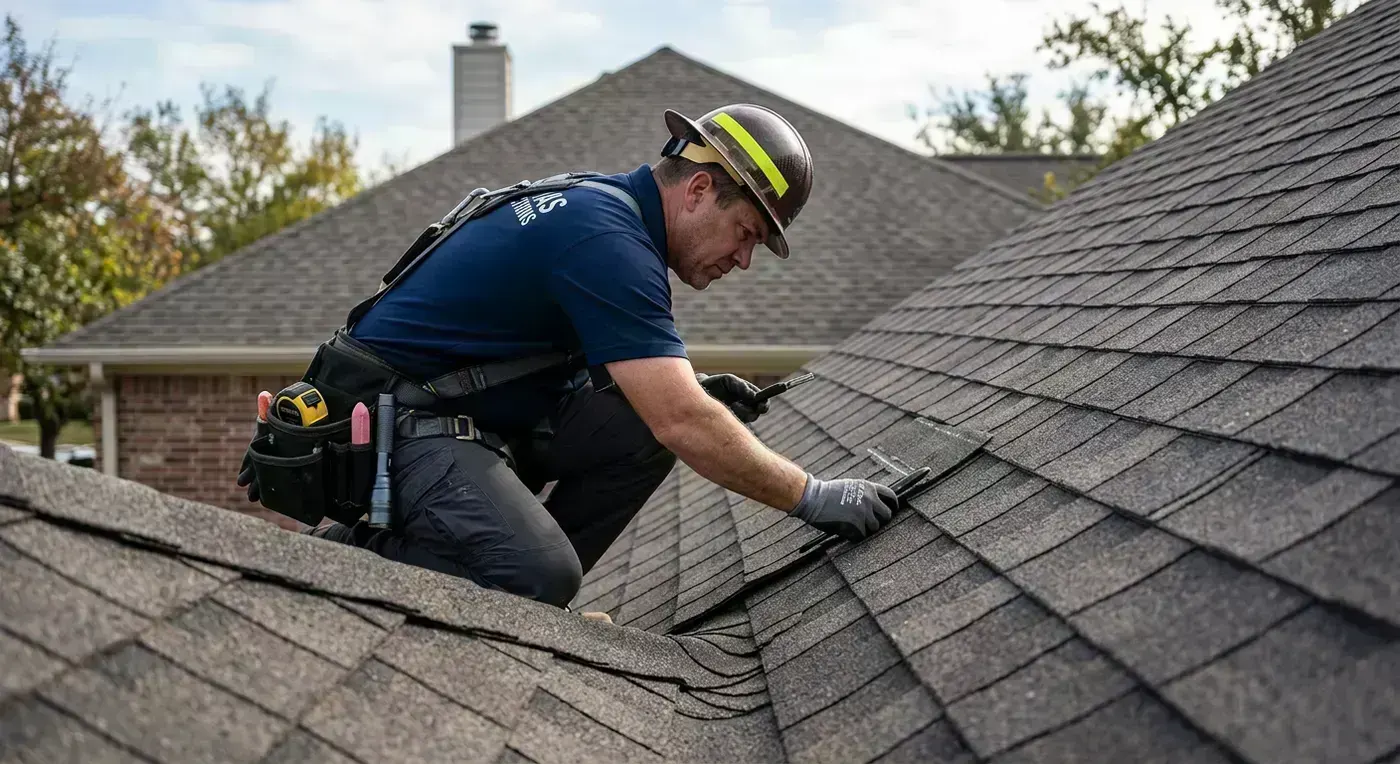
The only reliable way to make this call is a hands-on assessment. A professional roof inspection maps every impact and distinguishes cosmetic scuffing from structural bruising; when the verdict is replacement, our roof replacement team handles the tear-off, decking repair, and Class 4 install as one coordinated project.
The insurance and inspection angle
Hail damage is where roof lifespan and homeowner's insurance intersect, and getting the sequence right matters. Most Texas policies cover sudden hail damage, but they operate on deadlines and documentation. If you wait years to file after a storm, the insurer can argue the damage is old wear rather than a covered event—which is another reason latent damage is so costly. The move after a significant hailstorm is to get a professional inspection promptly, document everything, and file while the cause is clearly attributable to the storm.
A modern inspection is more thorough and less invasive than the old ladder-and-chalk method. RoofDog uses high-resolution drone inspections to survey the entire roof surface, capturing time-stamped, geotagged imagery of every impact. That documentation does two things: it gives you an accurate picture of how much life the hail actually cost, and it gives your insurance adjuster clear, credible evidence to work from. When damage is real, good documentation is the difference between a fair claim and a fight.
A word of caution: after every major DFW hailstorm, out-of-town "storm chaser" crews flood the area promising free roofs. Work with a local, established contractor who will still be here to honor the warranty in five years. RoofDog is North Texas–based, and our lifetime workmanship warranty means we stand behind the install for as long as you own the home.
DFW hail alley: the North Texas context
There is a reason this conversation matters more in Dallas–Fort Worth than in most of the country. North Texas sits squarely in what insurers and meteorologists informally call "hail alley"—the swath of the central plains where warm Gulf moisture collides with cold, dry air rolling off the Rockies to produce the supercell thunderstorms that manufacture large hail. Spring, roughly March through June, is peak season, and it is common for the Metroplex to log multiple damaging hail events in a single year.
The consequence for local homeowners is that hail is not a one-time catastrophe to recover from—it is a recurring tax on your roof. A roof installed here will, statistically, face several hail seasons over its life, and each one chips away at its remaining service life. That recurring exposure is exactly why Class 4 shingles, prompt inspections, and a relationship with a trustworthy local roofer are not luxuries in DFW; they are basic risk management. It also explains why so many North Texas roofs are replaced well before their nominal rating: the rating was set for a calmer climate than ours.
What to do after a hailstorm
If a hailstorm has just rolled through your neighborhood, a calm, orderly response protects both your roof and your claim:
- Look for the easy signs first. Check gutters and downspout splash areas for granule buildup, and inspect soft metal—gutters, vents, AC fins, mailboxes—for dents that confirm hail hit hard.
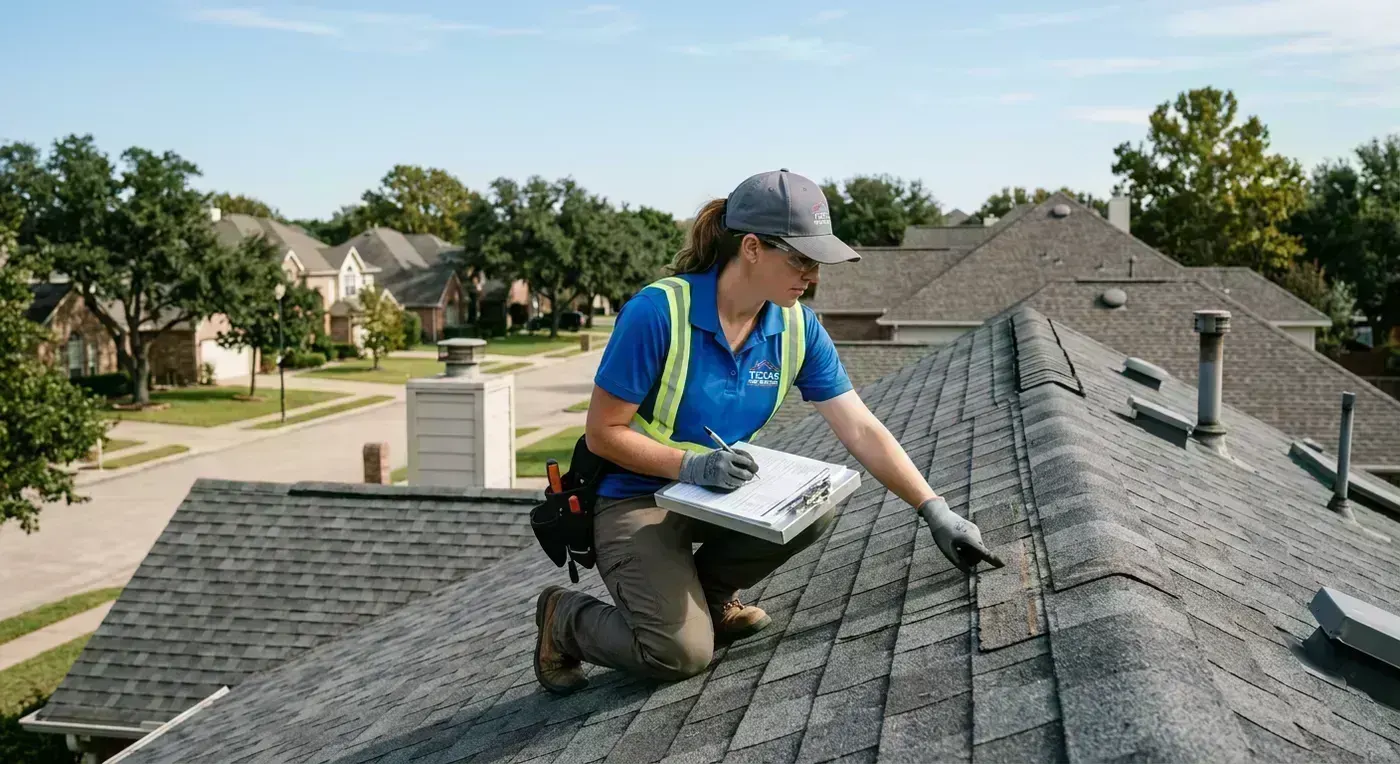
- Do not climb up yourself. Bruising is invisible from the ground and difficult to read even up close without training. A misstep on a damaged roof is dangerous and can worsen the damage.
- Schedule a professional inspection promptly. Prompt documentation protects your insurance claim and gives you an accurate read on lost lifespan.
- Get everything documented. Drone imagery and a written report create the paper trail your adjuster needs.
- Weigh repair vs. replacement with real data, not a driveway guess—and consider Class 4 if replacement is on the table.
RoofDog makes the first step easy. You can schedule a free drone roof inspection and get a straight answer about how much life the storm actually cost you—no pressure, no storm-chaser theatrics.
Frequently asked questions
Can hail damage shorten my roof's life even if it isn't leaking?
Absolutely. Most hail damage does not leak immediately. Bruised mats and stripped granules quietly weaken the roof, so it fails years earlier than it otherwise would. The absence of a leak is not evidence that the roof is fine.
How do I know if my roof has hail damage?
Ground-level clues include granules in your gutters and dents on soft metal like vents and gutters. Structural bruising, however, usually requires a hands-on or drone inspection to detect, because it can be invisible from the driveway.
What is the difference between granule loss and bruising?
Granule loss is surface wear that removes the shingle's UV protection and speeds up aging. Bruising is a fracture of the fiberglass mat underneath—a structural failure that can cause early leaks and typically warrants repair or replacement.
How much life does one hailstorm take off a roof?
It varies with severity, but a major storm can cost anywhere from a few years to most of a roof's remaining life. Golf-ball-size and larger hail can render a middle-aged roof functionally finished in a single afternoon.
Are Class 4 shingles worth it in North Texas?
For most DFW homeowners, yes. They resist the bruising that kills ordinary shingles, hold their rated life through more hail seasons, and often earn an insurance premium discount that offsets part of the upgrade cost.
Does hail damage always mean I need a new roof?
No. Isolated damage on a younger roof can often be repaired. Widespread bruising, large-area granule loss, or damage on an older roof usually points toward replacement. An inspection is the only way to know for sure.
How long do I have to file a hail insurance claim in Texas?
Deadlines vary by policy, but sooner is always better. Waiting lets an insurer argue the damage is ordinary wear rather than a covered storm event. Get an inspection promptly and document the damage while the cause is clear.
Will filing a hail claim raise my premium?
Because hail is a widespread regional event rather than individual negligence, a single legitimate hail claim in DFW typically has less premium impact than homeowners fear. Rates in hail alley are driven largely by regional risk, not one claim.
Can I just wait and see if the roof leaks before doing anything?
This is risky. Latent damage worsens under Texas heat cycles, and waiting can push you past your claim window and let small fractures become widespread failures. It is cheaper to document damage promptly than to chase leaks later.
Does a drone inspection really find damage a person might miss?
Drones capture high-resolution, geotagged imagery of the entire surface, including steep or hard-to-reach slopes, without anyone walking on and further stressing damaged shingles. It produces thorough documentation that adjusters trust.
My neighbor got a new roof after the storm—should I?
Possibly, but not automatically. Hail intensity varies street to street, and roof age and condition differ house to house. Get your own inspection rather than assuming your roof matches your neighbor's outcome.
How often does North Texas get damaging hail?
DFW sits in hail alley and commonly sees multiple damaging hail events per year, concentrated in spring. Over a roof's life, several hail seasons are effectively guaranteed, which is why local roofs often wear out ahead of their rating.
Does the age of my roof affect the repair-versus-replace decision?
Significantly. Repairing an older roof that is already near the end of its life often wastes money, because the surrounding shingles will fail soon anyway. On a younger roof, targeted repairs can be well worth it.
Who is RoofDog and why "Protecting Homes. Saving Dogs."?
RoofDog is a North Texas roofing company and Owens Corning Platinum Preferred Contractor offering drone inspections and a lifetime workmanship warranty. We donate 10% of our profits to dog rescues—protecting homes and saving dogs at the same time. Reach us at 940.828.ROOF.
Summary
Hail does reduce roof lifespan, and in North Texas it is the leading reason roofs fail early. The damage that matters most—mat fracture and bruising—is largely invisible from the ground, and it sets off a slow acceleration of aging that surfaces as leaks and premature failure years down the road. Surface granule loss speeds aging; structural bruising causes early failure. Because DFW sits in hail alley and faces repeated hail seasons, the smart defenses are prompt professional inspections after storms, careful documentation for insurance, and Class 4 impact-rated shingles when replacement is on the table. If a storm has passed through your neighborhood, don't guess from the driveway. Call RoofDog at 940.828.ROOF or schedule a free drone inspection to learn exactly how much life your roof has left. Protecting Homes. Saving Dogs.
You Might Also Need
Need a Roof Inspection?
Get expert advice and a free estimate from North Texas's trusted roofing professionals.
Schedule Free Inspection